

Geoff Shepard
Author of The Real Watergate Scandal: Collusion, Conspiracy, and the Plot That Brought Nixon Down
About the Author
Geoff Shepard joined the Nixon administration as a White House Fellow directly out of Harvard Law School and became a senior member of the Domestic Council staff. Later, as deputy defense counsel, he had a front-row seat for the political drama that toppled a president and sent his closest aides to show more prison. show less
Works by Geoff Shepard
The Real Watergate Scandal: Collusion, Conspiracy, and the Plot That Brought Nixon Down (2015) 43 copies, 1 review
Tagged
Common Knowledge
- Gender
- male
Members
Reviews
The Real Watergate Scandal: Collusion, Conspiracy, and the Plot That Brought Nixon Down by Geoff Shepard
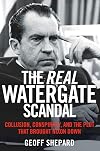
Author Geoff Shepard believes that the Nixon resignation was a coup d'etat and that Nixon should not have had to resign the presidency. Normally I would reject such a notion as a conspiracy theory. Having lived through Watergate I believe that I know everything about it because I read many newspapers around the time that it occurred. However, since Shepard worked in the White House as a lawyer at the time of the scandal, I believe that his opinion matters. Shepard's main argument is that the show more judges hearing separate Watergate cases met together several times with prosecutors and colluded to bring down a president that they opposed politically. This reasoning does not ring true for me.
Leon Jaworski and John Sirica were at the juxtaposition of the case. Leon Jaworski served as the second special prosecutor during the Watergate scandal. John Sirica, as a D.C. District Court judge, was responsible for hearing a request by Jaworski to force Nixon to turn over evidence. Jaworski had issued a subpoena for the tapes of 64 presidential conversations to use as evidence in the criminal cases against indicted former Nixon administration officials. Sirica issued an order granting the request. Nixon refused and Jaworski followed up with an appeal to the U. S. Supreme Court and won the appeal. Nixon, with his back to the wall and having been impeached by the House of Representatives, chose to leave office.
Years later the author obtained full copies of the judicial record of each case. Inside those boxes of documents he uncovered contact between the prosecution and the Judiciary that the defendants were not aware of. It is true that if one party in a lawsuit contacts a judge, that a copy of the request to see the judge must be given to all parties and all the parties must be present together with the judge in any meeting. Also, there is alot of case law overturning convictions based on this type of due process violation. However, it happens all the time in the U. S. and usually to people no one will ever know or care about.
My question for the author is "who cares" if this happened to Nixon. Shepard acknowledges in the book that crimes were committed and that Nixon was "flawed." OK. He admits Nixon is guilty. So what if there was a technical violation of the law. It happens every day in this country and to people who are not guilty of a crime. It is hard to feel any pity for Nixon who was guilty. Not only was he guilty of several crimes but he tarnished the office of the presidency. I feel no compassion for him and reject the author’s premise that the resignation was a coup d'etat.
Nixon resigned in order to receive a pension. If he stayed in office and was removed after a trial in the Senate, then he would lose his pension based on official misconduct. Nixon did not want to risk losing his pension. That was his decision to make. It was not forced upon him. It was not scandalous for him to choose this path and was not the "real" scandal in this matter. Therefore, I reject the author’s premise that the resignation was a scandal and a coup d'etat. show less
Leon Jaworski and John Sirica were at the juxtaposition of the case. Leon Jaworski served as the second special prosecutor during the Watergate scandal. John Sirica, as a D.C. District Court judge, was responsible for hearing a request by Jaworski to force Nixon to turn over evidence. Jaworski had issued a subpoena for the tapes of 64 presidential conversations to use as evidence in the criminal cases against indicted former Nixon administration officials. Sirica issued an order granting the request. Nixon refused and Jaworski followed up with an appeal to the U. S. Supreme Court and won the appeal. Nixon, with his back to the wall and having been impeached by the House of Representatives, chose to leave office.
Years later the author obtained full copies of the judicial record of each case. Inside those boxes of documents he uncovered contact between the prosecution and the Judiciary that the defendants were not aware of. It is true that if one party in a lawsuit contacts a judge, that a copy of the request to see the judge must be given to all parties and all the parties must be present together with the judge in any meeting. Also, there is alot of case law overturning convictions based on this type of due process violation. However, it happens all the time in the U. S. and usually to people no one will ever know or care about.
My question for the author is "who cares" if this happened to Nixon. Shepard acknowledges in the book that crimes were committed and that Nixon was "flawed." OK. He admits Nixon is guilty. So what if there was a technical violation of the law. It happens every day in this country and to people who are not guilty of a crime. It is hard to feel any pity for Nixon who was guilty. Not only was he guilty of several crimes but he tarnished the office of the presidency. I feel no compassion for him and reject the author’s premise that the resignation was a coup d'etat.
Nixon resigned in order to receive a pension. If he stayed in office and was removed after a trial in the Senate, then he would lose his pension based on official misconduct. Nixon did not want to risk losing his pension. That was his decision to make. It was not forced upon him. It was not scandalous for him to choose this path and was not the "real" scandal in this matter. Therefore, I reject the author’s premise that the resignation was a scandal and a coup d'etat. show less
Statistics
- Works
- 3
- Members
- 91
- Popularity
- #204,135
- Rating
- 3.4
- Reviews
- 1
- ISBNs
- 16