
Thomas A. Limoncelli
Author of Time Management for System Administrators
About the Author
Image credit: Thomas Limoncelli.
Works by Thomas A. Limoncelli
Tagged
Common Knowledge
- Birthdate
- 20th century
- Gender
- male
Members
Reviews
Time Management for System Administrators: Stop Working Late and Start Working Smart by Thomas A. Limoncelli
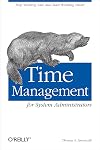
An excellent take on time management with the very specific use cases that render the arguments palatable to the type of character who finds himself in IT operations. I should have read this in 2006. I especially enjoyed the epilogue.
Two quibbles. Firstly, laundry and cleaning aren’t time wasters, but necessities, like changing the backup tape. Those tasks can be delegated, but you should understand that is what is being done—do not just assume that Someone Else will clean up your mess. show more His suggestion of a by-the-pound cleaner is a good one. Secondly, the example Cycle routine described somewhat elides administrative overhead such as commuting, filling out the timesheets, waiting, and running through the Cycle; and offers only a brief glimpse at feedback between planned time and actual task time. But it is, after all, the foundation for a system of continual improvement. show less
Two quibbles. Firstly, laundry and cleaning aren’t time wasters, but necessities, like changing the backup tape. Those tasks can be delegated, but you should understand that is what is being done—do not just assume that Someone Else will clean up your mess. show more His suggestion of a by-the-pound cleaner is a good one. Secondly, the example Cycle routine described somewhat elides administrative overhead such as commuting, filling out the timesheets, waiting, and running through the Cycle; and offers only a brief glimpse at feedback between planned time and actual task time. But it is, after all, the foundation for a system of continual improvement. show less
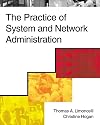
I’ve been reading this book for quite some time now—something like a year.
Not because it’s bad—it’s actually one of the best books I’ve ever read on systems administration. It covers everything you need to know to do the job right from a professional level. You can learn about the technical details for a particular tape drive, server, or desktop operating system anywhere; this book covers the big picture. How to set policies, how to plan for changes, how to deal with problems, show more how to deal with users and managers. Tom (and Christine Hogan, who isn’t mentioned here on the allconsuming page as I write this entry) know what it means to have the power and responsibility of a system administrator, and provide the tools you need to use that power safely and efficiently and handle your responsibilities ethically.
One of the best things about the book is its inclusion of many short anecdotes that illustrate a point that the authors are making. The stories bring things down from the possibly lofty-seeming policy level to the ‘tween-the-racks level of a working sysadmin.
Oh, yeah, why I haven’t finished it—I made the mistake of thinking I could read it at work. As an SA, of course, interruptions occur continuously, so I’ve actually only gotten to read it in the rest room, while I’m getting my hair cut, and during a few other unlikely situations. During a desk clearing, the book ended up on a shelf, “temporarily”, and I forgot about it as new problems, projects, and books came in and had to be dealt with.
(I've finished reading it since writing this review -- it's definitely the best book on the subject.) show less
Not because it’s bad—it’s actually one of the best books I’ve ever read on systems administration. It covers everything you need to know to do the job right from a professional level. You can learn about the technical details for a particular tape drive, server, or desktop operating system anywhere; this book covers the big picture. How to set policies, how to plan for changes, how to deal with problems, show more how to deal with users and managers. Tom (and Christine Hogan, who isn’t mentioned here on the allconsuming page as I write this entry) know what it means to have the power and responsibility of a system administrator, and provide the tools you need to use that power safely and efficiently and handle your responsibilities ethically.
One of the best things about the book is its inclusion of many short anecdotes that illustrate a point that the authors are making. The stories bring things down from the possibly lofty-seeming policy level to the ‘tween-the-racks level of a working sysadmin.
Oh, yeah, why I haven’t finished it—I made the mistake of thinking I could read it at work. As an SA, of course, interruptions occur continuously, so I’ve actually only gotten to read it in the rest room, while I’m getting my hair cut, and during a few other unlikely situations. During a desk clearing, the book ended up on a shelf, “temporarily”, and I forgot about it as new problems, projects, and books came in and had to be dealt with.
(I've finished reading it since writing this review -- it's definitely the best book on the subject.) show less
Time Management for System Administrators: Stop Working Late and Start Working Smart by Thomas A. Limoncelli
As a department head, I've wound up implementing a hybrid model for how I run things. I've adapted several things from Gino Wickman's Traction for running meetings, scoping projects, and defining metrics, but in terms of other day-to-day stuff I've borrowed from Thomas Limoncelli's Time Management for System Administrators.
The embarrassing thing is I first started reading this book at my last job (circa 2013) because of the issues that I had with the day-to-day headaches and interruption show more that technologists like my self deal with daily being in a support role, while also trying to get projects done. I never finished it because I wasn't following the advice. Jumping forward to 2021, yes, the book is a bit dated but the lessons and device are still relevant. I've since tackled my Ever-Growing To-Do List of Doom. This is where I feel Traction can fail with its Issues list and the I/D/S process as it pertains to System Administrators and those in support roles. The Cycle process does make sense and I've since adopted it. Obviously, in my line of work you need an issue tracking system, and I've used one for years, but it does no good if you can't prioritize.
The book isn't life changing, but it makes good points. Substitute Social Media for UseNet or smart phones for PDAs, and so on, it's certainly relevant. It leans a little heavy towards your Unix/Linux user, but that's O'Reilly publishing for you. No matter what type of system administrator you are the advice is valid. The hard part is pulling the trigger and following the advice. However, I can say that by following the advice, I've been able to finish the book (even during lunches at my desk as work). And I'm honestly a lot happier at work as a result.
[Update 2024, second time reading: still a worthwhile book to re-read, as the author suggests. I'm implementing some of the time management and system administration philosophies at work amongst my team.] show less
The embarrassing thing is I first started reading this book at my last job (circa 2013) because of the issues that I had with the day-to-day headaches and interruption show more that technologists like my self deal with daily being in a support role, while also trying to get projects done. I never finished it because I wasn't following the advice. Jumping forward to 2021, yes, the book is a bit dated but the lessons and device are still relevant. I've since tackled my Ever-Growing To-Do List of Doom. This is where I feel Traction can fail with its Issues list and the I/D/S process as it pertains to System Administrators and those in support roles. The Cycle process does make sense and I've since adopted it. Obviously, in my line of work you need an issue tracking system, and I've used one for years, but it does no good if you can't prioritize.
The book isn't life changing, but it makes good points. Substitute Social Media for UseNet or smart phones for PDAs, and so on, it's certainly relevant. It leans a little heavy towards your Unix/Linux user, but that's O'Reilly publishing for you. No matter what type of system administrator you are the advice is valid. The hard part is pulling the trigger and following the advice. However, I can say that by following the advice, I've been able to finish the book (even during lunches at my desk as work). And I'm honestly a lot happier at work as a result.
[Update 2024, second time reading: still a worthwhile book to re-read, as the author suggests. I'm implementing some of the time management and system administration philosophies at work amongst my team.] show less
Time Management for System Administrators: Stop Working Late and Start Working Smart by Thomas A. Limoncelli
Book is a little dated about using PDA's as a database since we've now evolved to using smartphones for our daily planners, but other than that, the principals are timeless. I follow a lot of the principals outlined in the book and it's made me a better organized person at work and life since I apply the same Sys admin principals to my life.
I work as a systems administrator and the issues brought in this book relate pretty bang on to my current situation. I'm always putting out fires, fixing show more problems, filling requests and working on projects. And that is just my day to day duties. Top that with doing an on-call rotation which makes you the go to guy 24hrs for a week makes things tough on family life.
This book was recommended to me by my Team lead, he particularly outlined stress management and how to deal with 'good' stress and the 'bad' one which we all succumb to now and again in our daily lives. show less
I work as a systems administrator and the issues brought in this book relate pretty bang on to my current situation. I'm always putting out fires, fixing show more problems, filling requests and working on projects. And that is just my day to day duties. Top that with doing an on-call rotation which makes you the go to guy 24hrs for a week makes things tough on family life.
This book was recommended to me by my Team lead, he particularly outlined stress management and how to deal with 'good' stress and the 'bad' one which we all succumb to now and again in our daily lives. show less
You May Also Like


Associated Authors
Statistics
- Works
- 8
- Members
- 941
- Popularity
- #27,308
- Rating
- 4.2
- Reviews
- 12
- ISBNs
- 24
- Languages
- 5
- Favorited
- 3