
Sam Slote
Author of Annotations to James Joyce's Ulysses
About the Author
Sam Slote is Associate Professor in the School of English at Trinity College Dublin, Ireland. He is the author of The Silence in Progress of Dante, Mallarm, and Joyce and 'Ulysses' in the Plural: The Variable Editions of Joyce's Novel and the co-editor of Derrida and Joyce: Texts and Contexts, How show more Joyce Wrote 'Finnegans Wake': A Chapter-by-Chapter Genetic Guide, Genitricksling Joyce, and Probes: Genetic Studies in Joyce. In addition to his work on Joyce, he has written on Modernists such as Beckett, Nabokov, Borges, Woolf and Elvis. show less
Works by Sam Slote
Tagged
Common Knowledge
- Nationality
- USA
- Associated Place (for map)
- USA
Members
Reviews
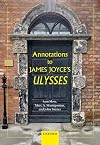
THE TEXT
Don Gifford’s "Ulysses Annotated" has been my companion for years. Now the "Oxford Ulysses Annotations" project has come to take its place. Or has it? A sampling of Sam Slote, Marc Mamigonian, and John Turner’s opus immediately tells me that this is a much more scholarly production: where Gifford’s annotations have the feel of an organically constructed neighborhood, like one of those small Italian towns where one building seems to sprout from another, a patchwork of styles and show more sources, or yet a house furnished over generations where no one ever throws anything away, Slote et al.’s book, while it adds on to the collection of dinnerware, to stick with the metaphor, gets rid of anything the use of which cannot be proved with certainty.
Compare this annotation to 8:258, U.P. in the Oxford edition:
‘U.P, the spelling pronunciation of UP adverb, = over, finished, beyond remedy’ (OED, s.vv. U; u.p.). Partridge gives a citation from 1823 and the term can be found in Charles Dickens’s Oliver Twist: ‘It’s all UP. there, [...] if she lasts a couple of hours, I shall be surprised’ (quoted in the OED). Joyce used the expression in this sense in a letter to Valery Larbaud of 17 October 1928: ‘Apparently I have completely overworked myself and if I don’t get back sight to read it is all U-P up’ (Letters, vol. 3, p. 182). Furthermore, the expressions ‘u.p.’ and ‘u.p. up’ were in wide use in the late nineteenth–early twentieth centuries (John Simpson, JJON).
Now Gifford:
8.258 (158:12). U.p: up — In Charles Dickens’s Oliver Twist, chapter 24, the expression U.P. is used by an apothecary’s apprentice to announce the imminent death of an old woman. In the French edition of Ulysses the postcard is translated fou tu, “you’re nuts, you’ve been screwed, you’re all washed up.” Richard Ellmann suggests: “When erect you urinate rather than ejaculate” (letter, 3 October 1983; see also Ellmann, p. 455n). Another possibility is the designation u. p. for whiskey, meaning underproof, below the legal standard (suggested by Robert T. Byrnes, in 1983 a graduate student in the English Department at UCLA). Still another speculation has to do with the initials that precede the docket numbers in Irish cemeteries; see Adams, pp. 192–93.
While the Oxford edition settles the debate, Gifford opens it up. While Oxford draws on written sources, Gifford is grateful for every last suggestion, however informal it might be. Reading "Ulysses" with Gifford you are constantly made aware of a text that is alive, that keeps eluding attempts at academic capture.
I also appreciate Gifford’s courtesy toward the reader: like Oxford, he annotates the Gabler edition – which, with its line numbering and episodes numbers helpfully indicated in the footers – invites annotation, but he also includes the Modern Library pagination. Personally, I am very fond of the Modern Library edition: a good sturdy classic in an easy-to-handle format. (This contrasts – necessarily -- with both volume of annotations and the Gabler edition, even in the single-volume paperback.)
It’s perhaps because Oxford is above using the common reader's Modern Library edition, that they don’t comment on the initial capitals. Where ML has chapter initials occupying the entire page, Gabler edn. doesn’t even use drop-caps. The initial capital is just like any other capital. But it isn’t. Gifford points out that the 3 initials – S … M … P – stand for the names of the three characters: Stephen Dedalus, Molly Bloom and Poly (Leopold) Bloom; that they are ALSO the three terms of a syllogism: Subject, Middle, and Predicate, and hark back to medieval pedagogy. “The analogue of the syllogism,” writes Gifford, “suggests a logical and narrative structure, which the reader can grasp but of which the characters in the fiction are essentially unaware.” The idea that there is a critical discourse going on in the book, that the book is self-aware, that the characters have no access to a sort of meta-discourse (but perhaps somewhere might be?), throws open many doors, which the Oxford Annotations are rather eager to close.
The Oxford introduction to chapter one, “Telemachus,” gives us the schema:
Time: 8–9 am
Location: Martello Tower, Sandycove
Art: Theology
Colour: white, gold
Symbol: Heir
Technic: Narrative (young)
Correspondences: Stephen: Telemachus, Hamlet; Buck Mulligan: Antinous; Milkwoman: Mentor
Gifford again enlarges: the Stuart Gilbert schema (above) is completed with a second correspondence for Mulligan (also Hamlet’s uncle, Claudius); plus Gifford cites the Carlo Linati schema, as well:
"Symbols: Hamlet, Ireland, and Stephen
Persons (without identifying correspondences): Mentor, Pallas [Athena], the Suitors, and Penelope [Muse]."
Again, where Oxford balances the accounts, Gifford refuses to settle the question.
The Oxford introduction to chapter one focuses on the biographical background relating to the chapter's setting and has a wonderful passage from "Rambles in Eirinn" (1907) by William Bulfin who visited Joyce at the Martello Tower. This is one of those finds that make the Oxford Annotations worthwhile. In contrast to Gifford, however, Oxford avoids drawing any parallels with the "Odyssey" and omits the type of notes where, in Gifford, you can sense the author’s excitement at mapping the Homeric epic onto the Dublin labyrinth that is Ulysses:
"3.153–54 (41.5–6) isle of dreadful thirst: Ireland; also, in Book 4 of The Odyssey, Menelaus remarks that he and his men, becalmed at Pharos, were about to run out of provisions when Proteus’s daughter intervened with advice about her father’s powers of divination."
The Oxford Annotations make the intertextual references much more explicit: e.g. the entire opening to chapter eleven, “Sirens,” is cross-references (see image). In Gifford, following perhaps a less orderly mode of construction, the cross-reference might point forward or backward. And here again, his notes are often more extensive.
For example, Oxford:
11.9: Trilling, trilling: Idolores
From 11.225–26
Then the note at 11.225 annotates the meaning of trilling from the OED, and the note at 11.226, cites the “popular operetta 'Florodora' (1899) composed by Leslie Stuart (British composer, 1863–1928), with book by Owen Hall (pseudonym for James Davis, Irish-born writer and solicitor, 1853–1907), and lyrics by E. Boyd-Jones and Paul Rubens. The actual line the song is ‘Oh, my Dolores, Queen of the Eastern sea.’ The setting of the operetta is a south Pacific island where the heroine, Dolores, falls in love with Frank Abercoed, a disguised nobleman, who sings…” There follows the full first stanza of his aria, which curiously enough omits the refrain cited in full by Gifford in his version of this note:
11.9 (256:9) Trilling, trilling: Idolores – Miss Douce sings a line from the light opera Floradora (1899) (11.225–26 [261:38–39]), music by Leslie Stuart, book by Owen Hall, lyrics by E. Boyd-Jones and Paul Rubens. The opera takes place on a South Sea island that produces Floradora, a world-famous perfume. Idolores, the beautiful and flirtatious heroine, is being pursued (and spoiled) by a host of men, including a nasty villain, but her eventual salvation is ensured when she falls in love with Frank Abercoed (surprisingly enough, a lord in disguise). At the end of Act I they pledge their love, even though they have to part, and Abercoed sings ‘The Shade of the Palm.’ Refrain: {text of the refrain follows}.
The Oxford note reads again much more “authoritative,” more academic… and at the same time much less flavorful than Gifford’s note: Gifford makes you want to ask, OK, so what happened to Dolores and Abercoed in Act II…?
THE PHYSICAL BOOK (or the reason why I docked a star)
Gifford’s book was published by University of California Press. Like any book coming from U. of Cal. Press, the paperback might get bent out of shape but it will survive several house moves and probably an earthquake. Sadly, the same cannot be said of the Oxford hardback. Despite the steep price, you can see cost cutting everywhere (I disagree here with another reviewer who praised the physical book production): when the book lies flat I can see down to the spine (see image). The binding is not sewn, as it should be in any book that’s meant for long-term use -- and (again, at this price tag) as would be expected – if only to honor the scholarly effort that must have taken years to complete. When I look at the top or bottom edge of the block of pages and closely inspect the binding, I can already see pages, or even whole signatures, slipping out of the glue (see image, even though a bit out of focus). It’s only a question of time. “Read with caution!” takes on a double meaning. The lack of headbands (a few pennies saved per book, ok, let's say it's 20p.) makes the shoddy binding all the more visible. Admittedly, the binding quality in the UK has declined over the past decade or so (especially with poor paper quality in paperbacks), but some mainstream publishers, notably Allen Lane (a Penguin imprint) still do sturdy first-edition hardback with sewn binding.
And what about the paper quality? As most academic titles from Oxford, the paper is VERY white (a commonly known fact in publishing: even slightly off-white paper is easier on the eye); cream paper is the most expensive, so we won’t expect it, but the paper chosen here not only is white-white, it also semi-glossy, like magazine paper – although magazines come with colored images which justifies the paper choice and, well, they're magazines. So another downside of the production choices is that, if you are the sort of person who likes to pencil in their own notes, you will find the medium less than satisfactory.
To buy or not to buy? I would have welcomed a print-replica ebook at half the price and happily accessed the text on my iPad, without worrying about future spine injuries. The Oxford publication is definitely for the completist. Yet, contrary to being marketed as the last word on Ulysses, for me it does not supplant Gifford’s book – it’s certainly complements it in many ways, and I look forward to discovering all the new scholarship it brings - but I will go back to Gifford for the freedom of his prose, his eclecticism, and his acceptance of endless ambiguity.
As you can learn from the Ulysses exhibition currently at the Morgan library, Joyce fussed about the color of the cover which he wanted to match that of the Greek flag (was the Greek flag really this sort of snotgreen slash turquoise, like the sea?). I wish the publishers fussed at least a little more about the quality of the physical “product” they are releasing and ensured it is on par with the effort put by the authors into writing of the volume and, last but, oh my purse, not least, justifies the price-tag.
p.s. a copy of the review is on amazon.co.uk with a few images. show less
Don Gifford’s "Ulysses Annotated" has been my companion for years. Now the "Oxford Ulysses Annotations" project has come to take its place. Or has it? A sampling of Sam Slote, Marc Mamigonian, and John Turner’s opus immediately tells me that this is a much more scholarly production: where Gifford’s annotations have the feel of an organically constructed neighborhood, like one of those small Italian towns where one building seems to sprout from another, a patchwork of styles and show more sources, or yet a house furnished over generations where no one ever throws anything away, Slote et al.’s book, while it adds on to the collection of dinnerware, to stick with the metaphor, gets rid of anything the use of which cannot be proved with certainty.
Compare this annotation to 8:258, U.P. in the Oxford edition:
‘U.P, the spelling pronunciation of UP adverb, = over, finished, beyond remedy’ (OED, s.vv. U; u.p.). Partridge gives a citation from 1823 and the term can be found in Charles Dickens’s Oliver Twist: ‘It’s all UP. there, [...] if she lasts a couple of hours, I shall be surprised’ (quoted in the OED). Joyce used the expression in this sense in a letter to Valery Larbaud of 17 October 1928: ‘Apparently I have completely overworked myself and if I don’t get back sight to read it is all U-P up’ (Letters, vol. 3, p. 182). Furthermore, the expressions ‘u.p.’ and ‘u.p. up’ were in wide use in the late nineteenth–early twentieth centuries (John Simpson, JJON).
Now Gifford:
8.258 (158:12). U.p: up — In Charles Dickens’s Oliver Twist, chapter 24, the expression U.P. is used by an apothecary’s apprentice to announce the imminent death of an old woman. In the French edition of Ulysses the postcard is translated fou tu, “you’re nuts, you’ve been screwed, you’re all washed up.” Richard Ellmann suggests: “When erect you urinate rather than ejaculate” (letter, 3 October 1983; see also Ellmann, p. 455n). Another possibility is the designation u. p. for whiskey, meaning underproof, below the legal standard (suggested by Robert T. Byrnes, in 1983 a graduate student in the English Department at UCLA). Still another speculation has to do with the initials that precede the docket numbers in Irish cemeteries; see Adams, pp. 192–93.
While the Oxford edition settles the debate, Gifford opens it up. While Oxford draws on written sources, Gifford is grateful for every last suggestion, however informal it might be. Reading "Ulysses" with Gifford you are constantly made aware of a text that is alive, that keeps eluding attempts at academic capture.
I also appreciate Gifford’s courtesy toward the reader: like Oxford, he annotates the Gabler edition – which, with its line numbering and episodes numbers helpfully indicated in the footers – invites annotation, but he also includes the Modern Library pagination. Personally, I am very fond of the Modern Library edition: a good sturdy classic in an easy-to-handle format. (This contrasts – necessarily -- with both volume of annotations and the Gabler edition, even in the single-volume paperback.)
It’s perhaps because Oxford is above using the common reader's Modern Library edition, that they don’t comment on the initial capitals. Where ML has chapter initials occupying the entire page, Gabler edn. doesn’t even use drop-caps. The initial capital is just like any other capital. But it isn’t. Gifford points out that the 3 initials – S … M … P – stand for the names of the three characters: Stephen Dedalus, Molly Bloom and Poly (Leopold) Bloom; that they are ALSO the three terms of a syllogism: Subject, Middle, and Predicate, and hark back to medieval pedagogy. “The analogue of the syllogism,” writes Gifford, “suggests a logical and narrative structure, which the reader can grasp but of which the characters in the fiction are essentially unaware.” The idea that there is a critical discourse going on in the book, that the book is self-aware, that the characters have no access to a sort of meta-discourse (but perhaps somewhere might be?), throws open many doors, which the Oxford Annotations are rather eager to close.
The Oxford introduction to chapter one, “Telemachus,” gives us the schema:
Time: 8–9 am
Location: Martello Tower, Sandycove
Art: Theology
Colour: white, gold
Symbol: Heir
Technic: Narrative (young)
Correspondences: Stephen: Telemachus, Hamlet; Buck Mulligan: Antinous; Milkwoman: Mentor
Gifford again enlarges: the Stuart Gilbert schema (above) is completed with a second correspondence for Mulligan (also Hamlet’s uncle, Claudius); plus Gifford cites the Carlo Linati schema, as well:
"Symbols: Hamlet, Ireland, and Stephen
Persons (without identifying correspondences): Mentor, Pallas [Athena], the Suitors, and Penelope [Muse]."
Again, where Oxford balances the accounts, Gifford refuses to settle the question.
The Oxford introduction to chapter one focuses on the biographical background relating to the chapter's setting and has a wonderful passage from "Rambles in Eirinn" (1907) by William Bulfin who visited Joyce at the Martello Tower. This is one of those finds that make the Oxford Annotations worthwhile. In contrast to Gifford, however, Oxford avoids drawing any parallels with the "Odyssey" and omits the type of notes where, in Gifford, you can sense the author’s excitement at mapping the Homeric epic onto the Dublin labyrinth that is Ulysses:
"3.153–54 (41.5–6) isle of dreadful thirst: Ireland; also, in Book 4 of The Odyssey, Menelaus remarks that he and his men, becalmed at Pharos, were about to run out of provisions when Proteus’s daughter intervened with advice about her father’s powers of divination."
The Oxford Annotations make the intertextual references much more explicit: e.g. the entire opening to chapter eleven, “Sirens,” is cross-references (see image). In Gifford, following perhaps a less orderly mode of construction, the cross-reference might point forward or backward. And here again, his notes are often more extensive.
For example, Oxford:
11.9: Trilling, trilling: Idolores
From 11.225–26
Then the note at 11.225 annotates the meaning of trilling from the OED, and the note at 11.226, cites the “popular operetta 'Florodora' (1899) composed by Leslie Stuart (British composer, 1863–1928), with book by Owen Hall (pseudonym for James Davis, Irish-born writer and solicitor, 1853–1907), and lyrics by E. Boyd-Jones and Paul Rubens. The actual line the song is ‘Oh, my Dolores, Queen of the Eastern sea.’ The setting of the operetta is a south Pacific island where the heroine, Dolores, falls in love with Frank Abercoed, a disguised nobleman, who sings…” There follows the full first stanza of his aria, which curiously enough omits the refrain cited in full by Gifford in his version of this note:
11.9 (256:9) Trilling, trilling: Idolores – Miss Douce sings a line from the light opera Floradora (1899) (11.225–26 [261:38–39]), music by Leslie Stuart, book by Owen Hall, lyrics by E. Boyd-Jones and Paul Rubens. The opera takes place on a South Sea island that produces Floradora, a world-famous perfume. Idolores, the beautiful and flirtatious heroine, is being pursued (and spoiled) by a host of men, including a nasty villain, but her eventual salvation is ensured when she falls in love with Frank Abercoed (surprisingly enough, a lord in disguise). At the end of Act I they pledge their love, even though they have to part, and Abercoed sings ‘The Shade of the Palm.’ Refrain: {text of the refrain follows}.
The Oxford note reads again much more “authoritative,” more academic… and at the same time much less flavorful than Gifford’s note: Gifford makes you want to ask, OK, so what happened to Dolores and Abercoed in Act II…?
THE PHYSICAL BOOK (or the reason why I docked a star)
Gifford’s book was published by University of California Press. Like any book coming from U. of Cal. Press, the paperback might get bent out of shape but it will survive several house moves and probably an earthquake. Sadly, the same cannot be said of the Oxford hardback. Despite the steep price, you can see cost cutting everywhere (I disagree here with another reviewer who praised the physical book production): when the book lies flat I can see down to the spine (see image). The binding is not sewn, as it should be in any book that’s meant for long-term use -- and (again, at this price tag) as would be expected – if only to honor the scholarly effort that must have taken years to complete. When I look at the top or bottom edge of the block of pages and closely inspect the binding, I can already see pages, or even whole signatures, slipping out of the glue (see image, even though a bit out of focus). It’s only a question of time. “Read with caution!” takes on a double meaning. The lack of headbands (a few pennies saved per book, ok, let's say it's 20p.) makes the shoddy binding all the more visible. Admittedly, the binding quality in the UK has declined over the past decade or so (especially with poor paper quality in paperbacks), but some mainstream publishers, notably Allen Lane (a Penguin imprint) still do sturdy first-edition hardback with sewn binding.
And what about the paper quality? As most academic titles from Oxford, the paper is VERY white (a commonly known fact in publishing: even slightly off-white paper is easier on the eye); cream paper is the most expensive, so we won’t expect it, but the paper chosen here not only is white-white, it also semi-glossy, like magazine paper – although magazines come with colored images which justifies the paper choice and, well, they're magazines. So another downside of the production choices is that, if you are the sort of person who likes to pencil in their own notes, you will find the medium less than satisfactory.
To buy or not to buy? I would have welcomed a print-replica ebook at half the price and happily accessed the text on my iPad, without worrying about future spine injuries. The Oxford publication is definitely for the completist. Yet, contrary to being marketed as the last word on Ulysses, for me it does not supplant Gifford’s book – it’s certainly complements it in many ways, and I look forward to discovering all the new scholarship it brings - but I will go back to Gifford for the freedom of his prose, his eclecticism, and his acceptance of endless ambiguity.
As you can learn from the Ulysses exhibition currently at the Morgan library, Joyce fussed about the color of the cover which he wanted to match that of the Greek flag (was the Greek flag really this sort of snotgreen slash turquoise, like the sea?). I wish the publishers fussed at least a little more about the quality of the physical “product” they are releasing and ensured it is on par with the effort put by the authors into writing of the volume and, last but, oh my purse, not least, justifies the price-tag.
p.s. a copy of the review is on amazon.co.uk with a few images. show less
Statistics
- Works
- 10
- Members
- 44
- Popularity
- #346,249
- Rating
- 3.8
- Reviews
- 1
- ISBNs
- 11