
Richard S. Dunn (1928–2022)
Author of The Age of Religious Wars, 1559–1715
Works by Richard S. Dunn
Associated Works
The Oxford History of the British Empire, Volume 1 : The Origins of Empire: British Overseas Enterprise to the Close of the Seventeenth Century (1998) — Contributor — 287 copies, 1 review
Colonial British America: Essays in the New History of the Early Modern Era (1983) — Contributor — 114 copies
Cultivation and Culture: Labor and the Shaping of Slave Life in the Americas (1993) — Contributor — 37 copies
Tagged
Common Knowledge
- Canonical name
- Dunn, Richard S.
- Legal name
- Dunn, Richard Slator
- Birthdate
- 1928-08-09
- Date of death
- 2022-01-24
- Gender
- male
- Education
- Harvard College (BA|1950)
Princeton University (MA|1952)
Princeton University (PhD|History|1955) - Occupations
- Teacher of History, Princeton University (1954-1955)
Teacher of History, University of Michigan (1955-1957)
Professor of History, University of Pennsylvania (1957-1996)
Professor Emeritus, History of the University of Pennsylvania (1996-) - Organizations
- Philadelphia Center for Early American Studies (founder)
American Historical Association
American Antiquarian Society
Organization of American Historians
Massachusetts Historical Society
Historical Society of Pennsylvania (show all 8)
Library Company of Philadelphia
Institute of Early American History and Culture Associates - Awards and honors
- Guggenheim Fellowship (1966-67)
American Council of Learned Societies Fellow (1977)
Fellow of the Queen's College, Oxford (1987-88)
Lindback Teaching Award (1993)
American Philosophical Society (1998)
American Academy of Arts and Sciences (2000) - Relationships
- Dunn, Mary Maples (wife)
Dunn, William P. (father) - Short biography
- Richard Slator Dunn (1928-)
Richard Slator Dunn retired in 1996 and was elected Professor Emeritus of History of the University of Pennsylvania.
Richard Dunn was born in Minneapolis, Minnesota, in 1928. His father, William P. Dunn was himself a Professor of English of the University of Minnesota.
Richard graduated from Harvard College with his Bachelor of Art in 1950, and took his Masters of Art (1952) and Philosophical Doctorate in History (1955) at Princeton University, where he also started his teaching career in 1954.
"Belatedly and almost accidentally I became interested in the history of slavery ... Eventually I drifted into American colonial history because I liked to work with Frank Craven, who taught at Princeton and was a specialist in the history of the seventeenth-century southern colonies".
After he completed his Ph.D., Richard taught at the University of Michigan from 1955 to 1957. He joined the faculty of the History Department of the University of Pennsylvania in 1957 and began working on his first book, published in 1962 as "Puritans and Yankees: The Winthrop Dynasty of New England, 1630-1717".
He was then promoted to Associate Professor in 1963 and after a year in England researching at the Public Record Office in the early 1960s he followed a new path of inquiry into the social development of the slave-based English Caribbean colonies of Barbados, Jamaica, and the Leeward Islands during the course of the seventeenth century. Some time after his promotion to full Professor (1968) he completed both "The Age of Religious Wars, 1559-1689" (1970) and "Sugar and Slaves: The Rise of the Planter Class in the English West Indies, 1624-1713" (1972).
"The PRO's manuscript Barbados census of 1680 where a far more detailed and probing set of documents than any mainland census for the colonial period and I saw at once that here was the evidence I needed to analyze the social structure of this booming sugar colony".
By 1972, Richard was appointed Chairman of the Department of History, a position he held until 1977. He founded the Philadelphia Center for Early American Studies the following year and served as the departments first director.
His two big editorial projects that he dis with his wife edited with Mary Maples Dunn, "The Papers of William Penn" in the 1980's and "The Journal of John Winthrop" in the 1990s, where competed while he had been working on his comparative study of Mesopotamia Estate in Jamaica and Mount Airy Plantation in Virginia. This important study, although allowing Richard to enabled me to reconstruct the individual biographies of a 1,103 Jamaican slaves who lived there between 1762 and 1833, and the lives of the 979 Virginian slaves who lived there between 1808 and 1865, the any slavery is abhorrent, it may have the adverse effect of allowing the idea that all slave colonies - particularly in the Caribbean Islands - are generally to be painted with the same brush. This work is to appear soon as "The Peoples of Mesopotamia and Mount Airy: Slave Life in Jamaica and Virginia, 1762-1865".
In addition to his own publications, he has contributed chapters to about a dozen of books, among them Seventeenth-century America: Essays in Colonial History (1959), Anglo-American Political Relations, 1675-1775 (1970), Early Maryland in a Wider World (1982), The World of William Penn (1986), and Cultivation and Culture: Labor and the Shaping of Slave Life in the Americas (1993).
Richard was appointed editor of the Early American Studies series (1992), and he is a member of American Historical Association, American Antiquarian Society, Organization of American Historians, Massachusetts Historical Society, Historical Society of Pennsylvania, Library Company of Philadelphia, and Institute of Early American History and Culture Associates.
Among the numerous honors and awards he won throughout his career, Richard was elected Guggenheim Fellow (1966-1967), granted the American Council of Learned Societies Fellowship (1977), appointed Fellow of the Queen's College, Oxford University (1987-1988), 'The Papers of William Penn' won a Distinguished Book Award from the Society of Colonial Wars (1990), and the Lindback Teaching Award was presented to him by the University of Pennsylvania (1993).
Richard Dunn retired in 1996 and was elected Professor Emeritus of History of the University of Pennsylvania.
Selected books and articles
The Age of Religious Wars, 1559-1689 (1970)
Sugar and Slaves: The Rise of the Planter Class in the English West Indies, 1624-1713 (1972)
The Papers of William Penn, ed. Mary Maples Dunn and others (1981-1987)
The Journal of John Winthrop, 1630-1649 ed. Laetitia Yeandle (1996)
Sugar and Slaves: The Rise of the Planter Class in the English West Indies, 1624-1713 (2000)
Sources
1. Richard S. Dunn, "The Barbados Census of 1680: Profile of the Richest Colony in English America," William and Mary Quarterly, 3d Ser., XXVI (1969),. 7-8
2. Archives - University of Pennsylvania (1995)
3. A Conversation with Richard S. Dunn (1997)
4. Interview - "Common Place" (July 2001) - Cause of death
- COVID-19
- Nationality
- USA
- Birthplace
- Minneapolis, Minnesota, USA
- Places of residence
- Minneapolis, Minnesota, USA
Philadelphia, Pennsylvania, USA - Place of death
- Winston-Salem, North Carolina, USA
- Associated Place (for map)
- USA
Members
Reviews
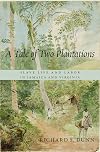
Dunn compares slave life on two plantations, Mesopotamia and Mount Airy in the generations before emancipation (1833 in Jamaica, 1865 in Virginia). Though Dunn doesn’t claim that they’re entirely representative of the two systems, he argues that they typify the key demographic difference—Jamaica’s slave population continually shrank because (often absentee) owners worked the slaves to death or long-term disability, while Virginia’s slave population continually grew, leading owners show more to expand and sell slaves into the deep South, ripping families apart. Thus, the cruelties of the system were inflicted in somewhat different ways. Notably, the British West Indies imported far more enslaved people from Africa (2.3 million before the close of the British slave trade, compared to 388,000 to the mainland, but the population on emancipation was much smaller because of population increase/decrease—775,000 enslaved people in the sugar islands and 1.4 million enslaved in the U.S. by 1807, when the slave trade ended. Blacks outnumbered whites by ten to one in Jamaica, while whites outnumbered blacks six to four in Virginia, contributing to unrest and the use of brutality in Jamaica—also enhanced by the absentee owners who saw Jamaica and its enslaved people as a resource to exploit, while Virginians also had residential settlements. A greater percentage of white Virginian householders owned slaves—more than half did—compared to white Jamaicans.
Jamaican slavery couldn’t long survive the termination of the slave trade, while American slavery could because of its ability to produce—and then drain off—surplus population. The “high-intensity production units” for cotton in the Gulf States and Mississippi valley, constantly renewed by Virginia imports, more closely resembled the Jamaican sugar estates. Mount Airy moved significant numbers of enslaved people to Kentucky, either to the enslavers’ Kentucky properties or sold to others (and while the enslaved people may have been told they were reuniting with family already moved to Kentucky, a substantial number were sold off on arrival).
Dunn admits with what seems like real chagrin that in the 1970s, when he was just starting to work on the project, he wrote that it was better to be a slave in Virginia than in Jamaica, where brutal punishments were common and enslaved people were worked to death or disability. He tries to complicate that story in this volume, but I wish he’d just said “wow, that was some Sophie’s Choice bullshit framing I used, and too subject to misuse (as indeed it was reported in the press as confirmation that American slavery wasn’t all that bad) to admit of justification.”
In Mesopotamia, the owners even charged £100 to white fathers who wanted to free their colored enslaved children, which may have contributed to the somewhat lower percentage of African-born slaves compared to other Jamaican plantations. Among other things, though there were in theory lands set aside for enslaved people to grow their own provisions, they were laid out 3-5 miles away from the slave village, apparently a deliberate choice to make them waste time in transit and to discourage them from producing extra food that they could have sold in the market. Most of the year, they worked six days a week and could only cultivate food on Sundays.
One Jamaican overseer/planter kept a diary in the 18th century reporting “the large number of lashes” he administered in daily punishments and his frequent sexual abuse of enslaved women. In his last two years in England, he recorded twenty acts of “fornication” with various women, while upon arrival in Jamaica he began recording 200 acts per year. “[H]e recorded numerous occasions in which two or three white males came to his plantation, got roaring drunk, and commandeered their favorite slave women for sex.” He recorded white men punishing enslaved people for no reason—or really, because they couuld. Enslaved people on Caribbean sugar plantations had shorter lives and fewer children than enslaved people forced to do any other form of labor. Dunn attributes disproportionate male deaths, in the midst of this wholesale slaughter, to the extra “emasculation” inflicted on African men. We don’t have a word for “efeminization,” but Dunn tells the story of Dido, who was punished for having stillborn twins, then punished again for miscarrying, and was recorded as recalcitrant as a result. With no Canada to flee to, Jamaican runaways often stayed away only for relatively short periods.
Dunn also spends time with the Moravian missionaries at Mesopotamia. They were never very successful in converting Africans or Afro-Jamaicans, but I was fascinated by their emphasis on Christ’s wounds and “a sensuous relationship with Jesus, illustrated by Moravian depictions of the Saviour’s side wound at his crucifixion in the shape of a vagina.”
The Virginia side of the story has its own horrors, though Dunn focuses mainly on the tearing apart of families. He doubts all cotton planters were “as grossly abusive” as those documented by Edward Baptist. The Mount Airy slaves apparently did not produce as much cotton per enslaved person as Baptist calculates, suggesting that the technologies of terror weren’t as advanced for them. Many Mount Airy slaves were “among the 30-40 percent of the migrating slaves who were moved to the cotton states by their masters,” who were expanding into those states. Of course, a fifth of them were sold when they arrived in Alabama, a fifth “experienced serious abuse in the 1830s, and all of them were forced to work very hard. But slave life for the Mount Airy people in Alabama does not appear to have been hugely different from slave life for the Mount Airy people in Virginia.” In particular, they often had a chance to form families, before those families were torn apart.
I find it very interesting, and telling, that Dunn doesn’t use “emasculation” to interpret the situation of enslaved Virginian men, even though their servility was equally forced and “their” women (his framing, not mine) and families were equally subject to arbitrary appropriation by whites. Interracial sex was prevalent but secret, not open as in Mesopotamia. Overt resistance was much riskier in the U.S. than in Jamaica, with the larger white Virginia population and more effective white surveillance. Jamaican slavery depended on the collaboration of “head men”—enslaved people set to oversee other enslaved people—while U.S. slavery didn’t; correspondingly, Jamaican head men were more likely to join the Moravian church and to turn in runaways than the average enslaved person, while skilled/household workers in Virginia were more likely to run away than field workers, perhaps simply because of greater opportunity.
Dunn also discusses the immediate post-abolition situation. In Jamaica, abolition came in stages, with forced “apprenticeship” for several years and monetary compensation to slaveowners. Freed Jamaicans preferred individual work to gang labor, and sometimes rejected wages at their “home” plantations in favor of supposedly lower offers at neighboring plantations. In response to abolition, the planters “planned to eject all freed slaves not willing to work as regular wage laborers from their estates.” Women who wanted to withdraw from field labor objected strongly, and also the formerly enslaved tended to believe that “the houses they had built and inhabited, as well as the provision grounds they had been tending, in many cases for several generations, belonged to them.” Life was very hard for these new Jamaican peasants, but still births began to outstrip deaths for the first time. White oppression continued for decades; Jamaicans didn’t achieve citizenship until 1962.
William Tayloe, who owned Mount Airy at abolition, by contrast said “I cannot turn off the old who have worked for me, nor starve the children. We need not expect to live as heretofore.” But, as Dunn points out “he soon changed his tune,” suggesting sending them off to the poorhouse or the Freedman’s Bureau. Although he was intimately familiar with his former human property, he also considered them unfit for freedom—his duty was a paternalistic one. Meanwhile, the U.S. underwent greater political change than Jamaica after emancipation, but much less economic and social change—Jamaican freedmen got access to land, and U.S. freedmen did not. And the political change was, of course, tragically shortlived. show less
Jamaican slavery couldn’t long survive the termination of the slave trade, while American slavery could because of its ability to produce—and then drain off—surplus population. The “high-intensity production units” for cotton in the Gulf States and Mississippi valley, constantly renewed by Virginia imports, more closely resembled the Jamaican sugar estates. Mount Airy moved significant numbers of enslaved people to Kentucky, either to the enslavers’ Kentucky properties or sold to others (and while the enslaved people may have been told they were reuniting with family already moved to Kentucky, a substantial number were sold off on arrival).
Dunn admits with what seems like real chagrin that in the 1970s, when he was just starting to work on the project, he wrote that it was better to be a slave in Virginia than in Jamaica, where brutal punishments were common and enslaved people were worked to death or disability. He tries to complicate that story in this volume, but I wish he’d just said “wow, that was some Sophie’s Choice bullshit framing I used, and too subject to misuse (as indeed it was reported in the press as confirmation that American slavery wasn’t all that bad) to admit of justification.”
In Mesopotamia, the owners even charged £100 to white fathers who wanted to free their colored enslaved children, which may have contributed to the somewhat lower percentage of African-born slaves compared to other Jamaican plantations. Among other things, though there were in theory lands set aside for enslaved people to grow their own provisions, they were laid out 3-5 miles away from the slave village, apparently a deliberate choice to make them waste time in transit and to discourage them from producing extra food that they could have sold in the market. Most of the year, they worked six days a week and could only cultivate food on Sundays.
One Jamaican overseer/planter kept a diary in the 18th century reporting “the large number of lashes” he administered in daily punishments and his frequent sexual abuse of enslaved women. In his last two years in England, he recorded twenty acts of “fornication” with various women, while upon arrival in Jamaica he began recording 200 acts per year. “[H]e recorded numerous occasions in which two or three white males came to his plantation, got roaring drunk, and commandeered their favorite slave women for sex.” He recorded white men punishing enslaved people for no reason—or really, because they couuld. Enslaved people on Caribbean sugar plantations had shorter lives and fewer children than enslaved people forced to do any other form of labor. Dunn attributes disproportionate male deaths, in the midst of this wholesale slaughter, to the extra “emasculation” inflicted on African men. We don’t have a word for “efeminization,” but Dunn tells the story of Dido, who was punished for having stillborn twins, then punished again for miscarrying, and was recorded as recalcitrant as a result. With no Canada to flee to, Jamaican runaways often stayed away only for relatively short periods.
Dunn also spends time with the Moravian missionaries at Mesopotamia. They were never very successful in converting Africans or Afro-Jamaicans, but I was fascinated by their emphasis on Christ’s wounds and “a sensuous relationship with Jesus, illustrated by Moravian depictions of the Saviour’s side wound at his crucifixion in the shape of a vagina.”
The Virginia side of the story has its own horrors, though Dunn focuses mainly on the tearing apart of families. He doubts all cotton planters were “as grossly abusive” as those documented by Edward Baptist. The Mount Airy slaves apparently did not produce as much cotton per enslaved person as Baptist calculates, suggesting that the technologies of terror weren’t as advanced for them. Many Mount Airy slaves were “among the 30-40 percent of the migrating slaves who were moved to the cotton states by their masters,” who were expanding into those states. Of course, a fifth of them were sold when they arrived in Alabama, a fifth “experienced serious abuse in the 1830s, and all of them were forced to work very hard. But slave life for the Mount Airy people in Alabama does not appear to have been hugely different from slave life for the Mount Airy people in Virginia.” In particular, they often had a chance to form families, before those families were torn apart.
I find it very interesting, and telling, that Dunn doesn’t use “emasculation” to interpret the situation of enslaved Virginian men, even though their servility was equally forced and “their” women (his framing, not mine) and families were equally subject to arbitrary appropriation by whites. Interracial sex was prevalent but secret, not open as in Mesopotamia. Overt resistance was much riskier in the U.S. than in Jamaica, with the larger white Virginia population and more effective white surveillance. Jamaican slavery depended on the collaboration of “head men”—enslaved people set to oversee other enslaved people—while U.S. slavery didn’t; correspondingly, Jamaican head men were more likely to join the Moravian church and to turn in runaways than the average enslaved person, while skilled/household workers in Virginia were more likely to run away than field workers, perhaps simply because of greater opportunity.
Dunn also discusses the immediate post-abolition situation. In Jamaica, abolition came in stages, with forced “apprenticeship” for several years and monetary compensation to slaveowners. Freed Jamaicans preferred individual work to gang labor, and sometimes rejected wages at their “home” plantations in favor of supposedly lower offers at neighboring plantations. In response to abolition, the planters “planned to eject all freed slaves not willing to work as regular wage laborers from their estates.” Women who wanted to withdraw from field labor objected strongly, and also the formerly enslaved tended to believe that “the houses they had built and inhabited, as well as the provision grounds they had been tending, in many cases for several generations, belonged to them.” Life was very hard for these new Jamaican peasants, but still births began to outstrip deaths for the first time. White oppression continued for decades; Jamaicans didn’t achieve citizenship until 1962.
William Tayloe, who owned Mount Airy at abolition, by contrast said “I cannot turn off the old who have worked for me, nor starve the children. We need not expect to live as heretofore.” But, as Dunn points out “he soon changed his tune,” suggesting sending them off to the poorhouse or the Freedman’s Bureau. Although he was intimately familiar with his former human property, he also considered them unfit for freedom—his duty was a paternalistic one. Meanwhile, the U.S. underwent greater political change than Jamaica after emancipation, but much less economic and social change—Jamaican freedmen got access to land, and U.S. freedmen did not. And the political change was, of course, tragically shortlived. show less

Variations on a theme. Whether or not you accept Huntington's thesis of the so-called "Clash of Civilizations," it behoves us to remember that before the Treaty of Westphalia established the nation-state (thus setting the stage for much of what we think of as modernity) that Europe had exhausted itself waging insensate religious wars. A slim but grim overview of what it's like when you can't countenance your neighbor not being on your grid.
This volume documents the final eighteen years of William Penn's life, from 1701 to 1718. It opens with his last months as resident proprietor of Pennsylvania -- a moment of great importance in the political history of the colony. It ends with his death on 30 July 1718, after a lingering illness.
This first volume, spanning the first thirty-five years of William Penn's life, from 1644 to 1679, documents his activities as a young Quaker activist.
Lists
Awards


You May Also Like


Associated Authors
Statistics
- Works
- 13
- Also by
- 6
- Members
- 909
- Popularity
- #28,218
- Rating
- 3.8
- Reviews
- 7
- ISBNs
- 35
