
Oliver August
Author of Inside the Red Mansion: On the Trail of China's Most Wanted Man
About the Author
Works by Oliver August
Tagged
Common Knowledge
- Birthdate
- 1971-07-19
- Gender
- male
- Education
- University of Oxford
City University, London - Occupations
- journalist
- Organizations
- The Times
- Nationality
- UK
- Associated Place (for map)
- UK
Members
Reviews
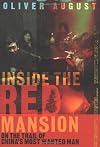
German-born, Oxford-educated journalist, Oliver August, spent seven years tracking the story of Chinese businessman/gangster/fugitive Lai Changxing in order to write Inside the Red Mansion: On the Trail of China's Most Wanted Man. By the time August arrived in China in 1999 as a London Times reporter, Lai was already on the lam, the subject of a massive criminal investigation by the Chinese government.
August followed Lai’s trail geographically, socially, and mythically – renting an show more apartment in Xiamen, Lai’s home base; visiting the Lai's pleasure palace, the Red Mansion; talking to anyone he could find who ever met Lai; and parsing internet rumors of Lai that painted him as either the greatest entrepreneur of modern China, a Mafioso-style criminal, or a Robin Hood combination of both.
Lai’s story is a fascinating one, but the book is much larger than his story. Oliver uses Lai’s individual reinvention from illiterate peasant to billionaire tycoon as the vehicle to discuss the tumultuous decades of China’s reinvention as a dominate market economy. He gives enough of China’s 20th Century history to give context to the story, and he uses clues about Lai as topical springboards for examination of different aspects of modern Chinese life. For instance, Oliver writes about popular midnight golf because he heard Lai liked to play, the world’s largest fois gras farm because Lai knew the enterprising owner, and an “underground” Christmas pageant attended by 5,000 Chinese Christians because he read a rumor that Lai had converted.
Oliver’s discussion is not merely anecdotal and entertaining, although it is both. His analysis of the political and cultural climate in China is astute, and he does not shy away from tackling the bigger issues facing the country – primarily the need for transparency in government, democracy, and the rule of law. As Oliver explains, rogues like Lai flourished because the government in Beijing needed them to change the economy while the government continued to maintain “official” positions contrary to the economic upheaval. Only when the government changes will real change come to China.
Also posted on Rose City Reader. show less
August followed Lai’s trail geographically, socially, and mythically – renting an show more apartment in Xiamen, Lai’s home base; visiting the Lai's pleasure palace, the Red Mansion; talking to anyone he could find who ever met Lai; and parsing internet rumors of Lai that painted him as either the greatest entrepreneur of modern China, a Mafioso-style criminal, or a Robin Hood combination of both.
Lai’s story is a fascinating one, but the book is much larger than his story. Oliver uses Lai’s individual reinvention from illiterate peasant to billionaire tycoon as the vehicle to discuss the tumultuous decades of China’s reinvention as a dominate market economy. He gives enough of China’s 20th Century history to give context to the story, and he uses clues about Lai as topical springboards for examination of different aspects of modern Chinese life. For instance, Oliver writes about popular midnight golf because he heard Lai liked to play, the world’s largest fois gras farm because Lai knew the enterprising owner, and an “underground” Christmas pageant attended by 5,000 Chinese Christians because he read a rumor that Lai had converted.
Oliver’s discussion is not merely anecdotal and entertaining, although it is both. His analysis of the political and cultural climate in China is astute, and he does not shy away from tackling the bigger issues facing the country – primarily the need for transparency in government, democracy, and the rule of law. As Oliver explains, rogues like Lai flourished because the government in Beijing needed them to change the economy while the government continued to maintain “official” positions contrary to the economic upheaval. Only when the government changes will real change come to China.
Also posted on Rose City Reader. show less
Oliver August used the case of Lai Changxing (賴昌星), the near illiterate rice farmer who ran a multi billion dollar empire of real estate and smuggling, to describe how China and its people transformed themselves in a decade of double digit economic growth, flexible rule of law, and corruption.
He did so by describing his endeavours to meet people who knew Lai (as well as Lai himself during his refuge in Canada) and the stories they told him. This also makes the book an example of the show more genre "Westerner learns to understand mysterious China". This improves in the second half of the book. With a slight love for the bizarre, the result is in an entertaining read.
In 2012 Lai was convicted to life imprisonment in China. show less
He did so by describing his endeavours to meet people who knew Lai (as well as Lai himself during his refuge in Canada) and the stories they told him. This also makes the book an example of the show more genre "Westerner learns to understand mysterious China". This improves in the second half of the book. With a slight love for the bizarre, the result is in an entertaining read.
In 2012 Lai was convicted to life imprisonment in China. show less
Watered down. What a great idea for a book, and the story seems relatively unknown in the modern press. With all the attention China is getting, especially the surge in entrepreneurship and corruption on the margins of regulation and government - incredibly interesting to look at the cover-boy of this trend. However, the author stretches our what should be a tight 100 or 140 page book into a 200+ page ramble. To give it its due, it's subtitle does say 'On the Trail' of China's most wanted show more man. What that means in this book is 1/5th facts about the man and specific search detective and research information, and 4/5th anecdotes about the author's personal friendships, views on entrepreneurship and China, etc. All woven together so that there's no way for the reader to cut to the parts about China's most wanted man. Reader is left almost forced to read about the authors adventures -- to his credit, writing is fine, and also to give him his due, there's just not that much data forthcoming from his friends, since many of them were corrupt government officials. If you're looking for a non-fiction adventure, and have read American mafia stores of the FBI vs. the Mob, this will let you down. show less
An easy read that is a good book to relax with and full of interesting facts about Germany and the Germans.
Statistics
- Works
- 2
- Members
- 109
- Popularity
- #178,010
- Rating
- 3.3
- Reviews
- 5
- ISBNs
- 17
- Languages
- 3