
Novuyo Rosa Tshuma
Author of House of Stone: A Novel
About the Author
Image credit: GoRealr Studios
Works by Novuyo Rosa Tshuma
I Am Nala 1 copy
Associated Works
New Daughters of Africa: An International Anthology of Writing by Women of African Descent (2019) — Contributor — 115 copies, 1 review
McSweeney's 52: In Their Faces a Landmark: Stories of Movement and Displacement (2018) — Contributor — 44 copies, 3 reviews
Tagged
Common Knowledge
- Birthdate
- 1988
- Gender
- female
- Education
- University of Witwatersrand (BComm)
University of Iowa Writers' Workshop (MFA)
University of Houston (PhD) - Occupations
- fiction editor, Bare Life Review
writing professor, Emerson University
convener, Kwantuthu Writers’ Workshop
co-founder, Deputy Editor, Jalada - Nationality
- Zimbabwe
- Birthplace
- Bulawayo, Zimbabwe
- Places of residence
- Houston, Texas, USA
- Map Location
- Zimbabwe
Members
Reviews
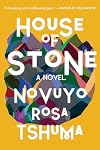
This is a good book. I'm surprised more people haven't read it.
It's been months since I've finished reading House of Stone and still I cannot stop thinking about it. Many scenes and details are just seared into my brain. The pathos, the horror, the rhythm of it all will stick with you with a vividness that few books manage.
The more I think about House of Stone, the more I appreciate how well-crafted it is. Voice, structure, style, pacing, and whatever else you can think of. The reader is show more engaged. There's this atmosphere of unrelenting dread, and also a particular sharpness and humor to it that really balances things out.
This book is uniquely affecting. There are those horrifying shocking bits, but there's also something else--something that creeps under your skin and settles there as you read. The narrator's voice is unique. It grabs you, wraps around you, holds you, suffocates you. You'll regard our narrator with a mixture of pity and disgust and curiosity and, importantly, empathy. You'll squirm but you won't look away.
The structure of this book takes us in and out of memory. Thematically, House of Stone focuses a lot on history and who controls it. How people remember, and how they forget. A lot of official media, to this day, still refers to Gukurahundi as a "disturbance" rather than a "genocide." Awkwardly, sheepishly skirt around the subject. In this book, we observe the dissonance that arises from living in such an environment: survivors at war with their own memories, some trying to live like the state suggests, like it didn't happen. Zamani has to coax his surrogate parents' stories out, almost against their will. Even then, we never get to hear Agnes and Abednego's stories from their own lips-- all we get is Zamani's dramatizations. What does it mean to let someone else take control of your own family history? show less
It's been months since I've finished reading House of Stone and still I cannot stop thinking about it. Many scenes and details are just seared into my brain. The pathos, the horror, the rhythm of it all will stick with you with a vividness that few books manage.
The more I think about House of Stone, the more I appreciate how well-crafted it is. Voice, structure, style, pacing, and whatever else you can think of. The reader is show more engaged. There's this atmosphere of unrelenting dread, and also a particular sharpness and humor to it that really balances things out.
This book is uniquely affecting. There are those horrifying shocking bits, but there's also something else--something that creeps under your skin and settles there as you read. The narrator's voice is unique. It grabs you, wraps around you, holds you, suffocates you. You'll regard our narrator with a mixture of pity and disgust and curiosity and, importantly, empathy. You'll squirm but you won't look away.
The structure of this book takes us in and out of memory. Thematically, House of Stone focuses a lot on history and who controls it. How people remember, and how they forget. A lot of official media, to this day, still refers to Gukurahundi as a "disturbance" rather than a "genocide." Awkwardly, sheepishly skirt around the subject. In this book, we observe the dissonance that arises from living in such an environment: survivors at war with their own memories, some trying to live like the state suggests, like it didn't happen. Zamani has to coax his surrogate parents' stories out, almost against their will. Even then, we never get to hear Agnes and Abednego's stories from their own lips-- all we get is Zamani's dramatizations. What does it mean to let someone else take control of your own family history? show less
A fantastic story made all the more compelling by the real-world history; Zimbabwe oppressed by colonial Great Britain and then once independent in 1980, having Robert Mugabe turn in to a brutal dictator and massacre civilians of the minority Ndebele group at Gukurahundi. It reminded me of the postcolonial books ‘The Poisonwood Bible’ (the Congo) and ‘What is the What’ (Sudan) which I also loved as much for the education as the writing.
The way Tshuma uses the tale of broken show more patrilineage across generations, with one man fathered out of wedlock by a white colonist and another by a rapist who committed atrocities seems to symbolize the plight of the country over the past century, and still trying to pick up the pieces today, e.g. searching for one’s true family, searching for one’s true country. The narrator is a young man who gradually uncovers the truth about the past in his country and the lives of the family he’s trying to ingratiate himself into, and we ourselves gradually begin to understand more about him. It’s a wonderful, chilling character, and the story is very well told.
The book is more about Gukurahundi and those who carried out Mugabe’s wishes (the current president, Emerson “The Crocodile” Mnangawa, and Perence “Black Jesus” Shiri included), but there are also references to British atrocities via chemical and biological warfare engineered by Professor Robert Symington that were interesting (and depressing) to read up on. The way Rhodesia’s border had been drawn by Britain in a nonsensical way didn’t help, but the pattern of a power vacuum once an oppressor is gone and violent factions invariably forming seems to recur so often that it makes me wonder about humanity as a whole. There is a lightness and buoyancy to Tshuma’s style, but what she’s saying here is devastating.
Quotes:
“What are honor and duty and country except the trinity of a live, moving hearse into which we throw conquest’s history-riddled bodies? What do you suppose those soldiers of the Schutzstaffel told themselves as they flung in the name of honour and duty and country Jewish bodies, warm and breathing still, into the furnaces of Treblinka? What do you suppose the founders of the US of A were thinking as they wiped out whole Native American populations? And those soldiers of our own Mugabe’s 5 Brigade, what do you suppose ran through their minds as they hacked and hacked our people to death in Matabeleland during Gukurahundi? I imagine they all saw themselves as ordinary men, just men and even boys who had mothers and lovers waiting somewhere with rose-scented memories bosomed in their chests.” show less
The way Tshuma uses the tale of broken show more patrilineage across generations, with one man fathered out of wedlock by a white colonist and another by a rapist who committed atrocities seems to symbolize the plight of the country over the past century, and still trying to pick up the pieces today, e.g. searching for one’s true family, searching for one’s true country. The narrator is a young man who gradually uncovers the truth about the past in his country and the lives of the family he’s trying to ingratiate himself into, and we ourselves gradually begin to understand more about him. It’s a wonderful, chilling character, and the story is very well told.
The book is more about Gukurahundi and those who carried out Mugabe’s wishes (the current president, Emerson “The Crocodile” Mnangawa, and Perence “Black Jesus” Shiri included), but there are also references to British atrocities via chemical and biological warfare engineered by Professor Robert Symington that were interesting (and depressing) to read up on. The way Rhodesia’s border had been drawn by Britain in a nonsensical way didn’t help, but the pattern of a power vacuum once an oppressor is gone and violent factions invariably forming seems to recur so often that it makes me wonder about humanity as a whole. There is a lightness and buoyancy to Tshuma’s style, but what she’s saying here is devastating.
Quotes:
“What are honor and duty and country except the trinity of a live, moving hearse into which we throw conquest’s history-riddled bodies? What do you suppose those soldiers of the Schutzstaffel told themselves as they flung in the name of honour and duty and country Jewish bodies, warm and breathing still, into the furnaces of Treblinka? What do you suppose the founders of the US of A were thinking as they wiped out whole Native American populations? And those soldiers of our own Mugabe’s 5 Brigade, what do you suppose ran through their minds as they hacked and hacked our people to death in Matabeleland during Gukurahundi? I imagine they all saw themselves as ordinary men, just men and even boys who had mothers and lovers waiting somewhere with rose-scented memories bosomed in their chests.” show less
It took longer than it should have to read House of Stone by Zimbabwean author Novuyo Rosa Tshuma. Weird, confusing, but fascinating too, it seems to be grounded in an oral storytelling tradition with a narrator who’s pulling the strings in an anarchic sort of way. Zamani is definitely in charge of the narrative, breaking in every now and again to confide in the reader that he is orchestrating events in the present while extracting from unwilling witnesses their stories of the past. But he show more is also manipulating the reader in order to gain sympathy for himself…
The story begins with the disappearance of 19 year-old Bhokasi. His parents, Abed and Agnes are distraught (as any parents would be in the chaos of Robert Mugabe’s Zimbabwe) so they are vulnerable to Zamani’s upbeat assurances that all will be well, even though he knows full well that Bhokasi was hauled into a police van during a demo. He doesn’t tell them that because he is scheming to become their adopted son…
According to the Bantu philosophy of Ubuntu, the belief in a universal bond of sharing involves a communal pedigree. Each person, Zamani tells us, needs a hi-story, and must be able to trace his lineage through two generations, to a grandfather. And as the would-be revolutionary Thandi explains to her would-be lover, their stories should be told:
The story begins with the disappearance of 19 year-old Bhokasi. His parents, Abed and Agnes are distraught (as any parents would be in the chaos of Robert Mugabe’s Zimbabwe) so they are vulnerable to Zamani’s upbeat assurances that all will be well, even though he knows full well that Bhokasi was hauled into a police van during a demo. He doesn’t tell them that because he is scheming to become their adopted son…
According to the Bantu philosophy of Ubuntu, the belief in a universal bond of sharing involves a communal pedigree. Each person, Zamani tells us, needs a hi-story, and must be able to trace his lineage through two generations, to a grandfather. And as the would-be revolutionary Thandi explains to her would-be lover, their stories should be told:
“And now, the valour of our people and the glory of the Mthwakazi Nation lives on not in any history book, or in any official account, where we are nothing but savages without culture, without history or glory or anything worth mentioning or passing on,” she said, pressing her hand to her chest. “I heard the stories from my father, passed down to him by his father, my grandfather, and which I shall one day pass down to my children.” (p.53)show less
But Zamani does not know his lineage. He was brought up by Uncle Fani after the death of his mother, and the imposed collective silence about the atrocity in which she died means that he does not even know how she died, or more ominously, who his father was. Abed does not know who his father was either, and the suggestion that it might be a neighbouring white farmer sends him into alcoholic rages and violence against his wife Agnes. These people are emblematic of the way Zimbabwe’s violent pre- and post-colonial history is at odds with its ancient tribal traditions.
To read the rest of my review please visit https://anzlitlovers.com/2019/01/05/house-of-stone-by-novuyo-rosa-tshuma/
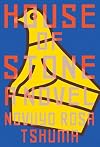
Powerful, exquisitely affecting, blisteringly honest
House of Stone is an impressive debut that examines the integration and recreation of personal and national identities through the lens of one “family” from the dissolution of Rhodesia, the birth of Zimbabwe, and what being a nation entails.
It is through the lens of the hopeful wily protagonist Zamani and his obsessive need to immerse himself into the family history of his landlords in order to re-create his “his-story” that makes show more this storyline so poignant.
While the violence is brutal it is well-balanced by the lively luminous prose as Tshuma deftly weaves the historical and personal into a seamless chronicle and provides a testament to the “culture of enforced amnesia.”
At the end, I was so appreciative of how cleverly this story not only engaged me into the lives of these compelling characters, provided a thought-provoking history lessons but left me with an extraordinary reading experience of a place and time that is more universal than not.
This is a perfect example of how to write history into fiction.
I look forward to writing future works by Tshuma. show less
House of Stone is an impressive debut that examines the integration and recreation of personal and national identities through the lens of one “family” from the dissolution of Rhodesia, the birth of Zimbabwe, and what being a nation entails.
It is through the lens of the hopeful wily protagonist Zamani and his obsessive need to immerse himself into the family history of his landlords in order to re-create his “his-story” that makes show more this storyline so poignant.
While the violence is brutal it is well-balanced by the lively luminous prose as Tshuma deftly weaves the historical and personal into a seamless chronicle and provides a testament to the “culture of enforced amnesia.”
At the end, I was so appreciative of how cleverly this story not only engaged me into the lives of these compelling characters, provided a thought-provoking history lessons but left me with an extraordinary reading experience of a place and time that is more universal than not.
This is a perfect example of how to write history into fiction.
I look forward to writing future works by Tshuma. show less
Lists
To Read (1)
Awards


You May Also Like
Associated Authors
Statistics
- Works
- 5
- Also by
- 6
- Members
- 192
- Popularity
- #113,796
- Rating
- 4.0
- Reviews
- 8
- ISBNs
- 19
- Languages
- 2