
Carol Strickland
Author of The Annotated Mona Lisa: A Crash Course in Art History from Prehistoric to Post-Modern
About the Author
Works by Carol Strickland
The Annotated Mona Lisa: A Crash Course in Art History from Prehistoric to Post-Modern (1992) 974 copies, 8 reviews
Tagged
Common Knowledge
- Legal name
- Strickland, Carol Ann Colclough
- Birthdate
- 1946
- Gender
- female
- Relationships
- Strickland, Sidney (spouse)
- Nationality
- USA
- Associated Place (for map)
- USA
Members
Reviews
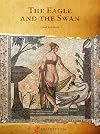
Theodora – ‘a born actress’ – brilliant historical fiction!
New York author and art historian Carol Strickland earned her doctorate from the University of Michigan and is a widely published writer of screenplays and stories for periodicals and news media, with subjects ranging from culture, art, politics, and monographs, as well as novels on architecture and art history.
With graceful eloquence the author transports us to the 6th century Byzantine Empire, in the words of a monk Brother show more Fabianus, focusing on Theodora, a women of simple means serving as a swan dancer in a circus, who happens to fall in love with a military officer, Justinian (the Eagle of the title), and through a colorful set of circumstances finds her way to the throne – Emperor Justinian and Empress Theodora – and the tenuous state of the Eastern Roman Empire, aka the Byzantine Empire. How a woman in the 6th century survived poverty and employment in prostitution to become the supreme Empress is a story told with wit, mystery, and candor – a superb admixture of history and fiction that becomes not only a marvelous novel but also a solid history resource and appreciation for the impact of strong women. This is an absolutely fantastic read, one that alerts attention to Dr. Strickland’s other books and stories. show less
New York author and art historian Carol Strickland earned her doctorate from the University of Michigan and is a widely published writer of screenplays and stories for periodicals and news media, with subjects ranging from culture, art, politics, and monographs, as well as novels on architecture and art history.
With graceful eloquence the author transports us to the 6th century Byzantine Empire, in the words of a monk Brother show more Fabianus, focusing on Theodora, a women of simple means serving as a swan dancer in a circus, who happens to fall in love with a military officer, Justinian (the Eagle of the title), and through a colorful set of circumstances finds her way to the throne – Emperor Justinian and Empress Theodora – and the tenuous state of the Eastern Roman Empire, aka the Byzantine Empire. How a woman in the 6th century survived poverty and employment in prostitution to become the supreme Empress is a story told with wit, mystery, and candor – a superb admixture of history and fiction that becomes not only a marvelous novel but also a solid history resource and appreciation for the impact of strong women. This is an absolutely fantastic read, one that alerts attention to Dr. Strickland’s other books and stories. show less

Much of what is known about Empress Theodora has come to us through the writings of one of her contemporaries, Procopius. He was a historian of her age and he wrote about Justinian and Theodora - in one book he praised them and in his "Secret History" found many, many years later he presented a totally opposite picture. What is truth? As with most situations like is - it probably lies somewhere in the middle. This novel is Theodora's response to Procopius's Secret History; she has a trusted show more friend write it with the caveat that it not be read until 1500 years in the future when it will be better received and understood.
Like Theodora, the daughter of a bear trainer who grew up to be an actress, then a whore, then a courtesan - the book is bold, raw and ribald. Theodora directs it and she states from the start that she will not lie nor will she present a life of sunshine and sugar. She will tell her story, warts and all.
I must admit that while she was not always likable I really liked Theodora. She was handed a really raw deal in life and yet she used what she had - her looks and her brains - and she rose to be Empress. She worked for women's rights in a time when women were nothing more than chattel. I wonder what more she might have done had her life not been cut so short. The book was riveting and I loved losing myself in Theodora's world as unpleasant as it was at times. show less
Like Theodora, the daughter of a bear trainer who grew up to be an actress, then a whore, then a courtesan - the book is bold, raw and ribald. Theodora directs it and she states from the start that she will not lie nor will she present a life of sunshine and sugar. She will tell her story, warts and all.
I must admit that while she was not always likable I really liked Theodora. She was handed a really raw deal in life and yet she used what she had - her looks and her brains - and she rose to be Empress. She worked for women's rights in a time when women were nothing more than chattel. I wonder what more she might have done had her life not been cut so short. The book was riveting and I loved losing myself in Theodora's world as unpleasant as it was at times. show less
I must admit I'm always reluctant to pick up a historical novel about a historical figure if I've already read an amazing book about her or him. In this case, having devoured and adored Stephanie Thornton's novel on the Empress Theodora, I was nervous that this book would pale in comparison.
I need not have worried, for this novel provides a delicious, racy, personality-filled sibling to Thornton's book, and offers another take on this infamous prostitute-turned-empress.
Penned by a monk, show more Fabianus, who is a childhood friend of Theodora's, the novel is split between covering her life, from circus child to prostitute to consort of the Emperor; and detailing how Justinian, the son of a pig herder from a rural province, became Emperor.
The narrative style is wonderfully playfully: our scribe, Fabianus, shares his apprehensions in doing justice to Theodora's story (and the ways she still affects him); Theodora is brassy and bold and bombastic, always in motion, theatrical. The cadre of men involved with the Emperor are selfish and weak-willed or clever and grasping. There's drama in spades, ranging from court intrigue to the various tribulations Theodora faces on her way to becoming Justinian's beloved.
The story shifts from the present -- Theodora telling her story to Fabianus -- to the past, as Fabianus fills in the empty spaces to help the reader along. Sometimes this can be jarring and disruptive, but in this case, I found the shifts smooth and unobtrusive, and they helped build up tension.
The historical landscape is effectively evoked -- Strickland's experience in writing about art and architecture can be seen in the descriptions of things -- and I loved every grimy, grandiose minute in 6th century Constantinople.
Strickland's Theodora is a different animal than Thornton's, but I loved her as much as I did her other incarnation. Strickland is unabashed in noting Theodora's sex work, and while there's nothing clinical or detailed about how sex is portrayed in this novel, it is very much present. I loved the unapologetic way Theodora talks about herself and her life, and more than once I snorted at one of her snarky digs and comments.
This edition includes some book club questions but is missing my favorite part of any historical novel, an Author's Note or Historical Note, identifying what is fiction and what is fact.
There's an enhanced e-book in the works, according to a publisher's note in this; Part One is available as a free download from the publisher.
On a different note: I didn't know this when I accepted this book for review, but Strickland is also the author of a beloved favorite of mine, The Annotated Mona Lisa. It was gifted to me when I was 12 or 13, and shaped my passion for art. I can't rave enough about this book, and if you are curious about art or have a budding art fan in your life, consider gifting it. show less
I need not have worried, for this novel provides a delicious, racy, personality-filled sibling to Thornton's book, and offers another take on this infamous prostitute-turned-empress.
Penned by a monk, show more Fabianus, who is a childhood friend of Theodora's, the novel is split between covering her life, from circus child to prostitute to consort of the Emperor; and detailing how Justinian, the son of a pig herder from a rural province, became Emperor.
The narrative style is wonderfully playfully: our scribe, Fabianus, shares his apprehensions in doing justice to Theodora's story (and the ways she still affects him); Theodora is brassy and bold and bombastic, always in motion, theatrical. The cadre of men involved with the Emperor are selfish and weak-willed or clever and grasping. There's drama in spades, ranging from court intrigue to the various tribulations Theodora faces on her way to becoming Justinian's beloved.
The story shifts from the present -- Theodora telling her story to Fabianus -- to the past, as Fabianus fills in the empty spaces to help the reader along. Sometimes this can be jarring and disruptive, but in this case, I found the shifts smooth and unobtrusive, and they helped build up tension.
The historical landscape is effectively evoked -- Strickland's experience in writing about art and architecture can be seen in the descriptions of things -- and I loved every grimy, grandiose minute in 6th century Constantinople.
Strickland's Theodora is a different animal than Thornton's, but I loved her as much as I did her other incarnation. Strickland is unabashed in noting Theodora's sex work, and while there's nothing clinical or detailed about how sex is portrayed in this novel, it is very much present. I loved the unapologetic way Theodora talks about herself and her life, and more than once I snorted at one of her snarky digs and comments.
This edition includes some book club questions but is missing my favorite part of any historical novel, an Author's Note or Historical Note, identifying what is fiction and what is fact.
There's an enhanced e-book in the works, according to a publisher's note in this; Part One is available as a free download from the publisher.
On a different note: I didn't know this when I accepted this book for review, but Strickland is also the author of a beloved favorite of mine, The Annotated Mona Lisa. It was gifted to me when I was 12 or 13, and shaped my passion for art. I can't rave enough about this book, and if you are curious about art or have a budding art fan in your life, consider gifting it. show less
Carol Strickland's The Eagle and the Swan chronicles Theodora's amazing rise from circus bear keeper's daughter to Empress of the Byzantine Empire. After her father died, she was forced into prostitution and dreams of a better life for herself and her daughter. She ultimately meets Justinian, the Emperor, and demands respect and public courtship before becoming his bride. As Empress, Theodora utilizes her authority to promote women's rights and assist the disadvantaged. This rich, show more beautifully described tale depicts Theodora's tenacity, her complicated connection with Justinian, and the mysteries of a remarkable age. show less
Lists
Sonlight Books (1)
Awards

You May Also Like


Associated Authors
Statistics
- Works
- 6
- Members
- 1,198
- Popularity
- #21,435
- Rating
- 4.0
- Reviews
- 14
- ISBNs
- 14
- Languages
- 2