
Joy Wilkinson
Author of Doctor Who: The Witchfinders
Works by Joy Wilkinson
The Simple Things 1 copy
Associated Works
Tagged
Common Knowledge
- Birthdate
- 20th century
- Gender
- female
- Nationality
- UK
- Birthplace
- Burnley, Lancashire, England, UK
- Associated Place (for map)
- England, UK
Members
Reviews
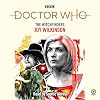
It's fine and, of Season 11, among the best of a bad bunch. But it still suffers from one of the biggest failings of the current Doctor Who era: the ideas the story raises are much more interesting than its handling of them. An extended running time hasn't helped that on TV and the broader story space of a novelisation doesn't help much here, either.
The Doctor comes from a race who can and do switch genders. If (as per the Doctor's claim a season earlier) that means they've moved beyond show more gender being an important societal construct, then that opens up some terrific story opportunities. The Doctor may not think gender important, but they've spent most of their (remembered life) hanging around humans in the form of a white man; this story is them realising that's played a huge part in their confidence to just walk into situations and take control of them.
It's the perfect framework for discussing how privilege works, but, having flagged it up, the story doesn't do much with it. There are lots of other intriguing threads: the female villain serving her husband; victims perpetuating systems; King James's rank and gender meaning his homosexuality is indulged while the female characters' perceived deviancies are punished with death. But they don't tie together.
The Witchfinders has the shape of a great story, but not the narrative of one. show less
The Doctor comes from a race who can and do switch genders. If (as per the Doctor's claim a season earlier) that means they've moved beyond show more gender being an important societal construct, then that opens up some terrific story opportunities. The Doctor may not think gender important, but they've spent most of their (remembered life) hanging around humans in the form of a white man; this story is them realising that's played a huge part in their confidence to just walk into situations and take control of them.
It's the perfect framework for discussing how privilege works, but, having flagged it up, the story doesn't do much with it. There are lots of other intriguing threads: the female villain serving her husband; victims perpetuating systems; King James's rank and gender meaning his homosexuality is indulged while the female characters' perceived deviancies are punished with death. But they don't tie together.
The Witchfinders has the shape of a great story, but not the narrative of one. show less

4.5/5 stars
From what I remember of The Witchfinders, the episode was a fairly average historical romp that suffered from its villains being underdeveloped but was saved by an absolutely delightful performance by Alan Cumming. While the novelization is definitely missing Cumming's commitment to hamming it up at all times, it does largely improve upon my problems with the episode. On the surface, it's recognizably the same story. Wilkinson doesn't try to remix anything here or retell the plot show more in some new, gimmicky way. Instead, she simply takes her original plot and expands upon it. The TARDIS still turns up in early-1600s Lancashire, where the Doctor and her friends stumble across a village in the throes of a witch trial. If you've seen the episode, you'll know exactly how it plays out, and the novelization follows the episode fairly closely. The only real differences to the plot come in the form of a framing device, revolving around Willa, but to go into any real detail about that would venture into spoiler territory (and the book’s ending may be slightly divisive with fans). Needless to say, this isn't a novelization that changes the plot much, it just provides a lot of extra context.
Most of that extra context comes in the form of much deeper, expanded backstories and motivations for the characters. Every single character in The Witchfinders benefits from the kind of internal characterization that a novel can provide. This greater exploration allows readers the chance to better understand these characters that weren't as well explored on screen. The Doctor, Yaz, Ryan, and Graham all get a bit more development, with Yaz being given the most depth in her conversations with Willa. Willa is fleshed out a lot more here than she was in the episode, with her backstory and connection to Becka better spelled out. Becka Savage's motivations are much clearer, with a good amount of backstory being given to her, making her utter devotion to the whole witch-hunting thing make a lot more sense. The Morax felt underdeveloped in the episode, so the book literally opens with a bit of backstory for the Morax, making their reveal, later on, feel more natural. Given the greater depth provided to the Morax, the novel doesn't feel quite as concerned with witches as the episode did, but the story's conclusion ends up being more satisfying as a result of the Morax's better development. Overall, Wilkinson really took the opportunity to give the characters of The Witchfinders more depth, and it’s a better story for it.
All in all, The Witchfinders is worth reading if you left the episode feeling like the characters needed more development. I wish the episode, itself, could’ve incorporated some of the expanded backstories found in the novelization. Just ten more minutes could’ve made such a difference. As it is, The Witchfinders was a solid historical story on TV and it’s an even better historical story in prose. Wilkinson’s prose is easy to read, spending more time delving into characters than overexplaining the visual elements. I don’t think it’ll really make anyone who hated the TV story fall in love with it, but for those of us who just wanted a bit more context and expansion for the characters, this book hits the nail on the head. It’s a great read that takes a solid episode and makes it better. What more can you ask of a Doctor Who novelization? show less
From what I remember of The Witchfinders, the episode was a fairly average historical romp that suffered from its villains being underdeveloped but was saved by an absolutely delightful performance by Alan Cumming. While the novelization is definitely missing Cumming's commitment to hamming it up at all times, it does largely improve upon my problems with the episode. On the surface, it's recognizably the same story. Wilkinson doesn't try to remix anything here or retell the plot show more in some new, gimmicky way. Instead, she simply takes her original plot and expands upon it. The TARDIS still turns up in early-1600s Lancashire, where the Doctor and her friends stumble across a village in the throes of a witch trial. If you've seen the episode, you'll know exactly how it plays out, and the novelization follows the episode fairly closely. The only real differences to the plot come in the form of a framing device, revolving around Willa, but to go into any real detail about that would venture into spoiler territory (and the book’s ending may be slightly divisive with fans). Needless to say, this isn't a novelization that changes the plot much, it just provides a lot of extra context.
Most of that extra context comes in the form of much deeper, expanded backstories and motivations for the characters. Every single character in The Witchfinders benefits from the kind of internal characterization that a novel can provide. This greater exploration allows readers the chance to better understand these characters that weren't as well explored on screen. The Doctor, Yaz, Ryan, and Graham all get a bit more development, with Yaz being given the most depth in her conversations with Willa. Willa is fleshed out a lot more here than she was in the episode, with her backstory and connection to Becka better spelled out. Becka Savage's motivations are much clearer, with a good amount of backstory being given to her, making her utter devotion to the whole witch-hunting thing make a lot more sense. The Morax felt underdeveloped in the episode, so the book literally opens with a bit of backstory for the Morax, making their reveal, later on, feel more natural. Given the greater depth provided to the Morax, the novel doesn't feel quite as concerned with witches as the episode did, but the story's conclusion ends up being more satisfying as a result of the Morax's better development. Overall, Wilkinson really took the opportunity to give the characters of The Witchfinders more depth, and it’s a better story for it.
All in all, The Witchfinders is worth reading if you left the episode feeling like the characters needed more development. I wish the episode, itself, could’ve incorporated some of the expanded backstories found in the novelization. Just ten more minutes could’ve made such a difference. As it is, The Witchfinders was a solid historical story on TV and it’s an even better historical story in prose. Wilkinson’s prose is easy to read, spending more time delving into characters than overexplaining the visual elements. I don’t think it’ll really make anyone who hated the TV story fall in love with it, but for those of us who just wanted a bit more context and expansion for the characters, this book hits the nail on the head. It’s a great read that takes a solid episode and makes it better. What more can you ask of a Doctor Who novelization? show less
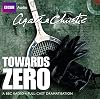
It has been at least a decade since I read an Agatha Christie novel. Towards Zero was a great re-introduction to her elaborate plots, multiple characters and hidden motives. Out of all her plots, it isn't the most complex one there is, which makes it a perfect candidate for audio.
Towards Zero is what you would expect from Dame Christie. The characters all have hidden agendas, blurring the true motives for the murder(s). None of the characters are truly likable, meaning that the reader can show more and does suspect every one of them, as Dame Christie intends. The characters themselves follow a similar formula - the gruff, know-it-all detective, the extremely wealthy matriarch, the put-upon companion/servant, the gold-digging wife, the unrequited lover. In essence, there are no surprises as to the characters or the plot itself, especially for long-time fans of Dame Christie.
The BBC audio production is amazing. It was very much like an old-fashioned radio production, complete with sound effects and scene changes. Each of the actors does a fantastic job embodying his or her character; the reader has no doubt behind each of the character's motivations and motives. The large ensemble adds to the complexity of the story without adding any confusion.
At one hour and 45 minutes, Towards Zero makes for an engaging afternoon auditory experience. It isn't the most difficult Agatha Christie novel, as I had a fairly good idea who the murderer was, which never happens in a mystery novel. Still, it was a great alternative to a normal audiobook, with its more stage-like performance. If audiobook fans are looking for something different without having to invest a lot of time, Towards Zero would be a great choice. show less
Towards Zero is what you would expect from Dame Christie. The characters all have hidden agendas, blurring the true motives for the murder(s). None of the characters are truly likable, meaning that the reader can show more and does suspect every one of them, as Dame Christie intends. The characters themselves follow a similar formula - the gruff, know-it-all detective, the extremely wealthy matriarch, the put-upon companion/servant, the gold-digging wife, the unrequited lover. In essence, there are no surprises as to the characters or the plot itself, especially for long-time fans of Dame Christie.
The BBC audio production is amazing. It was very much like an old-fashioned radio production, complete with sound effects and scene changes. Each of the actors does a fantastic job embodying his or her character; the reader has no doubt behind each of the character's motivations and motives. The large ensemble adds to the complexity of the story without adding any confusion.
At one hour and 45 minutes, Towards Zero makes for an engaging afternoon auditory experience. It isn't the most difficult Agatha Christie novel, as I had a fairly good idea who the murderer was, which never happens in a mystery novel. Still, it was a great alternative to a normal audiobook, with its more stage-like performance. If audiobook fans are looking for something different without having to invest a lot of time, Towards Zero would be a great choice. show less
https://nwhyte.livejournal.com/3814300.html
This is actually the first novelisation of any Thirteenth Doctor story to be published. I was one of the relatively few who really did not appreciate the televised story it is based on, but I'm glad to say that I liked the novelisation a bit more. As is often the case when bulking out a 50-minute script to 178 pages of novel, Wilkinson has used the extra latitude to give a lot more depth to her setting and characters - particularly the villainous show more Becka Savage, whose means and motivation are made a lot clearer. She also has the Doctor discovering that being treated as a woman isn't much fun. And the ending is changed, tying in to wider Who continuity. Definitely worth getting hold of, for a Who fan. Not really sure I could recommend to others! show less
This is actually the first novelisation of any Thirteenth Doctor story to be published. I was one of the relatively few who really did not appreciate the televised story it is based on, but I'm glad to say that I liked the novelisation a bit more. As is often the case when bulking out a 50-minute script to 178 pages of novel, Wilkinson has used the extra latitude to give a lot more depth to her setting and characters - particularly the villainous show more Becka Savage, whose means and motivation are made a lot clearer. She also has the Doctor discovering that being treated as a woman isn't much fun. And the ending is changed, tying in to wider Who continuity. Definitely worth getting hold of, for a Who fan. Not really sure I could recommend to others! show less
Lists
You May Also Like
Associated Authors
Statistics
- Works
- 8
- Also by
- 4
- Members
- 128
- Popularity
- #157,244
- Rating
- 3.9
- Reviews
- 6
- ISBNs
- 14