Mary Lindeen
Author of Let's Play Hockey (Beginning-to-read)
About the Author
Series
Works by Mary Lindeen
Dancing Bees and Other Amazing Communicators (Searchlight Books: Animal Superpowers) (2017) 18 copies
Smart Online Communications: Protecting Your Digital Footprint (Searchlight Books: What is Digital Citizenship?) (2016) 7 copies
Smart Internet Surfing: Evaluating Websites and Advertising (Searchlight Books What Is Digital Citizenship?) (2016) 5 copies, 1 review
Digital Safety Smarts: Preventing Cyberbullying (Searchlight Books: What is Digital Citizenship?) (2016) 5 copies
Patterns in the Sky (Beginning-to-Read: Read and Discover - Earth Science) (2018) 4 copies, 1 review
Smart Online Searching: Doing Digital Research (Searchlight Books What Is Digital Citizenship?) (2016) 3 copies
Being Kind to Our Planet (A Beginning-to Read: Read & Discover: Social-Emotional Learning) (2020) 3 copies
Viva el midsommar 3 copies
Frozen Frogs and Other Amazing Hibernators (Searchlight Books (TM) -- Animal Superpowers) (2017) 3 copies
Moonscape: The Surface of the Moon 2 copies
Sentirse solo (Beginning-to-Read: Sentimientos importantes / Big Feelings) (Spanish Edition) (2022) 1 copy
¡trabajo en equipo! 1 copy
es la levadura una vestia 1 copy
la noche y el dia 1 copy
Letter Dd, Unit 2.9 1 copy
Sentirse timido (Beginning-to-Read: Sentimientos importantes / Big Feelings) (Spanish Edition) (2022) 1 copy
Fox in the Barn, The 1 copy
Hermano Menor, Hermana Mayor Leveled Text (Early Rising Readers (En)) (Spanish Edition) (2016) 1 copy
I AM 1 copy
In the Water 1 copy
Get the Music 1 copy
Jordan's Zoo (City Stories - Rigby and the Children's Television Workshop's Literacy Street Series) 1 copy
Tagged
Common Knowledge
- Gender
- female
Members
Reviews
Weather Near You is part of the Earth Sciences series for young readers by Mary Lindeen. Full of gorgeous weather pictures, this installment helps young readers understand how weather can differ depending on location and how to find out about your local weather, so you can stay safe when bad weather is coming. Like the others in the series, this one has simple, easy to read sentences, and provides grounding in basic scientific concepts in ways young readers can grasp. The end of the book show more features a Connecting Concepts section with questions to ask about the reading, and practise with vocabulary and reading fluency. My cubs and I enjoyed reading this book, not that we don't have a great personal example every day. We live in a pocket climate :P
Earth Science: Landforms by Mary Lindeen/ Quickshot https://wp.me/p6C2DX-1Dm
Earth Sciences: Water by Mary Lindeen/ Quickshots https://wp.me/p6C2DX-1oA
Life Sciences: Animal Mothers and Fathers by Mary Lindeen/ Quickshots https://wp.me/p6C2DX-1CK
***Many thanks to Netgalley and Norwood House for providing an egalley in exchange for a fair and honest review. show less
Earth Science: Landforms by Mary Lindeen/ Quickshot https://wp.me/p6C2DX-1Dm
Earth Sciences: Water by Mary Lindeen/ Quickshots https://wp.me/p6C2DX-1oA
Life Sciences: Animal Mothers and Fathers by Mary Lindeen/ Quickshots https://wp.me/p6C2DX-1CK
***Many thanks to Netgalley and Norwood House for providing an egalley in exchange for a fair and honest review. show less
A new small publisher, Jump!, specializing in "Beautiful nonfiction for beginning and struggling readers" asked if I'd like to preview selections from their new imprint, Bullfrog Books. Of course, I said yes. I love easy nonfiction and between adding a nonfiction section to our easy readers and getting ready to start organizing most of the picture books by subject and integrate easy nonfiction, I am ALL about the easy nonfiction this year.
They sent me one title from each of five different show more series and that's what I'm looking at today.
Each book is a nice square size, just right for small hands without being so small they'll disappear on the shelf. They're about 7x7 inches (can't find my ruler to measure more accurately!) and have a nice, cheerfully colored border. The books begin with a message to parents and teachers, encouraging them to look at the photographs together, ask questions, and gives some sample questions tailored to the particular book. There's a table of contents for the short "chapters", a simple picture glossary with 4-8 words, an index, and a list of sources to learn more, including a child-friendly search engine. The back cover shows all the titles in the series.
Pigs is part of the "Animals on the Farm" series. The book emphasizes the different parts of the pig, from the docked tail "The farmer cut it short when I was a piglet" to how smart pigs are "I am smart. I learned to open the gate. Pig on the loose!" I would have liked to see a mention of how good a sense of smell pigs have, especially when the book mentioned that they don't see well, but it does show them sniffing and digging.
Dump Trucks is part of the "Machines at work" series. I had some reservations about this when I first read it, but after I'd look at all the titles in the different series and gotten a feel for their layout, it makes more sense. I like that they show a female driver, and have several captions for the different parts of the truck. There's a side dump that's not explained until the glossary and several images don't show a truck at all, which is a lot in a book of only 24 pages. The image of a dump truck and some kind of attachment laying blacktop was confusing. The attached machine isn't identified and the dump truck itself is obscured by the gutter of the pages. However, after looking at all the books, I can see there's a strong emphasis on very simple statements that will encourage kids to ask more questions. I still don't like the blacktop spread, but the other ones make more sense, since they'll encourage kids to ask questions.
Clownfish, from "Life under the sea" was my least favorite book and I thought it was written in a very confusing way. It starts with a male clownfish looking for a nest, then swimming home to his anemone, then finding his mate. "He chases her. He bites./He touches her with his fin. Follow me to the nest!" Will kids understand that all three of those sentences, especially since the first two are separated by a page turn, are all how he's getting the female to follow him? The female lays eggs and then goes home. Then it has the male guarding the eggs - no mention of fertilization, but I can see that would be difficult to introduce in a book with this limited vocabulary. What's really confusing though is the last page where it says "The clownfish chases him [big fish] away. Hooray! The eggs are safe!" and the accompanying photograph shows two fish. the picture glossary shows this same picture and says "mate: A fish's partner; a clownfish needs a mate to make babies." This is confusing - does the mating pair care for the eggs together or not? Do they come together only for breeding? I looked it up and apparently they live in sort of colonies with one breeding pair. They also change sex, if one of the breeding pair dies. I get that you can't exactly explain that in the space given, but it really wasn't clear who was tending the eggs and if the fish stayed together or not.
In Red, a sample of the "Colors in Nature" series, I learned something new - that the color of male cardinal's feathers comes from the berries they eat. I looked it up to be sure - it didn't make sense that the female would eat the same things and not be bright red, but somehow it all works out. The photographs in this one were possibly the most vibrant and I really liked the question and answer format that showed most strongly in this one. I'd definitely use this in storytime as well as for individual reading or reading aloud.
The last sample, Lions, comes from "My First Animal Library" and offers a simple introduction to the habits of a lion pride, not unlike the Pigs book. This does a really good job of introducing the different behaviors in the lions, especially in the small space offered. The pictures are clear but not too gory or graphic.
So, the pros of this new imprint - gorgeous photographs, text that will spark curiosity and questioning, high-interest topics, simple text that will attract beginning readers, and many of these will also make great discussion-type read-alouds for storytime.
Cons? Well, this may be nitpicky, but I'm worried that those nice white backgrounds on the covers won't stay white long. My library patrons are notoriously hard on their books and I see a constant cleaning in my future for these. They are expensive - even with Baker and Taylor's discount they're $20 apiece, which leaves you with the possibility of bindings that will last long past the interior pages and the content. If you buy them in complete sets from the publisher or a distributor, they get down to $17, which isn't quite as bad, but you're still paying $107 for only 6 books.
Verdict: For me, the pros definitely outweigh the cons. Since I'm focusing on increasing nonfiction easy readers and easy nonfiction for our new neighborhoods project in the picture books, these are exactly what I need and worth the cost. I will probably put them in the picture books, since they hit many of the subject areas I'm looking to expand and the more picture book shape will be more conducive to people checking out picture books than easy readers (yes, my patrons are that nitpicky. I once had a patron refuse any nonfiction on the grounds that they "looked like picture books"). I'll definitely be getting the Colors in Nature, Machines at Work, Animals on the Farm, and possibly the My First Animal Library series. They've also got several season-themed series and we're a little crazy on the subject of seasons, especially fall, so those look very good too.
Animals on the Farm: Pigs by Wendy Strobel Dieker
ISBN: 9781620310052
Machines at work: Dump Trucks by Rebecca Stromstad Glaser
ISBN: 9781620310199
Life under the sea: Clownfish by Cari Meister
ISBN: 9781620310304
Colors in Nature: Red by Rebecca Stromstad Glaser
ISBN: 9781620310366
My first animal library: Lions by Mary Lindeen
ISBN: 9781620310649
Published 2013 by Bullfrog Books/Jump!; Review copies provided by publisher; Selected series added to library wishlist to purchase, probably this summer. show less
They sent me one title from each of five different show more series and that's what I'm looking at today.
Each book is a nice square size, just right for small hands without being so small they'll disappear on the shelf. They're about 7x7 inches (can't find my ruler to measure more accurately!) and have a nice, cheerfully colored border. The books begin with a message to parents and teachers, encouraging them to look at the photographs together, ask questions, and gives some sample questions tailored to the particular book. There's a table of contents for the short "chapters", a simple picture glossary with 4-8 words, an index, and a list of sources to learn more, including a child-friendly search engine. The back cover shows all the titles in the series.
Pigs is part of the "Animals on the Farm" series. The book emphasizes the different parts of the pig, from the docked tail "The farmer cut it short when I was a piglet" to how smart pigs are "I am smart. I learned to open the gate. Pig on the loose!" I would have liked to see a mention of how good a sense of smell pigs have, especially when the book mentioned that they don't see well, but it does show them sniffing and digging.
Dump Trucks is part of the "Machines at work" series. I had some reservations about this when I first read it, but after I'd look at all the titles in the different series and gotten a feel for their layout, it makes more sense. I like that they show a female driver, and have several captions for the different parts of the truck. There's a side dump that's not explained until the glossary and several images don't show a truck at all, which is a lot in a book of only 24 pages. The image of a dump truck and some kind of attachment laying blacktop was confusing. The attached machine isn't identified and the dump truck itself is obscured by the gutter of the pages. However, after looking at all the books, I can see there's a strong emphasis on very simple statements that will encourage kids to ask more questions. I still don't like the blacktop spread, but the other ones make more sense, since they'll encourage kids to ask questions.
Clownfish, from "Life under the sea" was my least favorite book and I thought it was written in a very confusing way. It starts with a male clownfish looking for a nest, then swimming home to his anemone, then finding his mate. "He chases her. He bites./He touches her with his fin. Follow me to the nest!" Will kids understand that all three of those sentences, especially since the first two are separated by a page turn, are all how he's getting the female to follow him? The female lays eggs and then goes home. Then it has the male guarding the eggs - no mention of fertilization, but I can see that would be difficult to introduce in a book with this limited vocabulary. What's really confusing though is the last page where it says "The clownfish chases him [big fish] away. Hooray! The eggs are safe!" and the accompanying photograph shows two fish. the picture glossary shows this same picture and says "mate: A fish's partner; a clownfish needs a mate to make babies." This is confusing - does the mating pair care for the eggs together or not? Do they come together only for breeding? I looked it up and apparently they live in sort of colonies with one breeding pair. They also change sex, if one of the breeding pair dies. I get that you can't exactly explain that in the space given, but it really wasn't clear who was tending the eggs and if the fish stayed together or not.
In Red, a sample of the "Colors in Nature" series, I learned something new - that the color of male cardinal's feathers comes from the berries they eat. I looked it up to be sure - it didn't make sense that the female would eat the same things and not be bright red, but somehow it all works out. The photographs in this one were possibly the most vibrant and I really liked the question and answer format that showed most strongly in this one. I'd definitely use this in storytime as well as for individual reading or reading aloud.
The last sample, Lions, comes from "My First Animal Library" and offers a simple introduction to the habits of a lion pride, not unlike the Pigs book. This does a really good job of introducing the different behaviors in the lions, especially in the small space offered. The pictures are clear but not too gory or graphic.
So, the pros of this new imprint - gorgeous photographs, text that will spark curiosity and questioning, high-interest topics, simple text that will attract beginning readers, and many of these will also make great discussion-type read-alouds for storytime.
Cons? Well, this may be nitpicky, but I'm worried that those nice white backgrounds on the covers won't stay white long. My library patrons are notoriously hard on their books and I see a constant cleaning in my future for these. They are expensive - even with Baker and Taylor's discount they're $20 apiece, which leaves you with the possibility of bindings that will last long past the interior pages and the content. If you buy them in complete sets from the publisher or a distributor, they get down to $17, which isn't quite as bad, but you're still paying $107 for only 6 books.
Verdict: For me, the pros definitely outweigh the cons. Since I'm focusing on increasing nonfiction easy readers and easy nonfiction for our new neighborhoods project in the picture books, these are exactly what I need and worth the cost. I will probably put them in the picture books, since they hit many of the subject areas I'm looking to expand and the more picture book shape will be more conducive to people checking out picture books than easy readers (yes, my patrons are that nitpicky. I once had a patron refuse any nonfiction on the grounds that they "looked like picture books"). I'll definitely be getting the Colors in Nature, Machines at Work, Animals on the Farm, and possibly the My First Animal Library series. They've also got several season-themed series and we're a little crazy on the subject of seasons, especially fall, so those look very good too.
Animals on the Farm: Pigs by Wendy Strobel Dieker
ISBN: 9781620310052
Machines at work: Dump Trucks by Rebecca Stromstad Glaser
ISBN: 9781620310199
Life under the sea: Clownfish by Cari Meister
ISBN: 9781620310304
Colors in Nature: Red by Rebecca Stromstad Glaser
ISBN: 9781620310366
My first animal library: Lions by Mary Lindeen
ISBN: 9781620310649
Published 2013 by Bullfrog Books/Jump!; Review copies provided by publisher; Selected series added to library wishlist to purchase, probably this summer. show less
Usually one sentence and an appropriate photo of a child on most pages. The entire message is that it is OK to feel shy, to share that feeling with others, and see that feeling change as we make new friends. The story is aimed at children of a certain age, but it is also very appropriate for both ESL and ASL.
I requested and received a free temporary ebook copy from Norwood House Press via NetGalley. Thank you!
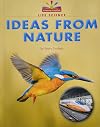
This is another wonderful entry into the Read and Discover Science series by Mary Lindeen. This series is full of great books for young readers and budding scientists. It documents people who closely observe nature and then emulates the patterns and techniques they find into the human world.
"Ideas From Nature" shows birds, snakes, burrs, lizards and more and how something about their body or or movement can be incorporated into human inventions. Nature inspires many different things from show more bullet trains, velcro, bumps on windmill blades and more. It jwas fun and interesting to discover how amazing inventions have been inspired, but it would have been nice to see more examples. This non-fiction Beginning-to-Read book contains crisp, clear photographs to demonstrate the facts discussed. The book contains high-frequency words, content vocabulary and activities to strengthen early science and literary skills. There are also notes to Parents and Caregivers about working with beginning readers and this book. I recommend this book and the whole "Read and Discover Science" series to school libraries, primary classrooms and families where budding scientists reside. The publisher, Norwood House Press, generously provided me with a copy of this book to read. The rating, ideas and opinions are my own. show less
You May Also Like
Associated Authors
Statistics
- Works
- 220
- Members
- 1,651
- Popularity
- #15,563
- Rating
- 4.1
- Reviews
- 41
- ISBNs
- 568
- Languages
- 2