
R. Conrad Stein
Author of Ellis Island
About the Author
R. Conrad Stein graduated from the University of Illinois with a degree in history. He is the author of more than two hundred books, most for young adults, including the eight-part Story of Mexico series published by Morgan Reynolds. He lives in Chicago with his wife and daughter, but Mexico was show more his home through most of the 1970s. The country remains the second home to the Stein family. show less
Works by R. Conrad Stein
The Story of the Lewis and Clark Expedition (Cornerstones of freedom) (1978) — Author — 598 copies, 2 reviews
The Story of Arlington National Cemetery (Cornerstones of Freedom Series) (1979) 303 copies, 1 review
The Korean War Veterans Memorial (Cornerstones of Freedom) (Cornerstones of Freedom Second Series) (2002) 29 copies
Harriet Tubman: On My Underground Railroad I Never Ran My Train Off the Track (Americans: The Spirit of a Nation) (2008) 7 copies
David Farragut: First Admiral Of The U.S. Navy (A Proud Heritage: The Hispanic Library) (2005) 6 copies
Gerald R. Ford: America's 38th President (Encyclopedia of Presidents. Second Series) (2005) 5 copies
The Monitor and the Merrimac 1 copy
Rocking and Rolling 1 copy
America the beautiful Oregon 1 copy
The Story of Valley Forge 1 copy
Associated Works
Cricket Magazine, Vol. 2, No. 11, July 1975 — Contributor — 2 copies
Tagged
Common Knowledge
- Legal name
- Stein, Richard Conrad
- Birthdate
- 1937-04-22
- Gender
- male
- Education
- University of Illinois, Champaign-Urbana
- Occupations
- children's book author
- Organizations
- U.S. Marine Corps
- Nationality
- USA
- Birthplace
- Chicago, Illinois, USA
- Places of residence
- Chanhassen, Minnesota, USA
Lakeview, Chicago, Illinois, USA - Associated Place (for map)
- Illinois, USA
Members
Reviews

Covers many aspects of the Homestead Act well, but is now dated. In the last pages, it mentions how different things are now in the 1970s and notes old things like rooftop television antennas. Still, a very good little American history book.
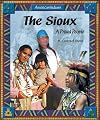
- Editor's note acknowledges that some people are offended by the use of the umbrella term "Sioux" instead of Lakota, Nakota, and Dakota.
- Each chapter (Homes, Clothing, Family Life) includes two sections,"The Sioux Then" and "The Sioux Today," to show how the Sioux have changed and evolved like any other culture.
- The history chapter predictably uses European history as a benchmark, dating only as far back as the 1600s when French explorers first came into contact with the Sioux. I wish show more the book gave some indication of how long native cultures may have inhabited the Great Plains before Europeans kept written records of them.
- Briefly discusses how alcoholism afflicts "some Sioux" while stressing that this is a problem that affects all kinds of Americans and that "most Sioux live proud, happy lives."
- Lots of interesting facts: the winter count (a pictorial record of how the tribe survived each winter); the Intertribal Bison Cooperative (a 42-tribe collective that tends a herd of 8,000 buffalo); the body modifications made in preparation for a Sun Dance; the visions of Sitting Bull before the Battle of Little Bighorn; the soccer-like game called shinny.
- Back matter includes a (too short) glossary, suggestions for further reading, internet resources (one of the three is current), and index. show less
- Each chapter (Homes, Clothing, Family Life) includes two sections,"The Sioux Then" and "The Sioux Today," to show how the Sioux have changed and evolved like any other culture.
- The history chapter predictably uses European history as a benchmark, dating only as far back as the 1600s when French explorers first came into contact with the Sioux. I wish show more the book gave some indication of how long native cultures may have inhabited the Great Plains before Europeans kept written records of them.
- Briefly discusses how alcoholism afflicts "some Sioux" while stressing that this is a problem that affects all kinds of Americans and that "most Sioux live proud, happy lives."
- Lots of interesting facts: the winter count (a pictorial record of how the tribe survived each winter); the Intertribal Bison Cooperative (a 42-tribe collective that tends a herd of 8,000 buffalo); the body modifications made in preparation for a Sun Dance; the visions of Sitting Bull before the Battle of Little Bighorn; the soccer-like game called shinny.
- Back matter includes a (too short) glossary, suggestions for further reading, internet resources (one of the three is current), and index. show less

Indians. Killer diseases. Desert sun. Savage snowstorms. These were the risks the Americans knew they'd be taking if they were to reach the promised land - Oregon. What they didn't know is what else they'd have to face... steep mountains, exhausting hardships, and unendurable starvation. There was no journey as difficult or as dangerous as the Oregon Trail where 34,000 pioneers were buried along the way. Yet, wave after wave of fresh pioneers continued westward. After all, this was their show more land and it needed to be settled! show less

It began with two small kernels of gold. They had been found on John Sutter's land in central California. But Sutter had no idea that those two shiny bits of metal would set off one of the wildest mass movements of people in world history. From the farms, small towns and cities of the East, hundreds of thousands of fortune-seekers flocked to California to find their fortunes. A few did. Most failed. But they changed the face of America forever.
Lists
Awards


You May Also Like


Associated Authors
Statistics
- Works
- 194
- Also by
- 1
- Members
- 15,130
- Popularity
- #1,511
- Rating
- 3.8
- Reviews
- 53
- ISBNs
- 365
- Languages
- 2