

Robert Mankoff
Author of The Complete Cartoons of the New Yorker
About the Author
Bob Mankoff became The New Yorker's cartoon editor in 1997. He is also the founder and president of the Cartoon Bank, a division of The New Yorker, which maintains the internet's only searchable cartoon archive. Bob Mankoff was a cartoonist for The New Yorker for twenty years and is currently the show more cartoon editor for the magazine. He founded the online Cartoon Bank, which has every cartoon since the magazine's founding. He is the author of the book How about Never - Is Never Good for You?: My Life in Cartoons. (Bowker Author Biography) show less
Image credit: Publicity photo
Works by Robert Mankoff
The New Yorker Encyclopedia of Cartoons: A Semi-serious A-to-Z Archive (2018) — Editor — 153 copies, 2 reviews
The New Yorker Book of Kids* Cartoons: *and the people who live with them (2001) — Editor; Contributor — 57 copies, 1 review
Have I Got a Cartoon for You!: The Moment Magazine Book of Jewish Cartoons (2019) — Editor — 6 copies, 1 review
Associated Works
The Rejection Collection: Cartoons You Never Saw, and Never Will See, in The New Yorker (2006) — Introduction — 349 copies, 9 reviews
The Best of the Rejection Collection: 293 Cartoons That Were Too Dumb, Too Dark, or Too Naughty for The New Yorker (2011) — Foreword — 157 copies, 12 reviews
Everyone's a Critic: The Ultimate Cartoon Book by the World's Greatest Cartoonists (2020) — Contributor — 13 copies, 1 review
Tagged
Common Knowledge
- Canonical name
- Mankoff, Robert
- Other names
- Mankoff, Bob
- Birthdate
- 1944-05-01
- Gender
- male
- Education
- Syracuse University (BA|1966)
Music and Art High School, New York, NY - Occupations
- cartoonist
editor - Organizations
- The New Yorker
Cartoon Collections
Cartoon Bank
Botnik Studios
Esquire Magazine
Air Mail - Nationality
- USA
- Birthplace
- The Bronx, New York, USA
- Places of residence
- Briarcliff Manor, New York, USA
- Associated Place (for map)
- New York, USA
Members
Reviews
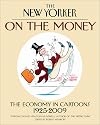
On the Money: The Economy in Cartoons is a coffee-table collection of more than 400 cartoons drawn from the pages of The New Yorker magazine from 1925 to 2009.
The book is sturdily produced and the cartoons -- involving money, taxes, spending, investing, business operations and class-status -- are clever, insightful and ironic. Because they’re organized by decade, I enjoyed tracking trends in content (living large in the ‘20s; economizing in the ‘30s; patriotism and inflation in the show more ‘40s; the emergence of the IRS and specific companies and a more prominent role of personal finance in later decades; the cycles of growth and recession throughout) and trends in the art itself (visually dark images early on; lighter, sparer drawings of late).
And what locks this book into the 5-star category is Malcolm Gladwell’s excellent Introduction -- a theory of humor that acknowledges the differing rules of business life (realism) and personal life (romanticism) and suggests that “funny” happens when the rules are misapplied. (For more about the process of creativity and cartooning, take a look at Robert Mankoff’s The Naked Cartoonist.)
For terrific social commentary -- as opposed to laugh-out-loud humor -- I highly recommend this collection. show less
The book is sturdily produced and the cartoons -- involving money, taxes, spending, investing, business operations and class-status -- are clever, insightful and ironic. Because they’re organized by decade, I enjoyed tracking trends in content (living large in the ‘20s; economizing in the ‘30s; patriotism and inflation in the show more ‘40s; the emergence of the IRS and specific companies and a more prominent role of personal finance in later decades; the cycles of growth and recession throughout) and trends in the art itself (visually dark images early on; lighter, sparer drawings of late).
And what locks this book into the 5-star category is Malcolm Gladwell’s excellent Introduction -- a theory of humor that acknowledges the differing rules of business life (realism) and personal life (romanticism) and suggests that “funny” happens when the rules are misapplied. (For more about the process of creativity and cartooning, take a look at Robert Mankoff’s The Naked Cartoonist.)
For terrific social commentary -- as opposed to laugh-out-loud humor -- I highly recommend this collection. show less
Of course I reserved this book in order to see my old favorite New Yorker cartoons ("On the Internet, no one knows you're a dog", "Lassie, get help! and the captionless picture of the legless frog pulling himself out of the restaurant kitchen) and to perhaps glean a fact or two. But to my surprise, I devoured the entire book! Mr. Mankoff not only has an illustrious cartooning career, he found a way to share the with all of his with his creation of the Cartoon Bank, and as the current cartoon show more editor of the New Yorker. Not only that, but he writes with a truly engaging and captive style. Kudos...A real pleasure! show less
My life waiting for Halloween Book Bingo to begin has been frustrating. I’m in the tail end of a weird book slump that feels like it’s lasted forever (over a year to be sure), and my recovery still feels precarious, like it could go either way. Because of this, I’m not doing any pre-planning for Bingo, but I still know there are a few books I’m waiting to read that will fit, so I’m trying to hold off.
Last night, I was sooo bored with this plan that I almost scrapped HB all together show more and just started in on the small stack I’m trying to wait on, and in a last ditch effort to find something else on my TBR to hold my attention, I found How About Never? Is Never Good for You? on a very small outlier of my TBR pile. I’d forgotten all about it, and honestly can’t remember where I bought it, only that I did so because I like most of the New Yorker’s cartoons, and I’d read Mary Norris’ Between You and Me which I thoroughly enjoyed, leaving me with a positive feeling about the staff’s extracurricular writing.
How About Never? Is Never Good for You? turned out to be a very engaging, and very fast read. I knew nothing about Bob Mankoff before reading it and therefore had no expectations. The subtitle is My Life in Cartoons which is a nice double play on words, as this memoir covers almost exclusively his career as a cartoonist and cartoon editor for The New Yorker, and the book is liberally sprinkled with cartoons, both his and others’ works, which is, along with the engaging writing, the reason the read goes so fast.
He discusses the rise of the periodical cartoon as an art form, the genesis of The New Yorker’s cartoons, the process by which the magazine chooses the cartoons each week, and the advent of, and the fiendish difficulty of, the “add a caption” contest and how not to win it. And he does it all with a charming brevity that is just long enough to be interesting and just thorough enough that the reader gets something out of it.
All in all, it turned out to be a delightful way to kill 3 hours or so last night. show less
Last night, I was sooo bored with this plan that I almost scrapped HB all together show more and just started in on the small stack I’m trying to wait on, and in a last ditch effort to find something else on my TBR to hold my attention, I found How About Never? Is Never Good for You? on a very small outlier of my TBR pile. I’d forgotten all about it, and honestly can’t remember where I bought it, only that I did so because I like most of the New Yorker’s cartoons, and I’d read Mary Norris’ Between You and Me which I thoroughly enjoyed, leaving me with a positive feeling about the staff’s extracurricular writing.
How About Never? Is Never Good for You? turned out to be a very engaging, and very fast read. I knew nothing about Bob Mankoff before reading it and therefore had no expectations. The subtitle is My Life in Cartoons which is a nice double play on words, as this memoir covers almost exclusively his career as a cartoonist and cartoon editor for The New Yorker, and the book is liberally sprinkled with cartoons, both his and others’ works, which is, along with the engaging writing, the reason the read goes so fast.
He discusses the rise of the periodical cartoon as an art form, the genesis of The New Yorker’s cartoons, the process by which the magazine chooses the cartoons each week, and the advent of, and the fiendish difficulty of, the “add a caption” contest and how not to win it. And he does it all with a charming brevity that is just long enough to be interesting and just thorough enough that the reader gets something out of it.
All in all, it turned out to be a delightful way to kill 3 hours or so last night. show less
LOVED this book, and was thrilled to receive it as an early reviewer. Such a wonderful way to write a memoir, with interspersed cartoons (of course it helps a lot if you're a cartoonist, and a lot more if you're the cartoon editor of the New Yorker).
I especially loved the beginning chapters, and wished Mankoff had written more about his early life, back when he was young and vulnerable, instead of the New Yorker cartoon Decider. But the chapters on humor and how to win the cartoon contest show more were highly interesting (even though still absolutely nothing comes to mind when I look at those captionless cartoons at the end of the New Yorker).
It was also interesting to learn how cartoons are chosen for the magazine: his "stable" of cartoonists have a much greater chance than newcomers, and yet even they have to submit a stack of 10 or 15 each week! One of the funniest lines in the book came from a note Mankoff wrote to David Mamet, who had submitted a stack of cartoons. Mankoff wrote back, saying he had taken the liberty of sending him a play.
What this says is that cartooning is an art, just like play writing, and requires both experience and talent. It also reveals a certain arrogance on Mankoff''s part. All this made me think about how lately I find many of the New Yorker cartoons rather insular, and not funny; while the winners of the cartoon contest often take my breath away, they're so clever.
But this has nothing to do with my evaluation of the book - it shows that it made me think, as well as laugh. show less
I especially loved the beginning chapters, and wished Mankoff had written more about his early life, back when he was young and vulnerable, instead of the New Yorker cartoon Decider. But the chapters on humor and how to win the cartoon contest show more were highly interesting (even though still absolutely nothing comes to mind when I look at those captionless cartoons at the end of the New Yorker).
It was also interesting to learn how cartoons are chosen for the magazine: his "stable" of cartoonists have a much greater chance than newcomers, and yet even they have to submit a stack of 10 or 15 each week! One of the funniest lines in the book came from a note Mankoff wrote to David Mamet, who had submitted a stack of cartoons. Mankoff wrote back, saying he had taken the liberty of sending him a play.
What this says is that cartooning is an art, just like play writing, and requires both experience and talent. It also reveals a certain arrogance on Mankoff''s part. All this made me think about how lately I find many of the New Yorker cartoons rather insular, and not funny; while the winners of the cartoon contest often take my breath away, they're so clever.
But this has nothing to do with my evaluation of the book - it shows that it made me think, as well as laugh. show less
 This review was written for LibraryThing Early Reviewers.
Lists
Awards


You May Also Like


Associated Authors
Statistics
- Works
- 27
- Also by
- 7
- Members
- 3,318
- Popularity
- #7,708
- Rating
- 4.1
- Reviews
- 48
- ISBNs
- 59
- Languages
- 5
