
John Simons
Author of The Poems of Laurence Minot: 1333-1352
Works by John Simons
Associated Works
A Companion to Romance: From Classical to Contemporary (Blackwell Companions to Literature and Culture) (2004) — Contributor — 12 copies
Tagged
Common Knowledge
- Gender
- male
- Education
- University College of Wales, Aberystwyth
- Occupations
- university teacher
mediaevalist - Organizations
- Exeter University (teacher)
King Alfred's College, Winchester (English and American literature and cultural studies|1982)
Edgehill College, Ormskirk (head of humanities and arts)
Association of Cricket Statisticians and Historians (member)
Lancashire County Cricket Club (member)
Winchester Empty Chair (dining club|co-founder)
Members
Reviews

I wish to thank the author for giving me an ARC copy in exchange for an honest review!
Being a book contest judge has been quite a positive and fun experience for me. Along with satiating my hunger for books without previous reviews, judges inevitably get exposed to new authors. While Explorers of Rinth didn't advance to the SPSFC3 semifinals (which means the book could still enter the 4th iteration of the contest next week if there are still available slots), I quite enjoyed the author's show more penchant for taking huge creative risks and going crazier with each ongoing chapter.
So, when the author asked me to sample this book, I instantly said yes, read the first 2 chapters and mentioned it was quite promising. While this book anxiously waits for the verdict in the SPFBOX competition, I will mention this book is a bite sized entreé for readers into weirder stuff that are intimidated by the colossal 800 pages of the Rinth book.
Lest to say, neither book belongs to the same universe as the other. But if readers liked one of the two books, chances are they will enjoy the other.
It is sometimes hard to discern this book at all. 70% of Saga of Bjorn is more like 'The adventures of Bjorn's college experience (& friends)(& crow)(aaaaand ghosts and stuff).
Bjorn is so unlike the MC's from Explorers of Rinth. He's stubborn, crass, and most likely neurodiverse. He doesn't exude any of the traits of the friendly Canadian stereotype. In fact, while women seem quite at ease in his company as platonic friendships, guys tend to think he's obnoxious. But again, most folk would think their college roommate might be a tad weird if they are walking around in circles of their dorm burning sage and chanting songs. ^_^'
The book could have been handlled in many different ways to make readers question whether Bjorn is insane... or he really does have supernatural abilites. Chances are the entire book never really happened and the whole plot is in reality Bjorn's fever dream. One thing that I would mention is for readers to expect Bjorn to have scant (if any) character development during the novel. In most instances, he is still pretty much the same person from chapter 1 right until the climax, albeit the people he spends most time with like him more. Whether or not people only get near him for their spiritual energy sugar high or Bjorn exerts some kind of invisible manipulative force to bind people to him for personal benefit is equally plausible.
Having read the author's prior work, I knew what I was expecting when I said yes to reading the book, but other readers might be quite surprised how this book is so easily dependant to personal interpretation.
For the sake of avoiding spoilers, I can't say much more about the story. But this was quite a fun book to read and I hope other readers give it a shot. This urban fantasy series is up to a good start! show less
Being a book contest judge has been quite a positive and fun experience for me. Along with satiating my hunger for books without previous reviews, judges inevitably get exposed to new authors. While Explorers of Rinth didn't advance to the SPSFC3 semifinals (which means the book could still enter the 4th iteration of the contest next week if there are still available slots), I quite enjoyed the author's show more penchant for taking huge creative risks and going crazier with each ongoing chapter.
So, when the author asked me to sample this book, I instantly said yes, read the first 2 chapters and mentioned it was quite promising. While this book anxiously waits for the verdict in the SPFBOX competition, I will mention this book is a bite sized entreé for readers into weirder stuff that are intimidated by the colossal 800 pages of the Rinth book.
Lest to say, neither book belongs to the same universe as the other. But if readers liked one of the two books, chances are they will enjoy the other.
It is sometimes hard to discern this book at all. 70% of Saga of Bjorn is more like 'The adventures of Bjorn's college experience (& friends)(& crow)(aaaaand ghosts and stuff).
Bjorn is so unlike the MC's from Explorers of Rinth. He's stubborn, crass, and most likely neurodiverse. He doesn't exude any of the traits of the friendly Canadian stereotype. In fact, while women seem quite at ease in his company as platonic friendships, guys tend to think he's obnoxious. But again, most folk would think their college roommate might be a tad weird if they are walking around in circles of their dorm burning sage and chanting songs. ^_^'
The book could have been handlled in many different ways to make readers question whether Bjorn is insane... or he really does have supernatural abilites. Chances are the entire book never really happened and the whole plot is in reality Bjorn's fever dream. One thing that I would mention is for readers to expect Bjorn to have scant (if any) character development during the novel. In most instances, he is still pretty much the same person from chapter 1 right until the climax, albeit the people he spends most time with like him more. Whether or not people only get near him for their spiritual energy sugar high or Bjorn exerts some kind of invisible manipulative force to bind people to him for personal benefit is equally plausible.
Having read the author's prior work, I knew what I was expecting when I said yes to reading the book, but other readers might be quite surprised how this book is so easily dependant to personal interpretation.
For the sake of avoiding spoilers, I can't say much more about the story. But this was quite a fun book to read and I hope other readers give it a shot. This urban fantasy series is up to a good start! show less

I am one of the judges of team Space Girls for the SPSFC3 contest. This review is my personal opinion. Officially, it is still in the running for the contest, pending any official team announcements.
Status: Quarterfinalist
Read: 100%
At first, I had no idea what to think about this book. Once again, I dived right in without reading the blurb (which helped avoid spoilers). From the first 30% of the story, we have three POVs: an arrogant female doctor named Indira with amnesia, another amnesiac show more named Aristotle who hasn't realized he woke up in the same place as Indira, and a teenager from a completely separate story named Iseulte.
This book has the differing POV curse: where the reader really wants to read the chapters from certain POVs and not the other ones. Worse, the character with the least interesting story gets the most chapters. I felt tempted with DNFing the book at the 9% point because the teenage highschool drama chapters was just not my cup of tea.
But I am glad to have given the book a chance, because the story is like entering the rabbit hole in Alice in Wonderland where things get increasingly weird and unpredictable as the story passes. All signs point that the three POVs are discovering the asteroid space station they are in has an ominous secret and they will encounter plenty of weirdness as they visit different sections of the enclosure. For what purpose, I have not yet found out
This is the first time I have read a book that gives me such fond memories of the disturbing levels of the Babel Tower in Senlin Ascends. Whether or not this was done on purpose by the author, I really commend them for emulating the disturbing weirdness that is so reminiscent of the Parlor and the Beer-Me-Go-round levels. Even the punishments for those that defy the local rule of law gave me haunting memories of the darker aspects of the Senlin Ascends's book series.
So, what is the verdict after delving into this rabbit hole of weirdness? Oh, it keeps that pace going on very well. A cultish AI with a hive mind named Avraham made me laugh a lot because he was seemingly everywhere. 'Now I am running, I am hungry. I am captured, trapped in a cage. Everyone in the city is laughing at me. I am being tortured. I have been murdered.' That guy was great. Blackhat also takes on a more pivotal role as the story advances. There really are a lot of very likeable supporting characters. Even the Hexbear inhabiting a twilight forest made in the station hallways is pretty cool.
If there is one huge problem with the book later on, it is the fact the interesting POV curse continues to the very end. We get introduced to the Grey Lady very late in the story and so those POV chapters were quite boring for me because I never had a true investment in them. I would have wanted her to play an active role earlier in the story. Whenever I saw it was a Grey Lady civil war chapter, I pretty much skipped to the next because it slowed the story too much and I never missed anything important.
The last 15% of the story is all over the place. I like how the book ends because it is what Iseulte was searching for in the beginning, but they get separated, then reunited, then some others are separated, and then they are in some hallways, and I had no idea what was going on. I never understood what happened to Aristotle. Steffie out of the blue now wants to learn how to speak Korean even though she never showed these desires during the whole book. And characters are hiking in hallways for days without needing food without going hungry. What happened to the 3 cladesmen that had their skulls surgically open and had cables inserted into their brains? Was it a side plot that was left abandoned in the last minute? Huh?
One thing I tend to have problems while reading books is that I innocently always assume the passage of time is measured in days and not months. So, to have characters going inside a hallway, basement, another forest, in & out, and all around, I assume they never go hungry or thirsty. Most of the book is pretty clear about days passing by, but it is the final 15% during the final arc where I never knew what was going on. I like how the book ends, but not the buildup due to the confusing writing that was all over the place.
If I was an editor, I would have reduced the character cast for clarity and word count. Pilar and Tom never do anything that is 100% critical for the plot. Carmela could have replaced their roles and the story would not be affected much at all. Sections of the story that are fights go on and on and on and on. Scenes where Steffie punches a robot and Iseulte zaps it with a plasma rifle could have been reduced to under 50 words instead of 1 1/2 pages. The book never spends 2 entire pages describing a tree, but there are certainly lots of text that doesn't advance the plot that I simply started skipping. There are plenty of very long scenes of Steffie punching robos or Iseulte sprinting over and over again all over the book that the reader can skip. I think with very good editing, the book's word count could become 150,000 words at the most. More than enough time to explore the (many) weird worlds and dual plot conflict without slowing the story to a halt.
In a nutshell, despite these issues, I had a ton of fun reading this book. It is quite original and I liked it how the characters from the separate POVs end up bumping into each other. For people that love Senlin Ascends, this book will certainly be up their alley. Brace yourselves, this book is a wild ride. show less
Status: Quarterfinalist
Read: 100%
At first, I had no idea what to think about this book. Once again, I dived right in without reading the blurb (which helped avoid spoilers). From the first 30% of the story, we have three POVs: an arrogant female doctor named Indira with amnesia, another amnesiac show more named Aristotle who hasn't realized he woke up in the same place as Indira, and a teenager from a completely separate story named Iseulte.
This book has the differing POV curse: where the reader really wants to read the chapters from certain POVs and not the other ones. Worse, the character with the least interesting story gets the most chapters. I felt tempted with DNFing the book at the 9% point because the teenage highschool drama chapters was just not my cup of tea.
But I am glad to have given the book a chance, because the story is like entering the rabbit hole in Alice in Wonderland where things get increasingly weird and unpredictable as the story passes. All signs point that the three POVs are discovering the asteroid space station they are in has an ominous secret and they will encounter plenty of weirdness as they visit different sections of the enclosure. For what purpose, I have not yet found out
This is the first time I have read a book that gives me such fond memories of the disturbing levels of the Babel Tower in Senlin Ascends. Whether or not this was done on purpose by the author, I really commend them for emulating the disturbing weirdness that is so reminiscent of the Parlor and the Beer-Me-Go-round levels. Even the punishments for those that defy the local rule of law gave me haunting memories of the darker aspects of the Senlin Ascends's book series.
So, what is the verdict after delving into this rabbit hole of weirdness? Oh, it keeps that pace going on very well. A cultish AI with a hive mind named Avraham made me laugh a lot because he was seemingly everywhere. 'Now I am running, I am hungry. I am captured, trapped in a cage. Everyone in the city is laughing at me. I am being tortured. I have been murdered.' That guy was great. Blackhat also takes on a more pivotal role as the story advances. There really are a lot of very likeable supporting characters. Even the Hexbear inhabiting a twilight forest made in the station hallways is pretty cool.
If there is one huge problem with the book later on, it is the fact the interesting POV curse continues to the very end. We get introduced to the Grey Lady very late in the story and so those POV chapters were quite boring for me because I never had a true investment in them. I would have wanted her to play an active role earlier in the story. Whenever I saw it was a Grey Lady civil war chapter, I pretty much skipped to the next because it slowed the story too much and I never missed anything important.
The last 15% of the story is all over the place. I like how the book ends because it is what Iseulte was searching for in the beginning, but they get separated, then reunited, then some others are separated, and then they are in some hallways, and I had no idea what was going on. I never understood what happened to Aristotle. Steffie out of the blue now wants to learn how to speak Korean even though she never showed these desires during the whole book. And characters are hiking in hallways for days without needing food without going hungry. What happened to the 3 cladesmen that had their skulls surgically open and had cables inserted into their brains? Was it a side plot that was left abandoned in the last minute? Huh?
One thing I tend to have problems while reading books is that I innocently always assume the passage of time is measured in days and not months. So, to have characters going inside a hallway, basement, another forest, in & out, and all around, I assume they never go hungry or thirsty. Most of the book is pretty clear about days passing by, but it is the final 15% during the final arc where I never knew what was going on. I like how the book ends, but not the buildup due to the confusing writing that was all over the place.
If I was an editor, I would have reduced the character cast for clarity and word count. Pilar and Tom never do anything that is 100% critical for the plot. Carmela could have replaced their roles and the story would not be affected much at all. Sections of the story that are fights go on and on and on and on. Scenes where Steffie punches a robot and Iseulte zaps it with a plasma rifle could have been reduced to under 50 words instead of 1 1/2 pages. The book never spends 2 entire pages describing a tree, but there are certainly lots of text that doesn't advance the plot that I simply started skipping. There are plenty of very long scenes of Steffie punching robos or Iseulte sprinting over and over again all over the book that the reader can skip. I think with very good editing, the book's word count could become 150,000 words at the most. More than enough time to explore the (many) weird worlds and dual plot conflict without slowing the story to a halt.
In a nutshell, despite these issues, I had a ton of fun reading this book. It is quite original and I liked it how the characters from the separate POVs end up bumping into each other. For people that love Senlin Ascends, this book will certainly be up their alley. Brace yourselves, this book is a wild ride. show less
At first, I had no idea what to think about this book. Once again, I dived right in without reading the blurb (which helped avoid spoilers). From the first 30% of the story, we have three POVs: an arrogant female doctor named Indira with amnesia, another amnesiac named Aristotle who hasn't realized he woke up in the same place as Indira, and a teenager from a completely separate story named Iseulte.
This book has the differing POV curse: where the reader really wants to read the chapters from show more certain POVs and not the other ones. Worse, the character with the least interesting story gets the most chapters. I felt tempted with DNFing the book at the 9% point because the teenage highschool drama chapters was just not my cup of tea.
But I am glad to have given the book a chance, because the story is like entering the rabbit hole in Alice in Wonderland where things get increasingly weird and unpredictable as the story passes. All signs point that the three POVs are discovering the asteroid space station they are in has an ominous secret and they will encounter plenty of weirdness as they visit different sections of the enclosure. For what purpose, I have not yet found out
This is the first time I have read a book that gives me such fond memories of the disturbing levels of the Babel Tower in Senlin Ascends. Whether or not this was done on purpose by the author, I really commend them for emulating the disturbing weirdness that is so reminiscent of the Parlor and the Beer-Me-Go-round levels. Even the punishments for those that defy the local rule of law gave me haunting memories of the darker aspects of the Senlin Ascends's book series.
So, what is the verdict after delving into this rabbit hole of weirdness? Oh, it keeps that pace going on very well. A cultish AI with a hive mind named Avraham made me laugh a lot because he was seemingly everywhere. 'Now I am running, I am hungry. I am captured, trapped in a cage. Everyone in the city is laughing at me. I am being tortured. I have been murdered.' That guy was great. Blackhat also takes on a more pivotal role as the story advances. There really are a lot of very likeable supporting characters. Even the Hexbear inhabiting a twilight forest made in the station hallways is pretty cool.
If there is one huge problem with the book later on, it is the fact the interesting POV curse continues to the very end. We get introduced to the Grey Lady very late in the story and so those POV chapters were quite boring for me because I never had a true investment in them. I would have wanted her to play an active role earlier in the story. Whenever I saw it was a Grey Lady civil war chapter, I pretty much skipped to the next because it slowed the story too much and I never missed anything important.
The last 15% of the story is all over the place. I like how the book ends because it is what Iseulte was searching for in the beginning, but they get separated, then reunited, then some others are separated, and then they are in some hallways, and I had no idea what was going on. I never understood what happened to Aristotle. Steffie out of the blue now wants to learn how to speak Korean even though she never showed these desires during the whole book. And characters are hiking in hallways for days without needing food without going hungry. What happened to the 3 cladesmen that had their skulls surgically open and had cables inserted into their brains? Was it a side plot that was left abandoned in the last minute? Huh?
One thing I tend to have problems while reading books is that I innocently always assume the passage of time is measured in days and not months. So, to have characters going inside a hallway, basement, another forest, in & out, and all around, I assume they never go hungry or thirsty. Most of the book is pretty clear about days passing by, but it is the final 15% during the final arc where I never knew what was going on. I like how the book ends, but not the buildup due to the confusing writing that was all over the place.
If I was an editor, I would have reduced the character cast for clarity and word count. Pilar and Tom never do anything that is 100% critical for the plot. Carmela could have replaced their roles and the story would not be affected much at all. Sections of the story that are fights go on and on and on and on. Scenes where Steffie punches a robot and Iseulte zaps it with a plasma rifle could have been reduced to under 50 words instead of 1 1/2 pages. The book never spends 2 entire pages describing a tree, but there are certainly lots of text that doesn't advance the plot that I simply started skipping. There are plenty of very long scenes of Steffie punching robos or Iseulte sprinting over and over again all over the book that the reader can skip. I think with very good editing, the book's word count could become 150,000 words at the most. More than enough time to explore the (many) weird worlds and dual plot conflict without slowing the story to a halt.
In a nutshell, despite these issues, I had a ton of fun reading this book. It is quite original and I liked it how the characters from the separate POVs end up bumping into each other. For people that love Senlin Ascends, this book will certainly be up their alley. Brace yourselves, this book is a wild ride. show less
This book has the differing POV curse: where the reader really wants to read the chapters from show more certain POVs and not the other ones. Worse, the character with the least interesting story gets the most chapters. I felt tempted with DNFing the book at the 9% point because the teenage highschool drama chapters was just not my cup of tea.
But I am glad to have given the book a chance, because the story is like entering the rabbit hole in Alice in Wonderland where things get increasingly weird and unpredictable as the story passes. All signs point that the three POVs are discovering the asteroid space station they are in has an ominous secret and they will encounter plenty of weirdness as they visit different sections of the enclosure. For what purpose, I have not yet found out
This is the first time I have read a book that gives me such fond memories of the disturbing levels of the Babel Tower in Senlin Ascends. Whether or not this was done on purpose by the author, I really commend them for emulating the disturbing weirdness that is so reminiscent of the Parlor and the Beer-Me-Go-round levels. Even the punishments for those that defy the local rule of law gave me haunting memories of the darker aspects of the Senlin Ascends's book series.
So, what is the verdict after delving into this rabbit hole of weirdness? Oh, it keeps that pace going on very well. A cultish AI with a hive mind named Avraham made me laugh a lot because he was seemingly everywhere. 'Now I am running, I am hungry. I am captured, trapped in a cage. Everyone in the city is laughing at me. I am being tortured. I have been murdered.' That guy was great. Blackhat also takes on a more pivotal role as the story advances. There really are a lot of very likeable supporting characters. Even the Hexbear inhabiting a twilight forest made in the station hallways is pretty cool.
If there is one huge problem with the book later on, it is the fact the interesting POV curse continues to the very end. We get introduced to the Grey Lady very late in the story and so those POV chapters were quite boring for me because I never had a true investment in them. I would have wanted her to play an active role earlier in the story. Whenever I saw it was a Grey Lady civil war chapter, I pretty much skipped to the next because it slowed the story too much and I never missed anything important.
The last 15% of the story is all over the place. I like how the book ends because it is what Iseulte was searching for in the beginning, but they get separated, then reunited, then some others are separated, and then they are in some hallways, and I had no idea what was going on. I never understood what happened to Aristotle. Steffie out of the blue now wants to learn how to speak Korean even though she never showed these desires during the whole book. And characters are hiking in hallways for days without needing food without going hungry. What happened to the 3 cladesmen that had their skulls surgically open and had cables inserted into their brains? Was it a side plot that was left abandoned in the last minute? Huh?
One thing I tend to have problems while reading books is that I innocently always assume the passage of time is measured in days and not months. So, to have characters going inside a hallway, basement, another forest, in & out, and all around, I assume they never go hungry or thirsty. Most of the book is pretty clear about days passing by, but it is the final 15% during the final arc where I never knew what was going on. I like how the book ends, but not the buildup due to the confusing writing that was all over the place.
If I was an editor, I would have reduced the character cast for clarity and word count. Pilar and Tom never do anything that is 100% critical for the plot. Carmela could have replaced their roles and the story would not be affected much at all. Sections of the story that are fights go on and on and on and on. Scenes where Steffie punches a robot and Iseulte zaps it with a plasma rifle could have been reduced to under 50 words instead of 1 1/2 pages. The book never spends 2 entire pages describing a tree, but there are certainly lots of text that doesn't advance the plot that I simply started skipping. There are plenty of very long scenes of Steffie punching robos or Iseulte sprinting over and over again all over the book that the reader can skip. I think with very good editing, the book's word count could become 150,000 words at the most. More than enough time to explore the (many) weird worlds and dual plot conflict without slowing the story to a halt.
In a nutshell, despite these issues, I had a ton of fun reading this book. It is quite original and I liked it how the characters from the separate POVs end up bumping into each other. For people that love Senlin Ascends, this book will certainly be up their alley. Brace yourselves, this book is a wild ride. show less
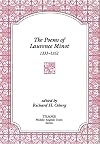
Poems celebrating English victories in the war with Scotland and the Hundred Years War 1333 to 1352, notably Halidon Hill, the siege of Calais, Crecy, Neville's Cross, and the Spaniards on the Sea, with some lesser-known episodes, eleven poems in all. This version has an introduction and a useful glossary..
You May Also Like
Associated Authors
Statistics
- Works
- 23
- Also by
- 2
- Members
- 131
- Popularity
- #154,466
- Rating
- 3.9
- Reviews
- 6
- ISBNs
- 35
- Languages
- 1