
Miles Kelly
Author of Explore and Learn: Science and Technology (Explore and Learn Volume 2)
About the Author
Image credit: By Stephan Davis - https://www.mileskelly.net/, CC BY-SA 4.0, https://commons.wikimedia.org/w/index.php?curid=88760954
Series
Works by Miles Kelly
Why Did Knights Fight? (First Questions And Answers: Knights And Castles) (2010) 34 copies, 1 review
My Storytime Collection Box Set-This Charming Collection of Fairy Tales, Fables and Animal Stories contains 20 Palm-Sized Picture Books (2017) 32 copies
Big Book of Fairy Tales-4 Classic Stories including Goldilocks and the Three Bears, Little Red Riding Hood, Puss in Boots and The Three Little Pigs (2014) 18 copies
Science Curious Questions and Answers – Bumper Book of Quirky Facts & Fun Illustrations to Excite Young Learners (Curious Questions & Answers) (2020) 10 copies
Encyclopedia of Space 9 copies
Dinosaur Stories: Five original stories will transport little dinosaur fans to prehistoric times (2021) 8 copies
Big Book of Living Things: A Guide to Everything Living on Our Planet: Extraordinary Facts, Fascinating Information and More (2007) 8 copies
Hans Christian Andersen The Brave Tin Soldier and other fairy tales (Hans Christian Andersen Tales) (2015) 7 copies
Children's Classic Collection Slipcase: Black Beauty, The Call of the Wild, The Jungle Book and The Secret Garden (2021) 3 copies
Read With Me - Betime Stories Boxset: 10 picture books in a handy and attractive box set (2021) 3 copies
Learn to Read Phonics Little Red Riding Hood: 24 Page Illustrated Book for Children aged 3+ (2020) 3 copies
Little Red Riding Hood 3 copies
Magical Fairy Tales 2 copies
Planet Earth : First Q& A 2 copies
Snow white and the seven dwarfs 2 copies
Learn to Read Phonics Goldilocks and the Three Bears: 24 Page Illustrated Book for Children aged 3+ (2020) 2 copies
Seashore Life 2 copies
Reptiles and Amphibians 2 copies
Snow White and the Seven Dwarfs 2 copies
The History Book 2 copies
Big Book of Nursery Rhymes-This Delightful Compendium contains Traditional Singing, Playing, Number and Bedtime Rhymes (2017) 2 copies
Alice in Wonderland 2 copies
My Fairytale Time Aladdin 2 copies
100 Facts About Cats & Kittens 2 copies
Learn to Read Phonics The Three Little Pigs: 24 Page Illustrated Book for Children aged 3+ (2023) 2 copies
Children's Classic Library Slipcase: Alice's Adventures in Wonderland, Peter Pan, Pinocchio and The Wonderful Wizard of Oz (2021) 2 copies
Read With Me - Dinosaur Stories Boxset: 10 picture books in a handy and attractive box set (2021) 1 copy
The Wolf in Sheep's Clothing 1 copy
Wild Animals 1 copy
The Book of Numbers 1 copy
NURSERY RHYMES 1 copy
DINOSAURS 1 copy
100+ First Words: On the Go 1 copy
Oceans 1 copy
PLANET EARTH 1 copy
100 Nursery Rhymes: 100 Hundred Nursery Rhymes Packed with Charm and Detail to Capture the Imaginations of Young Children (2021) 1 copy
Flashcards: Bugs! 27 double-sided cards suitable for 3 year olds (Lots to Spot Flashcards) (2020) 1 copy
Penguins 1 copy
HUMAN BODY 1 copy
Space 1 copy
Prehistoric Life 1 copy
The Three Billy Goats Gruff 1 copy
Encyclopedia of Earth 1 copy
world of animals 1 copy
The Secret Garden 1 copy
WHY DO KNEES BEND? 1 copy
What about …… dinosaurs? 1 copy
Three Little Kittens 1 copy
British Wildlife 1 copy
Project Space 1 copy
Home Sticker Book 1 copy
WHY DOES SATURN HAVE RINGS? 1 copy
Encyclopaedia of Body 1 copy
50 Fairy Stories 1 copy
Princess Time Repunzel 1 copy
WHY DOES THE EARTH SPIN? 1 copy
Food Sticker Book 1 copy
Do Plants Eat Meat? 1 copy
First Words & Numbers 1 copy
Mighty Warriors 1 copy
Learn to Read Phonics Snow White and the Seven Dwarfs: 24 Page Illustrated Book for Children aged 3+ (2020) 1 copy
The Three Little Pigs 1 copy
Nursery Rhymes-This Delightful Compendium contains 50+ Traditional Singing, Playing, Number and Bedtime Rhymes (2021) 1 copy
Who is in the mirror? 1 copy
Snakes 1 copy
Story Time Cinderella 1 copy
The Frog and the Ox 1 copy
Why do elephants trumpet? 1 copy
Questions and Answers Oceans 1 copy
Whales & Dolphins 1 copy
Owls 1 copy
I am a lizard 1 copy
Amazing Sharks 1 copy
A to Z Encyclopedia 1 copy
Junior Dictionary & Thesurus 1 copy
Animal Adventures 1 copy
A to Z Encyclopedia Volume * 1 copy
First Library Stories & Rhymes Slipcase: Traditional Stories, Nursery Rhymes and Contemporary Fiction (2021) 1 copy
I am a penguin! 1 copy
Are my bones bendy? 1 copy
Dinosaurs : first Q & A 1 copy
100 Poems for Children 1 copy
Atlas of the World 1 copy
Bugs - 100 Facts 1 copy
Animals Sticker Book 1 copy
Can Astronauts see me? 1 copy
Adventures Stories for Boys 1 copy
100 Facts Spies 1 copy
Adventure Stories for Boys 1 copy
Monkeys & Apes 1 copy
Associated Works
Explore and Learn: The Natural World (Explore and Learn Volume 3) (2010) — Producer — 331 copies, 1 review
Tagged
Common Knowledge
Members
Reviews

I thought it was a nice way to learn new stories, but my children had heard stories from Grimm's Fairy Tales first and did not like the way these versions were written. I don't consider it a good children's book when the children aren't interested. I attempted reading this with them over the years from ages 3 to 10.
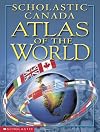
It’s that time of year, school is back in session, things are rolling along well — then suddenly you realize that your child’s hand-me-down atlas is sadly outdated. Perhaps we’re the only family with antiquated student atlases on the shelf with outdated political boundaries, but our latest reference title far surpasses our antiquated student atlas.
The Scholastic Canada Atlas of the World is a beautiful beginner’s reference, perfect for children ready to dig into some more show more substantive geographic and cultural facts than are included in the simplest primer-style atlases. Filled with gorgeous, full colour photography, vivid maps, and a wide range of geographic details, this title brings the study of place and people to life.
Opening with an introduction to the making of maps, using maps, the solar system, time zones, tectonic plates, oceans, climate, the water cycle, natural resources and much more — this wealth of information provides a rich fount to draw general knowledge from in addition to the splendid maps. Like all atlases this information is written from an old-earth perspective.
Divided into seven continental regions: North America, South America, Europe, Asia, Africa, Oceania, and Antarctica, each region is colour coded. All of the North American pages (Canada and the U.S. receive several two-page spreads each) are backed by a pastel lilac, the South American pages a pastel peach, and so on.
Each included country features a cultural and geographic overview that includes climate, economy and more, with fact boxes including: highest mountains, longest rivers, flags, life facts, trivia, time zones, latitude and longitude, and demographics. A search and find box provides cities of note and their alphanumeric reference (corresponding to a grid surrounding the page border) B5, for example is a “latitude” of B, and a “longitude” of 5 within that specific map. As the maps are all scaled separately, each includes it’s own scale and compass rose.
Pictures of the country’s people and well known places bring the region to life, while the life facts box which compares and contrasts life span and how many people in 100 own cars of the target country with Canada — or the US in the American edition Scholastic Atlas of the World. Smaller countries sharing borders may share a two-page spread, such as North and South Korea, Iraq and Iran, or the Ukraine, Belarus, and Moldova.
Due to the unique two-page spread design, the country maps are placed dead center with fact boxes, text and photographs ringing the map. In a few cases this results in the obfuscation of parts of the letters making up place names, but they are still readable with a bit of squinting and page pushing.
What has endeared me to this atlas above others is the inherent appeal it holds for my children. It invites browsing, and I’ve seen my six-year-old lying on the floor just taking in the photos, the maps, and the people. I’ve had to pry her away from its pages on more than one occasion. Isn’t this just what we hope for as parents: reference books that will become welcoming friends to our children? The Scholastic Canada Atlas of the World, or its American counterpart, the Scholastic Atlas of the World combine up-to-date maps, comprehensive (but not overwhelming) geographic data, and a warmly appealing format — I highly recommend it.
Reviewed at quiverfullfamily.com show less
The Scholastic Canada Atlas of the World is a beautiful beginner’s reference, perfect for children ready to dig into some more show more substantive geographic and cultural facts than are included in the simplest primer-style atlases. Filled with gorgeous, full colour photography, vivid maps, and a wide range of geographic details, this title brings the study of place and people to life.
Opening with an introduction to the making of maps, using maps, the solar system, time zones, tectonic plates, oceans, climate, the water cycle, natural resources and much more — this wealth of information provides a rich fount to draw general knowledge from in addition to the splendid maps. Like all atlases this information is written from an old-earth perspective.
Divided into seven continental regions: North America, South America, Europe, Asia, Africa, Oceania, and Antarctica, each region is colour coded. All of the North American pages (Canada and the U.S. receive several two-page spreads each) are backed by a pastel lilac, the South American pages a pastel peach, and so on.
Each included country features a cultural and geographic overview that includes climate, economy and more, with fact boxes including: highest mountains, longest rivers, flags, life facts, trivia, time zones, latitude and longitude, and demographics. A search and find box provides cities of note and their alphanumeric reference (corresponding to a grid surrounding the page border) B5, for example is a “latitude” of B, and a “longitude” of 5 within that specific map. As the maps are all scaled separately, each includes it’s own scale and compass rose.
Pictures of the country’s people and well known places bring the region to life, while the life facts box which compares and contrasts life span and how many people in 100 own cars of the target country with Canada — or the US in the American edition Scholastic Atlas of the World. Smaller countries sharing borders may share a two-page spread, such as North and South Korea, Iraq and Iran, or the Ukraine, Belarus, and Moldova.
Due to the unique two-page spread design, the country maps are placed dead center with fact boxes, text and photographs ringing the map. In a few cases this results in the obfuscation of parts of the letters making up place names, but they are still readable with a bit of squinting and page pushing.
What has endeared me to this atlas above others is the inherent appeal it holds for my children. It invites browsing, and I’ve seen my six-year-old lying on the floor just taking in the photos, the maps, and the people. I’ve had to pry her away from its pages on more than one occasion. Isn’t this just what we hope for as parents: reference books that will become welcoming friends to our children? The Scholastic Canada Atlas of the World, or its American counterpart, the Scholastic Atlas of the World combine up-to-date maps, comprehensive (but not overwhelming) geographic data, and a warmly appealing format — I highly recommend it.
Reviewed at quiverfullfamily.com show less
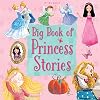
“Big Book of Princess Stories”
The “Big Book of Princess Stories” is a collection of fairy tale stories about the princesses Cinderella, Snow White, Sleeping Beauty and The Princess and the Pea. I liked this book for two reasons. I liked the illustrations and the style of writing. These two elements make it accessible for early readers.
The illustrations of this book enhance the story in that that the story could be told with just the pictures. It is important for a picture to have show more illustrations that tell the story just as well as the words do. For example, for the Cinderella story, there were pictures of Cinderella being sad while her sister laughed in the background. It had a picture of Cinderella in the pumpkin carriage and her fairy godmother. It also had pictures of Cinderella at the ball dancing with the prince and then the prince trying to find Cinderella. A reader could retell the story just from the information they got from the pictures. The drawings are also simple enough for young readers to understand, yet it is realistic enough to keep them engaged.
The style of writing was also simple and some of the words in the sentences were emphasized by capitalizing the words and by making them a different font. This will also keep young readers interested and will allow them to follow along. For example, in the Sleeping Beauty story, one of the sentences said “The queen collapsed into the king’s arms in shock, but then the last fairy stepped forwards, ‘WAIT!’ she said. Having the capital letters grabs the reader’s attention.
The common theme in all of these stories is kindness because all of the princesses show kindness and therefore have a happy ending. show less
The “Big Book of Princess Stories” is a collection of fairy tale stories about the princesses Cinderella, Snow White, Sleeping Beauty and The Princess and the Pea. I liked this book for two reasons. I liked the illustrations and the style of writing. These two elements make it accessible for early readers.
The illustrations of this book enhance the story in that that the story could be told with just the pictures. It is important for a picture to have show more illustrations that tell the story just as well as the words do. For example, for the Cinderella story, there were pictures of Cinderella being sad while her sister laughed in the background. It had a picture of Cinderella in the pumpkin carriage and her fairy godmother. It also had pictures of Cinderella at the ball dancing with the prince and then the prince trying to find Cinderella. A reader could retell the story just from the information they got from the pictures. The drawings are also simple enough for young readers to understand, yet it is realistic enough to keep them engaged.
The style of writing was also simple and some of the words in the sentences were emphasized by capitalizing the words and by making them a different font. This will also keep young readers interested and will allow them to follow along. For example, in the Sleeping Beauty story, one of the sentences said “The queen collapsed into the king’s arms in shock, but then the last fairy stepped forwards, ‘WAIT!’ she said. Having the capital letters grabs the reader’s attention.
The common theme in all of these stories is kindness because all of the princesses show kindness and therefore have a happy ending. show less
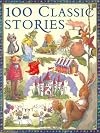
"100 Classic Stories" is helpfully organized by age group. Stories for the four to six year-old's and the seven to nine year-old's are helpfully categorized in the table of contents.
Stories are also categorized by boy or girl protagonists, royal protagonists, animal protagonists, spells, legends, and mythical creatures.
Most of the stories have been censored and sanitized for younger readers, even the villains fates are never too terrible. For instance the story of "The Three Little Pigs" has show more been changed so that all of the pigs live and the big bad wolf only falls into some hot water and then runs away. Even the section for older readers is adapted this way; the mermaid from "The Little Mermaid" is rescued from becoming sea foam by fairies.
Every story has lovely, detailed illustrations in different styles that show exactly what the text describes.
I found the inclusion of different myths from cultures that are usually overlooked in the fairy tale section to be quite refreshing, and interestingly enough these stories escaped the censoring the other fairy tales in this book received. Native American stories, Egyptian stories, Japanese stories, and others are included. show less
Stories are also categorized by boy or girl protagonists, royal protagonists, animal protagonists, spells, legends, and mythical creatures.
Most of the stories have been censored and sanitized for younger readers, even the villains fates are never too terrible. For instance the story of "The Three Little Pigs" has show more been changed so that all of the pigs live and the big bad wolf only falls into some hot water and then runs away. Even the section for older readers is adapted this way; the mermaid from "The Little Mermaid" is rescued from becoming sea foam by fairies.
Every story has lovely, detailed illustrations in different styles that show exactly what the text describes.
I found the inclusion of different myths from cultures that are usually overlooked in the fairy tale section to be quite refreshing, and interestingly enough these stories escaped the censoring the other fairy tales in this book received. Native American stories, Egyptian stories, Japanese stories, and others are included. show less
Awards

You May Also Like


Associated Authors
Statistics
- Works
- 516
- Also by
- 4
- Members
- 6,104
- Popularity
- #4,032
- Rating
- 4.0
- Reviews
- 23
- ISBNs
- 610
- Languages
- 5