
Sang H. Kim
Author of Ultimate Flexibility: A Complete Guide to Stretching for Martial Arts
About the Author
Sang H. Kim is the creator of Power Breathing for Life. He is the author of international bestsellers Ultimate Flexibility, Ultimate Fitness Through Martial Arts, and 1001 Ways to Motivate Yourself and Others. His books have been translated into 22 languages. He holds MS degree in Sports Science show more and is a certified 8th degree black belt and martial arts instructor show less
Works by Sang H. Kim
Vital Point Strikes: The Art and Science of Striking Vital Targets for Self-defense and Combat Sports (2008) 36 copies, 1 review
Complete Taekwondo Poomsae: The Official Taegeuk, Palgwae and Black Belt Forms of Taekwondo (2007) 12 copies
Complete Kicking: The Ultimate Guide to Kicks for Martial Arts Self-defense & Combat Sports (2009) 8 copies
Power Breathing: Breathe Your Way to Inner Power, Stress Reduction, Performance Enhancement, Optimum Health & Fitness (2008) 5 copies
Muye Dobo Tongji : The Comprehensive Illustrated Manual of Martial Arts of Ancient Korea (2000) 4 copies
Tagged
Common Knowledge
There is no Common Knowledge data for this author yet. You can help.
Members
Reviews
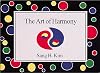
The Art of Harmony takes the reader on a journey through life, drawing a new perspective on the way we experience our very being. Blending the wisdom of east and west, it charts the course of our life, from the first realizatons of mortality through discord, happiness, freedom and eventually to the fulfillment of wisdom and harmony that we all seek. The thoughts and wisdom of The Art of Harmony are sure to touch a place deep within you and open the doors to a whole new way of looking at show more life.
Contents
Preface
Chapter 1 Truth
Chapter 2 Life and death
Chapter 3 Discord
Chapter 4 Detachment
Chapter 5 Freedom
Chapter 6 Happiness
Chapter 7 Fulfillment
Chapter 8 Wisdom
Chapter 9 Harmony show less
Contents
Preface
Chapter 1 Truth
Chapter 2 Life and death
Chapter 3 Discord
Chapter 4 Detachment
Chapter 5 Freedom
Chapter 6 Happiness
Chapter 7 Fulfillment
Chapter 8 Wisdom
Chapter 9 Harmony show less
Vital Point Strikes-The Art and Science of Vital Target Striking for Self-Defense & Combat Sports by Sang H. Kim
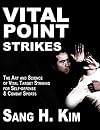
Vital Points Strikes is a guide to pressure point striking for the average martial artist. Sang H. Kim demystifies the lore of vital point strikes for self-defense and combat sports.
For those new to the concept of vital points, he begins by examining the Eastern theory of accupoints, meridians and ki (qi) and the Western scientific concepts of the nervous and circulatory systems, pain threshold and pain tolerance, and the relationship between pain and fear. This synthesis of accepted Eastern show more and Western theories helps the reader understand what makes vital point striking work and why it can be not only useful in fighing, but deadly. Based on this introduction, you'll learn about 202 vital points for use in fighting including the name, point number, location, involved nerves and blood vessels, applicable techniques, sample applications, and potential results for each point. The points are illustrated in detail on an anatomically correct human model, with English, Chinese, and Korean names as well as point numbers for easy reference.
In addition to identifying the vital points, Sang H. Kim gives you detailed information about the types of techniques that work for vital points striking including a discussion of fighting zones and ranges, plexus strikes, stance and footwork, bodily weapons, striking directions and angles and dozens of applications for common empty hand, grappling, groundfighting, knife and gun attacks.
Based on over thirty years experience in the martial arts and in-depth research, Sang H. Kim has created one of the most complete books available on the art and science of vital point striking.
Sang H. Kim is an internationally respected author of 12 martial arts books, including the best sellers Ultimate Fitness through Martial Arts, Martial Arts After 40, Combat Strategy and 1001 Ways to Motivate Yourself and Others, and star of over 100 martial arts instructional videos/DVDs. He won the 1976 Korean National Champion and was named Instructor of the Year in Korea in 1983.
During his 25 years teachng martial arts in the US, he was featured in and his articles appeared in Black Belt Magazine, The Journal of Asian Martial Arts, Delta Sky Magazine, Combat, Taekwondo Times and over 100 other publications.
He holds an M.S. degree in sports science and Ph.D. in sports media studies.
Contents
Book 1 Vital point fundamentals
Chapter 1 Introduction to vital points
what is a vital point?-types of vital points; Pain threshold; Pain tolerance factors; 19 lethal points; 49 paralyzing points; 36 tactical points
Why vital points?
Cautions
Chapter 2 Vital point theories
Classic Eastern theory-12 meridians and 8 vessels; Two primary vesseles
Classic Western theory-Nervous system; On pain; Pain and reflexes; On fear of pain; The circulatory system
Synthesis f East and West
Chapter key points
Chapter 3 Fighting fundamentals
Fighting zones and ranges-Fighting zones; Fighting range
Region strategy
Fighting stance and footwork-Fighiting stance; Footwork
Striking directions and angles
Chapter 4 Bodily weapons and techniques
Hands-Fingertips; Knuckle punch/press; Fist; Open hand
Elbow
Knee
Foot
Headbutt
Book 2 vital points and techniques
Chapter 5 Plexus strikes
Nerve networks
12 major plexus
Applications
Chapter 6 Vital ponts on teh head & neck
Significance of the head and neck
Vital points on the head-Anterior head; Applications; Lateral head; Applications; Posterior head; Applications; Top of theheaad; Applications
Chapter 7 Vital points on the trunk
Significance of the trunk
Wital pointson the trunk-Anterior trunk; Applications; Posterior trunk; Applications
Chaper 8 Vital points on the arm & hand
Significance of the arm & hand
Vital points on the arm-Anterior arm; Applications; Posterior arm; Applications
Vital points on the hand-Antrior hand; Applications; Posterior hand; Applications
Chapter 9 Vital points on the leg & foot
Significance of the leg & foot
Vital points on the leg-Anterior leg; Applications; Posterior leg; Applications; Interior leg; Applications; Exterior leg; Applications
vital points on the foot-Anterior foot; Applications; Interior foot; Applications; Exteriro foot; Applications
Book 3 Vital point applications
Chapter 10 Vital point striking drills
Chapter 11 Standing fight applications
Chapter 12 Ground fight applications
Chapter 13 Knife defense applications
Chapter 14 Gun defense applications
Appendix-Vital point charts; Vital point terms
Refenences (bibliography)
Glosary
Index
About the author show less
For those new to the concept of vital points, he begins by examining the Eastern theory of accupoints, meridians and ki (qi) and the Western scientific concepts of the nervous and circulatory systems, pain threshold and pain tolerance, and the relationship between pain and fear. This synthesis of accepted Eastern show more and Western theories helps the reader understand what makes vital point striking work and why it can be not only useful in fighing, but deadly. Based on this introduction, you'll learn about 202 vital points for use in fighting including the name, point number, location, involved nerves and blood vessels, applicable techniques, sample applications, and potential results for each point. The points are illustrated in detail on an anatomically correct human model, with English, Chinese, and Korean names as well as point numbers for easy reference.
In addition to identifying the vital points, Sang H. Kim gives you detailed information about the types of techniques that work for vital points striking including a discussion of fighting zones and ranges, plexus strikes, stance and footwork, bodily weapons, striking directions and angles and dozens of applications for common empty hand, grappling, groundfighting, knife and gun attacks.
Based on over thirty years experience in the martial arts and in-depth research, Sang H. Kim has created one of the most complete books available on the art and science of vital point striking.
Sang H. Kim is an internationally respected author of 12 martial arts books, including the best sellers Ultimate Fitness through Martial Arts, Martial Arts After 40, Combat Strategy and 1001 Ways to Motivate Yourself and Others, and star of over 100 martial arts instructional videos/DVDs. He won the 1976 Korean National Champion and was named Instructor of the Year in Korea in 1983.
During his 25 years teachng martial arts in the US, he was featured in and his articles appeared in Black Belt Magazine, The Journal of Asian Martial Arts, Delta Sky Magazine, Combat, Taekwondo Times and over 100 other publications.
He holds an M.S. degree in sports science and Ph.D. in sports media studies.
Contents
Book 1 Vital point fundamentals
Chapter 1 Introduction to vital points
what is a vital point?-types of vital points; Pain threshold; Pain tolerance factors; 19 lethal points; 49 paralyzing points; 36 tactical points
Why vital points?
Cautions
Chapter 2 Vital point theories
Classic Eastern theory-12 meridians and 8 vessels; Two primary vesseles
Classic Western theory-Nervous system; On pain; Pain and reflexes; On fear of pain; The circulatory system
Synthesis f East and West
Chapter key points
Chapter 3 Fighting fundamentals
Fighting zones and ranges-Fighting zones; Fighting range
Region strategy
Fighting stance and footwork-Fighiting stance; Footwork
Striking directions and angles
Chapter 4 Bodily weapons and techniques
Hands-Fingertips; Knuckle punch/press; Fist; Open hand
Elbow
Knee
Foot
Headbutt
Book 2 vital points and techniques
Chapter 5 Plexus strikes
Nerve networks
12 major plexus
Applications
Chapter 6 Vital ponts on teh head & neck
Significance of the head and neck
Vital points on the head-Anterior head; Applications; Lateral head; Applications; Posterior head; Applications; Top of theheaad; Applications
Chapter 7 Vital points on the trunk
Significance of the trunk
Wital pointson the trunk-Anterior trunk; Applications; Posterior trunk; Applications
Chaper 8 Vital points on the arm & hand
Significance of the arm & hand
Vital points on the arm-Anterior arm; Applications; Posterior arm; Applications
Vital points on the hand-Antrior hand; Applications; Posterior hand; Applications
Chapter 9 Vital points on the leg & foot
Significance of the leg & foot
Vital points on the leg-Anterior leg; Applications; Posterior leg; Applications; Interior leg; Applications; Exterior leg; Applications
vital points on the foot-Anterior foot; Applications; Interior foot; Applications; Exteriro foot; Applications
Book 3 Vital point applications
Chapter 10 Vital point striking drills
Chapter 11 Standing fight applications
Chapter 12 Ground fight applications
Chapter 13 Knife defense applications
Chapter 14 Gun defense applications
Appendix-Vital point charts; Vital point terms
Refenences (bibliography)
Glosary
Index
About the author show less
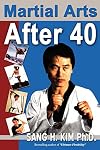
This book explores the effects of aging and how to combat them through martial arts. Best selling author Sang H. Kim's positive and enthusiastic approach will inspire, reassure and educate you, arming you with the confidence and skills to enjoy your training for years to come.
This book addresses important questions like:
How old is too old to start a martial art?
What exercises are best or dangerous for the over-40 martial artist?
What are the effects of aging and how can martial arts combat show more them?
How can baby boomers keep up in a martialarts class full of younger students?
What types of injuries are most prevalent after 40 and how can they be prevented?
Sang H. Kim is a forty-something martial artist who has been practicing and teaching the popular arts of taekwondo and junsado for over thirty years. He writes this book from the perspective of both teacher and practitioner, basing his advice on research, personal experience and conventional martial arts principles. In additon to authoring seven books and starring in dozens of instructional video tapes, he is a popular seminar presenter in the US, Europe and Asia.
Other titles by Sang H. Kim available from Turtle Press:
Taekwondo Kyorugi: Olympic Style Sparring
Teaching Martial Arts
1,001 Ways to Motivate Yourself and Others
Contents
Healthy body/Healthy mind
The ABC's of fitness
Diet and nutrition for martial artists
Choosing fitness
Fitness attributes after 40
Agility after 40
Power after 40
Reflexes after 40
Coordination after 40
Speed after 40
Endurance after 40
Creating a workout plan
Injury prevention and self-care
Overtraining
Skill development
Progressing in martial arts
Self-defense principles
Sparring
Forms
Weapons training
5 elements of success in martial arts
Your mind-body connection
When the going gets tough
Mastery points
Index show less
This book addresses important questions like:
How old is too old to start a martial art?
What exercises are best or dangerous for the over-40 martial artist?
What are the effects of aging and how can martial arts combat show more them?
How can baby boomers keep up in a martialarts class full of younger students?
What types of injuries are most prevalent after 40 and how can they be prevented?
Sang H. Kim is a forty-something martial artist who has been practicing and teaching the popular arts of taekwondo and junsado for over thirty years. He writes this book from the perspective of both teacher and practitioner, basing his advice on research, personal experience and conventional martial arts principles. In additon to authoring seven books and starring in dozens of instructional video tapes, he is a popular seminar presenter in the US, Europe and Asia.
Other titles by Sang H. Kim available from Turtle Press:
Taekwondo Kyorugi: Olympic Style Sparring
Teaching Martial Arts
1,001 Ways to Motivate Yourself and Others
Contents
Healthy body/Healthy mind
The ABC's of fitness
Diet and nutrition for martial artists
Choosing fitness
Fitness attributes after 40
Agility after 40
Power after 40
Reflexes after 40
Coordination after 40
Speed after 40
Endurance after 40
Creating a workout plan
Injury prevention and self-care
Overtraining
Skill development
Progressing in martial arts
Self-defense principles
Sparring
Forms
Weapons training
5 elements of success in martial arts
Your mind-body connection
When the going gets tough
Mastery points
Index show less
Power Breathing-Breath Your Way to Inner Power, Stress reduction, Performance Enhancement, Optimum Health & Fitness by Sang H. Kim
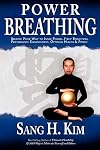
New to breathing exercises? Start with gentle breathing, a simple way to reconnect with your body and begin your journey toward renewed energy. When you're ready, the core power breathing exercises of steady, staccato and explosive breathing are a total body energizing workout that will leave you feeling refreshed and revitalized. Finally, give attention to problem areas with healing breathing-ten exercises to release tension and promote flexibility through controlled breathing. Sang H. Kim show more also demystifies the secret of power breathing-condensing.
Power breathing is an excellent way of improving lung capacity, strengthening the core muscles of the torso, increasing stamina, reducing stess and channeling inner energy. Its principles can be applied to martial art training, yoga, tai chi and many aerobic sports.
Sang H. Kim is the creator of power breathing for life. He is the author of international bestsellers Ultimate Flexibility, Ultimate Fitness Through Martial arts, and 1001 Ways to Motivate Yourself and Others. His books have been translated into 22 languages. He holds MS degree in Sports Science and is a cerfified 8th degree black belt and martial arts instructor.
Power breathing includes:
How and why power breathing works
Power breathing basics & principles
The golden center & condensing
5 types of power breathing
Centering exercises
Progressive training-novice to advancedd
Step-by-step, easy to understand instructions
Photos, illustrations and diagrams
Power breathing workout exercises
Strengthening & toning tips
Skill level variations
Keys to successful workout
Contents
Preface
Dedication
Acknowledgements
Note the readers
Chapter 1 Introduction
A new look at breathing
Breathing and power
Power breathing in action
What is power breathing?
Small things first
The magic stone
The unconscious consciousness
Chapter 2 Power breathing principles
Breathing methods comparison
Power breathing: How it works
Three steps of power breathing
Power breathing keys
Breathing power conmes from...-Condensing power; Diaphragm tension
Why power breathing?
Breathing physiology
The role of oxygen
Chapter 3 Power breathing basics
The golden center-Centering for power; Energy centers; The feet: Foundation of the body; Synchronize the body
Follow the rhythmic flow
Duration control & intensity level
3 exercises for centering and rhythmic flow
Exercises for resting the organs
Chapter 4 Gentle breathing
Holding the breath
Gentle breathing effects
Sitting breathing
Chapter 5 Explosive breathing 69
Five step breathing
Explosive breathing
Chapter 6 Steady breathing
Control the gates
Steady breathing
Chapter 7 Staccato breathing
Staccato breathing
Eight beat breathing
Chapter 8 Healing breathing
Supine position-Compresssion breathing; Uplifting; Vertical lifting; Diamond pull; Hip lifting 1 & 2
Kneeling position-Rolling cat; Arching cat; Pelvis opening; Camel position; Frog position
Cool down
Chapter 9 Power breathing workouts
About the author
Index show less
Power breathing is an excellent way of improving lung capacity, strengthening the core muscles of the torso, increasing stamina, reducing stess and channeling inner energy. Its principles can be applied to martial art training, yoga, tai chi and many aerobic sports.
Sang H. Kim is the creator of power breathing for life. He is the author of international bestsellers Ultimate Flexibility, Ultimate Fitness Through Martial arts, and 1001 Ways to Motivate Yourself and Others. His books have been translated into 22 languages. He holds MS degree in Sports Science and is a cerfified 8th degree black belt and martial arts instructor.
Power breathing includes:
How and why power breathing works
Power breathing basics & principles
The golden center & condensing
5 types of power breathing
Centering exercises
Progressive training-novice to advancedd
Step-by-step, easy to understand instructions
Photos, illustrations and diagrams
Power breathing workout exercises
Strengthening & toning tips
Skill level variations
Keys to successful workout
Contents
Preface
Dedication
Acknowledgements
Note the readers
Chapter 1 Introduction
A new look at breathing
Breathing and power
Power breathing in action
What is power breathing?
Small things first
The magic stone
The unconscious consciousness
Chapter 2 Power breathing principles
Breathing methods comparison
Power breathing: How it works
Three steps of power breathing
Power breathing keys
Breathing power conmes from...-Condensing power; Diaphragm tension
Why power breathing?
Breathing physiology
The role of oxygen
Chapter 3 Power breathing basics
The golden center-Centering for power; Energy centers; The feet: Foundation of the body; Synchronize the body
Follow the rhythmic flow
Duration control & intensity level
3 exercises for centering and rhythmic flow
Exercises for resting the organs
Chapter 4 Gentle breathing
Holding the breath
Gentle breathing effects
Sitting breathing
Chapter 5 Explosive breathing 69
Five step breathing
Explosive breathing
Chapter 6 Steady breathing
Control the gates
Steady breathing
Chapter 7 Staccato breathing
Staccato breathing
Eight beat breathing
Chapter 8 Healing breathing
Supine position-Compresssion breathing; Uplifting; Vertical lifting; Diamond pull; Hip lifting 1 & 2
Kneeling position-Rolling cat; Arching cat; Pelvis opening; Camel position; Frog position
Cool down
Chapter 9 Power breathing workouts
About the author
Index show less
You May Also Like


Statistics
- Works
- 26
- Members
- 314
- Popularity
- #75,176
- Rating
- 3.6
- Reviews
- 8
- ISBNs
- 26
- Languages
- 2