

Jwing-Ming Yang
Author of The Root of Chinese Qigong: Secrets of Health, Longevity, & Enlightenment
About the Author
Yang, Jwing-Ming, PhD, is a world-renowned author, scholar, and techr. He has been involved in Chinese martial arts since 1961. Dr. Yang's writing and teaching include the subjects of kung fu, tai chi chuan, and meditation, and he is a leading authority on qigong. Dr. Yang is the author of over 35 show more books and 80 videos. show less
Series
Works by Jwing-Ming Yang
The Root of Chinese Qigong: Secrets of Health, Longevity, & Enlightenment (1989) 213 copies, 1 review
Analysis of Shaolin Chin Na: Instructor's Manual for All Martial Styles (Ymaa Book Series) (1987) 116 copies, 3 reviews
Comprehensive Applications of Shaolin Chin Na: The Practical Defense of Chinese Seizing Arts for All Styles (Qin Na : the Practical Defense of Chinese Seizing Arts for All Martial… (1995) 71 copies, 1 review
Qigong for Health & Martial Arts: Exercises and Meditation (Qigong, Health and Healing) (1998) 66 copies, 1 review
Qigong, The Secret of Youth: Da Mo's Muscle/Tendon Changing and Marrow/Brain Washing Classics (2000) 53 copies, 2 reviews
Baguazhang: Emei Baguazhang Theory and Applications (Chinese Internal Martial Arts) (1996) 46 copies
Advanced Yang Style Tai Chi Chaun: Tai Chi Theory and Tai Chi Jing (Advanced Yang Style Tai Chi Chuan) (1986) 41 copies, 1 review
The Essence of Tai Chi Chi Kung : Health and Martial Arts (YMAA Publication Center Book Series, B014) (1990) 39 copies, 1 review
Tai Chi Theory and Martial Power: Advanced Yang Style Tai Chi Chaun (Martial Arts-Internal) (1996) 34 copies
Tai Chi Chuan Martial Applications: Advanced Yang Style Tai Chi Chaun (Martial Arts-Internal Series) (1996) 32 copies
Muscle/Tendon Changing and Marrow/Brain Washing Chi Kung: The Secret of Youth (YMAA chi kung series) (1989) 30 copies, 2 reviews
The Essence of Taiji Qigong: The Internal Foundation of Taijiquan (Martial Arts-Qigong) (1998) 29 copies
Taiji Sword, Classical Yang Style: The Complete Form, Qigong & Applications (Martial Arts-Internal) (1999) 27 copies
The Eight Pieces of Brocade: A Wai Dan Chi Kung Exercise Set for Maintaining and Improving Health (Ymaa Book Series, 10) (1988) 20 copies
Tai Chi Secrets of the Ancient Masters: Selected Readings from the Masters (Tai Chi Treasures) (1999) 19 copies, 1 review
Tai Chi Secrets of the Yang Style: Chinese Classics, Translations, Commentary (2001) 8 copies, 1 review
Qigong for Arthritis: The Chinese Way of Healing and Prevention : Massage, Cavity Press, and Qigong Exercises (1991) 8 copies
Pain-Free Joints: Simple Qigong Movements for Arthritis Healing and Prevention (2017) 5 copies, 1 review
Arthritis The Chinese Way of Healing and Prevention-Massage, Cavity Press, and Qigong Exercises (Qigong-Health and Healing) (1996) 3 copies
Starověké čínské zbraně : průvodce historií válečných nástrojů a tradičních zbraní čínských… (2002) 2 copies
The Eight Pieces of Brocade (Ba Duann Gin) A Wai Dan Chi Kung Exercise Set for Improving and Maintaining Health 1 copy, 1 review
Bundle: Tai Chi Chuan Classical Yang 108 Form Book and DVD by Dr. Yang, Jwing-Ming (YMAA) (2016) 1 copy
Qigong Secret of Youth 3rd. ed.: Da Mo's Muscle/Tendon Changing and Marrow/Brain Washing Classics (Qigong Foundation) (2022) 1 copy
Shen Gong and Nei Dan in Da Xuan: A Manual for Working with Mind, Emotion, and Internal Energy 1 copy
Sun Chasers 1 copy
Associated Works
Tagged
Common Knowledge
- Other names
- JWING-MING, Yang
JWING MING, Yang - Birthdate
- 1946-8-11
- Gender
- male
- Education
- PhD in Mechanical Engineering from Purdue University
Shaolin White Crane
Tai chi chuan - Organizations
- Yang's Martial Arts Association
- Awards and honors
- Man of the Year by Inside Kung Fu Magazine (1990 and 2007)
Kung Fu Artist of the Year by Black Belt Magazine (2003) - Relationships
- Master Cheng, Gin Gsao (Teacher)
Master Kao Tao (Teacher) - Nationality
- Taiwan
- Birthplace
- Taiwan
- Associated Place (for map)
- Taiwan
Members
Reviews
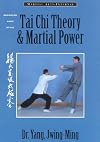
A must for advanced students, Tai Chi Theory & Martial Power is the next level in Tai Chi Chuan training. This book is witten expecially for those who have learned the form, begun Pushing Hands, and now want to develop and refine their tai chi skills.
Tai Chi Theory & Martial Power focuses on the martial essence of tai chi chuan, an aspect many other books ignore. This book explores in depth the subject of jing (internal martial power), general tai chi theory, and the application of chi in show more the tai chi form. Because jing training is essential to martial tai chi, this work is a valuable reference that no serious practitioner should be without.
A comprehensive training plan for jing (power) development.
Understand the difference between true jing (internal power) and li (muscular power).
Learn how to accumulate chi and jing in the tai chi postures.
Discover the essential role your mind plays in tai chi and jing practice.
Includes a special selection of tai chi poems, translated and with commentary by Dr. Yang.
Dr. Yang, Jwing-Mingis a renowned writer and teacher of Chinese martial arts and Chi Kung, and the author of twenty-one books. He lives in Lexington, Massachusetts.
'...the reader is fofrrtunate to have dr. Yang for a guide.'-Master Jou, Tsung Hwa, from the Foreword
Contents
Disclaimer
Acknowledgments
About the author
Foreword by Grandmaster Jou, Tsung-Hwa
Preface
Preface-New edition
Chapter 1 Generational introduction
Intoduction
General history of taijiquan
History of yang style taijiquan
What is taijiquan?
What does taiji training include?
The proper approach and the sequence of learning taiji-The proper approach to learning taiji; Training sequence
The real meaning of taijiquan
Bibliography
Chapter 2 Qi and taijiquan
Introduction
Qi-General concepts; Qi and health; Qi generation; Qi and the mind; Qi and the martial arts; Qi and hand forms
Qi and taijiquan-Qi generation and transportation in taijiquan; Qi and breathing; Qi and shen; Qi and the mind in taijiquan; The highest level of qi transportation
Posture and taijiquan
How to practice the taijiquan sequence
Chapter 3 Jin
Introduction
General definition of jin-The diffrence between jin and li; The range of jin
General theory of taiji jin-Categories of jin; Jin and yi; Jin muscles, and qi; Jin and the feet; Jin and the legs; Jin, the waist and the spine; Jin and the hands; Jin and sound; Balancing jin; Jin's substantial and insubstantial
Accumulating jin in the postures-Legs; Hips; Waist; Torso; Sholulder; Elbows; Wrists; Hands
The key points of taiji jin
The different jins and their applications
Precautions for beginners to jin training
List of the different jins
Sensing jins
Manifested jins-Offensive (yang) jin; Offensive with some defense (some yin in yang) jins
Defensive (yin) jins
Purely defensive (yin) jins
Defense with some offense (some yang in yin) jins
Neutral (neither offense nor defense) jins
Leg jins-Low kicks; Middle kicks; High kicks; Spinning kicks
Summary of jin trainng
Chapter 4 Concllusion
Appendix A Taiji poetry and songs
Appendix B Translation and glossary of Chinese terms
Index show less
Tai Chi Theory & Martial Power focuses on the martial essence of tai chi chuan, an aspect many other books ignore. This book explores in depth the subject of jing (internal martial power), general tai chi theory, and the application of chi in show more the tai chi form. Because jing training is essential to martial tai chi, this work is a valuable reference that no serious practitioner should be without.
A comprehensive training plan for jing (power) development.
Understand the difference between true jing (internal power) and li (muscular power).
Learn how to accumulate chi and jing in the tai chi postures.
Discover the essential role your mind plays in tai chi and jing practice.
Includes a special selection of tai chi poems, translated and with commentary by Dr. Yang.
Dr. Yang, Jwing-Mingis a renowned writer and teacher of Chinese martial arts and Chi Kung, and the author of twenty-one books. He lives in Lexington, Massachusetts.
'...the reader is fofrrtunate to have dr. Yang for a guide.'-Master Jou, Tsung Hwa, from the Foreword
Contents
Disclaimer
Acknowledgments
About the author
Foreword by Grandmaster Jou, Tsung-Hwa
Preface
Preface-New edition
Chapter 1 Generational introduction
Intoduction
General history of taijiquan
History of yang style taijiquan
What is taijiquan?
What does taiji training include?
The proper approach and the sequence of learning taiji-The proper approach to learning taiji; Training sequence
The real meaning of taijiquan
Bibliography
Chapter 2 Qi and taijiquan
Introduction
Qi-General concepts; Qi and health; Qi generation; Qi and the mind; Qi and the martial arts; Qi and hand forms
Qi and taijiquan-Qi generation and transportation in taijiquan; Qi and breathing; Qi and shen; Qi and the mind in taijiquan; The highest level of qi transportation
Posture and taijiquan
How to practice the taijiquan sequence
Chapter 3 Jin
Introduction
General definition of jin-The diffrence between jin and li; The range of jin
General theory of taiji jin-Categories of jin; Jin and yi; Jin muscles, and qi; Jin and the feet; Jin and the legs; Jin, the waist and the spine; Jin and the hands; Jin and sound; Balancing jin; Jin's substantial and insubstantial
Accumulating jin in the postures-Legs; Hips; Waist; Torso; Sholulder; Elbows; Wrists; Hands
The key points of taiji jin
The different jins and their applications
Precautions for beginners to jin training
List of the different jins
Sensing jins
Manifested jins-Offensive (yang) jin; Offensive with some defense (some yin in yang) jins
Defensive (yin) jins
Purely defensive (yin) jins
Defense with some offense (some yang in yin) jins
Neutral (neither offense nor defense) jins
Leg jins-Low kicks; Middle kicks; High kicks; Spinning kicks
Summary of jin trainng
Chapter 4 Concllusion
Appendix A Taiji poetry and songs
Appendix B Translation and glossary of Chinese terms
Index show less
Qigong, The Secret of Youth: Da Mo's Muscle/Tendon Changing and Marrow/Brain Washing Classics by Yang Jwing-Ming
the translations and contextualization of the source texts is fantastic, but the elaborated methods differ drastically and omit much material compared to all the other authorities on the traditions in question
excellent pictures, tho the force arrows r occasionally confusing. the applications were sufficiently illustrative, and the inclusion of so many qi kung forms was much appreciated!!
but its quite frustrating for the author to lay out what constitutes xingyiquan, say that he will walk u thru it, and then proceed to leave out a huge amount of essential content bc "its covered in many other books." ya, the entirety of this book is covered in many other books! thats not the point dude! if u show more thought there were enough xingyi books, dont write another one! and the huai-xian (or simply xingyiquan) form that is given in place of the 12 animals is also found in other manuals anyway! frustrating show less
but its quite frustrating for the author to lay out what constitutes xingyiquan, say that he will walk u thru it, and then proceed to leave out a huge amount of essential content bc "its covered in many other books." ya, the entirety of this book is covered in many other books! thats not the point dude! if u show more thought there were enough xingyi books, dont write another one! and the huai-xian (or simply xingyiquan) form that is given in place of the 12 animals is also found in other manuals anyway! frustrating show less
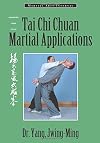
A comprehensive training guide for tai chi martial artists. with a wealth of information for novice and advanced students, this book examines the fighting techniques for tai chi chuan, including the martial applications for each movement of the form. The two-person fighting set, tai chi fighting tactics, and tai chi pushing hands trainng is also included.
Unique among tai chi books, this volume reveals the martial essence of tai chi that most other books ignore. Clearly explained and show more illustrated, tai chi chuan martial applications is a must for those who want to expand their knowledge and add depth and realism to their training.
Discover chin na, cavity strikes, and takedowns hidden in the tai chi form.
Improve your pushing hands with martial applications.
Learn the unique tai chi ball practice for jing training.
Sharpen your tai chi and self defense skills.
'Both Tai Chi Theory and Martial Power and Tai Chi Chuan Martial Applications lay a solid foundation for the internal and self-defense application of tai chi chuan. Everybody should read his books.'-T.T. Liang, from the Foreword
Dr. Yang, Jwing-Ming is a renowned author and teacher of Chinese martial art and qigong. Born in Taiwan, he has trained Gongfu, Taijiquan, and Qigong for thirty-five years. He is the author of twenty-five books. Dr. Yang lives in Lexington, Massachusetts.
Contents
Acknowledgements
About the author
Foreword by Tung-Tsai Liang
Preface
Preface-New edition
Chapter 1 Introduction
General introduction; Becoming a proficient Tai Chi martial artist; How to use this book
Chapter 2 Analysis of Tai Chi techniques
Introduction; General principles of Tai Chi techniques; Analysis of Tai Chi techniques
Chapter 3 Tai Chi pushing hands
Introduction; Key points in pushing hands training; Hen and Ha sounds; Tai Chi ball training; Pushing hands training; Martial applications of pushing hands
Chapter 4 Analysis of Tai Chi fighting set
Introduction; General rules and principles; Analysis of the Tai Chi fighting set
Chapter 5 Tai Chi fighting strategy
Introduction; About a real fight; How to connect in Tai Chi fighting; Attack timing; Jing in a fight; Poetry and songs
Chkapter 6 Conclusion
Appendix A Yang Style Tai Chi Chuan
Appendix B Yang Style Tai Chi fighting set
Appendix C Translation and glossary of Chinese terms
Index show less
Unique among tai chi books, this volume reveals the martial essence of tai chi that most other books ignore. Clearly explained and show more illustrated, tai chi chuan martial applications is a must for those who want to expand their knowledge and add depth and realism to their training.
Discover chin na, cavity strikes, and takedowns hidden in the tai chi form.
Improve your pushing hands with martial applications.
Learn the unique tai chi ball practice for jing training.
Sharpen your tai chi and self defense skills.
'Both Tai Chi Theory and Martial Power and Tai Chi Chuan Martial Applications lay a solid foundation for the internal and self-defense application of tai chi chuan. Everybody should read his books.'-T.T. Liang, from the Foreword
Dr. Yang, Jwing-Ming is a renowned author and teacher of Chinese martial art and qigong. Born in Taiwan, he has trained Gongfu, Taijiquan, and Qigong for thirty-five years. He is the author of twenty-five books. Dr. Yang lives in Lexington, Massachusetts.
Contents
Acknowledgements
About the author
Foreword by Tung-Tsai Liang
Preface
Preface-New edition
Chapter 1 Introduction
General introduction; Becoming a proficient Tai Chi martial artist; How to use this book
Chapter 2 Analysis of Tai Chi techniques
Introduction; General principles of Tai Chi techniques; Analysis of Tai Chi techniques
Chapter 3 Tai Chi pushing hands
Introduction; Key points in pushing hands training; Hen and Ha sounds; Tai Chi ball training; Pushing hands training; Martial applications of pushing hands
Chapter 4 Analysis of Tai Chi fighting set
Introduction; General rules and principles; Analysis of the Tai Chi fighting set
Chapter 5 Tai Chi fighting strategy
Introduction; About a real fight; How to connect in Tai Chi fighting; Attack timing; Jing in a fight; Poetry and songs
Chkapter 6 Conclusion
Appendix A Yang Style Tai Chi Chuan
Appendix B Yang Style Tai Chi fighting set
Appendix C Translation and glossary of Chinese terms
Index show less
You May Also Like


Associated Authors
Statistics
- Works
- 114
- Also by
- 1
- Members
- 1,805
- Popularity
- #14,259
- Rating
- 4.1
- Reviews
- 36
- ISBNs
- 165
- Languages
- 6
- Favorited
- 1