

Shou-Yu Liang
Author of Tai Chi Chuan: 24 & 48 Postures with Martial Applications
About the Author
Works by Shou-Yu Liang
Baguazhang: Emei Baguazhang Theory and Applications (Chinese Internal Martial Arts) (1996) 46 copies
Chinese Fast Wrestling for Fighting: The Art of San Shou Kuai Jiao Throws, Takedowns, & Ground-Fighting (1997) — Author — 34 copies, 2 reviews
Tagged
Common Knowledge
- Other names
- LIANG, Shou-Yu
LIANG, Shou Yu
Shou-Yu, LIANG
Shou Yu, LIANG - Birthdate
- 1943
- Gender
- male
Members
Reviews
Chinese Fast Wrestling for Fighting-The Art of San Shou Kuai Jiao (Throws, Takedowns, & Groundfighting) by Shou-Yu Liang
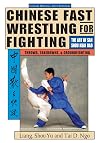
San shou kuai jiao (fast wrestling for fighting) is the Chinese martial art of throws and takedowns. A san shou kuai jiao throw can cause tremendous damage to our opponent while keeping you safely on your feet. For centuries, fighters in China have valued this art for its speed and power. Today, China's police and military forces are trained in its techniques.
Chinese Fast Wrestling for Fighting resents seventy-five throws and takedowns against punches, kicks, and grabs, and demonsstrates show more basic training methods such as stances, footwork, and strength training. Written by a gold medal winner in Chinese wrestling (Liang), this book is a complete training guide to this powerful martial art.
Throw your opponent to the ground-fast!
Effective for competition and self-defense.
460 action photos detail every technique.
Includes a chapter on groungfighting.
Master Liang, Shou-Yu is one of China's top coaches and a gold medal winner in Chinese wrestling. He is the co-author of Tai Chi Chuan-14 & 48 Forms (YMAA Publication Center), Baguazhang (YMAA Publication Center), and Hsing Yi Chuan (YMAA Publication Center). He lives in Vancouver, Canada.
Tai D. Ngo is a two-time Internal Style U.S. Grand Champion and martial arts instructor. A student of Dr. Yang, Jwing-Ming and Master Liang. Mr. Ngo lives in Malden, Massachusetts.
By far the most exhaustive guide to the art of Shuai Jiao (Aka Shuai Chiao) in English. Prior to this volume, there was only a single other work in English on this most practical of wrestling styles ('Fundamentals of Shuai Chiao' by Daniel Weng, who was a student of Chang Tung-sheng's). Authors Liang Shou-yu and Tai Ngo offer a thorough history, in-depth explanation of the theory behind this form of fighting, and important body-toughening exercises. Then they demonstrate a rather complete catalog of techniques from throws and locks to holding and locking on the ground. It will probably come as no surprise to seasoned martial artists who have had the opportunity to watch a Shuai Jiao match that the main differences between this art and others is the speed at which techniques are executed upon a subject (one of the reasons Shuai Jiao body training is sooo tough!).
Prior to this volume, the only exposure most of us (outside China and Taiwan) had to Shuai Jiao were a few scattered articles dealing with the great fighting master, Chang Tung-sheng, who maintained an incredible level of fitness even beyond his '70's! The one point which is neglected in this book is the importance of striking PRIOR to the execution of a Shuai Jiao technique (Chang Tung-sheng's theory). Of course, Author Liang Shou-yu is from Mainland China and not Taiwan, and may simply offer a path which deviates from Chang's known methods.
This book is a vast improvement over other Shuai Chiao books (mostly Chinese language), which limit themselves to a few illustrations. The editors and authors have teamed up to make sure the photographs convey correct direction and motion. A sequel dealing with either competitive Shuai Jiao or advanced applications (striking locking & throwing) would be most welcome. What a pity this magnificent art isn't more widely known and taught outside of China. -C.J. Hardman
These throws aren't the prettiest throws that you've seen, but they will most certainly get the job done. Unlike Judo, these throws aren't dependent on grabbing your opponents gi. Also, the throws very nasty in that they tie up your opponent so that he will have difficulty breaking his fall - perfect for combat.
Take it easy when practicing some of these throws and make sure that your partner knows how to slap out. -Tyrone Turner
Unlike most grappling arts, the philosophy of San Shou Kuai Jiao is to drop your opponent quickly without getting entangled and going to the ground yourself. You can use its throws to knock your attacker senseless and get cleanly away, all without breaking the fragile bones in your hands and feet with punches and kicks. This type of fighting is a good idea, but it is much easier read than done. This is evidenced by an informative section on groundfighting in the back of the book.
As good as this book is, its many excellent photos and descriptions can't teach people how to use its techniques effectively. Timing, speed and body feel are key to successful application against an unwilling opponent or attacker, especially in this type of wrestling. An ex high-school wrestler won't let you do this stuff to him unless you are very fast. Anyone who has a modicum of boxing or kicking skills will break your nose or worse as you attempt to grab them.
Having spent years sparring and wrestling in several different fighting arts, it's clear to me that only repititve practice with a qualified instructor can make fast wrestling fast enough to work. Unfortunately, unless you happen to live in LA or Columbus, Ohio, I have not been able to find qualified instructors of this art in the US. I wish there were more.
For people in the rest of the US, perhaps some of the techniques could be used to augment practice in other grappling arts such as judo, aikido or ju-jitsu. But you would have to find a very open-minded instructor. Good luck.
Contents
Acknowledments
About the authors
Foreword by Dr. Yang, Jwing-Ming
Preface by Master Liang, Shou-Yu
Preface by Tai D. Ngo
Chapter 1 General introduction
Introduction
General principles of san shoiu kuai jiao
The training stages of san shou kuai jiao
Chapter 2 Basic training
Introduction
Warm up exercises
San shou kuai jiao basic stances/leg training
San shou kuai jiao entering training
Fallilng
Chapter 3 Basic training with equipment
Introduction
Body conditioning with equipment
Chapter 4 Holding leg(s) throws
Introduction
Holding leg(s) throwing techniques
Chapter 5 Over the back/holding the waist throws
Introduction
Over back throwing techniques
Holding the waist throwing techniques
Chapter 6 Leg hooking throws
Introduction
Leg hooking techniques
Chapter 7 Other throwing methods
Introduction
Throwing techniques
Chapter 8 Groundfighting/controlling techniques
Inroduction
Groundfighting/controlling techniques
Appendix A Names of san shou kuai jiao techniques
Appendix B Translation and glossary of Chinese terms
Index show less
Chinese Fast Wrestling for Fighting resents seventy-five throws and takedowns against punches, kicks, and grabs, and demonsstrates show more basic training methods such as stances, footwork, and strength training. Written by a gold medal winner in Chinese wrestling (Liang), this book is a complete training guide to this powerful martial art.
Throw your opponent to the ground-fast!
Effective for competition and self-defense.
460 action photos detail every technique.
Includes a chapter on groungfighting.
Master Liang, Shou-Yu is one of China's top coaches and a gold medal winner in Chinese wrestling. He is the co-author of Tai Chi Chuan-14 & 48 Forms (YMAA Publication Center), Baguazhang (YMAA Publication Center), and Hsing Yi Chuan (YMAA Publication Center). He lives in Vancouver, Canada.
Tai D. Ngo is a two-time Internal Style U.S. Grand Champion and martial arts instructor. A student of Dr. Yang, Jwing-Ming and Master Liang. Mr. Ngo lives in Malden, Massachusetts.
By far the most exhaustive guide to the art of Shuai Jiao (Aka Shuai Chiao) in English. Prior to this volume, there was only a single other work in English on this most practical of wrestling styles ('Fundamentals of Shuai Chiao' by Daniel Weng, who was a student of Chang Tung-sheng's). Authors Liang Shou-yu and Tai Ngo offer a thorough history, in-depth explanation of the theory behind this form of fighting, and important body-toughening exercises. Then they demonstrate a rather complete catalog of techniques from throws and locks to holding and locking on the ground. It will probably come as no surprise to seasoned martial artists who have had the opportunity to watch a Shuai Jiao match that the main differences between this art and others is the speed at which techniques are executed upon a subject (one of the reasons Shuai Jiao body training is sooo tough!).
Prior to this volume, the only exposure most of us (outside China and Taiwan) had to Shuai Jiao were a few scattered articles dealing with the great fighting master, Chang Tung-sheng, who maintained an incredible level of fitness even beyond his '70's! The one point which is neglected in this book is the importance of striking PRIOR to the execution of a Shuai Jiao technique (Chang Tung-sheng's theory). Of course, Author Liang Shou-yu is from Mainland China and not Taiwan, and may simply offer a path which deviates from Chang's known methods.
This book is a vast improvement over other Shuai Chiao books (mostly Chinese language), which limit themselves to a few illustrations. The editors and authors have teamed up to make sure the photographs convey correct direction and motion. A sequel dealing with either competitive Shuai Jiao or advanced applications (striking locking & throwing) would be most welcome. What a pity this magnificent art isn't more widely known and taught outside of China. -C.J. Hardman
These throws aren't the prettiest throws that you've seen, but they will most certainly get the job done. Unlike Judo, these throws aren't dependent on grabbing your opponents gi. Also, the throws very nasty in that they tie up your opponent so that he will have difficulty breaking his fall - perfect for combat.
Take it easy when practicing some of these throws and make sure that your partner knows how to slap out. -Tyrone Turner
Unlike most grappling arts, the philosophy of San Shou Kuai Jiao is to drop your opponent quickly without getting entangled and going to the ground yourself. You can use its throws to knock your attacker senseless and get cleanly away, all without breaking the fragile bones in your hands and feet with punches and kicks. This type of fighting is a good idea, but it is much easier read than done. This is evidenced by an informative section on groundfighting in the back of the book.
As good as this book is, its many excellent photos and descriptions can't teach people how to use its techniques effectively. Timing, speed and body feel are key to successful application against an unwilling opponent or attacker, especially in this type of wrestling. An ex high-school wrestler won't let you do this stuff to him unless you are very fast. Anyone who has a modicum of boxing or kicking skills will break your nose or worse as you attempt to grab them.
Having spent years sparring and wrestling in several different fighting arts, it's clear to me that only repititve practice with a qualified instructor can make fast wrestling fast enough to work. Unfortunately, unless you happen to live in LA or Columbus, Ohio, I have not been able to find qualified instructors of this art in the US. I wish there were more.
For people in the rest of the US, perhaps some of the techniques could be used to augment practice in other grappling arts such as judo, aikido or ju-jitsu. But you would have to find a very open-minded instructor. Good luck.
Contents
Acknowledments
About the authors
Foreword by Dr. Yang, Jwing-Ming
Preface by Master Liang, Shou-Yu
Preface by Tai D. Ngo
Chapter 1 General introduction
Introduction
General principles of san shoiu kuai jiao
The training stages of san shou kuai jiao
Chapter 2 Basic training
Introduction
Warm up exercises
San shou kuai jiao basic stances/leg training
San shou kuai jiao entering training
Fallilng
Chapter 3 Basic training with equipment
Introduction
Body conditioning with equipment
Chapter 4 Holding leg(s) throws
Introduction
Holding leg(s) throwing techniques
Chapter 5 Over the back/holding the waist throws
Introduction
Over back throwing techniques
Holding the waist throwing techniques
Chapter 6 Leg hooking throws
Introduction
Leg hooking techniques
Chapter 7 Other throwing methods
Introduction
Throwing techniques
Chapter 8 Groundfighting/controlling techniques
Inroduction
Groundfighting/controlling techniques
Appendix A Names of san shou kuai jiao techniques
Appendix B Translation and glossary of Chinese terms
Index show less
Chinese Fast Wrestling for Fighting : The Art of San Shou Kuai Jiao Throws, Takedowns, & Ground-Fighting by Shou-Yu Liang
One of my favorite discussions of the use of throws within the context of wushu fighting. Borrows a lot from Shuai Chiao and Judo, but very well written.

Here is an extraordinary guide to taijiquan (tai chi chuan), the Grand Ultimate way of health and martial arts. This book is written in an easy to understand, step by step fashion, including guidelines for breathing, directing the mind, aligning the body, and devloping Qii (chi). The philosophy of yin-yang and the five elements, as well as martial applications, are explained to provide a broader perspective into this ancient art. This guide is useful as a learning tool for the beginner, as show more well as a reference guide for the more advanced practitioner.
Contents
Acknkowledgements
About the author: Master Liang ShouoYu
About the author: Mr. Wu Wen-Ching
Foreword by Grandmaster Wang Ju-Rong
Foreword by Dr. Yang Jwing-Ming
Preface by Master Liang Shouo-Yu
Preface by Mr. Wu Wen-Ching
Chapter 1 Genearl introduction
Introduction
The theoretical foundation of taijiquan-Yin-Yang theory; Five element theory; Energy (Qi) concept
The human body as a small universe
Taijiquan history-Creation of taijiquan; Taihiquan developement afte the Chen familiy
Brief history of the Yang family
Chapter 2 Guidelines for taijiquan practice
Introduction
Guidelines for body movements
Guidelines for breathing
Guidelines for directing your mind (Yi) and balancing your energy (Qi)
Chapter 3 Preparations and qigoing
Introduction
Warm up exercises
Qigong: Qi permeating technique
Stationary stances, moving stances, and hand forms
Chapter 4-24 posture taijiquan with applications
Introduction
24 posture taijiquan with key ponts and application
Chapter 5-48 posture taijiquan
Introduction
48 posture taijiquan
Conclusions
Appendix A: 24 and 48 posture translation
Appendix B: Translationof Chinese terms
Bibliography
Index show less
Contents
Acknkowledgements
About the author: Master Liang ShouoYu
About the author: Mr. Wu Wen-Ching
Foreword by Grandmaster Wang Ju-Rong
Foreword by Dr. Yang Jwing-Ming
Preface by Master Liang Shouo-Yu
Preface by Mr. Wu Wen-Ching
Chapter 1 Genearl introduction
Introduction
The theoretical foundation of taijiquan-Yin-Yang theory; Five element theory; Energy (Qi) concept
The human body as a small universe
Taijiquan history-Creation of taijiquan; Taihiquan developement afte the Chen familiy
Brief history of the Yang family
Chapter 2 Guidelines for taijiquan practice
Introduction
Guidelines for body movements
Guidelines for breathing
Guidelines for directing your mind (Yi) and balancing your energy (Qi)
Chapter 3 Preparations and qigoing
Introduction
Warm up exercises
Qigong: Qi permeating technique
Stationary stances, moving stances, and hand forms
Chapter 4-24 posture taijiquan with applications
Introduction
24 posture taijiquan with key ponts and application
Chapter 5-48 posture taijiquan
Introduction
48 posture taijiquan
Conclusions
Appendix A: 24 and 48 posture translation
Appendix B: Translationof Chinese terms
Bibliography
Index show less
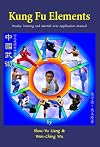
Kung Fu Elements is the Wushu training manual that martial artists have long awaited. It is the first of its kind in the English language. It contains the essence and elements of both Internal and External Styles of Wushu. It is an invaluable training reference for any instructor or serious student of any style of martial arts! This book contains seven chapters, plus an extensive glossary, including:
Classifications of wushu styles, history, and philosophy
Traditional methods for building a show more strong foundation
Techniques for developing powerful kicks
Sanshou fighting applications and combinations
Effective uses of grappling (Qinna) and takedown (Shuaijiao) techniques
Iron sand palm training and cavity press (dianxue)
Internal strength, light body, and many other kung fu attainment methods
A glossary of wushu styles, practitioners, and terms.
In Wushu, we train the physical to aid the shapeless; cultivate the shapeless to care for the physical. The training of Wushu gives one the necessary conditioning to master one's own physical body, and gain a greater understanding of inner workings of the mind and spirit. This book includes the training methods used by ancient Wushu masters to achieve great heights. With this book at your finger tips and your desire to excel, you too can achieve great heights in your martial arts training!
Shou-Yu Liang began his Wushu and Qigong taining at age 6. He is a recipient of the prestigious Coach of Excellence award presented by the Chinese government. In his youth he received many gold medals for provincial and national Wushu, Shuaijiao, and weight lifting competitons. He has over 50 years of Wushu experience.
Wen-Ching Wu is a prominent practitioner of Internal and external styles of Wushu, and Qigong. He received many national and international gold medals in his youth; and was a U.S. National all Around Champion. HIs accomplishments are included in the book, 'China's Contemporary Wushu Masters'.
Contents
Preface by Shou-Yu Liang
Preface by Wen-Ching Wu
Introduction Essential elements
Purpose and philosophy
Combat psychology and training emphasis
Body mechnanics and artistic expressions
A brief history of wuchu
Classification of styles
A brief outline of this book
Chapter 1 Building a strong foundation
Increase your flexibility
Develop stable stances, agiilty, and proper arm movements
Integrate your body movements
Improve your balance
Chapter 2 Developing powerful kicks
Jumping drills
Basic kicks
Jumping and spinning kicks
MIscellaneous drills to enhance our physical ability
Chapter 3 Free fighting applications
Mentally prepare yourself-Mental and physical fighitng principle; The five keys of combat; Basic sanshou strategies
Fist, hand, and elbow applications
Kicking applications
Sanshou fighting combinations
Chapter 4 Practical takedown applications
Use leverage to your advantage
Fast takedown techniques
Chapter 5 Practical joint control applications
Neutralization drills
Qinna techniques
Chapter 6 Wushu kung fu attainment training
Iron arm training
Iron leg training
Iron sand palm training
Red sand palm training
Cavity press finger training
Sound, eyes, and ear training
Emitting neijin-internal strength releasing training
Light body and agility training
Chapter 7 Cavity press
The cavity press concept
Numbing points
Knockout points
Common striking points used in fighting
Examples of vital pioints used in different styles
Appendix A Glossary
Appendix B Herbal formulas
About the author Shou-Yu liang
About the author Wen-Ching Wu
Bibliography
Index show less
Classifications of wushu styles, history, and philosophy
Traditional methods for building a show more strong foundation
Techniques for developing powerful kicks
Sanshou fighting applications and combinations
Effective uses of grappling (Qinna) and takedown (Shuaijiao) techniques
Iron sand palm training and cavity press (dianxue)
Internal strength, light body, and many other kung fu attainment methods
A glossary of wushu styles, practitioners, and terms.
In Wushu, we train the physical to aid the shapeless; cultivate the shapeless to care for the physical. The training of Wushu gives one the necessary conditioning to master one's own physical body, and gain a greater understanding of inner workings of the mind and spirit. This book includes the training methods used by ancient Wushu masters to achieve great heights. With this book at your finger tips and your desire to excel, you too can achieve great heights in your martial arts training!
Shou-Yu Liang began his Wushu and Qigong taining at age 6. He is a recipient of the prestigious Coach of Excellence award presented by the Chinese government. In his youth he received many gold medals for provincial and national Wushu, Shuaijiao, and weight lifting competitons. He has over 50 years of Wushu experience.
Wen-Ching Wu is a prominent practitioner of Internal and external styles of Wushu, and Qigong. He received many national and international gold medals in his youth; and was a U.S. National all Around Champion. HIs accomplishments are included in the book, 'China's Contemporary Wushu Masters'.
Contents
Preface by Shou-Yu Liang
Preface by Wen-Ching Wu
Introduction Essential elements
Purpose and philosophy
Combat psychology and training emphasis
Body mechnanics and artistic expressions
A brief history of wuchu
Classification of styles
A brief outline of this book
Chapter 1 Building a strong foundation
Increase your flexibility
Develop stable stances, agiilty, and proper arm movements
Integrate your body movements
Improve your balance
Chapter 2 Developing powerful kicks
Jumping drills
Basic kicks
Jumping and spinning kicks
MIscellaneous drills to enhance our physical ability
Chapter 3 Free fighting applications
Mentally prepare yourself-Mental and physical fighitng principle; The five keys of combat; Basic sanshou strategies
Fist, hand, and elbow applications
Kicking applications
Sanshou fighting combinations
Chapter 4 Practical takedown applications
Use leverage to your advantage
Fast takedown techniques
Chapter 5 Practical joint control applications
Neutralization drills
Qinna techniques
Chapter 6 Wushu kung fu attainment training
Iron arm training
Iron leg training
Iron sand palm training
Red sand palm training
Cavity press finger training
Sound, eyes, and ear training
Emitting neijin-internal strength releasing training
Light body and agility training
Chapter 7 Cavity press
The cavity press concept
Numbing points
Knockout points
Common striking points used in fighting
Examples of vital pioints used in different styles
Appendix A Glossary
Appendix B Herbal formulas
About the author Shou-Yu liang
About the author Wen-Ching Wu
Bibliography
Index show less
You May Also Like


Associated Authors
Statistics
- Works
- 17
- Members
- 332
- Popularity
- #71,552
- Rating
- 4.0
- Reviews
- 5
- ISBNs
- 20
- Languages
- 4
- Favorited
- 1