
Robert Ingpen
Author of The Idle Bear
About the Author
Robert R. Ingpen was born in Geelong, Australia on October 13, 1936. He began studying illustration and book design at The Royal Melbourne Institute of Technology. He has written and/or illustrated more than 100 books including versions of The Wind in the Willows, The Jungle Book, A Christmas show more Carol, and Treasure Island. In 1986, he was awarded the Hans Christian Andersen medal for his contribution to children's literature. (Bowker Author Biography) show less
Image credit: ABC News 2016
Series
Works by Robert Ingpen
Tower Hill : Wildlife Reserve 2 copies
Associated Works
Lifetimes: The Beautiful Way to Explain Death to Children (1983) — Illustrator — 1,092 copies, 33 reviews
Encyclopedia of Things That Never Were: Creatures, Places, and People (1986) — Illustrator — 594 copies, 7 reviews
Encyclopedia of Mysterious Places: The Life and Legends of Ancient Sites Around the World (1990) — Illustrator — 239 copies, 2 reviews
Encyclopedia of Ideas That Changed the World: The Greatest Discoveries and Inventions of Human History (1993) — Illustrator — 58 copies
Scientists Who Changed the World (Turning Points in History Series) (1994) — Illustrator — 15 copies
Tagged
Common Knowledge
- Birthdate
- 1936-10-13
- Gender
- male
- Education
- Royal Melbourne Institute of Technology (Diploma of Graphic Art)
Geelong College - Occupations
- illustrator
graphic designer
author - Organizations
- CSIRO
- Awards and honors
- Dromkeen Medal (1989)
Order of Australia (2007)
Hans Christian Andersen Award (1986) - Nationality
- Australia
- Birthplace
- Geelong, Victoria, Australia
- Places of residence
- Geelong, Victoria, Australia
Barwon Heads, Victoria, Australia - Associated Place (for map)
- Victoria, Australia
Members
Reviews

Growing up in country Australia I often found myself curious about the many abandoned buildings I encountered. My family lived just a few hundred metres from collection of abandoned buildings that included a burnt-out factory, chicken sheds, a vintage car and an uncovered well. Despite being banned from going anywhere near them, my brothers and I spent many happy hours exploring these dangerous remnants of history.
So, when I found Ingpen's book on abandoned Australian buildings my interest show more was piqued. And I’m happy to say it was an interest that was well rewarded. Ingpen’s book is more than a collection of derelict buildings. It features Ingpen’s beautiful artwork, and includes anecdotes about his experiences as he travelled Australia, as well as brief but entertaining accounts of the history of these long lost remnants. It was a book I thoroughly enjoyed reading, and look forward to returning to in the future. show less
So, when I found Ingpen's book on abandoned Australian buildings my interest show more was piqued. And I’m happy to say it was an interest that was well rewarded. Ingpen’s book is more than a collection of derelict buildings. It features Ingpen’s beautiful artwork, and includes anecdotes about his experiences as he travelled Australia, as well as brief but entertaining accounts of the history of these long lost remnants. It was a book I thoroughly enjoyed reading, and look forward to returning to in the future. show less
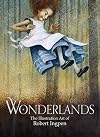
I am still in awe of Robert Ingpen's artistic talent. But not only his art: also his productivity, his research and his fidelity to detail. He is a sort of modern combination of NC Wyeth and Arthur Rackham...and I have always loved their illustrations. I guess, it was being exposed to such illustrations in children's books as a child that makes me like his work so much today. I just had a look at the cost of some of his illustrations that are for sale at auction and they seem to be selling show more for under $400...which seems rather cheap to me...given the quality and fame of the artist. Admittedly , these are not the original works from his published books. ..There is quite a nice text accompanying the various illustrations and one gets a small insight into the way that Ingpen works. (I like his flat-plan layout page). But I really would have liked to see more pictures of Ingpen himself at work and heard more from him about his technique. He mentions watercolour and tempera but I'm not sure if he has used crayon or oils with some of his works. Certainly, with his teddy bear picture he has used pencil and pastel. So he is obviously adept with a range of materials.
I first came across his work when I was with the CSIRO and I kept some of the magazines for years.....not sure whether I still have some. And I must say, that I was amused to see in his story of the Poppycock that he refers to his characters as Hairy Peruvians. I wonder if it is because (as he says) he saw dolls like this in a museum in Peru.....or because there is a variety of Subterranean clover called "Hairy Peruvian".... because it does have hairs and it comes from Peru. I think the CSIRO was working with newly introduced species like these in the 1960's. Anyway, I feel some affinity with Ingpen because of this shared experience with the CSIRO and agriculture. I seem to remember some illustrations of sub-clover varieties...almost certainly done by Ingpen. (I think there were issues with high oestrogen content of some of these clovers ..and they were messing up the reproductive cycles of sheep). The book is beautifully put together...very balanced and, as one would expect, superbly illustrated. Five stars from me. show less
I first came across his work when I was with the CSIRO and I kept some of the magazines for years.....not sure whether I still have some. And I must say, that I was amused to see in his story of the Poppycock that he refers to his characters as Hairy Peruvians. I wonder if it is because (as he says) he saw dolls like this in a museum in Peru.....or because there is a variety of Subterranean clover called "Hairy Peruvian".... because it does have hairs and it comes from Peru. I think the CSIRO was working with newly introduced species like these in the 1960's. Anyway, I feel some affinity with Ingpen because of this shared experience with the CSIRO and agriculture. I seem to remember some illustrations of sub-clover varieties...almost certainly done by Ingpen. (I think there were issues with high oestrogen content of some of these clovers ..and they were messing up the reproductive cycles of sheep). The book is beautifully put together...very balanced and, as one would expect, superbly illustrated. Five stars from me. show less
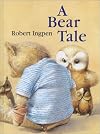
Somehow this book sneaked into my collection without being catalogued. And I just found it by accident when going to review it. As with most of Ingpen's books, I bought it for the illustrations....and somewhere I have some of these illustrations in a compendium of Ingpen's works. (Actually, I just went and checked and it's not the same book ...that is called the idle bear and was written for their first grandchild in 1986. But same Bear). I'm intrigued about the technique used. It looks like show more coloured pencil.....with an overlay of graphite pencil but maybe there is some crayon there as well ....hard to tell. But it doesn't seem to be watercolour. Anyway, as always, lovely illustrations. Not sure about the story. Kind of ok but didn't really grab me. I wonder how it is for children?
Loved his collection of owls. Now that I think about it, I too have owls from Mexico, Indonesia, and, (I think, Spain)...though all have been packed away for ages. I'm a bit divided over this rating. Five stars for the illustrations and two for the story. But illustrations wins out; so 5 stars. show less
Loved his collection of owls. Now that I think about it, I too have owls from Mexico, Indonesia, and, (I think, Spain)...though all have been packed away for ages. I'm a bit divided over this rating. Five stars for the illustrations and two for the story. But illustrations wins out; so 5 stars. show less
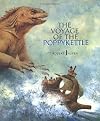
The Voyage of the Poppykettle is an adventurous retelling of how the Hairy Peruvians journeyed from ancient Peru to Australia. These tiny fishermen set sail in a tea kettle boat to escape from invading Spaniards. Because of their tiny size, the Hairy Peruvians run in to many 'oversized and dangerous' animals (once you catch on it's very funny). Today, Geelong children celebrate Poppykettle day every October. The hairy Peruvians' nautical adventure makes it hard to have one setting. For the show more most part, the story takes place on the Pacific Ocean but it is glossed over when they aren't interacting with any comparatively gigantic animals. I thought this was a cute story but I think it has a greater significance in Australian (aboriginal) culture. show less
Lists
Awards


You May Also Like


Associated Authors
Statistics
- Works
- 40
- Also by
- 53
- Members
- 599
- Popularity
- #41,951
- Rating
- 4.0
- Reviews
- 9
- ISBNs
- 87
- Languages
- 7