
Giovanni Pico della Mirandola (1463–1494)
Author of Oration on the Dignity of Man
About the Author
Disambiguation Notice:
Giovanni Pico della Mirandola (1463-1494) was the uncle of Giovanni Francesco Pico della Mirandola (1470–1533).
Works by Giovanni Pico della Mirandola
Commentaire sur une chanson d'amour de Jérôme Benivieni, (édition bilingue français - italien) (1990) 5 copies, 1 review
TRAKTAT MBI DINJITETIN NJERËZOR 2 copies
Prosatori latini del Quattrocento. Vol. VI: Il Platina, Cristoforo Landino, Giovanni Pico della Mirandola — Author — 2 copies
Epistolae Auree epistole Ioannis Pici Mirandulae viri omni ūm mortalium doctissimi eloquentissimi 1 copy
Of being and unity 1 copy
A dignidade do homem 1 copy
Oratio de hominis dignitate / Rede über die Würde des Menschen: Lateinisch/Deutsch (Reclams Universal-Bibliothek) (1997) — Author — 1 copy
Ausgewählte Schriften 1 copy
Associated Works
Tagged
Common Knowledge
- Legal name
- Pico dei conti della Mirandola e della Concordia, Giovanni
- Other names
- Picus de Mirandula, Johannes
Pico della Mirandola - Birthdate
- 1463-02-24
- Date of death
- 1494-11-17
- Gender
- male
- Education
- University of Bologna
University of Ferrara
University of Padua
University of Paris - Occupations
- philosopher
- Relationships
- Pico della Mirandola, Giovanni Francesco (nephew)
- Short biography
- Giovanni Pico dei conti della Mirandola e della Concordia, Latin: Johannes Picus de Mirandula; 24 February 1463 – 17 November 1494), known as Pico della Mirandola, was an Italian Renaissance nobleman and philosopher. He is famed for the events of 1486, when, at the age of 23, he proposed to defend 900 theses on religion, philosophy, natural philosophy, and magic against all comers, for which he wrote the Oration on the Dignity of Man, which has been called the "Manifesto of the Renaissance", and a key text of Renaissance humanism and of what has been called the "Hermetic Reformation". He was the founder of the tradition of Christian Kabbalah, a key tenet of early modern Western esotericism. The 900 Theses was the first printed book to be universally banned by the Church. Pico is sometimes seen as a proto-Protestant, because his 900 theses anticipated many Protestant views.
- Cause of death
- poisoning (arsenic)
- Nationality
- Italy
- Birthplace
- Mirandola, Duchy of Mirandola
- Place of death
- Florence, Italy
- Burial location
- Church of San Marco, Florence, Italy
- Disambiguation notice
- Giovanni Pico della Mirandola (1463-1494) was the uncle of Giovanni Francesco Pico della Mirandola (1470–1533).
- Associated Place (for map)
- Florence, Italy
Members
Reviews
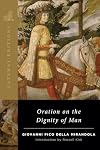
Delivered in Rome in 1486 by a twenty-four year old scholar before a platoon of erudite theologians and philosophers, Oration on the Dignity of Man is clearly the masterpiece of Renaissance humanism. Della Mirandola's oration fearlessly prepares the ground for debate around the 900 theses he proposed to such an audience, with which he sought to ignite passionate, intellectual discourses on every subject relevant to man.
The speech typifies the Renaissance mind and spirit, celebrating man's show more most precious gift from God – free will – and our divine potential for good. For della Mirandola, man was made unique in his capacity to choose between dwelling in the carnal, earthy world or to ascend into the heavenly spheres to reach a height that equals the cherubiums: “unable to yield to them” he calls, “and impatient of any second place, let us emulate their dignity and glory. And, if we will it, we shall be inferior to them in nothing” (13).
Yet this brilliant soul proves to be quite a mystic as well, as it becomes known in the last twenty pages -- by delicately deviating from Christian doctrine, della Mirandola veers off into the territory of esotericism and the occult, peppering his discourse with mentions of the Kabbalah and gnostic references. He goes as far as to propose a philosophy based upon “divine arithmetic”, which extends the works of Pythagoras, while also defining the two branches of "magic" – that of demonic evil, and that of "the highest realization of natural philosophy" (53). Of course, his esoteric references make certain parts of the oration very inaccessible, but for myself, it exposed me to thinkers and philosophies unheard of, which only delighted me. In a time in which many of the respected thinkers rejected intimate examinations of non-Christian texts and doctrines, this man daringly calls upon those of us yearning to initiate into the spiritual realms, to explore different paths of knowledge to become “a pure contemplator…wholly withdrawn into the inner chambers of the mind” (11).
If you want to read more of my reviews, check out my book blog! show less
The speech typifies the Renaissance mind and spirit, celebrating man's show more most precious gift from God – free will – and our divine potential for good. For della Mirandola, man was made unique in his capacity to choose between dwelling in the carnal, earthy world or to ascend into the heavenly spheres to reach a height that equals the cherubiums: “unable to yield to them” he calls, “and impatient of any second place, let us emulate their dignity and glory. And, if we will it, we shall be inferior to them in nothing” (13).
Yet this brilliant soul proves to be quite a mystic as well, as it becomes known in the last twenty pages -- by delicately deviating from Christian doctrine, della Mirandola veers off into the territory of esotericism and the occult, peppering his discourse with mentions of the Kabbalah and gnostic references. He goes as far as to propose a philosophy based upon “divine arithmetic”, which extends the works of Pythagoras, while also defining the two branches of "magic" – that of demonic evil, and that of "the highest realization of natural philosophy" (53). Of course, his esoteric references make certain parts of the oration very inaccessible, but for myself, it exposed me to thinkers and philosophies unheard of, which only delighted me. In a time in which many of the respected thinkers rejected intimate examinations of non-Christian texts and doctrines, this man daringly calls upon those of us yearning to initiate into the spiritual realms, to explore different paths of knowledge to become “a pure contemplator…wholly withdrawn into the inner chambers of the mind” (11).
If you want to read more of my reviews, check out my book blog! show less
The Oration on the Dignity of Man reads like an introduction to Pico Della Mirandola's 900 theses. If one is looking for a detailed exposition of occult philosophy you won't find it in this short treatise. However, what Pico Della Mirandola does achieve is a polemical call for a synthesis of the esoteric teaching of the ages. He doesn't declaim the exoteric but rather shows how exoteric mysticism and esoteric mysticism coalesce in a grand tradition going back to Hermes Trismegistus, show more Zoroaster, Jesus etc. On another level this text is of historical relevance for scholars of Rennaisance thought. Pico della Mirandola was precocious, it is amazing that he had done so much research into the esoteric arts, theology, philosophy all at the young age of 24. Sadly, he passed young and we don't get to see the full flowering of this erudite humanist thinker. show less
The Oration on the Dignity of Man reads like an introduction to Pico Della Mirandola's 900 theses. If one is looking for a detailed exposition of occult philosophy you won't find it in this short treatise. However, what Pico Della Mirandola does achieve is a polemical call for a synthesis of the esoteric teaching of the ages. He doesn't declaim the exoteric but rather shows how exoteric mysticism and esoteric mysticism coalesce in a grand tradition going back to Hermes Trismegistus, show more Zoroaster, Jesus etc. On another level this text is of historical relevance for scholars of Rennaisance thought. Pico della Mirandola was precocious, it is amazing that he had done so much research into the esoteric arts, theology, philosophy all at the young age of 24. Sadly, he passed young and we don't get to see the full flowering of this erudite humanist thinker. show less
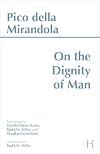
The Renaissance was a time of reevaluation of philosophical and theological teachings in various forms and the results at times were interesting and strange. On the Dignity of Man contains three treatises by Giovanni Pico della Mirandola including the titular treatise has been called the “manifesto of the Renaissance”.
The “Oration on the Dignity of Man” is Pico’s justification of the importance of the human quest for knowledge within a Neoplatonic frame as well as an introduction show more to his unpublished 900 thesis in which he believed provided complete and sufficient basis for the discovery of all knowledge. The second treatise, “On Being and the One”, is an attempted reconciliation between Platonic and Aristotelian writings on the relative place of being and “the one” and a refutation of opposing arguments. The finale treatise, “Heptaplus”, is a mystic-allegorical exposition of the creation according to the seven Biblical senses, elaborates on his idea that different religions and traditions describe the same God.
The titular treatise of this collection is the best of the bunch as Pico is eloquent in his thoughts, justifications, and introducing his thesis. The other two treatise are a combination of Christian, pagan philosophy, and Jewish thought which ultimate stretches credibility even though Pico tries his best to bring forth his ideas. However even thought I’m not truly well read in Plato and Aristotle, even I know they do not agree while Pico tries his best to make them agree. Pico’s belief that all other traditions and religions were pale imitations of future Christianity and thus worthy to be combined with Scripture to bring forth quasi-theological ideas like St. Augustine.
On the Dignity of Man is a collection of treatise by Giovanni Pico in which the titular treatise is the best of the bunch while the other two are well written but utterly worthless due to Pico’s thinking. show less
The “Oration on the Dignity of Man” is Pico’s justification of the importance of the human quest for knowledge within a Neoplatonic frame as well as an introduction show more to his unpublished 900 thesis in which he believed provided complete and sufficient basis for the discovery of all knowledge. The second treatise, “On Being and the One”, is an attempted reconciliation between Platonic and Aristotelian writings on the relative place of being and “the one” and a refutation of opposing arguments. The finale treatise, “Heptaplus”, is a mystic-allegorical exposition of the creation according to the seven Biblical senses, elaborates on his idea that different religions and traditions describe the same God.
The titular treatise of this collection is the best of the bunch as Pico is eloquent in his thoughts, justifications, and introducing his thesis. The other two treatise are a combination of Christian, pagan philosophy, and Jewish thought which ultimate stretches credibility even though Pico tries his best to bring forth his ideas. However even thought I’m not truly well read in Plato and Aristotle, even I know they do not agree while Pico tries his best to make them agree. Pico’s belief that all other traditions and religions were pale imitations of future Christianity and thus worthy to be combined with Scripture to bring forth quasi-theological ideas like St. Augustine.
On the Dignity of Man is a collection of treatise by Giovanni Pico in which the titular treatise is the best of the bunch while the other two are well written but utterly worthless due to Pico’s thinking. show less
Lists
You May Also Like
Associated Authors
Statistics
- Works
- 47
- Also by
- 1
- Members
- 1,037
- Popularity
- #24,830
- Rating
- 3.5
- Reviews
- 21
- ISBNs
- 104
- Languages
- 15
- Favorited
- 3

