
Mercer Mayer
Author of I Was So Mad
About the Author
Mercer Mayer was born December 30, 1943 in Little Rock Arkansas. While attending school at the Honolulu Museum of Art, Mayer decided to enter the field of children's book illustration. He created a portfolio of sketches and peddled them wherever he could. He moved to New York City in 1964, pursuing show more further instruction at the Art Students League of New York, where he met an artist named Marianna who became his first wife. He soon created a new portfolio and with these new sketches persuaded editors at Dial Press and Harper & Row to give him some illustration work. Mayer published his first book, A Boy, a Dog, and a Frog, at Dial Press in 1967. It was notable for being a completely wordless picture book one that tells its story entirely with pictures. Mayer was one of the first illustrators to be credited for using this format. Five more books in this series were to follow. Mayer joined Golden Publishing, creators of Little Golden Books, in 1976. Through them he has sold his "Little Critter" and "Little Monster" series, which are popular with beginning readers. His title Just Me and My Dad made The New York Times Best Seller List for 2012. In 2015, his title Little Critter: Just a Little Love, also made the list. His holiday book, Merry Christmas Mom and Dad, is also a bestseller. (Bowker Author Biography) show less
Series
Works by Mercer Mayer
I Am Subject: Sharing Our Truths to Reclaim Our Selves by DeBella, Diane (2013) Paperback (1992) 375 copies, 2 reviews
Little Critter® Little Red Riding Hood: A Lift-the-Flap Book (Little Critter series) (1991) 231 copies, 2 reviews
Little Critter Set of 5 Paperbacks Includes I Was so Mad, I Just Forgot, Just Go to Bed, Just a Mess, & the Best Show & Share (2015) 100 copies
My First I Can Read Little Critter : Just A Baby Bird, The Fall Festival, This Is My Town, To the Rescue, Going to the Firehouse, Snowball Soup (2017) 89 copies
Just Go to Bed (Little Critter) (Mercer Mayer's Little Critter) (Pictureback(R)) 73 copies, 1 review
We All Need Forgiveness (Mercer Mayer's Little Critter) (Mercer Mayer's Little Citter) (2014) 73 copies, 1 review
Just Grandma and Me, Just Me and My Dad, I Just Forgot, Just A Daydreamer, Just Go To Bed, Just A Mess, Just Me And My Little Sister by Mercer Mayer (1977) 45 copies
Little Critter 12-Book Phonics Fun!: Includes 12 Mini-Books Featuring Short and Long Vowel Sounds (My First I Can Read) (2012) 36 copies
Little Critter's Bedtime Storybook (Little Critter series) by Mayer, Mercer (2012) Hardcover 31 copies
When I Get Bigger (Mercer Mayer's Little Critter) by Mayer, Mercer, Bierle (1985) Paperback 21 copies
8 Favorite Little Critter Books Just for You: Just for You/Just Me and My Dad/I Was So Mad/Just Grandma and Me/When I Get Bigger/Just Go to Bed/Me T (1993) 11 copies
Little Look-look Books 6 copies
Little Critter Box Set, Level 1 A, Volume 1 (Mercer Mayer First Reader; Camping Out / No One Can Play / Play Ball / Snow Day) (2001) 5 copies
Little Critter First Reader Slipcase Level 1, Volume 2 (Mercer Mayer First Readers Skills and Practice, 4) (2002) 5 copies
Just Like Dad 4 copies
Happy Easter Little Critter (Little Critter)[HAPPY EASTER LITTLE CRITTER (L][Paperback] (2000) 4 copies
Little Critters Read-it-yourself Storybook Six Funny Easy-to-read Stories - 1993 publication. (1993) 4 copies
Little Critter First Reader Slipcase Level 2, Volume 2 (Little Critter First Readers Skills and Practice, 4) (2002) 3 copies
Little Critter First Reader Slipcase Level 3, Volume 2 (Mercer Mayer First Readers Skills and Practice, 4) (2002) 2 copies
Little Critter First Reader Slipcase Level 2, Volume 1 (Little Critter First Readers, Level 2) (2001) 2 copies
Merry Christmas Mom And Dad 2 copies
3 Mercer Mayer Stories 2 copies
Little Critters Classic Collection 2 copies
Just a Day at the Pond (The New Adventures of Little Critter (8x8)) (Paperback) - Common (2013) 2 copies
Just a Day Dream 2 copies
Camping Out (First Reader) 1 copy
Happy Halloween, Little Critter! (Mercer Mayer's Little Critter (Paperback)) } ]Sep-2004 Paperback 1 copy
Play With Me (Little Critters Book Series, A Golden Sturdy Shade Board Book), 1st Edition (1982) 1 copy
little critter coloring book 1 copy
Mercer Mayer - Beginning Math Workbook Preschool (Little Critter Preschool Spectrum Workbooks) (2003) 1 copy
If I Had... 1 copy
The night before Christmas 1 copy
School Age- Little Critter 1 copy
A Mayer M. & M. : Boy, A Dog, A Frog, & A Friend (Picture Puffin Books (Paperback)) (Paperback) - Common (1993) 1 copy
Little Critters' 1 copy
School Mouse 1 copy
Little Monster at Home 1 copy
Just Grandma and Me 1 copy
Little Critter (Set of 8) Best Teacher Ever; Happy Valentine's Day Little Critter; + 6 (2008) 1 copy
What Is A Bird 1 copy
Margaret's Birthday 1 copy
What Baby Wants 1 copy
Spooky Halloween Kit: A Story Book, a Coloring and Activity Book, a Flashlight, and a Trick-Or-Treat Bag (Little Critter) (1997) 1 copy
Just a Day at the Pond 1 copy
Little Critter (6 Set) Joke Book; Just Me and My Dad; Just Go to Bed; What a Bad Dream (2007) 1 copy
Little Critter First Reader Slipcase Level 3, Volume 1 (Little Critter First Readers. Level 3) (2001) 1 copy
Snowball Soup - I Can Read 1 copy
When I Get Better 1 copy
A Boy, A Dog and A Grog 1 copy
Bear who Wouldn't Share, The 1 copy
I Smell Christmas 1 copy
This Is My Town - I Can Read 1 copy
J'ai oublie 1 copy
Just Pick Us, Please 1 copy
Little Critter At Scout Camp 1 copy
Just Saving My Money ponics 1 copy
Snowball Soup 1 copy
To The Rescue phonics 1 copy
Bye-Bye Mom And Dad 1 copy
Just Little Love 1 copy
Associated Works
The 20th-Century Children's Book Treasury: Picture Books and Stories to Read Aloud (1998) — Contributor — 1,836 copies, 14 reviews
The Great Brain at the Academy (Great Brain #4) (1972) — Illustrator, some editions — 921 copies, 9 reviews
The Great Brain Reforms (1973) — Illustrator, some editions; Illustrator, some editions — 795 copies, 3 reviews
The Best of John Bellairs: The House with a Clock in Its Walls; The Figure in the Shadows; The Letter, the Witch, and the Ring (1998) — Illustrator — 246 copies, 6 reviews
Mercer Mayer's Critters of the Night: No Howling in the House (1996) — Illustrator — 238 copies, 2 reviews
Blue Ribbon Mystery (Mercer Mayers's LC the Critter Kids Mini Novels #11) (1996) — Creator — 18 copies
Cricket Magazine, Vol. 4, No. 11, July 1977 — Illustrator — 2 copies
The Great Brain (8 Book Series) — Illustrator — 1 copy
Adventures of the Great Brain Boxed Set — Illustrator — 1 copy
Tagged
Common Knowledge
- Birthdate
- 1943-12-30
- Gender
- male
- Education
- Honolulu Academy of Arts
Art Students League of New York - Occupations
- children's book author
illustrator - Awards and honors
- National Book Festival (Artist of the Year, 2007)
- Relationships
- Mayer, Gina (wife)
Mayer, Marianna (ex-wife) - Nationality
- USA
- Birthplace
- Little Rock, Arkansas, USA
- Places of residence
- Bridgewater, Connecticut, USA
Little Rock, Arkansas, USA
Hawaii, USA
New York, New York, USA - Associated Place (for map)
- USA
Members
Reviews
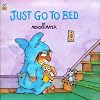
Looking back at this book, I can't help but juxtapose it with the book 'Go the Fuck To Sleep'. This book is from a child's perspective of not wanting to go to bed while the aforementioned 'Go the Fuck to Sleep' views the same problem from an adult perspective. This book really captures well the frustration a child has at having a bedtime/not wanting to go to sleep.
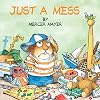
i did not much enjoy the majority of the first books that i was able to read competently and independently. only a few provoked true aversion or derision (like the berenstain bears), most merely seemed empty and unsettling
i remember the little critter series for the distinct sense of difficult-to-place discomfort; so much abt the series is immediately and intuitively upsetting, but on second glance it is so profoundly banal as to defy any emotional reaction whatsoever. the distance bw the show more initial discomfort and the utterly banal surface of the world of little critter is itself a source of anxiety and tension--how could this thing make me so uncomfortable when it is "in fact" so normal and usual? the world's symbolic facade thus makes the reader question the rational basis of their initial emotional reaction, indeed makes the reader question their own sanity
there are two elements of the textual world of little critter that i think warrant special attention: the physiognomy of the characters, and the reader's process of moral interpretation
the eponymous "critter" is not identifiable as any one species. thus it is not only different from us (humans) in terms of species, but in terms of its symbolic embedding in the world. we are confronted as readers with these bizarre creatures which are similar enough to other familiar species as to b somewhat imaginable, but still inextricably different. furthermore most anthropomorphic animals obtain the shape and structure of the human body relatively closely and consistently (though before the meteoric rise of the global online furry community this was less consistent). in many of the books of the little critter series this might appear to also be the case for "the critters," but if one is familiar with the greater series then it is clear that "the critters" have a strange body structure not reminiscent of humans at all (this can be seen most clearly in [b: Just For You|386234|Just for You (Little Critter)|Mercer Mayer|https://images.gr-assets.com/books/1388332030s/386234.jpg|375913]). neither human nor animal, nor following the implicit rules for anthropomorphic animals, the critter inhabits a liminal space that is neither here nor there, unimaginable and yet understandable, clearly a mammal and yet outside the sphere of imaginable mammals.
all critters (at least in "Just a Mess") also have identical facial features. the characters are distinguished by clothing, overall body size (age), minor variations in their (head) hair, and moment-to-moment are distinguished by their comportment and emotionality. but they are otherwise identical
speaking of emotionality--the world of little critter is full of strong emotions, usually those regarded as "negative." anger, frustration, and spite can be found on many of the covers of little critter books, and are some of the more common emotions seen on the pages of this book. indeed some of the most positive emotions displayed are indifference and invidious or mischievous satisfaction. this could b understood as a form of sympathetic realism--"its ok to b angry, see these characters are angry sometimes too!" but the depth of negative emotion runs far deeper
its not just the frequency or intensity of negative emotions that is unnerving, but the consequences as well. extreme, unjustified anger or frustration, despite appearing on half the pages, is simply part of the journey for little critter and co. based on its frequency and intensity one can only imagine the seething rage and resentment building up in the children. and the total indifference of the parents is also striking--this seems to b little critter's first time cleaning his room, and yet neither parent wants to bother themselves helping him. cleaning your room is an incredibly important and deep life skill, and a habit to b cultivated! one would think that if it is a child's first time cleaning their room, a parent would want to b involved!! especially if they can detect the horrifying scorn on their child's face.
but as little critter cleans his room alone and without help, he of course misses the entire point of the room cleaning exercise--he simply moves the mess from a place where it is seen but easy to clean or tolerate (the floor) to a place where it is unseen but MUCH more difficult to clean or tolerate (jammed, disorganized, overflowing into the closet, chest, under the bed). little critter does indeed find the missing object he seeks, but it is entirely by chance, and is found WHILE looking for another missing object which might never be found!
the troubling emotional lives of the children, concerning indifference of the parents, and total misunderstanding of cleanliness and organization in the end lead to... a resolution of the central conflict. little critter lost a glove, and his floor was covered in things. at the end, he has found his glove, his floor is cleared, and there is finally a smile on his face. all those troubling or concerning elements ultimately are rewarded when little critter accomplishes his goal, and in a certain shallow sense has learned a lesson (hide the mess to please your mom). all of this unfolds as in any other children's picture book, but the moral logic is upended as undesirable, irresponsible, and antisocial traits are depicted as normal, usual, alright, and in fact good and proper! one could try to read this as subversive or disruptive if it wasnt for the lack of any sort of compassion, care, or justice in the book; its merely a disgusting world without morals. and its all the more confusing as the book will likely be read AS a children's book, in which undesirable traits lead to consequences and are corrected, and a moral lesson is learned abt proper behavior according to some normative morality. if one enters the world of little critter with this assumption, only bewilderment and discomfort will follow
the characters, their presentations, and their interactions are given to the reader as a sort of symbolic expanse. the reader uses their working knowledge of the world around them to interpret this symbolic realm of the book into an imaginable and understandable world of personal meanings and identifications. thus the fit bw the symbolic world of the book and the symbolic world of the reader is key, as this fit is what makes the book accessible to the reader's imaginary realm.
the fit between the symbolic world of little critter and the symbolic realm of our 21st c american world is haphazard and uneven. the result is a nauseating vertigo as the symbolic floor of the imaginary realm falls out from underneath the Ego of the reader, and they plunge crashing into the traumatic soup that is the unintelligible realm of The Real. the juxtaposition of the bizarre species of "the critters" with their near lack of individuation destabilizes the already challenging image of The Big Other, or the actual Other. the Other defies identification, like the species of "the critters," but in this defiance it is utterly unique beyond imagining. but the identical faces of the critters portray a horrifying solipsistic world not unlike that seen in "Los Parecidos" (2015), where the subject is confronted with a wholly alienated world of undifferentiated and unending Other-ness into which the subject may never be truly welcomed or accepted unless they die by subsuming themselves. thus the critters defy the logic of self-other that composes the symbolic and imaginary realms, being neither small other nor Big Other, mercer mayer undoes the work of the conscious and unconscious mind by cutting straight to the unmovable Reality of the world
the twisted emotionality and upended moral logic contribute to this vertiginous fall off the brink of sanity. the reader desperately searches for some understandable grain of humanity, something warm and stabilizing, something that might confirm that yes, the reader IS reading a normal childrens book and everything IS just fine! instead the reader find a sick inversion of Deleuze's "desiring machines"--all the characters are like antagonizing machines, all hooked up to each other and powering each other with mutual resentment, indifference, and spite. while Deleuze sought to escape the prison that is Lacan's symbolic realm through a compassionate schizoanalysis, this route is even denied to our reader who is unmoored without Lacan's signifiers or Deleuze's desiring machines to orient oneself towards others. and just as the worst elements of psychosis are manifested in paranoid perceptions of ill-will, so does the entire world of little critter seem to be inhabited and powered entirely by confrontational ill-will. one SHOULD be constantly paranoid of everyone and everything around, because they all harbor nothing but hate or cruel indifference
thus the world of little critter cuts holes into the symbolic foundation of the ego, not necessarily sending it tumbling entirely into the psychotic pit of insanity in The Real, but opening up fissures that invite the reader to remember The Real, that invite the reader to be just slightly retraumatized
i do not kno why Mercer Mayer would wish this upon children unless he himself has a twisted conception of the lifeworld of american children and the trauma that brings them into the world
still not as bad as the berenstain bears tho show less
i remember the little critter series for the distinct sense of difficult-to-place discomfort; so much abt the series is immediately and intuitively upsetting, but on second glance it is so profoundly banal as to defy any emotional reaction whatsoever. the distance bw the show more initial discomfort and the utterly banal surface of the world of little critter is itself a source of anxiety and tension--how could this thing make me so uncomfortable when it is "in fact" so normal and usual? the world's symbolic facade thus makes the reader question the rational basis of their initial emotional reaction, indeed makes the reader question their own sanity
there are two elements of the textual world of little critter that i think warrant special attention: the physiognomy of the characters, and the reader's process of moral interpretation
the eponymous "critter" is not identifiable as any one species. thus it is not only different from us (humans) in terms of species, but in terms of its symbolic embedding in the world. we are confronted as readers with these bizarre creatures which are similar enough to other familiar species as to b somewhat imaginable, but still inextricably different. furthermore most anthropomorphic animals obtain the shape and structure of the human body relatively closely and consistently (though before the meteoric rise of the global online furry community this was less consistent). in many of the books of the little critter series this might appear to also be the case for "the critters," but if one is familiar with the greater series then it is clear that "the critters" have a strange body structure not reminiscent of humans at all (this can be seen most clearly in [b: Just For You|386234|Just for You (Little Critter)|Mercer Mayer|https://images.gr-assets.com/books/1388332030s/386234.jpg|375913]). neither human nor animal, nor following the implicit rules for anthropomorphic animals, the critter inhabits a liminal space that is neither here nor there, unimaginable and yet understandable, clearly a mammal and yet outside the sphere of imaginable mammals.
all critters (at least in "Just a Mess") also have identical facial features. the characters are distinguished by clothing, overall body size (age), minor variations in their (head) hair, and moment-to-moment are distinguished by their comportment and emotionality. but they are otherwise identical
speaking of emotionality--the world of little critter is full of strong emotions, usually those regarded as "negative." anger, frustration, and spite can be found on many of the covers of little critter books, and are some of the more common emotions seen on the pages of this book. indeed some of the most positive emotions displayed are indifference and invidious or mischievous satisfaction. this could b understood as a form of sympathetic realism--"its ok to b angry, see these characters are angry sometimes too!" but the depth of negative emotion runs far deeper
its not just the frequency or intensity of negative emotions that is unnerving, but the consequences as well. extreme, unjustified anger or frustration, despite appearing on half the pages, is simply part of the journey for little critter and co. based on its frequency and intensity one can only imagine the seething rage and resentment building up in the children. and the total indifference of the parents is also striking--this seems to b little critter's first time cleaning his room, and yet neither parent wants to bother themselves helping him. cleaning your room is an incredibly important and deep life skill, and a habit to b cultivated! one would think that if it is a child's first time cleaning their room, a parent would want to b involved!! especially if they can detect the horrifying scorn on their child's face.
but as little critter cleans his room alone and without help, he of course misses the entire point of the room cleaning exercise--he simply moves the mess from a place where it is seen but easy to clean or tolerate (the floor) to a place where it is unseen but MUCH more difficult to clean or tolerate (jammed, disorganized, overflowing into the closet, chest, under the bed). little critter does indeed find the missing object he seeks, but it is entirely by chance, and is found WHILE looking for another missing object which might never be found!
the troubling emotional lives of the children, concerning indifference of the parents, and total misunderstanding of cleanliness and organization in the end lead to... a resolution of the central conflict. little critter lost a glove, and his floor was covered in things. at the end, he has found his glove, his floor is cleared, and there is finally a smile on his face. all those troubling or concerning elements ultimately are rewarded when little critter accomplishes his goal, and in a certain shallow sense has learned a lesson (hide the mess to please your mom). all of this unfolds as in any other children's picture book, but the moral logic is upended as undesirable, irresponsible, and antisocial traits are depicted as normal, usual, alright, and in fact good and proper! one could try to read this as subversive or disruptive if it wasnt for the lack of any sort of compassion, care, or justice in the book; its merely a disgusting world without morals. and its all the more confusing as the book will likely be read AS a children's book, in which undesirable traits lead to consequences and are corrected, and a moral lesson is learned abt proper behavior according to some normative morality. if one enters the world of little critter with this assumption, only bewilderment and discomfort will follow
the characters, their presentations, and their interactions are given to the reader as a sort of symbolic expanse. the reader uses their working knowledge of the world around them to interpret this symbolic realm of the book into an imaginable and understandable world of personal meanings and identifications. thus the fit bw the symbolic world of the book and the symbolic world of the reader is key, as this fit is what makes the book accessible to the reader's imaginary realm.
the fit between the symbolic world of little critter and the symbolic realm of our 21st c american world is haphazard and uneven. the result is a nauseating vertigo as the symbolic floor of the imaginary realm falls out from underneath the Ego of the reader, and they plunge crashing into the traumatic soup that is the unintelligible realm of The Real. the juxtaposition of the bizarre species of "the critters" with their near lack of individuation destabilizes the already challenging image of The Big Other, or the actual Other. the Other defies identification, like the species of "the critters," but in this defiance it is utterly unique beyond imagining. but the identical faces of the critters portray a horrifying solipsistic world not unlike that seen in "Los Parecidos" (2015), where the subject is confronted with a wholly alienated world of undifferentiated and unending Other-ness into which the subject may never be truly welcomed or accepted unless they die by subsuming themselves. thus the critters defy the logic of self-other that composes the symbolic and imaginary realms, being neither small other nor Big Other, mercer mayer undoes the work of the conscious and unconscious mind by cutting straight to the unmovable Reality of the world
the twisted emotionality and upended moral logic contribute to this vertiginous fall off the brink of sanity. the reader desperately searches for some understandable grain of humanity, something warm and stabilizing, something that might confirm that yes, the reader IS reading a normal childrens book and everything IS just fine! instead the reader find a sick inversion of Deleuze's "desiring machines"--all the characters are like antagonizing machines, all hooked up to each other and powering each other with mutual resentment, indifference, and spite. while Deleuze sought to escape the prison that is Lacan's symbolic realm through a compassionate schizoanalysis, this route is even denied to our reader who is unmoored without Lacan's signifiers or Deleuze's desiring machines to orient oneself towards others. and just as the worst elements of psychosis are manifested in paranoid perceptions of ill-will, so does the entire world of little critter seem to be inhabited and powered entirely by confrontational ill-will. one SHOULD be constantly paranoid of everyone and everything around, because they all harbor nothing but hate or cruel indifference
thus the world of little critter cuts holes into the symbolic foundation of the ego, not necessarily sending it tumbling entirely into the psychotic pit of insanity in The Real, but opening up fissures that invite the reader to remember The Real, that invite the reader to be just slightly retraumatized
i do not kno why Mercer Mayer would wish this upon children unless he himself has a twisted conception of the lifeworld of american children and the trauma that brings them into the world
still not as bad as the berenstain bears tho show less

When Liza Lou's mother dispatches her to her Gramma's house with some sweet potatoes, she warns her to be careful, in crossing the Yeller Belly Swamp - home to good-for-nothing swamp haunts, a wicked swamp witch, the slithery gobblygook, and a soul-stealing swamp devil. But our intrepid young heroine has a trick or two up her sleeve, something those nasty swamp monsters discover, as she crisscrosses their territory in the course of her errands...
First published in 1976 (the year I was born), show more this delightful picture-book from the prolific Mercer Mayer - creator of the Little Critter books, as well as illustrator of many fairy-tale retellings - would have been available in my childhood, and I regret that I did not encounter it then! I would have loved it - I love it now! Liza Lou is a clever and resourceful heroine, and I think readers - young and old, boy and girl - will take her adventures to heart. Mayer's illustrations are adorable, both realistic and cute (I loved Liza Lou's little opossum companion!), and add to the sense of fun.
I was a little confused by the inclusion of this title in a folktale group-read, over in the Picture-Book Club to which I belong, but I guess that the inclusion of so many folkloric elements - outwitting the devil is always a classic theme, and the gobblygook under the bridge could be read as a troll - make it a sort of fractured fairy-tale. In any case: whatever the genre, the story and art are top-notch! Highly recommended to all! show less
First published in 1976 (the year I was born), show more this delightful picture-book from the prolific Mercer Mayer - creator of the Little Critter books, as well as illustrator of many fairy-tale retellings - would have been available in my childhood, and I regret that I did not encounter it then! I would have loved it - I love it now! Liza Lou is a clever and resourceful heroine, and I think readers - young and old, boy and girl - will take her adventures to heart. Mayer's illustrations are adorable, both realistic and cute (I loved Liza Lou's little opossum companion!), and add to the sense of fun.
I was a little confused by the inclusion of this title in a folktale group-read, over in the Picture-Book Club to which I belong, but I guess that the inclusion of so many folkloric elements - outwitting the devil is always a classic theme, and the gobblygook under the bridge could be read as a troll - make it a sort of fractured fairy-tale. In any case: whatever the genre, the story and art are top-notch! Highly recommended to all! show less
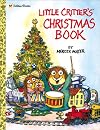
A slice-of-life look at Little Critter's family at Christmastime going through all the usual traditions.
I've never been a fan of the Little Critter books and have not read many, but I do wonder about the mythology because they seem to live in a world full of critters, but a Nativity scene and an appearance by Santa both feature humans. Do the critters live segregated from humanity by choice or force? Do they interact at all beyond sharing Christmas customs and beliefs? Weird.
FOR show more REFERENCE:
Contents: Winter Fun -- Toy Testing -- Meeting Santa -- The Christmas Play -- The Christmas Tree -- How to Wrap a Present -- Decorating -- Christmas Eve -- Christmas Song -- The Christmas Dream -- Christmas Morning show less
I've never been a fan of the Little Critter books and have not read many, but I do wonder about the mythology because they seem to live in a world full of critters, but a Nativity scene and an appearance by Santa both feature humans. Do the critters live segregated from humanity by choice or force? Do they interact at all beyond sharing Christmas customs and beliefs? Weird.
FOR show more REFERENCE:
Contents: Winter Fun -- Toy Testing -- Meeting Santa -- The Christmas Play -- The Christmas Tree -- How to Wrap a Present -- Decorating -- Christmas Eve -- Christmas Song -- The Christmas Dream -- Christmas Morning show less
Lists
Books About Boys (1)
Best Dog Stories (1)
Christmas Books (1)
Wordless Books (1)
Sonlight Books (1)
Awards


You May Also Like


Associated Authors
Statistics
- Works
- 537
- Also by
- 52
- Members
- 132,397
- Popularity
- #51
- Rating
- 4.0
- Reviews
- 1,447
- ISBNs
- 1,951
- Languages
- 11
- Favorited
- 21

