
Paulette Bourgeois
Author of In the Dark
About the Author
Paulette Bourgeois was born July 20, 1951 in Winnepeg , Canada. She graduated from the University of Western Ontario in 1974 with a B.Sc. and worked briefly as an occupational therapist before returning to Carleton University to study journalism. She has worked in television and print before show more writing her first book, Franklin in the Dark. Although Paulette is best-known for the Franklinthe Turtle books, she is also the writer of fiction and non-fiction for young readers. Her book, The Sun: Starting with Space was shortlisted for a Science in Society Book Award (1995), given by the Canadian Science Writer's Association, and won the honor of Parents' Choice Approval, given by the US Parents' Choice Foundation (1997). (Bowker Author Biography) show less
Disambiguation Notice:
The Franklin books were originally by Paulette Bourgeois. Some later books were written or adapted from TV episodes by Eva Moore and Sharon Jennings. These books are notated as (A Franklin TV Storybook) or (Kid's Can Read) Please do not combine these authors! Thank you.
Series
Works by Paulette Bourgeois
Storytime with Franklin: A Collection of Six Favorites (Franklin Classic Storybooks) (2024) 10 copies
Franklin Wants a Pet 5 copies
Franklin Goes to the Hospital, Franklin and the Tooth Fairy, and Finders Keepers for Franklin (2011) 4 copies
Franklin's goes to the hospital 3 copies
On your mark, get set 3 copies
Franklin (French Edition) 3 copies
Franklin and the Hero 2 copies
Benjamin: Et La Nuit 2 copies
Franklin helps out 2 copies
Franklin and the Tooth Fairy, C2 2 copies
La manta de franklin 1 copy
Franklin I wróżka zebuszka 1 copy
BENJAMIN ET LE TONNERRE 1 copy
La magie de la pomme 1 copy
Franklin In The Dark 1 copy
FInders Keppers For Franklin 1 copy
Franklin és a kis tesó 1 copy
Franklin's in the dark 1 copy
LA MANTA DE FRANKLIN 1 copy
TRESORS DE BENJAMIN 1 copy
Franklin Ngay le ta on 1 copy
Franklin kíváncsiskodik 1 copy
Franklin Dan Hujan Badai 1 copy
Menginap Di Rumah Franklin 1 copy
Franček Rad Pomaga 1 copy
Franklin’s School Play, C2 1 copy
Franklin i ukochany kocyk 1 copy
Franklin Is Lost, C2 1 copy
Franklin Is Lost, C3 1 copy
Franklin Helps Out, C2 1 copy
Franklin Fibs, C2 1 copy
Franklin mhte helfen : [basierend auf der Folge Franklin - Ausflug ins Gre der TV-Serie Franklin] (2007) 1 copy
Kleine Stiefel: große Sarah 1 copy
Franklin’s Bad Day, C2 1 copy
Bring Back the Bees 1 copy
The Dirt Book 1 copy
Franklin's Year (Chick-fil-A series) — Author — 1 copy
Franklin Wants a Pet, C2 1 copy
Franklin’s Blanket, C2 1 copy
FRANKLIN AND THE TOOTH FAIRY 1 copy
Big Sarah`s Little Boots 1 copy
Benjamin et le Tonnere 1 copy
Franklin’s Halloween, C2 1 copy
Franklin in the Dark, C4 1 copy
Franklin’s New Friend, C2 1 copy
Franklin’s Secret Club, C2 1 copy
Franklin’s Valentines, C2 1 copy
Hurry Up, Franklin, C3 1 copy
Franklin’s Music Lessons 1 copy
Franklin in the Dark, C3 1 copy
Franklin in the Dark, C5 1 copy
Franklin e o bébé 1 copy
Franklin in the Stars 1 copy
Associated Works
Tagged
Common Knowledge
- Canonical name
- Bourgeois, Paulette
- Birthdate
- 1951-07-20
- Gender
- female
- Education
- University of Western Ontario (BSc|1974))
Carleton University (Journalism)
University of British Columbia (MFA|2009) - Occupations
- children's book author
- Awards and honors
- Order of Canada (2003)
- Relationships
- Clark, Brenda (collaborator)
Jennings, Sharon (collaborator) - Nationality
- Canada
- Birthplace
- Winnipeg, Manitoba, Canada
- Places of residence
- Toronto, Ontario, Canada
- Disambiguation notice
- The Franklin books were originally by Paulette Bourgeois. Some later books were written or adapted from TV episodes by Eva Moore and Sharon Jennings. These books are notated as (A Franklin TV Storybook) or (Kid's Can Read) Please do not combine these authors! Thank you.
- Associated Place (for map)
- Canada
Members
Reviews

What a delightful second installment in the "Professor Goose Debunks Fairy Tales" series by Paulette Bourgeois; charmingly illustrated by Alex G. Griffiths. Following the imaginative premise introduced in the first book, this sequel blends humor, education, and a fresh perspective on the classic tale of the Three Little Pigs, turning it on its head through the investigative lens of the intrepid Professor Goose.
The narrative cleverly reimagines the well-known fable by introducing Professor show more Goose, a knowledgeable and slightly eccentric character who is determined to uncover the scientific inaccuracies and improbabilities within traditional fairy tales. As Professor Goose delves into the story of the Three Little Pigs, readers are invited on a journey that questions the structural integrity of houses made from straw, sticks, and bricks.
Paulette Bourgeois excels once again in crafting a story that is both educational and entertaining. The book skillfully introduces basic principles of architecture and engineering to children, encouraging them to question and explore the world around them through science. The text is accessible and engaging, perfectly pitched to capture the interest of young readers while providing them with valuable insights into problem-solving and critical thinking.
Alex G. Griffiths’ illustrations are a standout feature of the book. His vibrant and expressive artwork brings the story to life, adding layers of humor and charm that enhance the overall narrative. The illustrations not only complement the text but also expand on it, providing visual cues and details that encourage children to delve deeper into the story.
One of the most commendable aspects of the book is how it promotes scientific literacy among children. By debunking the fairy tale, Professor Goose encourages readers to think critically about what they read and hear. This approach not only makes the book a valuable educational tool but also ensures that it is a fun and interactive experience for young minds.
"Professor Goose Debunks the Three Little Pigs" is a splendid blend of education and entertainment, making it a perfect addition to the shelves of young readers who are curious about the world around them. It is also an excellent resource for parents and educators who wish to foster a love of science and critical thinking in children. With its engaging narrative and striking illustrations, this book is sure to be a hit among children and adults alike, eagerly awaiting more adventures from Professor Goose. show less
The narrative cleverly reimagines the well-known fable by introducing Professor show more Goose, a knowledgeable and slightly eccentric character who is determined to uncover the scientific inaccuracies and improbabilities within traditional fairy tales. As Professor Goose delves into the story of the Three Little Pigs, readers are invited on a journey that questions the structural integrity of houses made from straw, sticks, and bricks.
Paulette Bourgeois excels once again in crafting a story that is both educational and entertaining. The book skillfully introduces basic principles of architecture and engineering to children, encouraging them to question and explore the world around them through science. The text is accessible and engaging, perfectly pitched to capture the interest of young readers while providing them with valuable insights into problem-solving and critical thinking.
Alex G. Griffiths’ illustrations are a standout feature of the book. His vibrant and expressive artwork brings the story to life, adding layers of humor and charm that enhance the overall narrative. The illustrations not only complement the text but also expand on it, providing visual cues and details that encourage children to delve deeper into the story.
One of the most commendable aspects of the book is how it promotes scientific literacy among children. By debunking the fairy tale, Professor Goose encourages readers to think critically about what they read and hear. This approach not only makes the book a valuable educational tool but also ensures that it is a fun and interactive experience for young minds.
"Professor Goose Debunks the Three Little Pigs" is a splendid blend of education and entertainment, making it a perfect addition to the shelves of young readers who are curious about the world around them. It is also an excellent resource for parents and educators who wish to foster a love of science and critical thinking in children. With its engaging narrative and striking illustrations, this book is sure to be a hit among children and adults alike, eagerly awaiting more adventures from Professor Goose. show less
 This review was written for LibraryThing Early Reviewers.
When Emily's Oma, her grandmother, must move from her house on Maple Street, where she has lived for most of her life, to a retirement home, the older woman is far from happy. She misses her old house, her old neighbors - like Mrs. Mostowyk, who used to wave to her every morning - and many of her old possessions, which cannot be kept in her new single-room residence. Emily, a sensitive youngster who is attuned to her beloved Oma's moods, conceives of a plan to help her grandmother adjust, show more and to show her that the really important things - her memories, her sense of belonging - can still be hers. And so she and her mother set out to make Oma a very special quilt...
Chosen as one of our September selections, over in the Picture-Book Club to which I belong, where our theme this month is 'grandparents,' Oma's Quilt is an excellent exploration of an experience that many children share: seeing a grandparent moving into some kind of retirement home or assisted living situation. Told with compassion, the narrative is perfectly complemented by Stéphane Jorisch's lovely mixed media illustrations, which have a distinctive and quirky sensibility all their own. Highly recommended to anyone looking for quality children's stories featuring grandparents and grandchildren! show less
Chosen as one of our September selections, over in the Picture-Book Club to which I belong, where our theme this month is 'grandparents,' Oma's Quilt is an excellent exploration of an experience that many children share: seeing a grandparent moving into some kind of retirement home or assisted living situation. Told with compassion, the narrative is perfectly complemented by Stéphane Jorisch's lovely mixed media illustrations, which have a distinctive and quirky sensibility all their own. Highly recommended to anyone looking for quality children's stories featuring grandparents and grandchildren! show less
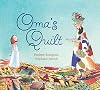
[b:Oma's Quilt|281224|Oma's Quilt|Paulette Bourgeois|http://d.gr-assets.com/books/1173387188s/281224.jpg|272811], written by Paulette Bourgeois, with illustrations by Stéphane Jorisch, touched me deeply. Both text and illustrations are poignant and evocative, and I think this heartwarming and heartbreaking story of Oma's (grandma's) reluctant move from a house to an assisted living retirement residence will likely strike an emotional chord with many children and adults, especially those who show more have had to face or are currently facing a similar situation within their own families.
Oma's new domicile, Forest View Retirement Home, is described as a charming, beautiful place, with attractive rooms and gardens. However, to Oma, who has lived in her house on Maple Street for most of her life, it is simply not home, it is strange and unnerving. Some reviews of [b:Oma's Quilt|281224|Oma's Quilt|Paulette Bourgeois|http://d.gr-assets.com/books/1173387188s/281224.jpg|272811] on Amazon complain that Oma's moodiness and her refusal to be more accepting of her new surroundings are a bit annoying. Well, Oma's constant bad mood and stubbornness might be somewhat problematic, but one has to realise that being forced to move from a house where you made the decisions, where you were "boss" to a retirement or nursing home where many if not most decisions are now being made not by you, but for you, might easily result in feelings sadness, of resentment at no longer being independent, of anger at everyone and everything.
Oma's memories are tied to her house on Maple Street and to the many objects she has collected (maybe even hoarded) over the years. Of course, Oma's room at the retirement residence is not large enough for her to be able to keep most of her collected keepsakes, so that particular fact is without a doubt one of the main reasons for her moodiness, her sadness; she feels as though she has lost her memories, her sense of belonging. That is why Emily's idea of making a quilt for her grandmother out of some of her many keepsakes is such a wonderful, thoughtful and ingenious idea. Not only does this memory quilt allow Oma to keep some of her many collected treasures near her, a quilt is also such a comforting, soothing object (being wrapped in a quilt made of memories would be like being surrounded, being embraced by them). And how sweet and poignant that it is Emily, the little granddaughter, who has the idea of making a memory quilt for Oma. This is not only a tribute to Emily's imagination and ingenuity, it also demonstrates that children can be of vital assistance to their parents in difficult, stressful times.
The quilt Emily and her mother make form the fabric of collected memories helps to ease Oma's pain, helps her to adjust to Forest View Retirement Home, although it does not (and I appreciate that honesty) suddenly transform Oma's moodiness and resentment. But it does make life at Forest view more acceptable, more tolerable for her. And by extension, the quilt also helps to somewhat ease Emily's and Emily's mother's worry and concern for Oma. The quilt provides solace and hope; it is made of love and represents both love and memories.
As much as I enjoyed and was moved by Paulette Bourgeois' narrative, and as much as I could relate to both Oma's frustrations and her daughter's (Emily's mother's) worry, sadness and probable feelings of guilt at having to move her clearly reluctant mother into a retirement home, I also felt that she was somewhat clueless and insensitive at times. Oma has clearly always loved to cook, to do housework, so for Emily's mother to make a comment about Oma not needing to cook anymore now, was really not the most sensitive, the most helpful thing to say. I actually found that Emily often seemed to understand her grandmother's feelings somewhat better, and although I could easily empathise with the mother's difficulties and realised that she was trying to do her best in a difficult situation, I did wish that she had been a bit less insensitive with some of her comments.
Stéphane Jorisch's colourful illustrations work beautifully in this story, evocatively reflecting the emotions, the feelings of the characters. Oma, hunched in her chair, calling the other residents "nincompoops" looks supremely curmudgeonly, a cantankerous grandmother par excellence. Her daughter's facial expression as she and Emily are on their way home after getting Oma "settled" in her new room, also clearly and evocatively show how worried and sad she is; both text and image show that she is about to cry. My favourite illustration though, is the two-page spread of a much happier Oma, telling her daughter and her granddaughter stories about the many fabric pieces in her new quilt. The images, the memories are depicted as almost dancing on the quilt, and Oma's, Emily's and the mother's smiles are like bright sunshine after a storm, signalling calmer skies and better weather ahead. Highly recommended. show less
Oma's new domicile, Forest View Retirement Home, is described as a charming, beautiful place, with attractive rooms and gardens. However, to Oma, who has lived in her house on Maple Street for most of her life, it is simply not home, it is strange and unnerving. Some reviews of [b:Oma's Quilt|281224|Oma's Quilt|Paulette Bourgeois|http://d.gr-assets.com/books/1173387188s/281224.jpg|272811] on Amazon complain that Oma's moodiness and her refusal to be more accepting of her new surroundings are a bit annoying. Well, Oma's constant bad mood and stubbornness might be somewhat problematic, but one has to realise that being forced to move from a house where you made the decisions, where you were "boss" to a retirement or nursing home where many if not most decisions are now being made not by you, but for you, might easily result in feelings sadness, of resentment at no longer being independent, of anger at everyone and everything.
Oma's memories are tied to her house on Maple Street and to the many objects she has collected (maybe even hoarded) over the years. Of course, Oma's room at the retirement residence is not large enough for her to be able to keep most of her collected keepsakes, so that particular fact is without a doubt one of the main reasons for her moodiness, her sadness; she feels as though she has lost her memories, her sense of belonging. That is why Emily's idea of making a quilt for her grandmother out of some of her many keepsakes is such a wonderful, thoughtful and ingenious idea. Not only does this memory quilt allow Oma to keep some of her many collected treasures near her, a quilt is also such a comforting, soothing object (being wrapped in a quilt made of memories would be like being surrounded, being embraced by them). And how sweet and poignant that it is Emily, the little granddaughter, who has the idea of making a memory quilt for Oma. This is not only a tribute to Emily's imagination and ingenuity, it also demonstrates that children can be of vital assistance to their parents in difficult, stressful times.
The quilt Emily and her mother make form the fabric of collected memories helps to ease Oma's pain, helps her to adjust to Forest View Retirement Home, although it does not (and I appreciate that honesty) suddenly transform Oma's moodiness and resentment. But it does make life at Forest view more acceptable, more tolerable for her. And by extension, the quilt also helps to somewhat ease Emily's and Emily's mother's worry and concern for Oma. The quilt provides solace and hope; it is made of love and represents both love and memories.
As much as I enjoyed and was moved by Paulette Bourgeois' narrative, and as much as I could relate to both Oma's frustrations and her daughter's (Emily's mother's) worry, sadness and probable feelings of guilt at having to move her clearly reluctant mother into a retirement home, I also felt that she was somewhat clueless and insensitive at times. Oma has clearly always loved to cook, to do housework, so for Emily's mother to make a comment about Oma not needing to cook anymore now, was really not the most sensitive, the most helpful thing to say. I actually found that Emily often seemed to understand her grandmother's feelings somewhat better, and although I could easily empathise with the mother's difficulties and realised that she was trying to do her best in a difficult situation, I did wish that she had been a bit less insensitive with some of her comments.
Stéphane Jorisch's colourful illustrations work beautifully in this story, evocatively reflecting the emotions, the feelings of the characters. Oma, hunched in her chair, calling the other residents "nincompoops" looks supremely curmudgeonly, a cantankerous grandmother par excellence. Her daughter's facial expression as she and Emily are on their way home after getting Oma "settled" in her new room, also clearly and evocatively show how worried and sad she is; both text and image show that she is about to cry. My favourite illustration though, is the two-page spread of a much happier Oma, telling her daughter and her granddaughter stories about the many fabric pieces in her new quilt. The images, the memories are depicted as almost dancing on the quilt, and Oma's, Emily's and the mother's smiles are like bright sunshine after a storm, signalling calmer skies and better weather ahead. Highly recommended. show less
Professor Goose Debunks The Three Little Pigs (Professor Goose Debunks Fairy Tales) by Paulette Bourgeois
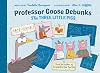
This is a beautiful book with lovely illustrations. The premise is a cute one - taking an old fairy tale and applying science and common sense to debunk the silly actions of the characters. Small children will like looking at the book and hearing the fairy tale again and older children (5-6) may enjoy the explanations. Which relates to my only criticism. The book almost seems to have a split personality - it alternates between age levels for comprehension. But a good parent can probably work show more around that and fit the book to their child's age and comprehension. Overall I give the book a 4 on a 5 point scale. show less
This review was written for LibraryThing Early Reviewers.Lists
Awards


You May Also Like


Associated Authors
Statistics
- Works
- 260
- Also by
- 30
- Members
- 47,474
- Popularity
- #334
- Rating
- 3.9
- Reviews
- 243
- ISBNs
- 1,197
- Languages
- 18
- Favorited
- 2

