
Elin Hilderbrand
Author of Barefoot
About the Author
Elin Hilderbrand grew up in Collegeville, Pennsylvania. She graduated from Johns Hopkins University and the graduate fiction workshop at the University of Iowa. Her first book, The Beach Club, was published in 2000. Her other works include The Blue Bistro, Barefoot, A Summer Affair, The Castways, show more The Island, Summerland, The Matchmaker, Winter Street, The Rumor, and Winter Stroll. Elin's novels, Here's to Us and Winter Storms, made the New York Times bestseller list in 2016. (Bowker Author Biography) show less
Series
Works by Elin Hilderbrand
The Elin Hilderbrand Collection: Volume 1: The Beach Club, Summer People, and The Love Season (2014) 2 copies
Un week-end à Nantucket 2 copies
Трач 1 copy
Insula 1 copy
Winter Street Series Set 1 copy
Liefdesgolf 1 copy
Et sommer-eventyr 1 copy
Same Time Next Year 1 copy
ZVONUL 1 copy
Associated Works
My Bookstore: Writers Celebrate Their Favorite Places to Browse, Read, and Shop (2012) — Contributor — 622 copies, 16 reviews
Reunion Beach: Stories Inspired by Dorothea Benton Frank (2021) — Contributor — 165 copies, 5 reviews
Reader's Digest Select Editions 2006 v02 #284: Looking for Peyton Place / Lifeguard / The Blue Bistro / Sacred Cows (2006) — Author — 23 copies
Het Beste Boek 252: Zonder een woord / Het strandpaviljoen / In Gods naam / Weehuis El Girasol 2 copies, 1 review
Livros Condensados: Os Finalizadores | Blue Bistro | Mergulhar Na Sombra | Muito Honestamente (2007) — Author — 2 copies
Tagged
Common Knowledge
- Birthdate
- 1969-07-17
- Gender
- female
- Education
- Johns Hopkins University
University of Iowa (Iowa Writers' Workshop) - Occupations
- writer
- Agent
- InkWell Management
- Relationships
- Cunningham, Shelby (daughter)
- Nationality
- USA
- Birthplace
- Nantucket, Massachusetts, USA
- Places of residence
- Collegeville, Pennsylvania, USA
Nantucket, Massachusetts, USA - Map Location
- Massachusetts, USA
Members
Discussions
Found: Restaurant near the ocean, main character is a hostess in Name that Book (February 2025)
chick lit - sisters/divorcee holiday in Name that Book (June 2013)
Reviews
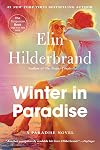
I devoured this book in a single day. The thing I love about Elin Hildebrand novels is she always packs them with fascinating characters and then you get drama, drama, drama and the twists just keep coming! This one is set in both Iowa and the Virgin Islands. After the death of Russ, a businessman who is often away, his Iowa family discovers he’s been keeping a HUGE secret down in the Virgin Islands. The characters are really great, and there are hints Elin Hildebrand may yet be able to show more turn this story of marital disaster into something of a hopeful note one day as lost characters from the states meet lonely souls on the island.
I found myself falling in love with the way she wrote the island and the characters, even as I found myself a little wistful for snowy Nantucket and the uber-Christmas scene of the “Winter Street” series, which will always be one of my favorite Christmas series of all time. Still, this book on its own is an absolute delight, particularly in the lush descriptions of the islands, the fishing, the rivalry between the two brothers (so believably written! But Cash, dude, you were SUCH a jerk there at the end!! You have some major improvements to do before I can pull for you! ), and the way two families are forced to confront what has been going on behind their backs for over a decade. Amazing! And of course the twists keep coming in this one right until the end. I will definitely be reading on in the series. show less
I found myself falling in love with the way she wrote the island and the characters, even as I found myself a little wistful for snowy Nantucket and the uber-Christmas scene of the “Winter Street” series, which will always be one of my favorite Christmas series of all time. Still, this book on its own is an absolute delight, particularly in the lush descriptions of the islands, the fishing, the rivalry between the two brothers (so believably written!
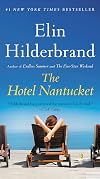
I never thought I'd qualify a novel as tacky, but here we are! The story is schmaltzy and predictable, but I expected that, and as far as the genre goes, it kept me happily entertained with a tongue-in-cheek style that I enjoyed. I did eye roll at all the gimmicky Millennial pandering, but what had me really gagging was the lavish "style": from Dom Pérignon in a vodka cocktail to brass portholes in the hotel, there were so many tacky details even a kitsch designer would have an apoplectic show more attack. Also, it kept me reading to see what over-the-top hilarious detail would pop up. I was not disappointed.
Highly readable if one parks one's brain. show less
Highly readable if one parks one's brain. show less
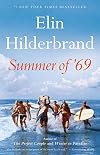
The delight of any Elin Hilderbrand book is the wonderful quirky cast of characters and her ability to transport you to her beach destinations for a mini-vacation. We’re back on Nantucket (and Martha’s Vineyard) for the summer, staying in seaside cottages, going to the beach, enjoying Portuguese bread and BLTs, lobster, corn coleslaw and strawberry shortcake (the food descriptions in this one were absolutely decadent.)
It’s the summer of 1969, David and Kate have four children. Their show more oldest daughter Blair is in an unhappy marriage, about to give birth, another daughter Kirby is part of the women’s rights movement, their son Tiger is fighting in Vietnam, and daughter Jessie is stuck under her grandmother’s thumb, being dragged to the club and forced into tennis lessons. Each person’s individual story was woven into a larger tapestry, and it was one of those large family epics that really worked with lots of POV because we got to relax and spend a while in each segment of the story.
Absolutely loved this tale. (And, Elin Hildebrand, I’m still holding out that you will one day write another AMAZING Christmas series, because even though you are absolute queen of the beach read, you are soooo good at bringing the Christmas, too! I will always treasure Winter Street!)
Trigger Warnings: sexual assault
Please excuse typos/name misspellings. Entered on screen reader. show less
It’s the summer of 1969, David and Kate have four children. Their show more oldest daughter Blair is in an unhappy marriage, about to give birth, another daughter Kirby is part of the women’s rights movement, their son Tiger is fighting in Vietnam, and daughter Jessie is stuck under her grandmother’s thumb, being dragged to the club and forced into tennis lessons. Each person’s individual story was woven into a larger tapestry, and it was one of those large family epics that really worked with lots of POV because we got to relax and spend a while in each segment of the story.
Absolutely loved this tale. (And, Elin Hildebrand, I’m still holding out that you will one day write another AMAZING Christmas series, because even though you are absolute queen of the beach read, you are soooo good at bringing the Christmas, too! I will always treasure Winter Street!)
Trigger Warnings:
Please excuse typos/name misspellings. Entered on screen reader. show less
Elin Hilderbrand is not only the queen of summer reading but she is also an auto-read author for me. I remember taking her book The Castaways on our 2009 honeymoon trip to St. John and it was just the beginning of a long love affair with her writing. At that point, I read everything on her backlist and have read every single one of her book releases since then.
Elin Hilderbrand June book releases always signify the unofficial start of summer for me. Summer of ‘69 was released on June 18th show more but I grabbed it a couple of weeks early in my Book of the Month box and couldn’t wait to dive in.
I knew going into it that this book would be a little different than her others. While it was still set on the beautiful island of Nantucket, she took us back to 1969 in her first historical fiction novel. I always love reading the authors notes at the beginning of books and Hilderbrand shared that Summer of '69 was in honor of her 50th birthday, and I loved that connection so much.
Summer of '69 delivered with Hilderbrand's gift of the summer beach read while also diving into some historic events like the lunar landing, The Vietnam War and Chappaquiddick.
We meet the Levin family and with this, there is a personal look at feminist issues, the civil rights movement and the life changes and transitions for this family. This book was packed full of powerful moments but was also an enjoyable coming of age story. There were many different personalities and perspectives in this story which made it feel multifaceted while also being a completely engrossing read.
Having grown up in the 80s and 90s I couldn't connect personally with this time period but she was able to bring me right there with her vivid details and ability to connect the music and other pop culture of this time in history. I highly recommend adding this to your summer reading list! show less
Elin Hilderbrand June book releases always signify the unofficial start of summer for me. Summer of ‘69 was released on June 18th show more but I grabbed it a couple of weeks early in my Book of the Month box and couldn’t wait to dive in.
I knew going into it that this book would be a little different than her others. While it was still set on the beautiful island of Nantucket, she took us back to 1969 in her first historical fiction novel. I always love reading the authors notes at the beginning of books and Hilderbrand shared that Summer of '69 was in honor of her 50th birthday, and I loved that connection so much.
Summer of '69 delivered with Hilderbrand's gift of the summer beach read while also diving into some historic events like the lunar landing, The Vietnam War and Chappaquiddick.
We meet the Levin family and with this, there is a personal look at feminist issues, the civil rights movement and the life changes and transitions for this family. This book was packed full of powerful moments but was also an enjoyable coming of age story. There were many different personalities and perspectives in this story which made it feel multifaceted while also being a completely engrossing read.
Having grown up in the 80s and 90s I couldn't connect personally with this time period but she was able to bring me right there with her vivid details and ability to connect the music and other pop culture of this time in history. I highly recommend adding this to your summer reading list! show less
Lists
Best Beach Reads (3)
Florida (1)
Awards


You May Also Like


Associated Authors
Statistics
- Works
- 68
- Also by
- 7
- Members
- 35,873
- Popularity
- #522
- Rating
- 3.7
- Reviews
- 1,066
- ISBNs
- 848
- Languages
- 19
- Favorited
- 39

