
The Editors of Consumer Reports
Author of How to Clean Practically Anything
About the Author
Series
Works by The Editors of Consumer Reports
The New Medicine Show: Consumers Union's Practical Guide to Some Everyday Health Problems and Health Products {6th ed., 1989} (1989) 117 copies
The Medicine Show: Consumers Union's Practical Guide to Some Everyday Health Problems and Health Products {5th ed., updated; 1983} (1980) 114 copies
How to Clean Practically Anything, Consumer Reports Books, Fourth Edition/Updated, Featuring a Comprehensive Stain Removal Chart, 1996 (Paperback) (1996) 53 copies
The Medicine Show: Consumers Union's Practical Guide to Some Everyday Health Problems and Health Products {revised ed., 1974} (1974) 50 copies
Consumer Reports Buying Guide 2010 (Best & Worst Appliances, Cars, Electronics, and more, 1,500 Brand-Name Product Ratings) (2009) 37 copies
The Medicine Show; Some Plain Truths About Popular Remedies for Common Ailments {early editions; 1963+} (1976) 30 copies
Consumer Reports Buying Guide 2011 (Best & Worst Appliances, Cars, Electronics, and more, 1,600 Brand-Name Product Ratings) (2010) 28 copies
I'll Buy That!: 50 Small Wonders and Big Deals That Revolutionized the Lives of Consumers : A 50-Year Retrospective (1986) 25 copies
Preventive Home Maintenance: How to Detect and Prevent Structural, Electrical, Plumbing, and Other Problems in Your Home (Homeowners Library Series) (1990) 19 copies
The Medicine Show: Consumers Union's Practical Guide to Some Everyday Health Problems and Health Products {5th ed., 1980} (1980) 13 copies
1995 Buying Guide: The December 15, 1994 Issue of Consumer Reports : No 13 (Consumer Reports Buying Guide) (1994) 10 copies
Consumer Reports 1991 Buying Guide Issue (Consumer Reports Buying Guide Issue Large Print) (1991) 9 copies
How to resolve the health care crisis : affordable protection for all Americans (1992) 5 copies, 1 review
The Consumers Union report on life insurance : a guide to planning & buying the protection you need (1980) 4 copies
Consumer Reports Buying Guide 2021 3 copies
Consumer Reports Buying Guide 2017 2 copies
New Car Buying Guide 2010 2 copies
The Consumers Union report on life insurance: A guide to planning & buying the protection you need (1977) 2 copies
Consumer Reports New Car Buying Guide 2003-04 (Consumer Reports New Car Buying Guide) (2003) 2 copies
Consumer Reports The Best of Health newly Revised & Updated 2001 edition 275 Questions You've always wanted to ask your doctor (2001) 2 copies
Consumer Reports Magazine January 2021 [Single Issue Magazine] Consumer Reports Magazine (2020) 2 copies
Consumer Reports 1 copy
Big Trucks 1 copy
The Running Book 1 copy
Movies for TV: 6900 Ratings 1 copy
Buying Guide 2001 1 copy
NEW MEDICINE SHOW 1 copy
Arsenic in Your Food 1 copy
The Medicine Show 1 copy
New Car Buying Guide, 2017 1 copy
Guide to Better health 1 copy
1997 buying guide 1 copy
New Car Buying Guide, 2000 1 copy
1999 Buying guide 1 copy
ShopSmart;)® : Fall 2006 1 copy
CU Buying Guide 1937 1 copy
The Consumer Reports Home Entertainment 1998 Buying Guide (Consumer Reports Home Entertainment Buying Guide) (1997) 1 copy
ShopSmart [serial entry] 1 copy
The Complete drug reference 1 copy
On Health: September 1997 1 copy
Best and worst new cars 2011 1 copy
Best SUV's & Trucks 2014 1 copy
New Car Preview 2014 1 copy
Used Car Buying Guide 1 copy
1998 Buying guide 1 copy
Buying Guide 2001 1 copy
The Medicine Show 1 copy
A small car in your family 1 copy
CR Consumer Reports The Best of Health 265+ Questions You've Always Wanted to Ask Your Doctor (2016) 1 copy
Buying Guide 2013 1 copy
Guide to Used Cars 1 copy
Consumer Reports April 2025 1 copy
Buying Guide 2000 1 copy
Shop smart for home & yard 1 copy
The Bests of Health 1 copy
The Answer To Good Health 1 copy
Great Kitchens on a Budget 1 copy
Associated Works
Tagged
Common Knowledge
- Canonical name
- The Editors of Consumer Reports
- Gender
- n/a
- Map Location
- USA
Members
Reviews
How to Resolve the Health Care Crisis: Affordable Protection for All Americans by Consumer Reports Books

This Consumer Union report is fact-based and helpful. With its 1992 study as a "baseline", we can see how medical care became criminalized by profiteering corporations exploiting the fears and hopes of consumers in the last decades of having any "consumer" power in government.
This book documents the fact that by 1992, the US medical care system was already "costly and exclusionary", and not very effective at sustaining actual "health" outcomes. In addition, the authors present rational show more outlines of the Canadian system which provides better care for more people. The examination references the concerted attacks on the Canadian system, by interested lobbies, and illustrates actions taken in Hawaii, and Minnesota. [193-254]
A "single-payer" system has clearly been shown to produce the best outcomes for the least cost. [197]
The book concludes with an analysis of the claims made by critics of the Single-payer systems. Without accusing the AMA and the insurance companies of "fraud", this book shows numerous examples of claims made which are fraudulent--directly misleading the American public. While many of the fraudulent quotes highlighted here are made by Republican Party politicians, on the whole the authors avoid "political" grand-standing.
For example, President Bush (the first one) states that "we don't need to put government between patients and their doctors and create another wasteful federal bureaucracy." Opponents of Canadian-style single-payer healthcare often add that "government should not tell doctors how to practice medicine". Of course, the Canadian/single-payer system does neither. [198] [And the authors do not characterize the attacks as fiendish frauds.] Very few Americans, in fact, have any actual relationships with "their doctors", and their employers have failed to negotiate prices on their behalf. Americans now have offshore insurance companies telling doctors how to practice medicine.
"Our health care system does not just allow prices to rise--it practically demands that they do....The American system stands alone in the developed world." [6] In other civilized countries, universal standard payment schedules are set by direct negotiation with doctors and hospitals. Most have a ceiling on medical expenditures. Not a single country other than the US devotes more than 10 percent of its gross national product to health care. The US broke that barrier in 1985. In 1992, the US is expected to spend 14 percent on GNP on health--of course, an increasing percentage is simply going to profit for insurance companies, not medical care at all. Compare, in 1960, US spent 5.3 percent of GNP on health care, comparable to Germany and Canada.
What changed everything? In 1965, Medicare was set up to serve the over-65 population. At that time, there were few private insurers covering the population, and they left treatment entirely to doctors. Medicare made a compromise with the medical opposition to "socialized medicine", by agreeing to pay "usual and customary fees". This allowed physicians to set their own prices. Employer-financed insurance plans bought into this system, without "bargaining" with the doctors. With no constraints on costs, doctor's bills began an inexorable climb.
"Experience has shown that attempts to manage the health care system a piece at a time are likely to fail." [9]
"Medical care is unlike services delivered by other professionals. When clients hire an architect or a lawyer, they generally know what they need and roughly how much it's going to cost. But in medicine, physicians make virtually all the decisions that determine the cost of care." [11]
Doctors create "medical need", and then profit from it. This is called "induced demand". [12] In the 1970s and 80s, Rand Corporation began studying the systemic incentives for over-treatment and self-dealing referrals. Nearly 1/3 of the elderly patients referred for removal of athreosclerotic plaque from the carotid artery did not need it. 14% of heart bypass operations were unnecessary. [14] Of course, the abuses by the self-dealing doctors attracted the insurance companies to examine the procedures.
The authors document the fact that doctors are surprisingly isolated and uncertain. Typical physicians spend their entire careers within a single referral network, based at one hospital. Local colleagues are the principal influence, but may not be the most reliable resource--based on the variations visible between small areas. This is a "striking demonstration of just how unscientific medical practice really is". [16]
For me, it is staggering to see that since 1992, our "system" has increasingly gotten worse, and more profitable for the rich. Medical care has been a weapon wielded against the middle class and employees. With all the hopes and fears inside the world of involuntary hospitalization and disease, fascists found the perfect cover to use to grab power and money. show less
This book documents the fact that by 1992, the US medical care system was already "costly and exclusionary", and not very effective at sustaining actual "health" outcomes. In addition, the authors present rational show more outlines of the Canadian system which provides better care for more people. The examination references the concerted attacks on the Canadian system, by interested lobbies, and illustrates actions taken in Hawaii, and Minnesota. [193-254]
A "single-payer" system has clearly been shown to produce the best outcomes for the least cost. [197]
The book concludes with an analysis of the claims made by critics of the Single-payer systems. Without accusing the AMA and the insurance companies of "fraud", this book shows numerous examples of claims made which are fraudulent--directly misleading the American public. While many of the fraudulent quotes highlighted here are made by Republican Party politicians, on the whole the authors avoid "political" grand-standing.
For example, President Bush (the first one) states that "we don't need to put government between patients and their doctors and create another wasteful federal bureaucracy." Opponents of Canadian-style single-payer healthcare often add that "government should not tell doctors how to practice medicine". Of course, the Canadian/single-payer system does neither. [198] [And the authors do not characterize the attacks as fiendish frauds.] Very few Americans, in fact, have any actual relationships with "their doctors", and their employers have failed to negotiate prices on their behalf. Americans now have offshore insurance companies telling doctors how to practice medicine.
"Our health care system does not just allow prices to rise--it practically demands that they do....The American system stands alone in the developed world." [6] In other civilized countries, universal standard payment schedules are set by direct negotiation with doctors and hospitals. Most have a ceiling on medical expenditures. Not a single country other than the US devotes more than 10 percent of its gross national product to health care. The US broke that barrier in 1985. In 1992, the US is expected to spend 14 percent on GNP on health--of course, an increasing percentage is simply going to profit for insurance companies, not medical care at all. Compare, in 1960, US spent 5.3 percent of GNP on health care, comparable to Germany and Canada.
What changed everything? In 1965, Medicare was set up to serve the over-65 population. At that time, there were few private insurers covering the population, and they left treatment entirely to doctors. Medicare made a compromise with the medical opposition to "socialized medicine", by agreeing to pay "usual and customary fees". This allowed physicians to set their own prices. Employer-financed insurance plans bought into this system, without "bargaining" with the doctors. With no constraints on costs, doctor's bills began an inexorable climb.
"Experience has shown that attempts to manage the health care system a piece at a time are likely to fail." [9]
"Medical care is unlike services delivered by other professionals. When clients hire an architect or a lawyer, they generally know what they need and roughly how much it's going to cost. But in medicine, physicians make virtually all the decisions that determine the cost of care." [11]
Doctors create "medical need", and then profit from it. This is called "induced demand". [12] In the 1970s and 80s, Rand Corporation began studying the systemic incentives for over-treatment and self-dealing referrals. Nearly 1/3 of the elderly patients referred for removal of athreosclerotic plaque from the carotid artery did not need it. 14% of heart bypass operations were unnecessary. [14] Of course, the abuses by the self-dealing doctors attracted the insurance companies to examine the procedures.
The authors document the fact that doctors are surprisingly isolated and uncertain. Typical physicians spend their entire careers within a single referral network, based at one hospital. Local colleagues are the principal influence, but may not be the most reliable resource--based on the variations visible between small areas. This is a "striking demonstration of just how unscientific medical practice really is". [16]
For me, it is staggering to see that since 1992, our "system" has increasingly gotten worse, and more profitable for the rich. Medical care has been a weapon wielded against the middle class and employees. With all the hopes and fears inside the world of involuntary hospitalization and disease, fascists found the perfect cover to use to grab power and money. show less
Should I Eat This? Simple ways to know what to eat and what to avoid (updated 4th edition) by Consumer Reports

This book is an easy-to-read collection of all kinds of nutrition advice for healthy eating. I liked the format of the narrative. It was in short articles and just as easy to read as a magazine. I read through it fairly quickly. The only thing I didn't care for were the recipes. However, I often find so-called "healthy" recipes not much to my liking. I'd rather tweak more appealling recipes in different ways. With that said, I did find helpful suggestions for how to stay on the right track show more in keeping my diet heart-healthy. I'll try to keep these ideas in mind as I go forward. show less

I can't see why anyone would give this book a low rating. I borrowed this well-worn book from our local library and found many great recipes. One of my frustrations with bean recipes is that they usually start with 'a can of' and if you want to use dried you need to work backwards first. Although there are some canned recipes here, I loved that there were many recipes that started with dry goods. There are also recipes using fresh beans. At the front of the book there is a listing of many show more different types of beans along with descriptions and cooking times. Some recipes are vegetarian, and some are not. Only one bean dessert that I could see however. Highly recommended. :) show less
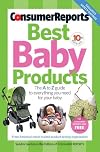
Great resource! I brought it to the store when we tested baby gear and kept it handy when we put together the baby registry.
Lists
Awards

You May Also Like


Associated Authors
Statistics
- Works
- 258
- Also by
- 2
- Members
- 4,286
- Popularity
- #5,862
- Rating
- 3.4
- Reviews
- 12
- ISBNs
- 143
- Languages
- 2