
Marie Winn (1936–2024)
Author of Red-Tails in Love : A Wildlife Drama in Central Park
About the Author
Image credit: Photo by Charles Kennedy
Works by Marie Winn
Associated Works
Tagged
Common Knowledge
- Canonical name
- Winn, Marie
- Birthdate
- 1936-10-21
- Date of death
- 2024-12-25
- Gender
- female
- Education
- Bronx High School of Science, New York, New York, USA
Radcliffe College
Columbia University - Occupations
- Newspaper Columnist
author
birdwatcher - Relationships
- Malcolm, Janet (sister)
- Nationality
- USA
- Birthplace
- Prague, Czechoslovakia
- Places of residence
- New York, New York, USA
- Associated Place (for map)
- USA
Members
Reviews

A stimulating and thorough look at how children and television coexist in a household. Winn explains how children watch television and how their brains work to process the visual images they see on the screen. She discusses how the sheer amount of television watched by the average American child damages their lives and their education by stopping them doing other things such as reading, socialising with other children and finding interests of their own. She also explores how computers and show more internet access in schools may be doing more harm than good, reinforcing the instant gratification children expect from life after years of television.
On top of this analysis, Winn offers – shock horror – alternatives to the automatic impulse we all seem to harbour to switch on the TV, stick on a DVD or plug in a games console. She offers inspiration in the form of testimonies from families who have already taken control of their viewing habits and come out the other side with happier children who are more active in the community, healthier both physically and mentally, and have balanced lives full of active pursuits and developed interests.
This is a fairly exhaustive study, but the simple breakdown of topics makes it a manageable one. The argument is balanced and Winn doesn’t preach her message – instead she persuades admirably and eloquently. The book is both interesting and provocative, and a must-read for parents and telly addicts everywhere. show less
On top of this analysis, Winn offers – shock horror – alternatives to the automatic impulse we all seem to harbour to switch on the TV, stick on a DVD or plug in a games console. She offers inspiration in the form of testimonies from families who have already taken control of their viewing habits and come out the other side with happier children who are more active in the community, healthier both physically and mentally, and have balanced lives full of active pursuits and developed interests.
This is a fairly exhaustive study, but the simple breakdown of topics makes it a manageable one. The argument is balanced and Winn doesn’t preach her message – instead she persuades admirably and eloquently. The book is both interesting and provocative, and a must-read for parents and telly addicts everywhere. show less
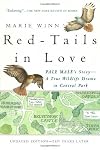
In 1991, a rather light-colored red-tailed hawk was spotted by some regular bird-watchers in NYC's Central Park. Observers were excited to see the hawk engage in courtship display and win a mate. Their first nesting attempt was foiled by mobbing crows, but the next year the pair built a new nest on the side of a building, an unusual site for red-tailed hawks to choose. They laid eggs which failed to hatch, but later on had success- and eager bird-watchers counted the chicks, watched the show more parents going to and fro to feed them, witnessed the young hawks' first flight. Meanwhile they also did all they could to protect the birds without disturbing them- stepping in when the city poisoned rats and pigeons, or when maintenance workers attempted to remove the nest. The notably pale hawk is a mainstay through the story, but had several different mates in a row- and one that apparently returned to him later on- because some of them met with misfortune. The hawk and his various mates became pretty famous for thriving and raising so many young year after year in the heart of New York City. The book isn't all about hawks though- in fact I'd say it's more about birds of all kinds in Central Park and the people- from dedicated scientists and locals to visiting tourists who never took an interest before. There are downy woodpeckers, saw-whet owls, flickers, green herons, killdeer and one rare seagull escaped from a zoo mentioned in particular, and many many more species mentioned just as sightings. The account as a whole is really engaging and lovely to read, although I felt the title and jacket description a bit misleading since the hawks aren't the entire focus of it.
from the Dogear Diary show less
from the Dogear Diary show less
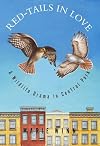
Who’s in love here?
There’s a lot of love poured out in this book. It flows freely from the New York City hawk watchers, of whom the author is one, for the red-tailed hawks of the title and the myriad bird life in and around Central Park. The story turns around the mating attempts, failures, and successes of a male red-tail hawk, called Pale Male for his light plumage. A common enough nature story, perhaps; except this hawk courts, mates, hunts, and raises young in Manhattan in full show more binocular-enhanced view of a band of dedicated hawk watchers and, eventually, international media.
If you want a scientific discourse on hawks and their mating habits or the skinny on avian romance from the birds’ point of view, don’t look for it here. Only as much ornithology is offered as needed to understand why the human participants in the story react to events as they do. The birds are not artificially thrust into the narrator’s role; their separateness from our species is not negated by the author’s imagination. I respect the author’s decision; it fits well with my preference that animals be respected for what they are; not for how they are similar to us, how they entertain us, or how they are useful to us. This decision does mean that readers, like the hawk watchers, can only observe the wildlife drama of the book’s subtitle from a distance.
What this rather charming book offers close up is the tale of the watchers themselves, their love of birds, and the informal community that coalesces around their nesting season hawk nest stake-outs. The reader is drawn to these people who love birds and are willing to sacrifice comfort (like warm beds on cold mornings), endure tedium (to watch and wait for signs of hatching), and sometimes put aside their “real” lives (even to the extent of postponing job hunting) to feed their love. show less
There’s a lot of love poured out in this book. It flows freely from the New York City hawk watchers, of whom the author is one, for the red-tailed hawks of the title and the myriad bird life in and around Central Park. The story turns around the mating attempts, failures, and successes of a male red-tail hawk, called Pale Male for his light plumage. A common enough nature story, perhaps; except this hawk courts, mates, hunts, and raises young in Manhattan in full show more binocular-enhanced view of a band of dedicated hawk watchers and, eventually, international media.
If you want a scientific discourse on hawks and their mating habits or the skinny on avian romance from the birds’ point of view, don’t look for it here. Only as much ornithology is offered as needed to understand why the human participants in the story react to events as they do. The birds are not artificially thrust into the narrator’s role; their separateness from our species is not negated by the author’s imagination. I respect the author’s decision; it fits well with my preference that animals be respected for what they are; not for how they are similar to us, how they entertain us, or how they are useful to us. This decision does mean that readers, like the hawk watchers, can only observe the wildlife drama of the book’s subtitle from a distance.
What this rather charming book offers close up is the tale of the watchers themselves, their love of birds, and the informal community that coalesces around their nesting season hawk nest stake-outs. The reader is drawn to these people who love birds and are willing to sacrifice comfort (like warm beds on cold mornings), endure tedium (to watch and wait for signs of hatching), and sometimes put aside their “real” lives (even to the extent of postponing job hunting) to feed their love. show less
More than anything else, Red-Tails in Love (Pantheon, 1998) is a modern love story.
No, no, I don’t mean the two red-tailed hawks of the title. Well, make that three. Or, at least more than two. But that’s more a mystery than a love story. Or maybe both.
The real love in this story is between the bird-watchers of Central Park and that slice of nature to which they give such assiduous attention. That’s the love story that will lift your spirits and warm your heart.
Marie Winn tells the show more story. She’s a columnist, writing about nature for the Wall Street Journal. “If it is possible to fall in love with a thing,” she says in her opening sentence, “I believe I fell in love with the Bird Register the day I first opened it." In the Bird Register she learns that there is a community of folk who sight and record their sightings of “snipes, goshawks and scarlet tanagers, flycatchers, vireos, kinglets, and twenty, thirty species of warbler,” not to mention woodchucks and bats and bullfrogs and snapping turtles and butterflies and dragonflies, and more. They see them at places not marked on any map of Central Park: Humming Tombstone, Willow Rock, the Oven, Muggers Woods, the Point, Azalea Pond.
With her glimpse into this register, Ms Winn begins her six-year affair with “a faithful band of birdwatchers and nature lovers—the Regulars” in Central Park.
And, of course, it is these Regulars who first spot Pale Male, a red-tail hawk, wooing and winning a mate. Then, almost in awe, they watch them building their nest on a high ledge on Fifth Avenue, three floors above Mary Tyler Moore and across the street from Woody Allen. It’s not exactly an easy place for a hawk to raise a family, but Pale Male is a determined hawk. Family life is arduous and risky, exciting and tedious. There are ups and downs throughout the season, and through seasons to come. But the red-tailed hawks are faithful to their calling.
And the Regulars of Central Park are faithful to the hawks, maintaining a respectful distance, intervening only when intervention seems absolutely necessary. They experience exhilaration, and they experience grief.
Reading the book you learn more than you ever expected to about Central Park, about the Regulars, about the red-tailed hawks. You also learn patience and awe and admiration and anxiety and appreciation. You learn about nature and human nature.
And, by the way, once you’ve enjoyed the very last curtain call—at least, as recorded in the book, you will find a Wildlife Almanac for Central Park: birds through the year, January through December; butterflies of Central Park (I count fifty-three species of them); migrating hawks; things to taste along the way (like field garlic and wintercress and blackberries and smartweed); and a good map.
I’ve promised myself, during retirement, to live at least a month within walking distance of Central Park. In the meantime, I wonder if there are Regulars who walk with me along the Katy Trail from day to day. Is there a register where I could jot down all the wildflowers I saw blooming the other day? show less
No, no, I don’t mean the two red-tailed hawks of the title. Well, make that three. Or, at least more than two. But that’s more a mystery than a love story. Or maybe both.
The real love in this story is between the bird-watchers of Central Park and that slice of nature to which they give such assiduous attention. That’s the love story that will lift your spirits and warm your heart.
Marie Winn tells the show more story. She’s a columnist, writing about nature for the Wall Street Journal. “If it is possible to fall in love with a thing,” she says in her opening sentence, “I believe I fell in love with the Bird Register the day I first opened it." In the Bird Register she learns that there is a community of folk who sight and record their sightings of “snipes, goshawks and scarlet tanagers, flycatchers, vireos, kinglets, and twenty, thirty species of warbler,” not to mention woodchucks and bats and bullfrogs and snapping turtles and butterflies and dragonflies, and more. They see them at places not marked on any map of Central Park: Humming Tombstone, Willow Rock, the Oven, Muggers Woods, the Point, Azalea Pond.
With her glimpse into this register, Ms Winn begins her six-year affair with “a faithful band of birdwatchers and nature lovers—the Regulars” in Central Park.
And, of course, it is these Regulars who first spot Pale Male, a red-tail hawk, wooing and winning a mate. Then, almost in awe, they watch them building their nest on a high ledge on Fifth Avenue, three floors above Mary Tyler Moore and across the street from Woody Allen. It’s not exactly an easy place for a hawk to raise a family, but Pale Male is a determined hawk. Family life is arduous and risky, exciting and tedious. There are ups and downs throughout the season, and through seasons to come. But the red-tailed hawks are faithful to their calling.
And the Regulars of Central Park are faithful to the hawks, maintaining a respectful distance, intervening only when intervention seems absolutely necessary. They experience exhilaration, and they experience grief.
Reading the book you learn more than you ever expected to about Central Park, about the Regulars, about the red-tailed hawks. You also learn patience and awe and admiration and anxiety and appreciation. You learn about nature and human nature.
And, by the way, once you’ve enjoyed the very last curtain call—at least, as recorded in the book, you will find a Wildlife Almanac for Central Park: birds through the year, January through December; butterflies of Central Park (I count fifty-three species of them); migrating hawks; things to taste along the way (like field garlic and wintercress and blackberries and smartweed); and a good map.
I’ve promised myself, during retirement, to live at least a month within walking distance of Central Park. In the meantime, I wonder if there are Regulars who walk with me along the Katy Trail from day to day. Is there a register where I could jot down all the wildflowers I saw blooming the other day? show less
Lists
Awards


You May Also Like


Associated Authors
Statistics
- Works
- 22
- Also by
- 1
- Members
- 1,020
- Popularity
- #25,252
- Rating
- 3.9
- Reviews
- 21
- ISBNs
- 40
- Languages
- 2
- Favorited
- 1