
Alexandra Johnson
Author of Leaving a Trace: On Keeping a Journal: The Art of Transforming a Life into Stories
About the Author
She is the author of Hidden Writer: Diaries & the Creative Life, which won the PEN/Jerard Fund Award for nonfiction. Her writing has appeared in many national publications including The New Yorker, the New York Times Book Review, & The Nation. She currently teaches memoir writing & creative show more nonfiction at Wellesley College & the Harvard Extension School, where she won the James E. Conway award for distinguished teacher of writing. She lives near Boston. (Bowker Author Biography) show less
Works by Alexandra Johnson
Leaving a Trace: On Keeping a Journal: The Art of Transforming a Life into Stories (2001) 359 copies, 6 reviews
Tagged
Common Knowledge
- Canonical name
- Johnson, Alexandra
- Gender
- female
- Awards and honors
- James E. Conway award for distinguished teacher of writing
- Nationality
- USA
- Associated Place (for map)
- USA
Members
Reviews
Leaving a trace : on keeping a journal : the art of transforming a life into stories by Alexandra Johnson
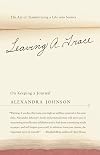
I really appreciated the way that Alexandra Johnson wrote this book. It’s not a workbook, or a seven point system to success, it is an exposition of what journals are. The author is a collector and researcher of journals of all shapes and sizes and she weaves examples from her collected journals into the text of the book to illustrate that each journal and journaling style is unique to the person writing. While she does have some helpful exercises, these take the back seat. The goal of show more this book is to inspire you to journal, not to tell you how to, or merely how to build a habit out of it. show less
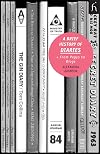
As the title suggests, this is in fact a brief history of diaries; a very easy read if you have a couple of hours to kill, and would like to learn more about, well, diarists. There's not much more to say: Johnson gives us a couple of pages on the obvious (Pepys, Boswell), the well known (Darwin, Lewis & Clark, Thoreau), and selected authors (Burney, Mansfield, Woolf, Tolstoys). There were two surprises: first, the 'war diaries' section was given over primarily to women (Frank, Chestnut, show more Hillesum, Iris Origo), which worked very well. Second, the final chapter on 'cyberspace and digital diarists' is intellectually offensive: 12 or so pages about how LIKE THE INTERNET REVOLUTIONISES EVERYTHING AND NOW EVERYTHING IS GREAT BECAUSE WE'RE SHARING AND NOT ASHAMED YOU KNOW? Lest you think I'm exaggerating:
"Twenty-first-century diary keeping is now that perfect mix of confession, self-expression and moral improvement by sharing rather than concealing... Foursquare, a mobile social network, now allows users to tell others where they are located at that precise moment."
Goodbye, Virginia Woolf, today we have Foursquare--making the world a better... wait, does Foursquare even exist anymore? Apparently so. But it's not clear to me what any of this has to do with diaries.
More importantly, the Brief History is determinedly nominalist; no attempts to bring things together (except to point out how GREAT EVERYTHING IS TODAY), little attempt to link the use of diaries to anything outside of diaries. But that's just a reason to read more diaries, and books about diaries. Johnson's book certainly made me want to do that, which is no mean thing. show less
"Twenty-first-century diary keeping is now that perfect mix of confession, self-expression and moral improvement by sharing rather than concealing... Foursquare, a mobile social network, now allows users to tell others where they are located at that precise moment."
Goodbye, Virginia Woolf, today we have Foursquare--making the world a better... wait, does Foursquare even exist anymore? Apparently so. But it's not clear to me what any of this has to do with diaries.
More importantly, the Brief History is determinedly nominalist; no attempts to bring things together (except to point out how GREAT EVERYTHING IS TODAY), little attempt to link the use of diaries to anything outside of diaries. But that's just a reason to read more diaries, and books about diaries. Johnson's book certainly made me want to do that, which is no mean thing. show less
"The unexamined life is not worth living"
--Socrates
"Self-realization. I was thinking of the immortal words of Socrates, who said, "... I drank what?""
--Chris Knight, Real Genius
Whatever version of Socrates' wisdom you prefer, there's definitely something of value in keeping in a journal. Some published journals have never left print, revealing the lives and psychology of geniuses, ordinary people, people in moments of historic turmoil, and people with nothing more thrilling than the play of show more light in an almost empty room. Even if you aren't Virginia Woolf or Anne Frank, your descendants might wish to know who you were, you may wish to remember your youth when you're old.
I irregular keep a journal*, mostly as a pretext to write with fountain pens, and that journal is frankly, what Johnson identifies as the introspective whine, a psychological venting of spleen and complaints that I'd be embarrassed and terrified to show anybody else. The core of Johnson's practice is to focus first on sensation, then on memory, then on pattern and narrative. The specific sensory impression of a moment, like Proust's madeleine, acts as a trigger to a whole world of the cobwebbed past. And as the moments come alive again, you can see the choices you made in your life that, well, made your life. Each chapter is dotted with specific examples and closes with useful exercises. I hope they'll improve the quality of my journals.
*it also strikes me that in many way, my 1500+ book reviews over 10 years on this site are another journal, so thank you for reading along, friends. show less
--Socrates
"Self-realization. I was thinking of the immortal words of Socrates, who said, "... I drank what?""
--Chris Knight, Real Genius
Whatever version of Socrates' wisdom you prefer, there's definitely something of value in keeping in a journal. Some published journals have never left print, revealing the lives and psychology of geniuses, ordinary people, people in moments of historic turmoil, and people with nothing more thrilling than the play of show more light in an almost empty room. Even if you aren't Virginia Woolf or Anne Frank, your descendants might wish to know who you were, you may wish to remember your youth when you're old.
I irregular keep a journal*, mostly as a pretext to write with fountain pens, and that journal is frankly, what Johnson identifies as the introspective whine, a psychological venting of spleen and complaints that I'd be embarrassed and terrified to show anybody else. The core of Johnson's practice is to focus first on sensation, then on memory, then on pattern and narrative. The specific sensory impression of a moment, like Proust's madeleine, acts as a trigger to a whole world of the cobwebbed past. And as the moments come alive again, you can see the choices you made in your life that, well, made your life. Each chapter is dotted with specific examples and closes with useful exercises. I hope they'll improve the quality of my journals.
*it also strikes me that in many way, my 1500+ book reviews over 10 years on this site are another journal, so thank you for reading along, friends. show less
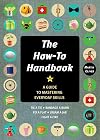
Honest disclosure: I am writing this review as an adult, and not as a member of the intended audience which appears to be young teens. When my children were younger I might have bought this book for them, hoping to bypass the all-too-frequent nagging about how to do things. As a matter of fact, I did purchase books much like this. Then, when they had moved on in life and I cleaned up their rooms, I found these books, spines uncracked, on their bookshelves. There may be young people who will show more use and appreciate this compendium; I don't know them.
Some other quibbles:
1, If recipes are included, the directions should be accurate. For example, the recipe for a smoothie asks for a "small bag" of frozen fruit - how much fruit is that? The recipe for an omelet requires that the eggs cook for several minutes, then a few minutes more, and then another minute or two. These eggs will be solid as rock - the classic omelet is cooked in no more than two minutes.
2. Why do the directions for threading a needle come after how to sew on a button?
3. Dietary advice does not acknowledge that the reader may be vegetarian. show less
Some other quibbles:
1, If recipes are included, the directions should be accurate. For example, the recipe for a smoothie asks for a "small bag" of frozen fruit - how much fruit is that? The recipe for an omelet requires that the eggs cook for several minutes, then a few minutes more, and then another minute or two. These eggs will be solid as rock - the classic omelet is cooked in no more than two minutes.
2. Why do the directions for threading a needle come after how to sew on a button?
3. Dietary advice does not acknowledge that the reader may be vegetarian. show less
 This review was written for LibraryThing Early Reviewers.
You May Also Like


Statistics
- Works
- 8
- Members
- 645
- Popularity
- #39,134
- Rating
- 3.6
- Reviews
- 38
- ISBNs
- 17
- Languages
- 1
