
Thomas Mallon
Author of A Book of One's Own: People and Their Diaries
About the Author
Thomas Mallon, author of "In Fact", is a frequent contributor to many magazines & journals. His column, "Doubting Thomas" ran for six years in GQ. His novels Dewey Defeats Truman & Henry & Clara were New York Times Notable Books. A recipient of Guggenheim & Rockefeller fellowships, he lives in show more Westport, Connecticut. (Bowker Author Biography) show less
Image credit: Thomas Mallon at the 2012 National Book Festival By Slowking4 - Own work, GFDL 1.2, https://commons.wikimedia.org/w/index.php?curid=21582370
Works by Thomas Mallon
No title 1 copy
Associated Works
The Missionary Position: Mother Teresa in Theory and Practice (1995) — Foreword, some editions — 1,065 copies, 34 reviews
The Underworld U.S.A. Trilogy, Volume I: American Tabloid, The Cold Six Thousand; Introduction by Thomas Mallon (Everyman's Library Contemporary Classics Series) (2019) — Introduction, some editions — 71 copies
Mary McCarthy: Novels 1963-1979 (LOA #291): The Group / Birds of America / Cannibals and Missionaries (Library of America Mary McCarthy Edition) (2017) — Editor — 70 copies, 1 review
Pal Joey: The Novel and The Libretto and Lyrics (2016) — Foreword, some editions — 43 copies, 2 reviews
My Town: Writers on American Cities — Contributor — 3 copies
Tagged
Common Knowledge
- Birthdate
- 1951-11-02
- Gender
- male
- Education
- Sewanhaka High School
Brown University
Harvard University
University of Cambridge (St Edmund's House) - Occupations
- novelist
essayist
critic
professor - Organizations
- George Washington University
- Nationality
- USA
- Birthplace
- Glen Cove, New York, USA
- Places of residence
- Stewart Manor, New York, USA
- Associated Place (for map)
- New York, USA
Members
Reviews
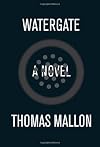
(Writing this review as I watch the "Snowflake Day" episode of Daniel Tiger.) This is my favorite kind of historical fiction, that focuses more on the supporting cast. Reading Michael Shaara's _The Killer Angels_ in high school started my obsession with Civil War history, because of its insight into the lives of minor figures Joshua Chamberlain, Daniel Sickles, and James Longstreet. Mallon's _Watergate_ pays quite a lot of attention to Rosemary Woods (Nixon's secretary) and Fred LaRue, an show more advisor from the deep South with his own sordid past.
Mallon's Nixon is more sympathetic and inscrutable than one would expect, considering he is the main figure in this kind of stupid episode in American history. The entire scandal was predicated on a petty burglary, which is quaint considering the fraudsters and traitors currently in power, who seem intent on destroying our system of governance. There is no discussion 0f the tapes that revealed Nixon's (and Billy Graham's) anti-semitism and racism. Regardless, Mallon effectively captures the slowly building sense that the break-in, and ensuing coverup, would eventually topple Nixon's presidency. show less
Mallon's Nixon is more sympathetic and inscrutable than one would expect, considering he is the main figure in this kind of stupid episode in American history. The entire scandal was predicated on a petty burglary, which is quaint considering the fraudsters and traitors currently in power, who seem intent on destroying our system of governance. There is no discussion 0f the tapes that revealed Nixon's (and Billy Graham's) anti-semitism and racism. Regardless, Mallon effectively captures the slowly building sense that the break-in, and ensuing coverup, would eventually topple Nixon's presidency. show less

Having enjoyed Thomas Mallon’s WATERGATE, a piece of historical fiction centering on the 37th President of the United States, I eagerly picked up his FINALE: A HISTORY OF THE REAGAN YEARS to see how he treated the 40th occupant of that office. Again, Mallon mixes fictional characters with real life participants in history, some obscure and some surprising, and centers most of his action around the second half of 1986, a patch of time that included the Reykjavik Summit with Soviet leader show more Mikhail Gorbachev, a hard fought mid-term election with the control of Senate on the line, and the revelation that the Reagan Administration was trading arms for hostages with the Ayatollah in Iran, while secretly funding the Contras, who were waging a guerilla war against the leftist Castro backed government in Nicaragua. Mallon’s book weaves a story that involves many different individuals, some of whom work in the White House, while others vigorously oppose it, and some who just enjoy drifting along in close proximity to power and glamour. Then there are those who observe and see through the facades the mighty and wealthy work so hard to put up.
I thought FINALE didn’t have as strong of narrative as WATERGATE, and maybe that is because the historical events of the latter were so dramatic, and the cast of characters involved so fascinating. But the strong point in FINALE is the way Mallon builds his characters here, both real and fictional, giving them distinctive voices and personalities that may not exactly jibe with the record, but who nevertheless leap off the page for me. Mallon has a great talent for portraying these historical personages not only as they would have liked for us to see them, but then showing us their faults, and allowing the more real person to be seen. The standout in this book for me is his portrayal of Nancy Reagan, the First Lady utterly and obsessively devoted to her “Ronnie,” an insecure woman who uses astrology to try and control a world filled with dangers, seen and unseen, who always believes that the men surrounding her husband in the White House are falling short of doing their best for him, and never forgetting those who hindered her husband’s ambitions, or failed in their efforts on his behalf. Her dependence on astrologer Joan Quigley was kept from the public during the Reagan’s years in the White House, not in the least for how fanatically she believed in it, but also because astrology was anathema to Ronald Reagan’s devoted supporters in the Christian evangelical community, many million strong. Mallon does bring back Richard Nixon in this book, now a disgraced ex-President determined to still wield influence in the waning days of the Cold War, going so far as to have a mole planted in the American delegation to Reykjavik. Pamela Harriman comes off as a sort of anti-Nancy, a woman who knew how to marry well and advance herself, now the widow of Averell Harriman and determined to step out and make herself a power in her own right as a Democratic Party fundraiser. I must admit that I liked the fictional Christopher Hitchens (a friend of Mallon’s) in this book much better than the real life one who went off the deep end after 9/11 and supported the invasion of Iraq, while becoming a militant atheist. Among the other real life personages making appearances in the book are Mikhail Gorbachev, Margaret Thatcher, Jimmy and Rosalyn Carter, Jeanne Kirkpatrick (a darling of neo-cons back in the day), Merv Griffin, Bette Davis, Donald Regan (the tough as nails White House chief of staff who clashed with Nancy); a napping Lillian Gish, George Schultz, Michael Deaver, John Hinckley (who attempted to assassinate Reagan); Bob Dole, Walter and Lee Annenberg, along with a lot of politicians and names from the ‘80s that many readers will have to wiki. I’m surprised there wasn’t an appearance by Sam Donaldson, the abrasive ABC News White House correspondent during the Reagan years, and a frequent foil for the amiable President. Among the fictional characters Mallon invents for his novel is Anne MacMurray, the former wife of a Republican Party power broker (and a money funneler to the Contras) who has become an anti-nuclear activist, an issue that was red hot back in those days, and Anders Little, a lower level member of the National Security Counsel who manages to hitch a ride to Reykivik, and nearly witnesses what might have been the end of the Cold War on one October afternoon but for Reagan’s refusal to abandon his Strategic Defense Initiative. Little is a closeted homosexual in the middle of the AIDS epidemic, working for an administration doing nothing to stem the disease while being supported by a Republican Party not shy about its hostility to anything and anyone suspected of sexual deviancy. Mallon doesn’t hammer the point, but I think he lets his portrayal of the sad fate of Terry Dolan in the book speak for itself. Ronald Reagan is the one character Mallon does not try to get inside, letting the man remain the enigma so many found him to be, a genial front masking a detachment that mystified even those who worked closely with him. The author strongly hints that the Alzheimer’s, which wouldn’t be diagnosed for some years to come, was already lurking in the shadows and peaking out in the last years in the White House.
Mallon is an exceptionally good writer of prose, and gives his story a flow that is easy for the reader to get into, even if one is not too familiar with the politics and personalities of the 1980s. He deftly opens the book on the last day of the 1976 Republican National Convention in Kansas City, setting the stage for what would come later, and then doing a time jump to the middle of Reagan’s second term. One thing Mallon does well that is almost impossible for other authors is to switch the character POV multiple times during a scene. This is called “head hopping,” something all beginning authors are warned against doing, but Mallon pulls it off, though I suspect some readers might be thrown by it.
FINALE was published in 2015 just before the Trump era of American politics commenced, and one thing that struck while reading it was just how stark raving sane everyone sounds in this novel compared to the conversations being had in the White House in real life some three decades and change later. So, if you find the political scene of the present day too depressing and you yearn to party like it’s 1986 again, then pick up this book by all means. show less
I thought FINALE didn’t have as strong of narrative as WATERGATE, and maybe that is because the historical events of the latter were so dramatic, and the cast of characters involved so fascinating. But the strong point in FINALE is the way Mallon builds his characters here, both real and fictional, giving them distinctive voices and personalities that may not exactly jibe with the record, but who nevertheless leap off the page for me. Mallon has a great talent for portraying these historical personages not only as they would have liked for us to see them, but then showing us their faults, and allowing the more real person to be seen. The standout in this book for me is his portrayal of Nancy Reagan, the First Lady utterly and obsessively devoted to her “Ronnie,” an insecure woman who uses astrology to try and control a world filled with dangers, seen and unseen, who always believes that the men surrounding her husband in the White House are falling short of doing their best for him, and never forgetting those who hindered her husband’s ambitions, or failed in their efforts on his behalf. Her dependence on astrologer Joan Quigley was kept from the public during the Reagan’s years in the White House, not in the least for how fanatically she believed in it, but also because astrology was anathema to Ronald Reagan’s devoted supporters in the Christian evangelical community, many million strong. Mallon does bring back Richard Nixon in this book, now a disgraced ex-President determined to still wield influence in the waning days of the Cold War, going so far as to have a mole planted in the American delegation to Reykjavik. Pamela Harriman comes off as a sort of anti-Nancy, a woman who knew how to marry well and advance herself, now the widow of Averell Harriman and determined to step out and make herself a power in her own right as a Democratic Party fundraiser. I must admit that I liked the fictional Christopher Hitchens (a friend of Mallon’s) in this book much better than the real life one who went off the deep end after 9/11 and supported the invasion of Iraq, while becoming a militant atheist. Among the other real life personages making appearances in the book are Mikhail Gorbachev, Margaret Thatcher, Jimmy and Rosalyn Carter, Jeanne Kirkpatrick (a darling of neo-cons back in the day), Merv Griffin, Bette Davis, Donald Regan (the tough as nails White House chief of staff who clashed with Nancy); a napping Lillian Gish, George Schultz, Michael Deaver, John Hinckley (who attempted to assassinate Reagan); Bob Dole, Walter and Lee Annenberg, along with a lot of politicians and names from the ‘80s that many readers will have to wiki. I’m surprised there wasn’t an appearance by Sam Donaldson, the abrasive ABC News White House correspondent during the Reagan years, and a frequent foil for the amiable President. Among the fictional characters Mallon invents for his novel is Anne MacMurray, the former wife of a Republican Party power broker (and a money funneler to the Contras) who has become an anti-nuclear activist, an issue that was red hot back in those days, and Anders Little, a lower level member of the National Security Counsel who manages to hitch a ride to Reykivik, and nearly witnesses what might have been the end of the Cold War on one October afternoon but for Reagan’s refusal to abandon his Strategic Defense Initiative. Little is a closeted homosexual in the middle of the AIDS epidemic, working for an administration doing nothing to stem the disease while being supported by a Republican Party not shy about its hostility to anything and anyone suspected of sexual deviancy. Mallon doesn’t hammer the point, but I think he lets his portrayal of the sad fate of Terry Dolan in the book speak for itself. Ronald Reagan is the one character Mallon does not try to get inside, letting the man remain the enigma so many found him to be, a genial front masking a detachment that mystified even those who worked closely with him. The author strongly hints that the Alzheimer’s, which wouldn’t be diagnosed for some years to come, was already lurking in the shadows and peaking out in the last years in the White House.
Mallon is an exceptionally good writer of prose, and gives his story a flow that is easy for the reader to get into, even if one is not too familiar with the politics and personalities of the 1980s. He deftly opens the book on the last day of the 1976 Republican National Convention in Kansas City, setting the stage for what would come later, and then doing a time jump to the middle of Reagan’s second term. One thing Mallon does well that is almost impossible for other authors is to switch the character POV multiple times during a scene. This is called “head hopping,” something all beginning authors are warned against doing, but Mallon pulls it off, though I suspect some readers might be thrown by it.
FINALE was published in 2015 just before the Trump era of American politics commenced, and one thing that struck while reading it was just how stark raving sane everyone sounds in this novel compared to the conversations being had in the White House in real life some three decades and change later. So, if you find the political scene of the present day too depressing and you yearn to party like it’s 1986 again, then pick up this book by all means. show less
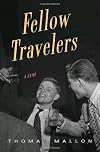
The book follows a years-long romance between Tim, an emotional and unsteady young writer, and Hawkins, an older man with an established career. The men showcase two extremes of temperament, with Tim unable to hide his obsession and Hawkins unwilling to indulge him. Each is acutely aware of the risk their affair poses to their social and professional lives.
Both men live and work in Washington D.C. during the McCarthy era. For those uninclined to US politics: A 1950s political era defined by show more the policy and career of Joe McCarthy, a congressman who dedicated his career to eradicating communists (and homosexuals) from American life. People were routinely investigated and ejected from work, school and polite society based on the smallest suspicion. Homosexuality was illegal at this time.
I found neither Tim nor Hawkins particularly likable, but they are interesting all the way through. Tim is particularly compelling, even at his lowest points. I think my favourite part of this novel is the window the author gives us into Tim's struggle with his religion. It's incredibly intimate and the prose draws out a ton of emotional depth. There is some introspection on Hawkins' part but it's handled very differently.
Fellow Travelers may be a tough read for those wanting a more idealistic kind of romance. The relationship dynamic is tumultuous at best, and anyone who has been in a hopelessly one-sided relationship will feel the hurt through the pages.
Readers who come from the TV adaptation may be surprised to find the book is just as much a political thriller as it is a romance. The book is full of side characters, whose diverse and well-written personalities make it relatively easy to keep the names straight. Quite a feat given the number of names dropped in this book. The pages are filled to the brim with historic figures and cultural context. Mallon does a fantastic job illustrating how Capitol Hill bleeds unstoppably into the personal lives of everyone who dares set foot on its steps.
I enjoyed the political content more as the book went on, but it is largely a matter of personal taste. If you like LGBT romance or political history you will like it, if you enjoy both, you'll love it. Younger readers especially may find it dry. However, it's a relatively short book, there is lots to love about it, and skimming isn't a crime.
Highly recommend. show less
Both men live and work in Washington D.C. during the McCarthy era. For those uninclined to US politics: A 1950s political era defined by show more the policy and career of Joe McCarthy, a congressman who dedicated his career to eradicating communists (and homosexuals) from American life. People were routinely investigated and ejected from work, school and polite society based on the smallest suspicion. Homosexuality was illegal at this time.
I found neither Tim nor Hawkins particularly likable, but they are interesting all the way through. Tim is particularly compelling, even at his lowest points. I think my favourite part of this novel is the window the author gives us into Tim's struggle with his religion. It's incredibly intimate and the prose draws out a ton of emotional depth. There is some introspection on Hawkins' part but it's handled very differently.
Fellow Travelers may be a tough read for those wanting a more idealistic kind of romance. The relationship dynamic is tumultuous at best, and anyone who has been in a hopelessly one-sided relationship will feel the hurt through the pages.
Readers who come from the TV adaptation may be surprised to find the book is just as much a political thriller as it is a romance. The book is full of side characters, whose diverse and well-written personalities make it relatively easy to keep the names straight. Quite a feat given the number of names dropped in this book. The pages are filled to the brim with historic figures and cultural context. Mallon does a fantastic job illustrating how Capitol Hill bleeds unstoppably into the personal lives of everyone who dares set foot on its steps.
I enjoyed the political content more as the book went on, but it is largely a matter of personal taste. If you like LGBT romance or political history you will like it, if you enjoy both, you'll love it. Younger readers especially may find it dry. However, it's a relatively short book, there is lots to love about it, and skimming isn't a crime.
Highly recommend. show less
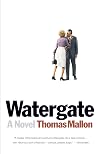
One would think that there is nothing new to say about the Watergate scandal, now ancient history to most Americans, but Thomas Mallon’s historical novel proves this point wrong by a considerable margin. His book, WATERGATE, is an utterly enthralling look back at events and a Presidency that altered American history forever, from some never before considered perspectives. Mallon’s book is a reimagining of the scandal, told from the view of many characters, all principle players to some show more extent in the scandal. I think the genius of the book is that Mallon creates fictional versions of Nixon and his people which seem totally real, they live and breathe and rage and hurt, all while feeling utter dismay that things have taken such a turn.
Mallon’s book is not a particularly long one and the narrative flows smoothly from one character to the next; this is not a “and then this happened” retelling of historical events, it does help if the reader has at least a working knowledge of the scandal and who was who and where they were at certain points in the story. Those unfamiliar with history may have to do a lot of wiki-ing before they reach the last page, but Mallon does provide a list of players at the beginning of his book that helps a lot.
What I found so striking about WATERGATE was Mallon’s sympathetic portrait of so many characters who have been written off as villains or worse, fools, by most historical accounts; he does not apologize for their actions or carry water like so many of the “Nixon didn’t do anything wrong” bitter enders, but lets us see them as they, perhaps, saw themselves. It is a refreshing take; one thankfully free of the snark and irony so prevalent in much contemporary political fiction.
In the pages of Mallon’s book, we meet a flawed Richard Nixon who lives in perpetual fear that his many, many enemies will yet find a way to bring him down, a fear that infected his White House and all who were part of his inner circle. There is a fascinating portrait of Pat Nixon, the woman who was always so reserved in public, never letting her mask slip, yet capable of surprising secrets in private. There is John and Martha Mitchell, an incredible mismatch of a marriage, one that crumbled under the weight of revelations of his criminal activities as head of Nixon’s re-election campaign. Equally memorable is Rose Mary Woods, Nixon’s long time and ever loyal secretary, the person responsible of the infamous 18 ½ minute gap on one Nixon’s incriminating tapes. Mallon comes up with a surprising and poignant explanation for this act and what was on the tape, one of the enduring mysteries of the 20th Century. Another interesting relationship explored is the marriage of outward tough guy E. Howard Hunt and his formidable wife, Dorothy, who skillfully negotiated with the men in the Nixon White House to get hush money for her family after her husband’s arrest for his role in the break in. Every reader’s favorite is Alice Roosevelt Longworth, the daughter of Theodore and Washington’s long time Grande Dame, who sees through everyone, yet holds a deep affection for Richard Nixon, whose act of kindness in an hour of need is not forgotten. Mallon does an exceptional job with his women characters, making them every bit as compelling as the men who were on the front pages.
Much space is given to Fred LaRue, the genial Southerner who became the White House’s bagman after the Watergate break in; in Mallon’s hands, this relativity minor character in history, takes front and center often in the narrative. Like many of the others involved in Watergate, LaRue simply cannot understand how his life, which was on such a successful trajectory, has taken such a wrong turn, but is helpless in the face of impending disaster as one illegal act and lie leads to another with the inevitable set down with the Federal Attorney waiting at the end. Like most of the characters in Mallon’s book, LaRue suppresses a private pain they would never dare show in public; only a brief reunion with long ago love offers him any solace as the firestorm engulfs the Nixon Administration.
If there is a real villain in this book, it is the fatuous Elliot Richardson, who thinks he will walk over Richard Nixon’s political corpse to the Oval Office.
I would never claim that Mallon’s book is history, there is plenty in the historical record that condemns Nixon and his crew as the most corrupt, venal and downright mean group of characters to ever hold power in America (and I include Donald Trump in that judgment), but as historical fiction, the book is of the highest order, making us see very familiar history in a different light. I am a self published author of two alternate history novels, both featuring a fictional Nixon among others, and I fully respect the hard work and attention to detail Thomas Mallon must have put in to write this book. All readers of good fiction should seek it show less
Mallon’s book is not a particularly long one and the narrative flows smoothly from one character to the next; this is not a “and then this happened” retelling of historical events, it does help if the reader has at least a working knowledge of the scandal and who was who and where they were at certain points in the story. Those unfamiliar with history may have to do a lot of wiki-ing before they reach the last page, but Mallon does provide a list of players at the beginning of his book that helps a lot.
What I found so striking about WATERGATE was Mallon’s sympathetic portrait of so many characters who have been written off as villains or worse, fools, by most historical accounts; he does not apologize for their actions or carry water like so many of the “Nixon didn’t do anything wrong” bitter enders, but lets us see them as they, perhaps, saw themselves. It is a refreshing take; one thankfully free of the snark and irony so prevalent in much contemporary political fiction.
In the pages of Mallon’s book, we meet a flawed Richard Nixon who lives in perpetual fear that his many, many enemies will yet find a way to bring him down, a fear that infected his White House and all who were part of his inner circle. There is a fascinating portrait of Pat Nixon, the woman who was always so reserved in public, never letting her mask slip, yet capable of surprising secrets in private. There is John and Martha Mitchell, an incredible mismatch of a marriage, one that crumbled under the weight of revelations of his criminal activities as head of Nixon’s re-election campaign. Equally memorable is Rose Mary Woods, Nixon’s long time and ever loyal secretary, the person responsible of the infamous 18 ½ minute gap on one Nixon’s incriminating tapes. Mallon comes up with a surprising and poignant explanation for this act and what was on the tape, one of the enduring mysteries of the 20th Century. Another interesting relationship explored is the marriage of outward tough guy E. Howard Hunt and his formidable wife, Dorothy, who skillfully negotiated with the men in the Nixon White House to get hush money for her family after her husband’s arrest for his role in the break in. Every reader’s favorite is Alice Roosevelt Longworth, the daughter of Theodore and Washington’s long time Grande Dame, who sees through everyone, yet holds a deep affection for Richard Nixon, whose act of kindness in an hour of need is not forgotten. Mallon does an exceptional job with his women characters, making them every bit as compelling as the men who were on the front pages.
Much space is given to Fred LaRue, the genial Southerner who became the White House’s bagman after the Watergate break in; in Mallon’s hands, this relativity minor character in history, takes front and center often in the narrative. Like many of the others involved in Watergate, LaRue simply cannot understand how his life, which was on such a successful trajectory, has taken such a wrong turn, but is helpless in the face of impending disaster as one illegal act and lie leads to another with the inevitable set down with the Federal Attorney waiting at the end. Like most of the characters in Mallon’s book, LaRue suppresses a private pain they would never dare show in public; only a brief reunion with long ago love offers him any solace as the firestorm engulfs the Nixon Administration.
If there is a real villain in this book, it is the fatuous Elliot Richardson, who thinks he will walk over Richard Nixon’s political corpse to the Oval Office.
I would never claim that Mallon’s book is history, there is plenty in the historical record that condemns Nixon and his crew as the most corrupt, venal and downright mean group of characters to ever hold power in America (and I include Donald Trump in that judgment), but as historical fiction, the book is of the highest order, making us see very familiar history in a different light. I am a self published author of two alternate history novels, both featuring a fictional Nixon among others, and I fully respect the hard work and attention to detail Thomas Mallon must have put in to write this book. All readers of good fiction should seek it show less
Lists
Awards


You May Also Like


Associated Authors
Statistics
- Works
- 21
- Also by
- 8
- Members
- 3,085
- Popularity
- #8,275
- Rating
- 3.7
- Reviews
- 84
- ISBNs
- 86
- Languages
- 2
- Favorited
- 4

