
Elia Kazan (1909–2003)
Author of The Arrangement
About the Author
Image credit: James Kavallines. Library of Congress Prints and Photographs Division. New York World-Telegram and the Sun Newspaper Photograph Collection. http://hdl.loc.gov/loc.pnp/cph.3c16773
Works by Elia Kazan
The Complete James Dean Collection: East of Eden / Giant / Rebel Without a Cause (2011) — Director — 23 copies
Controversial Classics Collection (Advise and Consent / The Americanization of Emily / Bad Day at Black Rock / Blackboard Jungle / A Face in the Crowd / Fury / I Am a Fugitive… (2005) — Director — 6 copies
20th Century Fox Best Picture Collection: All About Eve / The Sound of Music / How Green was My Valley / Gentleman's Agreement / The French Connection (2008) — Director — 5 copies
Natalie Wood Signature Collection {Gypsy/Sex and the Single Girl/Splendor in the Grass/Inside Daisy Clover} (2013) 5 copies
Mi vida. Memorias de un testigo excepcional de los tiempos dorados de Broadway y Hollywood. (1990) 3 copies
20th Century Fox Presents Classic Award Winners — Director — 2 copies
Love Me Forever Double Feature: An Affair to Remember [and] Wild River (2014) — Director; Director — 2 copies
Twentieth Century Fox Presents Studio Classics: The "Best Picture" Collection (All About Eve/Gentleman's Agreement/How Green Was My Valley/Sunrise) — Director — 2 copies
Twentieth Century Fox Presents: Studio Classics: The "Best Picture" Collection — Director — 2 copies
Leading Men Collection, Vol. 2: A Farewell to Arms / Gentleman's Agreement / The Grapes of Wrath / Heaven Knows, Mr. Allison / The Hustler (2013) — Director — 1 copy
TCM Greatest Classic Films: Tennessee Williams — Director — 1 copy
Sur les Quais 1 copy
Elia Kazan: le plaisir de mettre en scène: carnets, essais et conférences (2010) — Author — 1 copy
Amerika ... Amerika 1 copy
The Arrangeent 1 copy
América América 1 copy
The visitors 1 copy
ATOS DE AMOR 1 copy
Associated Works
Five O'Clock Angel: Letters of Tennessee Williams to Maria St. Just, 1948-1982 (1990) — Introduction, some editions — 72 copies, 1 review
Tagged
Common Knowledge
- Canonical name
- Kazan, Elia
- Legal name
- Kazantzoğlou, Elias
- Other names
- Gadget
- Birthdate
- 1909-09-07
- Date of death
- 2003-09-28
- Gender
- male
- Education
- Williams College
Yale University - Occupations
- film director
producer
screenwriter - Organizations
- Actors Studio
- Awards and honors
- Kennedy Center Honors (1983)
- Relationships
- Kazan, Nicholas (son)
Kazan, Zoe (granddaughter)
Kazan, Frances (spouse) - Nationality
- Ottoman Empire
USA - Birthplace
- Constantinople, Ottoman Empire
- Places of residence
- Istanbul, Ottoman Turkey
- Place of death
- New York, New York, USA
- Map Location
- Turkey
Members
Reviews
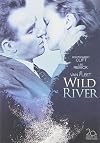
It is a shame this film fell into obscurity over the years. Though overshadowed by Elia Kazan’s more heralded and flashier efforts, I have always found “A Tree Grows in Brooklyn” and “Wild River” to be his best. Thanks to a scarred Montgomery Clift and a young and earthy Lee Remick, “Wild River” has a feeling of quiet reality.
Monty’s genius was to be so much the person he was portraying that he seemed to disappear on-screen. Clift’s sensitive performance here, coming after show more the accident which altered his appearance, is one of his best. It is matched by a young and incredibly lovely Lee Remick.
Clift works for the TVA (Tennessee Valley Authority) and has come to Jo Van Fleet’s rural home to move her off her land so room can be made for a dam. Clift is not uncaring, and his sympathy for the older woman is complicated even further by his attraction to her young granddaughter, Lee Remick.
He is also unpopular because of his fair treatment of blacks whom he is employing to help build the dam. But the violence simmering just beneath the surface here is less on his mind than Remick. He cannot have her because of what he is forced to do. Yet it is torture for him.
Clift’s sensitivity and Remick’s heart, torn between what she knows he has to do and what she feels within for him creates a frustration for the would-be couple the viewer can really feel. One scene in particular, as Remick paces back and forth in front of a sitting Clift, reveals the ache in Clift which finally blows.
Beautiful location filming by Kazan adds a further sense of reality to this quiet yet moving film. This was one of Clift’s best post-accident performances. This quiet film needs to become recognized for the masterpiece that it is. show less
Monty’s genius was to be so much the person he was portraying that he seemed to disappear on-screen. Clift’s sensitive performance here, coming after show more the accident which altered his appearance, is one of his best. It is matched by a young and incredibly lovely Lee Remick.
Clift works for the TVA (Tennessee Valley Authority) and has come to Jo Van Fleet’s rural home to move her off her land so room can be made for a dam. Clift is not uncaring, and his sympathy for the older woman is complicated even further by his attraction to her young granddaughter, Lee Remick.
He is also unpopular because of his fair treatment of blacks whom he is employing to help build the dam. But the violence simmering just beneath the surface here is less on his mind than Remick. He cannot have her because of what he is forced to do. Yet it is torture for him.
Clift’s sensitivity and Remick’s heart, torn between what she knows he has to do and what she feels within for him creates a frustration for the would-be couple the viewer can really feel. One scene in particular, as Remick paces back and forth in front of a sitting Clift, reveals the ache in Clift which finally blows.
Beautiful location filming by Kazan adds a further sense of reality to this quiet yet moving film. This was one of Clift’s best post-accident performances. This quiet film needs to become recognized for the masterpiece that it is. show less
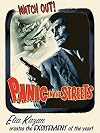
Great cast and exciting finale raise this film to its 4-star rating. Widmark, as a Public Health Officer (in a silly uniform) trying to stop the plague from spreading through New Orleans, talks way too loud most of the time, and Douglas isn't especially effective as his reluctant police detective partner. On the other hand, Barbara Bel Geddes is memorable in a somewhat thankless role as Widmark's long-suffering wife (because he can't see what any of us can see immediately--she's fabulous!) show more The best performance is given by Jack Palance, billed here early in his career as "Walter Jack Palance"--he's not only a fearsome physical presence, towering over his minions, but he delivers his lines perfectly, seeming so reasonable in tone while we (and the other characters) know what his true nature is. As one of his minions, Zero Mostel is great, and Tommy Cook is superb as the unwitting man most responsible for spreading the plague. The New Orleans scenes are great, and the finale in a coffee warehouse and along the waterfront is excellent. This is hardly a noir classic, but it looks great, and it's well worth your time. show less
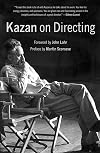
Kazan on Directing. By Elia Kazan. New York: Random House Publishing, 2009. 329 Pages.
By Patrick Charsky
Elia Kazan was a better director than Orson Welles. Many critics cite Citizen Kane as the best film ever made. However, On the Waterfront makes Citizen Kane look old and thin. Kazan’s life’s work was more robust and superior to Welles who made a few films of little impact after Citizen Kane. In Kazan’s own words, his thoughts about Mr. Welles, “In Mr. Welles’ productions there is show more a certain vitality and energy, but no total meaning, no sense of the thick fabric of life, of it’s real BODY. Welles reduced theater to theatricalism, and this is anemic fare.”
Elia Kazan was the best actor’s director of twentieth century American drama. Through the application of “the method” he brought a deeper characterization than had ever been seen on a stage or at a movie theater. This review will focus on his treatment of seminal characters which he dramatized in several famous plays and movies.
Kazan on Directing is Elia Kazan’s life work as a director put into book form. The chapters focus on his productions for theater in part one and his movie productions in part two. In the final section, Kazan goes into detail about the pleasures of directing and what it takes to become a director. The most interesting parts of the book are his notes about characters from his most famous productions. Blanche DuBois from A Streetcar Named Desire, Willy Loman from Death of a Salesman, Terry Malloy from On the Waterfront, and Cal Trask from East of Eden. These are his best efforts at directing and his greatest characters brought to life.
The Group Theater is where Kazan cut his teeth as a director. He started out as an actor but quickly moved into directing. At the time, The Group Theater was created to rival the Soviet Union’s theater group led by Stanislavsky. Kazan learned directing by learning “The Method.” “The Method” was based around principles that reflected human behavior on the stage realistically. Kazan was heavily influenced by Marxism. It shows in his notes about his early productions, especially his direction of Arthur Miller’s All My Sons and Death of a Salesman. According to editor Cornfield, “For a decade the Group Theatre members argued and fought among themselves, broke into factions that hated and admired, despised and adored each other, but their approach was at base steadily coherent enough to revolutionize American Theatre and consequently American Film.”
A Streetcar Named Desire was Kazan’s legendary production. He made a stage production and the film version with essentially the same cast, except Vivien Leigh took over the role of Blanche Dubois from Jessica Tandy. Kazan’s characterization of Blanche Dubois shines with a newfound depth that hadn’t been seen in American Theater before. Kazan believed that Blanche was an “anachronism.” She was living in a fantasy World of the nineteenth century American South. Kazan writes in his notes about the character of Blanche ``She is a refuge, punch drunk, and on the ropes, making her last stand, trying to keep up a gallant front, because she is a proud person.” It is only when she is raped by Stanley Kowalski that her World is finally violated and no hope is left. Through sexual violence, and her sex life, the sad character of Blanche is revealed. Her sexuality is the central characteristic which draws the audience to her. Kazan’s analysis was an in-depth exposition of a woman’s desire or need for protection from a male. A value of the Old South, a value to be obliterated by a New South more violent, in the form of the “sexual terrorist” Marlon Brando as Stanley.
In his notes, Kazan compares Blanche to Scarlett O’Hara. I think this is a great comparison since both women are beholden to the old values of a civilization that has ceased to exist. Only Scarlett lived during the time of it’s last gasp for air. Blanche lives in it like a fantasy. Both women are not allowed to assert their rights, they must depend on men for their survival. Scarlett marries three times and survives the Civil War and Reconstruction. Blanche has a different fate; she doesn’t succeed in finding a man to protect her, she is fired from her job as an English teacher, rejected by Karl Malden, and finally committed to an asylum.
Kazan does an excellent job of finding the “spine” of Blanche’s character. Kazan had to work hard with Vivien Leigh to adopt his theory of Blanche. Before Kazan and Leigh worked together, Leigh had been portraying Blanche in a different way from what Kazan wanted. Leigh eventually adapted to Kazan’s method and she won an Oscar for her performance. Kazan’s method was to use psychology to show Blanche’s life of desperation, rejection, and alienation.
The other legendary character that Kazan brings to life is Terry Malloy from On the Waterfront. Marlon Brando’s performance shows a man who was deeply troubled by his life. The famous scene where Terry and his brother ride in a car and Charley must kill his brother or risk his own life exposes what Terry has become “a liability.” He pleads with his brother “I could been somebody. I coulda been a contender.” Kazan analyzes the character of Terry in comparison to Stanley Kowalski, he writes that Terry is “deeply troubled inside, alone, abandoned, betrayed, and he needs help. Kowalski needs nothing.” Terry Malloy is an extension of Kazan who testified in front of the HUAC committee. Terry testifies before the New York City Crime Commission. What Terry goes through symbolizes what Kazan went through. The beating Terry gets from the gangsters who control the waterfront physicalizes the ostracism that Kazan endured from the theater and film communities because he named names.
Kazan and screenwriter Bud Schulberg both endured acrimony from their HUAC testimony. Cornfield writes of the beating scene’s symbolism “the brutal beating that Friendly and his henchmen give Terry might be it’s most ‘Kazan’ moment, his complaint and his pained expression of injustice” Instead of a beating Kazan’s reputation suffered blows that he would never entirely recover from. He did have some form of revenge against his adversaries “the financial and critical success of the film was Kazan’s revenge on the ‘Hollywood system,’ and he was particularly happy to accept his Academy Award in New York rather than in Hollywood.”
It was a bittersweet few years for Kazan, he had achieved enormous success. Ten years later, however, Kazan would struggle to find films to make and endured significant opprobrium in the press and filmmaking communities. After America, America Kazan directed a number of flops and his directing career ended with an adaptation of F. Scott Fitzgerald’s The Last Tycoon.
It seemed that History would forget Elia Kazan. “The Method” would be subsumed by franchise stars and megamergers in Hollywood. Kazan is the best actors’ director of twentieth century American drama. Today that sounds like an ailment to be avoided. But in Kazan’s time it was a worthy title to be coveted. Kazan is the most famous proponent of the method acting style. He will always be remembered for using the Stanislavsky based method. It will stand as a testament to realism in theater and film. HIs use of “The Method” brought about two award winning roles in Blanche Dubois and Terry Malloy. Among many of Kazan’s characters these two stand as his best work as a director.
Similar to his peers William Wyler, Orson Welles, and Roberto Rosselini, Kazan was an innovator of stage and screen. His production of All My Sons and Death of a Salesman rival those of Wyler’s The Best Years of Our Lives. His films have more substance than Welles’ Citizen Kane. And he is just as much a proponent of Realism as Rosselini was in his groundbreaking Paisan. He stands alone among twentieth century directors for his commitment to the method, to acting, and to realism. Kazan wrote about what must be done when searching out a piece of drama “you have to dig down past the dead leaves, the pretty dead leaves, the twigs, the gay green grass, the sod itself- down to the heart of the drama and TEST THAT.”
In this era of franchise tent poles and Superhero films, Kazan seems outdated and forgotten. The question presents itself, will Kazan be remembered? Will his characters and his method be forgotten? Will they someday have a renaissance? If a student is led to Vivien Leigh or Marlon Brando, they will discover Elia Kazan. They will discover his work, his plays, his films. Kazan will not be forgotten, nor his contributions to directing, he will live on in the hearts and minds of anyone who wants to make serious dramatic works. show less
By Patrick Charsky
Elia Kazan was a better director than Orson Welles. Many critics cite Citizen Kane as the best film ever made. However, On the Waterfront makes Citizen Kane look old and thin. Kazan’s life’s work was more robust and superior to Welles who made a few films of little impact after Citizen Kane. In Kazan’s own words, his thoughts about Mr. Welles, “In Mr. Welles’ productions there is show more a certain vitality and energy, but no total meaning, no sense of the thick fabric of life, of it’s real BODY. Welles reduced theater to theatricalism, and this is anemic fare.”
Elia Kazan was the best actor’s director of twentieth century American drama. Through the application of “the method” he brought a deeper characterization than had ever been seen on a stage or at a movie theater. This review will focus on his treatment of seminal characters which he dramatized in several famous plays and movies.
Kazan on Directing is Elia Kazan’s life work as a director put into book form. The chapters focus on his productions for theater in part one and his movie productions in part two. In the final section, Kazan goes into detail about the pleasures of directing and what it takes to become a director. The most interesting parts of the book are his notes about characters from his most famous productions. Blanche DuBois from A Streetcar Named Desire, Willy Loman from Death of a Salesman, Terry Malloy from On the Waterfront, and Cal Trask from East of Eden. These are his best efforts at directing and his greatest characters brought to life.
The Group Theater is where Kazan cut his teeth as a director. He started out as an actor but quickly moved into directing. At the time, The Group Theater was created to rival the Soviet Union’s theater group led by Stanislavsky. Kazan learned directing by learning “The Method.” “The Method” was based around principles that reflected human behavior on the stage realistically. Kazan was heavily influenced by Marxism. It shows in his notes about his early productions, especially his direction of Arthur Miller’s All My Sons and Death of a Salesman. According to editor Cornfield, “For a decade the Group Theatre members argued and fought among themselves, broke into factions that hated and admired, despised and adored each other, but their approach was at base steadily coherent enough to revolutionize American Theatre and consequently American Film.”
A Streetcar Named Desire was Kazan’s legendary production. He made a stage production and the film version with essentially the same cast, except Vivien Leigh took over the role of Blanche Dubois from Jessica Tandy. Kazan’s characterization of Blanche Dubois shines with a newfound depth that hadn’t been seen in American Theater before. Kazan believed that Blanche was an “anachronism.” She was living in a fantasy World of the nineteenth century American South. Kazan writes in his notes about the character of Blanche ``She is a refuge, punch drunk, and on the ropes, making her last stand, trying to keep up a gallant front, because she is a proud person.” It is only when she is raped by Stanley Kowalski that her World is finally violated and no hope is left. Through sexual violence, and her sex life, the sad character of Blanche is revealed. Her sexuality is the central characteristic which draws the audience to her. Kazan’s analysis was an in-depth exposition of a woman’s desire or need for protection from a male. A value of the Old South, a value to be obliterated by a New South more violent, in the form of the “sexual terrorist” Marlon Brando as Stanley.
In his notes, Kazan compares Blanche to Scarlett O’Hara. I think this is a great comparison since both women are beholden to the old values of a civilization that has ceased to exist. Only Scarlett lived during the time of it’s last gasp for air. Blanche lives in it like a fantasy. Both women are not allowed to assert their rights, they must depend on men for their survival. Scarlett marries three times and survives the Civil War and Reconstruction. Blanche has a different fate; she doesn’t succeed in finding a man to protect her, she is fired from her job as an English teacher, rejected by Karl Malden, and finally committed to an asylum.
Kazan does an excellent job of finding the “spine” of Blanche’s character. Kazan had to work hard with Vivien Leigh to adopt his theory of Blanche. Before Kazan and Leigh worked together, Leigh had been portraying Blanche in a different way from what Kazan wanted. Leigh eventually adapted to Kazan’s method and she won an Oscar for her performance. Kazan’s method was to use psychology to show Blanche’s life of desperation, rejection, and alienation.
The other legendary character that Kazan brings to life is Terry Malloy from On the Waterfront. Marlon Brando’s performance shows a man who was deeply troubled by his life. The famous scene where Terry and his brother ride in a car and Charley must kill his brother or risk his own life exposes what Terry has become “a liability.” He pleads with his brother “I could been somebody. I coulda been a contender.” Kazan analyzes the character of Terry in comparison to Stanley Kowalski, he writes that Terry is “deeply troubled inside, alone, abandoned, betrayed, and he needs help. Kowalski needs nothing.” Terry Malloy is an extension of Kazan who testified in front of the HUAC committee. Terry testifies before the New York City Crime Commission. What Terry goes through symbolizes what Kazan went through. The beating Terry gets from the gangsters who control the waterfront physicalizes the ostracism that Kazan endured from the theater and film communities because he named names.
Kazan and screenwriter Bud Schulberg both endured acrimony from their HUAC testimony. Cornfield writes of the beating scene’s symbolism “the brutal beating that Friendly and his henchmen give Terry might be it’s most ‘Kazan’ moment, his complaint and his pained expression of injustice” Instead of a beating Kazan’s reputation suffered blows that he would never entirely recover from. He did have some form of revenge against his adversaries “the financial and critical success of the film was Kazan’s revenge on the ‘Hollywood system,’ and he was particularly happy to accept his Academy Award in New York rather than in Hollywood.”
It was a bittersweet few years for Kazan, he had achieved enormous success. Ten years later, however, Kazan would struggle to find films to make and endured significant opprobrium in the press and filmmaking communities. After America, America Kazan directed a number of flops and his directing career ended with an adaptation of F. Scott Fitzgerald’s The Last Tycoon.
It seemed that History would forget Elia Kazan. “The Method” would be subsumed by franchise stars and megamergers in Hollywood. Kazan is the best actors’ director of twentieth century American drama. Today that sounds like an ailment to be avoided. But in Kazan’s time it was a worthy title to be coveted. Kazan is the most famous proponent of the method acting style. He will always be remembered for using the Stanislavsky based method. It will stand as a testament to realism in theater and film. HIs use of “The Method” brought about two award winning roles in Blanche Dubois and Terry Malloy. Among many of Kazan’s characters these two stand as his best work as a director.
Similar to his peers William Wyler, Orson Welles, and Roberto Rosselini, Kazan was an innovator of stage and screen. His production of All My Sons and Death of a Salesman rival those of Wyler’s The Best Years of Our Lives. His films have more substance than Welles’ Citizen Kane. And he is just as much a proponent of Realism as Rosselini was in his groundbreaking Paisan. He stands alone among twentieth century directors for his commitment to the method, to acting, and to realism. Kazan wrote about what must be done when searching out a piece of drama “you have to dig down past the dead leaves, the pretty dead leaves, the twigs, the gay green grass, the sod itself- down to the heart of the drama and TEST THAT.”
In this era of franchise tent poles and Superhero films, Kazan seems outdated and forgotten. The question presents itself, will Kazan be remembered? Will his characters and his method be forgotten? Will they someday have a renaissance? If a student is led to Vivien Leigh or Marlon Brando, they will discover Elia Kazan. They will discover his work, his plays, his films. Kazan will not be forgotten, nor his contributions to directing, he will live on in the hearts and minds of anyone who wants to make serious dramatic works. show less
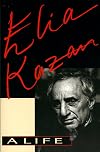
Great memoir that pulls no punches on himself, his friends, his enemies, or anyone in the film and theater realm, while at the same time giving due respect and admiration for the same people. Goes into great detail about how the HUAC impacted his life from the early 50's to time of writing the book, as well as the atmosphere of the Communist party in the US in the 30's and 40's. He doesn't shy away from mentioning his many infidelities and his complicated relationships with his wives and show more other women. His writing style is friendly and conversational. My only complaint is his tendency to repeat himself, which should have been fixed by his editor. show less
Lists
Awards


You May Also Like


Associated Authors
Statistics
- Works
- 73
- Also by
- 4
- Members
- 2,637
- Popularity
- #9,743
- Rating
- 3.7
- Reviews
- 61
- ISBNs
- 222
- Languages
- 12
- Favorited
- 1