

Cecilia Vicuña
Author of Spit Temple
About the Author
Image credit: via author's website
Works by Cecilia Vicuña
Ul: Four Mapuche Poets : An Anthology (Poetry in Indigenous Languages) (1998) — Editor — 11 copies, 1 review
Cruz del Sur: antología 1 copy
La Wik'uña 1 copy
Associated Works
These Are Not Sweet Girls: Poetry by Latin American Women (2000) — Contributor — 45 copies, 1 review
Daughters of Latin America: An International Anthology of Writing by Latine Women (2023) — Contributor — 40 copies, 1 review
3 x Abstraction: New Methods of Drawing by Hilma af Klint, Emma Kunz, and Agnes Martin (2005) — Contributor — 37 copies, 1 review
The Serpent and the Fire: Poetries of the Americas from Origins to Present (2024) — Contributor — 17 copies
Tagged
Common Knowledge
- Canonical name
- Vicuña, Cecilia
- Gender
- female
- Nationality
- Chile (birth)
- Places of residence
- USA
Members
Reviews
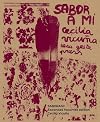
"How many artists are there? Choose where you want to work, choose. Invent your task, do it! All together to destroy reactionary ideas, bourgeois ideology, individualism, solemnity, all white, European, capitalist ways of existence!"
– Cecilia Vicuña, Saborami, 1973
Cecilia Vicuña created Saborami in the aftermath of the September 1973 military coup in Chile. Combining poetry, journal entries, documentation of artworks including assemblages and paintings, the book was published in Devon, show more England in an edition of 250 hand-made copies by the artist-led Beau Geste Press. It was one of the first artistic responses to the violence of the fascist junta.
In recent years, Vicuña has gained increasing renown, including a retrospective at Kunstinstituut Melly (FKA Witte de With, 2019) and installations at the Guggenheim (2022); and Tate Modern (2023). Saborami is one of her most important works, made at a turning point in her life and career, and reverberating through to the present day. Though the book is highly regarded, it has also been hard to access. This new, expanded facsimile edition remedies this oversight, and restates Saborami as a central example of artistic engagement in material and revolutionary resistance.
Engaging obliquely with the legacies of surrealism, contemporaneous experiments in concrete poetry and the British conceptual art practices of the 1960s and 1970s, Saborami is part of an exilic and internationalist tradition. Years ahead of her time, Vicuña outlines an eco-socialist and feminist vision in the face of defeat.
Coinciding with the fiftieth anniversary of the book’s original publication and of the coup in Chile, this expanded edition contains a new introduction by art historian and curator Amy Tobin and poet and writer Luke Roberts. It includes rarely seen archival material from Vicuña’s time in London, such as contributions to the feminist newspaper Spare Rib, commentary from BBC coverage, and her role in Artists for Democracy in Chile and other solidarity campaigns.
Saborami: Expanded facsimile edition by Cecilia Vicuña, is edited by Amy Tobin and Luke Roberts, designed by James Langdon, and published by Book Works in an edition of 1,000 copies. This project has been generously supported by the Jan Michalski Foundation, Cecilia Vicuña, King’s College London, and Newnham College, University of Cambridge.
Cecilia Vicuña is an internationally renowned visual artist and poet. Born in Chile in 1948, she lived in England between 1972 and 1975. After a period in Bogota, Colombia, she settled in New York City, where she lives and works today. Her New and Selected Poems were published by Kelsey Street in 2018. At the Venice Biennale in 2022 she won the Golden Lion award for Lifetime Achievement.
Luke Roberts, author of Home Radio (2021), is Senior Lecturer in Modern Poetry at King’s College London.
Amy Tobin, author of Women Artists Together: Art in the Age of Women’s Liberation (2023), is Associate Professor in History of Art and Curator at Kettle’s Yard, University of Cambridge. show less
– Cecilia Vicuña, Saborami, 1973
Cecilia Vicuña created Saborami in the aftermath of the September 1973 military coup in Chile. Combining poetry, journal entries, documentation of artworks including assemblages and paintings, the book was published in Devon, show more England in an edition of 250 hand-made copies by the artist-led Beau Geste Press. It was one of the first artistic responses to the violence of the fascist junta.
In recent years, Vicuña has gained increasing renown, including a retrospective at Kunstinstituut Melly (FKA Witte de With, 2019) and installations at the Guggenheim (2022); and Tate Modern (2023). Saborami is one of her most important works, made at a turning point in her life and career, and reverberating through to the present day. Though the book is highly regarded, it has also been hard to access. This new, expanded facsimile edition remedies this oversight, and restates Saborami as a central example of artistic engagement in material and revolutionary resistance.
Engaging obliquely with the legacies of surrealism, contemporaneous experiments in concrete poetry and the British conceptual art practices of the 1960s and 1970s, Saborami is part of an exilic and internationalist tradition. Years ahead of her time, Vicuña outlines an eco-socialist and feminist vision in the face of defeat.
Coinciding with the fiftieth anniversary of the book’s original publication and of the coup in Chile, this expanded edition contains a new introduction by art historian and curator Amy Tobin and poet and writer Luke Roberts. It includes rarely seen archival material from Vicuña’s time in London, such as contributions to the feminist newspaper Spare Rib, commentary from BBC coverage, and her role in Artists for Democracy in Chile and other solidarity campaigns.
Saborami: Expanded facsimile edition by Cecilia Vicuña, is edited by Amy Tobin and Luke Roberts, designed by James Langdon, and published by Book Works in an edition of 1,000 copies. This project has been generously supported by the Jan Michalski Foundation, Cecilia Vicuña, King’s College London, and Newnham College, University of Cambridge.
Cecilia Vicuña is an internationally renowned visual artist and poet. Born in Chile in 1948, she lived in England between 1972 and 1975. After a period in Bogota, Colombia, she settled in New York City, where she lives and works today. Her New and Selected Poems were published by Kelsey Street in 2018. At the Venice Biennale in 2022 she won the Golden Lion award for Lifetime Achievement.
Luke Roberts, author of Home Radio (2021), is Senior Lecturer in Modern Poetry at King’s College London.
Amy Tobin, author of Women Artists Together: Art in the Age of Women’s Liberation (2023), is Associate Professor in History of Art and Curator at Kettle’s Yard, University of Cambridge. show less

Vicuna's Instan is a book in five parts, the first of which contains a series of line drawings. These appear to be pencil sketches that “look like” constellations drawn onto the sky, with the letters of the words taking the position of individual stars, or waves or insect swarms, each letter a bee or fly or mosquito, or particles as in particle physics (parachute physics) or strings as in String Theory. Letters fly, drip, fall, buzz around the page. Tracers. Part two is the poem "Instan" show more which recapitulates the words and words within words of the drawings. Many words are cognates in English, Spanish and Quechua, the poet's 3 languages. In fact, the poem slips constantly back and forth between Spanish and English, as if the poet in her role of simultaneous translator is whispering into headphones worn by her reader. Vicuna explains in her "carta or end note" (Part 4 of the book)that "Instan is the third person plural of the infinitive 'instar.' meaning 'to urge, press, reply,' It first appears in Spanish in 1490, and is associated with political demands. In English it means 'to stud with stars.' For me it suggests a movement inward, towards the sta, the inner star 'standing' in the verb 'to be': estar." The above quote gives a taste of the sort of Language Poetry Vicuna engages in, one that presents, in shifty fashion, a word's lexical, cognitive, emotional, historical and even metaphysical personas. The third part of the book is a poem entitled "fabulas del comienzo y restos del origen/ fables of the beginning and remains of the origin," an unpictured poem which concerns itself with the "dawn of speech," language's relationship to time, silence, juxtaposition and conjugation and the preverbal. Finally, Instan ends with a "dixio/nary a diction" which both reiterates and expands on the elucidation of the words in the preceding poems. The book as a whole is visually appealing, musical, and linguistically challenging, in short, a pleasurable reading experience. show less
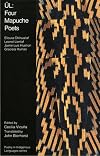
This is a collection of poetry by four poets of indigenous Chilean (Mapuchean) descent, most of which have not been published previously. The poems deal with the lives of Mapucheans, who make up approximately 1 million of the 14 million Chilean population, and who only recently have been accorded full rights and increasing recognition by the government and majority community. These works are about the history and ancestry of the Mapuchean culture, and their place in the world (according to show more one author, "Mapuche" means "People of the Earth", and the culture emphasizes that humans are part of the earth, but do not own it, and must respect all of its inhabitants). Other poems deal with the cultural displacement and discrimination faced by Mapucheans, and the death of beloved ancestors and family members. Most of the poems were good, and several were noteworthy.
This book was published in 1998 by the Latin American Literary Review Press, and is part of the Poetry in Indigenous Language series, along with Pichka Harawikuna: Five Quechua Poets. show less
This book was published in 1998 by the Latin American Literary Review Press, and is part of the Poetry in Indigenous Language series, along with Pichka Harawikuna: Five Quechua Poets. show less

Awards


You May Also Like
Associated Authors
Statistics
- Works
- 23
- Also by
- 8
- Members
- 150
- Popularity
- #138,699
- Rating
- 4.0
- Reviews
- 4
- ISBNs
- 20
- Languages
- 1