
Robert Lipsyte
Author of The Contender
About the Author
Robert Lipsyte is a legendary sports reporter, award-winning young adult novelist and an outspoken critic of the sports world. Lipsyte has often expressed his controversial opinion that the nation's fixation on competitive athletics is detrimental. He feels that sports should be recreational, not show more an industry that offers the often false hope of stardom. As a young reporter, Lipsyte covered boxing for The New York Times. He drew on this background for his first book, "The Contender" (1967), a highly acclaimed coming-of-age story in which an orphaned teenager matures through the training discipline of boxing. In 1971, Lipsyte left the Times to concentrate on writing books. His other sports books for young people include "Free To Be Muhammad Ali" (1978) and the "Superstar Lineup" series documenting the lives of famous sports heroes. The author's other novels for adolescents include the semi-autobiographical "Fifties Trilogy: One Fat Summer" (1977), "Summer Rules" (1981) and "Summerboy" (1982). Lipsyte has also written for adults in such books as "SportsWorld: An American Dreamland" (1975) and for television, notably "Saturday Night With Howard Cosell". He received an Emmy Award for hosting the PBS show "The Eleventh Hour"" (1990). Robert Michael Lipsyte was born January 16, 1938 in New York City and earned an M.S. in Journalism from Columbia in 1959. He has been a radio commentator, a television news correspondent, and a journalism teacher. He successfully fought cancer in the late 1970's. Lipsyte's career has come full circle; he once again is writing a sports column for The New York Times and books for young adults. "The Chief" (1993) is the long-awaited sequel to "The Contender". (Bowker Author Biography) show less
Image credit: Twin Cities Public Television
Works by Robert Lipsyte
Red Carpet Treatment 1 copy
Associated Works
Sixteen: Short Stories by Outstanding Writers for Young Adults (1985) — Contributor — 176 copies, 1 review
Ultimate Sports: Short Stories by Outstanding Writers for Young Adults (1995) — Contributor — 78 copies
Tagged
Common Knowledge
- Birthdate
- 1938-01-16
- Gender
- male
- Occupations
- sports journalist
author - Awards and honors
- Margaret A. Edwards Award (2001)
- Relationships
- Lipsyte, Sam (son)
- Nationality
- USA
- Birthplace
- New York, New York, USA
- Places of residence
- Closter, New Jersey, USA
- Associated Place (for map)
- USA
Members
Reviews
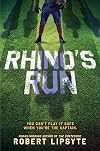
There are plenty of YA books about sports where bullying in involved. This is perhaps the most intelligent one I have read. It starts at a school assembly where Rhino, a junior of the football team, reacts when another student slams his head into his nose. Rhino reacts, punching the boy. Both are suspended and assigned to Group, an alternative program for 'misfits'. At first, Rhino figures he'll ride it out and then get back to football, but a number of events get in his way, a bullied boy show more bringing an automatic weapon to the group, not knowing it was moved to a different room, and another school function is taking place there. There's also another boy on the football team whose desperation at not yet being recruited by a college, drives him to ever more violent acts, there's tension at home, Rhino's gradual growing introspection as he realizes there are many things that are rotten his town, and a couple shocking events near the end that make characters and readers painfully aware of how fragile the facade of a small town can be. It's well worth a spot on any library shelf where quality YA fiction is considered important. show less
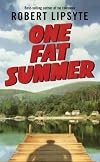
I loved this book when I was nine. As an adult--I'm so glad I grew up and had a wide variety of life experiences to steer me away from liking it again. This book has notable anti-Semitism, anti-Italian sentiment, racism, and homophobia, and I do not care that it takes place in the fifties. It's a boring book about a high schooler working a summer job and whining. All the horrible sentiments and portrayals didn't need to be there. Joanie is portrayed as a horrible person for getting a nose show more job, and my eyebrows raised. She obviously had parental consent for it, but like--it--uhm. Willie is truly a horrible person who beats up on Bob all the time, and could have easily killed him if Bob had died from exposure from being on the island, if Bob had fallen from the roof after Willie pulled the ladder away, or possibly from one of the many beatings Willie and his brothers gave, if a kick had broken a rib and punctured something. And Willie whines about "his" job going to a fat boy, and really goes out of his way to--shut up and find another job, dude. You're a vet, as you keep wailing. You'll find another one. Bob does not agree with me in the final paragraph of the book, where he pardons and celebrates Willie's behavior. Willie and his pals kidnapped and blindfolded you, moron, and he tried to get his girlfriends to strip you. Don't pardon him, you hopeless case. His brothers do that enough, and it's gross. I do not care how freaked out Willie was when he couldn't find Bob the next day. He was obviously thinking Bob would laugh it off or not tell anyone or something and slink away. I haaaated Willie, had no respect for Joanie, actually really liked Michelle, and disliked everyone else.
The most unrealistic part of the book was actually the plot: I seriously doubt a small-town, summer island tourist-trap resident would give a job to someone who's not a local. Realistically, Dr Kahn would have fired Bob on the spot after scolding him the first day, and the book would have ended. I did like and buy him standing up for Bob and not liking Willie, though. I read this as an e-book from my library. I've noticed so far the e-books I read, I tend not to like, but I haven't DNF'ed a single one. show less
The most unrealistic part of the book was actually the plot: I seriously doubt a small-town, summer island tourist-trap resident would give a job to someone who's not a local. Realistically, Dr Kahn would have fired Bob on the spot after scolding him the first day, and the book would have ended. I did like and buy him standing up for Bob and not liking Willie, though. I read this as an e-book from my library. I've noticed so far the e-books I read, I tend not to like, but I haven't DNF'ed a single one. show less
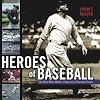
"Now there's three things you can do in a baseball game. You can win or you can lose or it can rain." -- Casey Stengel This is one of my favorite books on the history of baseball, because it has so many amazing pictures from the Baseball Hall of Fame, and Robert Lipsyte is such a fantastic storyteller. From the very beginnings of baseball (and whether or not Abner Doubleday really is the father of modern baseball), Lipsyte takes readers on a who's who tour of baseball history. Ty Cobb and show more Honus Wagner start off the players, with stories of how games were played so differently at the beginning of the 20th century. Cobb had a football attitude in his baseball game! Babe Ruth, Mickey Mantle, Lou Gehrig, and Jackie Robinson also appear, along with the stories of the early segregated Negro Leagues. There are tales of hard-fought, well-played games, well-known and not-so-well-known Hall of Famers, and the players who changed the rules of the game -- often at great personal cost, like Curt Flood, who ended up in the Supreme Court over his rights as a player. This is excellent nonfiction for anyone who enjoys the game, and it's a perfect read for the start of the 2011 season! 6th grade and up. show less
SPOILER
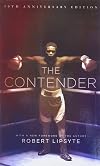
Robert Lipsyte's The Contender is a YA classic. It is a raw, realistic look at life in Harlem. Albert dropped out of school and works in Epstein's grocery store. He and his friend James usually go to the movies on Friday night, but one night Albert finds James in a gang clubhouse with Major, Hollis and Sonny. The gang decides to rob Epstein's when Albert mentions that there's money in the cash register overnight. He forgets, however, about the new silent alarm, and James gets show more caught.
Albert meets Henry on the street. Henry is his age, with a bum leg, and works at Mr. Dontelli's gym. He invites Albert to train and Albert takes him up on it. Albert wants to be something special, a champion. Mr. Donatelli tells him he first needs to want to be a contender--work hard, to maybe be something, but maybe not.
On Albert's first morning run, he encounters two policemen who joke about him. He's afraid and discouraged but he keeps going. He has one slip-up, discourage that he hasn't had a fight scheduled--a night in the clubhouse because James is supposed to show up. Albert gets totally drunk. He sees James come in and Major slip him some white powder.
When he finally does get a fight, Mr. Donatelli sees that Albert doesn't have the fighter instinct for blood. In his second fight, Albert knocks out his opponent and then becomes worried about him. He schedules a last fight, just to see if he can stomach it. He can't.
Lipsyte has penned a raw, realistic look at boxing, Harlem and some teens that have growing up to do. Albert is smart but dropped out of school to work. James ends up with a gang.
Albert lives with his Aunt Pearl and her three daughters in Harlem, struggling to make ends meet contrasted against his other Aunt, Uncle and Cousin live in the suburbs. His cousin Jeff is going to college and has great prospects. This is contrasted against Epstein, the store owner. Major calls Albert a slave working for Epstein, with no prospects and no meaningful work. Meanwhile Major preys on the weak.
Lipsyte's characters are great. Jelly Belly, a fighter who'd rather eat and fight. Spoon (Witherspoon) a former boxer turned teacher who shows Albert that there is something after boxing. Henry, a disabled kid who begins training Albert. They help each other, without realizing it. Albert gave Henry his chance to train. Henry gave Albert the courage to train. Mr. Donatelli is the atypical trainer who cares about his boxers and won't let them go beyond their capabilities. And surprisingly, Epstein, who was a boxer in his day and who bonds with Albert when he learns Albert is training.
The Contender is real but hopeful. There's no hope for Major. James, who is strung out, is hurt trying to rob Epstein's but Albert comes to his aid and promises to ride out the storm (both his probable arrest and his kicking his drug habit) with his best friend. Albert decides to finish high school. All in all, The Contender deserves to be a classic. show less
Robert Lipsyte's The Contender is a YA classic. It is a raw, realistic look at life in Harlem. Albert dropped out of school and works in Epstein's grocery store. He and his friend James usually go to the movies on Friday night, but one night Albert finds James in a gang clubhouse with Major, Hollis and Sonny. The gang decides to rob Epstein's when Albert mentions that there's money in the cash register overnight. He forgets, however, about the new silent alarm, and James gets show more caught.
Albert meets Henry on the street. Henry is his age, with a bum leg, and works at Mr. Dontelli's gym. He invites Albert to train and Albert takes him up on it. Albert wants to be something special, a champion. Mr. Donatelli tells him he first needs to want to be a contender--work hard, to maybe be something, but maybe not.
On Albert's first morning run, he encounters two policemen who joke about him. He's afraid and discouraged but he keeps going. He has one slip-up, discourage that he hasn't had a fight scheduled--a night in the clubhouse because James is supposed to show up. Albert gets totally drunk. He sees James come in and Major slip him some white powder.
When he finally does get a fight, Mr. Donatelli sees that Albert doesn't have the fighter instinct for blood. In his second fight, Albert knocks out his opponent and then becomes worried about him. He schedules a last fight, just to see if he can stomach it. He can't.
Lipsyte has penned a raw, realistic look at boxing, Harlem and some teens that have growing up to do. Albert is smart but dropped out of school to work. James ends up with a gang.
Albert lives with his Aunt Pearl and her three daughters in Harlem, struggling to make ends meet contrasted against his other Aunt, Uncle and Cousin live in the suburbs. His cousin Jeff is going to college and has great prospects. This is contrasted against Epstein, the store owner. Major calls Albert a slave working for Epstein, with no prospects and no meaningful work. Meanwhile Major preys on the weak.
Lipsyte's characters are great. Jelly Belly, a fighter who'd rather eat and fight. Spoon (Witherspoon) a former boxer turned teacher who shows Albert that there is something after boxing. Henry, a disabled kid who begins training Albert. They help each other, without realizing it. Albert gave Henry his chance to train. Henry gave Albert the courage to train. Mr. Donatelli is the atypical trainer who cares about his boxers and won't let them go beyond their capabilities. And surprisingly, Epstein, who was a boxer in his day and who bonds with Albert when he learns Albert is training.
The Contender is real but hopeful. There's no hope for Major. James, who is strung out, is hurt trying to rob Epstein's but Albert comes to his aid and promises to ride out the storm (both his probable arrest and his kicking his drug habit) with his best friend. Albert decides to finish high school. All in all, The Contender deserves to be a classic. show less
Lists
Sonlight Books (1)
el (1)
Awards


You May Also Like


Associated Authors
Statistics
- Works
- 34
- Also by
- 9
- Members
- 2,652
- Popularity
- #9,680
- Rating
- 3.7
- Reviews
- 66
- ISBNs
- 163
- Languages
- 1
- Favorited
- 1