
Sharon M. Draper
Author of Out of My Mind
About the Author
Sharon M. Draper was born in Cleveland, Ohio on August 21, 1952. She taught high school English for twenty-five years and received numerous honors including Ohio Teacher of the Year and the NCNW Excellence in Teaching Award. She has also written numerous books including Romiette and Julio, Darkness show more before Dawn, Double Dutch, and the Ziggy and the Black Dinosaurs series. She is a a five-time winner of the Coretta Scott King Literary Award for Copper Sun, Forged by Fire, Tears of a Tiger, The Battle of Jericho, and November Blues. Her title Out of My Mind made The New York Times Best Seller List. (Bowker Author Biography) show less
Image credit: By Jeffrey Beall - Own work, CC BY 3.0, https://commons.wikimedia.org/w/index.php?curid=38251325
Series
Works by Sharon M. Draper
Not Quite Burned Out, but Crispy Around the Edges: Inspiration, Laughter, and Encouragement for Teachers (2001) 39 copies
The Out of My Mind Collection (Boxed Set): Out of My Mind; Out of My Heart (The Out of My Mind Series) (2021) 2 copies
The Out of My Mind Trilogy (Boxed Set): Out of My Mind; Out of My Heart; Out of My Dreams (The Out of My Mind Series) (2024) 1 copy
clubhouse mysteries 1 copy
Associated Works
Recognize!: An Anthology Honoring and Amplifying Black Life (2021) — Contributor — 55 copies, 3 reviews
Tagged
Common Knowledge
- Canonical name
- Draper, Sharon M.
- Birthdate
- 1952
- Gender
- female
- Education
- Pepperdine University (English)
- Occupations
- English teacher
author - Awards and honors
- National Teacher of the Year (1997)
Margaret A. Edwards Award (2015) - Nationality
- USA
- Birthplace
- Cleveland, Ohio, USA
- Places of residence
- Cincinnati, Ohio, USA
- Associated Place (for map)
- Ohio, USA
Members
Reviews
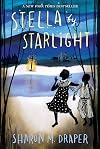
Twelve-year-old Stella Mills and her family live in Bumblebee, North Carolina. It's the Depression in 1930, and the Ku Klux Klan has a meeting she and her younger brother see one night near their home. The Black community of Bumblebee deals with that fear while Stella goes about her life, going to school, struggling with writing, and coming together with love when hardship happens.
The story is pretty episodic, in a way that I haven't read in a kid's book in awhile but reminded me of the show more pacing of a lot of books I would read as a child. It's much more about Stella's internal growth and coming of age than it is about one plot thread holding together. And Draper doesn't shy away from showing the racism and tensions Stella and her family deal with on a regular basis, from when Stella's father registers to vote to when an act by the Klan rocks her community. And yet, it's done with nuance and a light touch: there are white people who treat the Black community with respect and compassion as well. show less
The story is pretty episodic, in a way that I haven't read in a kid's book in awhile but reminded me of the show more pacing of a lot of books I would read as a child. It's much more about Stella's internal growth and coming of age than it is about one plot thread holding together. And Draper doesn't shy away from showing the racism and tensions Stella and her family deal with on a regular basis, from when Stella's father registers to vote to when an act by the Klan rocks her community. And yet, it's done with nuance and a light touch: there are white people who treat the Black community with respect and compassion as well. show less
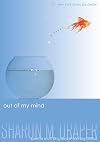
I think this is by far one of the best books I have ever read. It’s up there with A Man Called Ove, The Perks of Being a Wallflower and even Ann of Green Gables – the only thing in common being how much I loved the character, and the supporting characters who helped the MCs overcome the obstacles that life has thrown in their path.
Melody was born with cerebral palsy. Her parents watch as other babies and children develop and Melody does not. She is ten years old and in fifth grade when show more she tells us her story.
Melody has severely limited control over her bodily functions. She can’t hold things, sit or stand up, speak, or do more than partially control her thumbs. She cannot control her spasms or her drooling. However, Melody is intelligent, sharp, and sensitive; she sees colors in music; she absorbs knowledge from the television, and a love of words from the books her parents read to her as a small child. Her adoring parents are supportive and nurturing. Although they sense her intelligence, she is unable to communicate her thoughts, feelings, or needs to them. Mrs. V, their neighbor, is her Anne Sullivan. One or two teachers in her school and Catherine, the college student who becomes her classroom aide, are supportive, but for the most part the rest of the world is horrid or at best, indifferent. Hey, wait a minute, I’m sad to say that if we weren’t reading this book, that might be most of us.
There is much subtle drama in this book, and much joy. We can feel Melody’s suffocation and frustration, her embarrassment of the sloppy task of being fed in front of others, being confronted with a steep staircase leading up into a restaurant where the rest of her classmates are already seated, shame at her lack of ability to control her spastic attacks and drooling in front of her classmates, desolation at being dismissed or condescended to, of not being able to tell her parents how much she loves them and how much she appreciates everything they do for her, terror of finding herself face down on the carpet like a turtle flipped onto its shell. These are only some of the emotions expressed. There are predictable heartbreaking moments in this story, but there are also moments when you want to jump out of your chair to clap and cheer - and others when you want to take your fist and punch the wall. One of the most difficult things to read was the indifference to her feelings – like she was invisible, deaf, dumb, and blind – even after she proved time and time again that she was the smartest person in the inclusion class. Stephen Hawking became an inspiration to her when she realized that if she had a computer operated speech and language board on her wheelchair, she would finally be able to communicate her thoughts, feelings, and needs to others. It wasn’t easy getting her family and mentors to understand what she wanted, but once they understood, they moved mountains for her to get that board.
The cover of this book is perfect – a fish out of water is only part of the story, a fish trapped in the fishbowl, perhaps another part. Described as realistic fiction, this book is so much more than the sum of its parts. We dread the inevitable, and there is much inevitable, we cheer with every success and get pissed-off at anyone who dismisses her or stands in her way….
I hope I become a more sensitive person after reading Melody’s story. I don’t believe I would have the strength to walk even a tenth of mile in her shoes.
At the end of the book there are study/book club questions for discussion. I found it interesting that there was no question for discussion regarding Melody’s own attitude, opinions, or feelings toward the other students in class H-2, where the special students were taught (if you could call it teaching). I mention only because Melody was preoccupied with how she was viewed by other able-bodied classmates but I thought I detected some observations of her own regarding some of her H-2 classmates. Human Nature might also be a point for discussion within a sociological and/or anthropological context.
This was a buddy read with my ten-year-old granddaughter, while I was visiting. I devoured the book in just a few hours and I’m not sure that she ever caught up with me or finished. I tried to interest some of my other grandchildren, but I think that Rick Riordan overshadows (sigh!). show less
Melody was born with cerebral palsy. Her parents watch as other babies and children develop and Melody does not. She is ten years old and in fifth grade when show more she tells us her story.
Melody has severely limited control over her bodily functions. She can’t hold things, sit or stand up, speak, or do more than partially control her thumbs. She cannot control her spasms or her drooling. However, Melody is intelligent, sharp, and sensitive; she sees colors in music; she absorbs knowledge from the television, and a love of words from the books her parents read to her as a small child. Her adoring parents are supportive and nurturing. Although they sense her intelligence, she is unable to communicate her thoughts, feelings, or needs to them. Mrs. V, their neighbor, is her Anne Sullivan. One or two teachers in her school and Catherine, the college student who becomes her classroom aide, are supportive, but for the most part the rest of the world is horrid or at best, indifferent. Hey, wait a minute, I’m sad to say that if we weren’t reading this book, that might be most of us.
There is much subtle drama in this book, and much joy. We can feel Melody’s suffocation and frustration, her embarrassment of the sloppy task of being fed in front of others, being confronted with a steep staircase leading up into a restaurant where the rest of her classmates are already seated, shame at her lack of ability to control her spastic attacks and drooling in front of her classmates, desolation at being dismissed or condescended to, of not being able to tell her parents how much she loves them and how much she appreciates everything they do for her, terror of finding herself face down on the carpet like a turtle flipped onto its shell. These are only some of the emotions expressed. There are predictable heartbreaking moments in this story, but there are also moments when you want to jump out of your chair to clap and cheer - and others when you want to take your fist and punch the wall. One of the most difficult things to read was the indifference to her feelings – like she was invisible, deaf, dumb, and blind – even after she proved time and time again that she was the smartest person in the inclusion class. Stephen Hawking became an inspiration to her when she realized that if she had a computer operated speech and language board on her wheelchair, she would finally be able to communicate her thoughts, feelings, and needs to others. It wasn’t easy getting her family and mentors to understand what she wanted, but once they understood, they moved mountains for her to get that board.
The cover of this book is perfect – a fish out of water is only part of the story, a fish trapped in the fishbowl, perhaps another part. Described as realistic fiction, this book is so much more than the sum of its parts. We dread the inevitable, and there is much inevitable, we cheer with every success and get pissed-off at anyone who dismisses her or stands in her way….
I hope I become a more sensitive person after reading Melody’s story. I don’t believe I would have the strength to walk even a tenth of mile in her shoes.
At the end of the book there are study/book club questions for discussion. I found it interesting that there was no question for discussion regarding Melody’s own attitude, opinions, or feelings toward the other students in class H-2, where the special students were taught (if you could call it teaching). I mention only because Melody was preoccupied with how she was viewed by other able-bodied classmates but I thought I detected some observations of her own regarding some of her H-2 classmates. Human Nature might also be a point for discussion within a sociological and/or anthropological context.
This was a buddy read with my ten-year-old granddaughter, while I was visiting. I devoured the book in just a few hours and I’m not sure that she ever caught up with me or finished. I tried to interest some of my other grandchildren, but I think that Rick Riordan overshadows (sigh!). show less
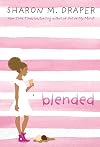
This is, quite clearly, The Hate U Give for younger kids -- it's also a moving story about an 11 year old girl struggling to find her way between her divorced parents bickering (1 black and affluent, 1 white and poor, both devoted to her and insistent about their custody time), and an artist's story -- Izzy/Isabella is a talented pianist, who devotes herself to musical practice. Lots of great stuff in here, from the early conversation about lynching that leads to school unrest, to the show more engaging characters and their different concerns (dueling weddings, great new older brother, racial tension at the mall), to the shocking denouement, and the light moments of kids growing up/crushes. show less
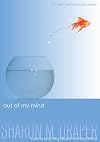
Melody Brooks, an 11-year-old girl with cerebral palsy, possesses a photographic memory but is unable to communicate—until a high-tech device lets her speak for the first time. In Out of My Mind, Draper delivers a heartwarming and powerful middle-grade narrative that challenges assumptions about ability, intelligence, and identity. Melody's emotional journey—from frustration and isolation to empowerment and connection—is portrayed with empathy, realism, and unwavering courage. The show more novel has been widely praised for bringing disability representation into children's literature with grace and authenticity. show less
Lists
Awards


You May Also Like


Associated Authors
Statistics
- Works
- 45
- Also by
- 4
- Members
- 20,297
- Popularity
- #1,068
- Rating
- 4.1
- Reviews
- 891
- ISBNs
- 428
- Languages
- 7
- Favorited
- 7


