
Allen Pittman
Author of Hsing-I: Chinese Internal Boxing (Chinese Martial Arts Library)
About the Author
Works by Allen Pittman
Associated Works
Nei Jia Quan: Internal Martial Arts Teachers of Tai Ji Quan, Xing Yi Quan, and Ba Gua Zhang (2004) — Contributor, some editions — 32 copies, 1 review
Tagged
Common Knowledge
- Other names
- Pittman, Allen
Pittman, Robert
Pittman, Robert Allen - Gender
- male
- Education
- British School of Osteopathy
- Occupations
- physical therapist
martial arts instructor
bodyguard - Organizations
- Athens General Hospital
Wisdom of the Body - Relationships
- Smith, Robert W. (martial arts teacher)
- Nationality
- USA
- Places of residence
- Taiwan
England, UK
Brittany, France
USA
Members
Reviews
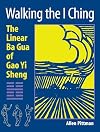
'The Gao sixty-four movements physically demonstrate taoism's relation to Chinese martial arts. This relationship is something often mentioned in various writings, but seldom made clear. Here the relation is clear, defined, and direct.'-from the book.
Ba gua zhang is one of the 'internal' styles of Chinese martial arts. Developed in the early nineteenth century, it has profound cultural and philosophical roots that ground it in the ancient principles ofTaoism and the I Ching. Although ba gua show more is most often taught in circular forms, Walking the I Ching describes sixty-four unusual sequences of movements performed in straight lines, each of which is presented to the public for the first time with its matching I Ching hexagram.
After an overview of ba gua's history and philosophy, author Allen Pittman presents eight chapters corresponding to the eight 'houses' of ba gua theory-elemental groupings that match the eight foundational trigrams of the I Ching. Each of these houses manifests a distinct underlying dynamic and martial arts principle, and each chapter begins with an introductory survey of the symbolism and cultural, anatomical, tactical, and spiritual ramifications of the house. Detailed and extensively illustrated directions for performing the eight linear sequence forms of each house follow.
This combination of practical instruction and philosophical insight make Walking the I Ching not only an authoritative guide to hands-on-practices, but also a pathway to a deeper understanding of ba gua zhang and its traditional roots.
Contents
Foreword by Marnix Wells
About this book
Preface to the Blue Snake Edition
Preface
History and philosophy
Ba gua basics
Beginning the forms
1 House of light
2 House of water
3 House of mountain
4 House of thunder
5 House of wind
6 House of fire
7 House of earth
8 House of lake
About the author show less
Ba gua zhang is one of the 'internal' styles of Chinese martial arts. Developed in the early nineteenth century, it has profound cultural and philosophical roots that ground it in the ancient principles ofTaoism and the I Ching. Although ba gua show more is most often taught in circular forms, Walking the I Ching describes sixty-four unusual sequences of movements performed in straight lines, each of which is presented to the public for the first time with its matching I Ching hexagram.
After an overview of ba gua's history and philosophy, author Allen Pittman presents eight chapters corresponding to the eight 'houses' of ba gua theory-elemental groupings that match the eight foundational trigrams of the I Ching. Each of these houses manifests a distinct underlying dynamic and martial arts principle, and each chapter begins with an introductory survey of the symbolism and cultural, anatomical, tactical, and spiritual ramifications of the house. Detailed and extensively illustrated directions for performing the eight linear sequence forms of each house follow.
This combination of practical instruction and philosophical insight make Walking the I Ching not only an authoritative guide to hands-on-practices, but also a pathway to a deeper understanding of ba gua zhang and its traditional roots.
Contents
Foreword by Marnix Wells
About this book
Preface to the Blue Snake Edition
Preface
History and philosophy
Ba gua basics
Beginning the forms
1 House of light
2 House of water
3 House of mountain
4 House of thunder
5 House of wind
6 House of fire
7 House of earth
8 House of lake
About the author show less
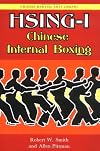
'An excellent pictorial presentation of the art.'-John F. Gilbey, author of Secret Fighting Arts of the World
'A welcome addition to books on the 'soft'arts by a recognized international expert on hand-to-hand combat.'-The Washington Post
Unlike most martial arts, chinese internal (soft-style) boxing does not depent upon muscular strength. The secret behind its power lies in the cultivation and practical application of internal energy-ch'i. There are basically three soft-style martial arts: show more T'ai-chi, already well known worldwide, and Hsing-i and Pa-kua, relative newcomers to the West. Althugh they are essentially not fighting arts but living arts, they are devastating as systems of self-defense.
This book outlines the history of Hsing-i-a style of boxing given form (hsing) by the mind (i)-and gives a thorough account of the philosophy behind the technques. It also presents to the West for the first time the orthodox style of the late Chinese Hsing-i master Ch'en P'an-ling.
Described here in great detail and fully illustrated are the basic techniques, the five fists of Hsing-i, a linked form of the five fists, and the twelve animal styles.
Contents
Preface
Acknowledgments
Part One: Introduction to hsing-i boxing
1 What is hsing-i?
Name and thing
History and masters
2 Theories behind the art
Breathing and body
Exercise and meditation
Part Two: Hsing-i training
3 The basics
The five positions
The six coordinations
The nine words
Other pointers
4 Practicing the five fists
Preparation
Beginning
The five fists-Splitting fist (p'i ch'uan); Crushing fist (peng ch'uan); Driling fist (tsuan ch'uan); Pounding fist (p'ao ch'uan); Crossing fist (heng ch'uan)
Ending
Linking the five fists
5 Practicing the twelve animal styles
Beginning
The twelve styles
Dragon style (lung hsing)
Tiger style (hu hsing)
Monkey style (hou hsing)
Horse style (ma hsing)
Water strider style (t'ou hsing)
Chicken style (chi hsing)
Falcon style (yao hsing)
Swallow style (en hsing)
Snake style (she hsing)
T'ai style (t'ai hsing)
Combine eagle-and-bear style (ying-hsiung hsing)
6 Conclusion
Index show less
'A welcome addition to books on the 'soft'arts by a recognized international expert on hand-to-hand combat.'-The Washington Post
Unlike most martial arts, chinese internal (soft-style) boxing does not depent upon muscular strength. The secret behind its power lies in the cultivation and practical application of internal energy-ch'i. There are basically three soft-style martial arts: show more T'ai-chi, already well known worldwide, and Hsing-i and Pa-kua, relative newcomers to the West. Althugh they are essentially not fighting arts but living arts, they are devastating as systems of self-defense.
This book outlines the history of Hsing-i-a style of boxing given form (hsing) by the mind (i)-and gives a thorough account of the philosophy behind the technques. It also presents to the West for the first time the orthodox style of the late Chinese Hsing-i master Ch'en P'an-ling.
Described here in great detail and fully illustrated are the basic techniques, the five fists of Hsing-i, a linked form of the five fists, and the twelve animal styles.
Contents
Preface
Acknowledgments
Part One: Introduction to hsing-i boxing
1 What is hsing-i?
Name and thing
History and masters
2 Theories behind the art
Breathing and body
Exercise and meditation
Part Two: Hsing-i training
3 The basics
The five positions
The six coordinations
The nine words
Other pointers
4 Practicing the five fists
Preparation
Beginning
The five fists-Splitting fist (p'i ch'uan); Crushing fist (peng ch'uan); Driling fist (tsuan ch'uan); Pounding fist (p'ao ch'uan); Crossing fist (heng ch'uan)
Ending
Linking the five fists
5 Practicing the twelve animal styles
Beginning
The twelve styles
Dragon style (lung hsing)
Tiger style (hu hsing)
Monkey style (hou hsing)
Horse style (ma hsing)
Water strider style (t'ou hsing)
Chicken style (chi hsing)
Falcon style (yao hsing)
Swallow style (en hsing)
Snake style (she hsing)
T'ai style (t'ai hsing)
Combine eagle-and-bear style (ying-hsiung hsing)
6 Conclusion
Index show less
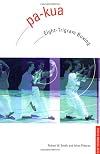
Tuttle Library of Martial Arts
from cover
Unlike most martial arts, Chinese internal (soft-style) boxing does not depend upon muscular strength. The secret behind its power lies in the cultivation and practical application of internal energy-ch'i. There are basically three soft-style martial arts: T'ai-chi, already well known worldwide, and Hsingi and Pa-kua, relative newcomers to the West. Although they are essentially not fighting arts but living arts, they are devastating as systems of show more self-defense.
This book outlines the history of Pa-kua-a style of boxing based on the eight (pa) trigrams (kua) of the I Ching-and gives a thorough account of the philosophy behind the art. It also presents to the West for the first time the orthodox style of the late Chinese Pa-kua master Wang Shu-chin.
Described here in great detail and fully illustrated are teh basic techniques, the eight palm shapes, and the eight traditional methods of 'walking the circle.' Guided by this easy-to-follow text, the student of Pa-kua can probe deeply into the hitherto hidden secrets of one of the most complete systems of self-defense ever developed.
Contents
Preface
Acknowledgments
Part One: Introduction to Pa-Kua
1 What is Pa-Kua?--Philosophy and Practice; History and Masters
2 Essential Pa-Kua--Substance and Form; Concepts Needed for Practice; The Teacher-student Relationship
Part Two: Pa-Kua Training
3 The Basics--The Main Principles; The Twelve Basic Principles; The Ten Prohibitions; 'Internally Bound, Externally stretched'; The Nine Palaces; Other Principles
4 Walking the Circle--The Concept of the Circle; The Eight Major Palm Shapes; The Eight Changes (Single Change of Palm; Double Change of palm; Hawk Soars up to Heaven; Yellow Dragon Rolls Over; White Snake Sticks Out Tongue; Giant Roc Spreads Wings; White Monkey Presents a Peach; Whirlwind Palms)
5 Conclusion show less
from cover
Unlike most martial arts, Chinese internal (soft-style) boxing does not depend upon muscular strength. The secret behind its power lies in the cultivation and practical application of internal energy-ch'i. There are basically three soft-style martial arts: T'ai-chi, already well known worldwide, and Hsingi and Pa-kua, relative newcomers to the West. Although they are essentially not fighting arts but living arts, they are devastating as systems of show more self-defense.
This book outlines the history of Pa-kua-a style of boxing based on the eight (pa) trigrams (kua) of the I Ching-and gives a thorough account of the philosophy behind the art. It also presents to the West for the first time the orthodox style of the late Chinese Pa-kua master Wang Shu-chin.
Described here in great detail and fully illustrated are teh basic techniques, the eight palm shapes, and the eight traditional methods of 'walking the circle.' Guided by this easy-to-follow text, the student of Pa-kua can probe deeply into the hitherto hidden secrets of one of the most complete systems of self-defense ever developed.
Contents
Preface
Acknowledgments
Part One: Introduction to Pa-Kua
1 What is Pa-Kua?--Philosophy and Practice; History and Masters
2 Essential Pa-Kua--Substance and Form; Concepts Needed for Practice; The Teacher-student Relationship
Part Two: Pa-Kua Training
3 The Basics--The Main Principles; The Twelve Basic Principles; The Ten Prohibitions; 'Internally Bound, Externally stretched'; The Nine Palaces; Other Principles
4 Walking the Circle--The Concept of the Circle; The Eight Major Palm Shapes; The Eight Changes (Single Change of Palm; Double Change of palm; Hawk Soars up to Heaven; Yellow Dragon Rolls Over; White Snake Sticks Out Tongue; Giant Roc Spreads Wings; White Monkey Presents a Peach; Whirlwind Palms)
5 Conclusion show less
You May Also Like
Associated Authors
Statistics
- Works
- 7
- Also by
- 2
- Members
- 92
- Popularity
- #202,475
- Rating
- 4.1
- Reviews
- 3
- ISBNs
- 8