
Lou Drendel
Author of SR-71 Blackbird in action - Aircraft No. 55
About the Author
Series
Works by Lou Drendel
Air War Over Southeast Asia: A Pictorial Record Vol. 1, 1962-1966 - Vietnam Studies Group series (6034) (1982) 37 copies, 1 review
Phantom II: A Pictorial History of the McDonnell Douglas F-4 Phantom II - Aircraft Specials series (6010) (1979) 35 copies, 1 review
Air War Over Southeast Asia: A Pictorial Record Vol. 3, 1971-1975 - Vietnam Studies Group series (6037) (1984) 34 copies, 1 review
Air War Over Southeast Asia: A Pictorial Record Vol. 2, 1967-1970 - Vietnam Studies Group series (6036) (1983) 32 copies, 1 review
TAC: A Pictorial History of the USAF Tactical Air Forces 1970-1977 - Aircraft Specials series (6012) (1978) 23 copies
...And Kill MiGs, Air to Air Combat From Vietnam to the Gulf War - Aircraft Specials series (6072) (1974) 19 copies
Operation Enduring Freedom: US Military Operations in Afghanistan, 2001-2002 - Specials series (6123) (2002) 17 copies
F-14 Tomcat 3 copies
F-16 Fighting Falcon 2 copies
E-2 Hawkeye Illustrated 1 copy
UH-1 Huey Illustrated 1 copy
A-10 Warhog in ACtion 1 copy
Nei cieli di Vietnam 1 copy
Tagged
Common Knowledge
- Canonical name
- Drendel, Lou
- Birthdate
- 1937
- Gender
- male
- Occupations
- Aviation artist
- Nationality
- USA
- Associated Place (for map)
- USA
Members
Reviews
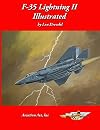
Very interesting book providing a plethora of information on F35 and all versions of it to be used by US armed forces (USAF, USN, and USMC versions).
Together with very detailed photographs and pictures, we are presented with the main differences between the three planned versions and the way the entire concept of delivery and upgrading/modification is envisioned for this strike craft. The inclusion of articles and comments from Lockheed's internal magazine also give lots of inside show more information.
Unfortunately, the book is also very ...... commercial-sounding. Way too many very first times for everything, from first flight with pilot looking to the front, first flight with pilot saluting sideways...... I am exaggerating, but the entire book from time to time sounds like commercial for that best-movie-ever commercial. Everything is new, never before seen, top of the shelf etc etc.
There are some weird conclusions, especially when it comes to STOVL implementation. While showing how US companies working on STOVL implementation reached the peak of what technology allowed for in early 1970's, it seems to be difficult to even contemplate the idea of Soviet construction bureaus maybe coming to very similar design ideas in that same period or later (example of Yak 141). So we get to weird constructs like modern STOVL design was patented and developed by US, but Soviets/Russians made a first successful flight using this approach. Like, what - did they steal it? Of course, nobody claims this, but it seems that it is not allowed for the same concepts to be developed (and same conclusions drawn) from different vantage points. Which is nuts.
The definitely funniest point is the comment on helmet HUD implementation - there is talk about how helmet mounted systems exist for decades, the greatest drawback being requirement for re-calibration with every aircraft take off. Solution for this is the creation of custom tailored helmets for each and every pilot flying the plane (!?!?!) because this is a common thing for any mass-produced weapon system- right? Huh......
F35 is truly a very sophisticated plane, but with a design approach devised by software developers, which is horror for any real-world technical solution. Due to this even inclusion of stopping chute to shorten the landing area [especially in sub-polar and polar areas], is discussed as if they are installing who knows what, not something that is common on strike crafts for at least since jets were introduced.
All of this makes F35 a very expensive scalpel, very sophisticated strike plane that can do miracles but I am not sure it would handle high intensity warfare scenarios just because of the price and long time required to build it and deploy it. Everything is custom-made. It is like creating a fleet of Lamborghinis to do the job of sturdy and survivable Toyota's. It will work ..... for a while, and when casualties start piling up, Mad Max vehicles will start showing up, with Jeep Wranglers leading the way.
As of time of writing this, F35 did not fully replace either of planned older craft - F16s, F15s, or AV8Bs. Price, very weird remote control features that worry every user of this aircraft outside US, have definitely affected the deadlines, and after almost 30 years since JSF start, this plane might end up replaced with something new especially in light of new designs coming from the BRICS area, and even from NATO itself (Rafale and Gripen to mention the most popular models).
All in all, interesting book, but at times, so pompous and chest beating it is ridiculous.
Recommended to all fans of cutting-edge military technology. show less
Together with very detailed photographs and pictures, we are presented with the main differences between the three planned versions and the way the entire concept of delivery and upgrading/modification is envisioned for this strike craft. The inclusion of articles and comments from Lockheed's internal magazine also give lots of inside show more information.
Unfortunately, the book is also very ...... commercial-sounding. Way too many very first times for everything, from first flight with pilot looking to the front, first flight with pilot saluting sideways...... I am exaggerating, but the entire book from time to time sounds like commercial for that best-movie-ever commercial. Everything is new, never before seen, top of the shelf etc etc.
There are some weird conclusions, especially when it comes to STOVL implementation. While showing how US companies working on STOVL implementation reached the peak of what technology allowed for in early 1970's, it seems to be difficult to even contemplate the idea of Soviet construction bureaus maybe coming to very similar design ideas in that same period or later (example of Yak 141). So we get to weird constructs like modern STOVL design was patented and developed by US, but Soviets/Russians made a first successful flight using this approach. Like, what - did they steal it? Of course, nobody claims this, but it seems that it is not allowed for the same concepts to be developed (and same conclusions drawn) from different vantage points. Which is nuts.
The definitely funniest point is the comment on helmet HUD implementation - there is talk about how helmet mounted systems exist for decades, the greatest drawback being requirement for re-calibration with every aircraft take off. Solution for this is the creation of custom tailored helmets for each and every pilot flying the plane (!?!?!) because this is a common thing for any mass-produced weapon system- right? Huh......
F35 is truly a very sophisticated plane, but with a design approach devised by software developers, which is horror for any real-world technical solution. Due to this even inclusion of stopping chute to shorten the landing area [especially in sub-polar and polar areas], is discussed as if they are installing who knows what, not something that is common on strike crafts for at least since jets were introduced.
All of this makes F35 a very expensive scalpel, very sophisticated strike plane that can do miracles but I am not sure it would handle high intensity warfare scenarios just because of the price and long time required to build it and deploy it. Everything is custom-made. It is like creating a fleet of Lamborghinis to do the job of sturdy and survivable Toyota's. It will work ..... for a while, and when casualties start piling up, Mad Max vehicles will start showing up, with Jeep Wranglers leading the way.
As of time of writing this, F35 did not fully replace either of planned older craft - F16s, F15s, or AV8Bs. Price, very weird remote control features that worry every user of this aircraft outside US, have definitely affected the deadlines, and after almost 30 years since JSF start, this plane might end up replaced with something new especially in light of new designs coming from the BRICS area, and even from NATO itself (Rafale and Gripen to mention the most popular models).
All in all, interesting book, but at times, so pompous and chest beating it is ridiculous.
Recommended to all fans of cutting-edge military technology. show less
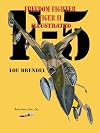
Finally, after searching all over the place I came across this volume on one of the very interesting fighter planes of the 20th century - F-5. Author manages to give us all of the information, from the conception of the plane, first light fighter models (Skoshi) to F5E/F and finally F20 Tigershark.
Of course story of F-5 would not be complete without mention of the T38 Talon, and its use across multiple services and agencies.
Wonderful book, lots of interesting photographs, technical show more schematics and of course historical information about this fighter plane's service record - including aggressor squadrons/Top Gun/Red Flag. Extremely interesting were chapters on Brazilian and Chilean F-5E/FM's and level of modifications introduced here.
Highly recommended. show less
Of course story of F-5 would not be complete without mention of the T38 Talon, and its use across multiple services and agencies.
Wonderful book, lots of interesting photographs, technical show more schematics and of course historical information about this fighter plane's service record - including aggressor squadrons/Top Gun/Red Flag. Extremely interesting were chapters on Brazilian and Chilean F-5E/FM's and level of modifications introduced here.
Highly recommended. show less


You May Also Like


Associated Authors
Statistics
- Works
- 104
- Members
- 1,998
- Popularity
- #12,889
- Rating
- 3.3
- Reviews
- 14
- ISBNs
- 92
- Languages
- 1
- Favorited
- 1