
Rajia Hassib
Author of In the Language of Miracles: A Novel
Works by Rajia Hassib
Tagged
Common Knowledge
- Gender
- female
- Education
- University of Alexandria (BA)
Marshall University (BA, MA) - Occupations
- English professor, Marshall University
- Nationality
- Egypt
- Birthplace
- Alexandria, Egypt
- Places of residence
- Charleston, West Virginia, USA
Alexandria, Egypt - Map Location
- Egypt
Members
Reviews
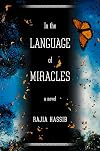
Imagine a family grieving the loss of one of their children. Imagine two families grieving such a loss. Imagine these families are next-door neighbors and very friendly. Imagine that one family's child is the cause of the other's death. Now imagine that the family is Egyptian and Muslim in a post 9/11 world and you have the basis for In The Language of Miracles by Rajia Hassib.
Hosaam Al-Menshawwy has committed an unthinkable act. He has murdered his neighbor's daughter, his former best show more friend, his former girlfriend and he has committed suicide. Hosaam's family is left trying to pick up the pieces of their suburban American life, grieving not only the loss of their son but their neighbor's daughter while feeling an overwhelming sense of guilt. Najla, Hosaam's mother, feels as if she should have known what her son was thinking and been able to stop him. Khaled, Hosaam's younger brother, feels an overpowering sense of responsibility to be the "good" son, as well as feeling blamed for and overshadowed by his brother's actions. Fatima, Hosaam's younger sister, wants to get away from the guilt and shame her family must bear and move to another town. Ehsan, Hosaam's devout maternal grandmother, is simply trying to keep her daughter's family together and make some sense of the insensible. Samir, Hosaam's father, feels guilt and shame because of his son's actions but naively believes that he can make amends to his neighbors and community. He also feels that his family shouldn't run away from this shame and that eventually things will get better.
In The Language of Miracles is a poignant tale of one family's search for common ground. How is a family expected to cope with this type of tragedy when neither their cultural/religious traditions nor their current societal traditions can make sense of their son's actions? The Al-Menshawwy family is a Muslim family residing in the West and for some in their community that is the sole reason for their son's actions. The action within the story takes place over the course of one week leading up to a community memorial service for the neighbor's daughter. The reader bears witness to this family's turmoil. It's been a year since the tragedy happened and this family will forever bear a public shame, as it appears many in the community are willing to blame the entire family for the action of one person, one seemingly disturbed person. It is easy to imagine this scenario in the wake of recent tragedies in Aurora CO and Newtown CT. I found In The Language of Miracles to be a fascinating glimpse into the juxtaposition of Middle-Eastern/Muslim culture compared to Western/American culture. I found this to be a fast-paced and engrossing read. How engrossing was this story? I put water in my electric teakettle, turned it on, and never got up to make a cup of tea. I didn't respond to text messages, email notifications or even answer the phone while I was reading this book. (Yes, it is that good!) If you enjoy reading about diverse cultures, want to find out how this family copes, or simply want a good book to read, then run out and grab a copy of In The Language of Miracles. (Yes, I know I suggest you read many of the books I've reviewed [I get to read a lot of good books], but I'm putting this book in the absolutely, positively must-read category!) I look forward to reading more from Ms. Hassib in the future. show less
Hosaam Al-Menshawwy has committed an unthinkable act. He has murdered his neighbor's daughter, his former best show more friend, his former girlfriend and he has committed suicide. Hosaam's family is left trying to pick up the pieces of their suburban American life, grieving not only the loss of their son but their neighbor's daughter while feeling an overwhelming sense of guilt. Najla, Hosaam's mother, feels as if she should have known what her son was thinking and been able to stop him. Khaled, Hosaam's younger brother, feels an overpowering sense of responsibility to be the "good" son, as well as feeling blamed for and overshadowed by his brother's actions. Fatima, Hosaam's younger sister, wants to get away from the guilt and shame her family must bear and move to another town. Ehsan, Hosaam's devout maternal grandmother, is simply trying to keep her daughter's family together and make some sense of the insensible. Samir, Hosaam's father, feels guilt and shame because of his son's actions but naively believes that he can make amends to his neighbors and community. He also feels that his family shouldn't run away from this shame and that eventually things will get better.
In The Language of Miracles is a poignant tale of one family's search for common ground. How is a family expected to cope with this type of tragedy when neither their cultural/religious traditions nor their current societal traditions can make sense of their son's actions? The Al-Menshawwy family is a Muslim family residing in the West and for some in their community that is the sole reason for their son's actions. The action within the story takes place over the course of one week leading up to a community memorial service for the neighbor's daughter. The reader bears witness to this family's turmoil. It's been a year since the tragedy happened and this family will forever bear a public shame, as it appears many in the community are willing to blame the entire family for the action of one person, one seemingly disturbed person. It is easy to imagine this scenario in the wake of recent tragedies in Aurora CO and Newtown CT. I found In The Language of Miracles to be a fascinating glimpse into the juxtaposition of Middle-Eastern/Muslim culture compared to Western/American culture. I found this to be a fast-paced and engrossing read. How engrossing was this story? I put water in my electric teakettle, turned it on, and never got up to make a cup of tea. I didn't respond to text messages, email notifications or even answer the phone while I was reading this book. (Yes, it is that good!) If you enjoy reading about diverse cultures, want to find out how this family copes, or simply want a good book to read, then run out and grab a copy of In The Language of Miracles. (Yes, I know I suggest you read many of the books I've reviewed [I get to read a lot of good books], but I'm putting this book in the absolutely, positively must-read category!) I look forward to reading more from Ms. Hassib in the future. show less
Samir and Nagla Al-Menshawy immigrated to the United States from their home in Egypt in search of the American dream. It wasn't always easy, but in suburban Summerset, New Jersey, they thought they had found it. Samir's medical practice was successful, the couple found fast friends in the family next door, and their children were growing up knowing the luxuries of American life. But, when a heinous crime is committed by their oldest son, Hossam, the family is plunged into grief and the show more community they once felt a valuable part of turns forcefully against them. In the Language of Miracles is the story of the Al-Menshawy family's struggles in the aftermath of their tragic awakening from the American dream that should have been their reality.
In the Language of Miracles is a story of faith and community: having it, finding it, losing it. Mother Nagla struggles with her loss of faith in face of tragedy, her inability to match the piety of her mother and her best friend that increases her fear that it was a shortfall in herself that caused tragedy to befall her family. Grandmother Ehsan is steeped in faith, perpetually murmuring prayers and waving incense, providing holy water for healing. Her faith imbues her every action and is so genuine that it can tear down cultural walls but can't rescue her daughter's family from their grief and struggle. Daughter Fatima is seeking her own path to faith, uncertain of whether to pursue her family's more Americanized ways or don the headscarves of her more religious friends. Son Khaled is a different story completely. Caught between the shame and treachery brought on by his brother's act and the expectations of a father whose hopes are now pinned upon him alone, Khaled takes refuge in studying monarch butterflies, how they migrate thousands of miles south to winter only to have a new generation of butterflies return north - a practice that seems to have parallels even in his own family.
Each of Hassib's characters is fleshed out and fully realized, from Khaled who is coming of age in the shadow of tragedy to his father, whose stubbornness makes him easy for readers to dislike, but his ultimate wish and goal to preserve the life and community he had striven so hard to attain, is ultimately sympathetic. I wished for an ending that offered a bit more closure, but that should take nothing away from this book that seems in every way to be an authentic exploration of the immigrant experience, an honest portrayal of the Muslim faith, and a compelling picture of a broken family knitting themselves back together after tragedy. show less
In the Language of Miracles is a story of faith and community: having it, finding it, losing it. Mother Nagla struggles with her loss of faith in face of tragedy, her inability to match the piety of her mother and her best friend that increases her fear that it was a shortfall in herself that caused tragedy to befall her family. Grandmother Ehsan is steeped in faith, perpetually murmuring prayers and waving incense, providing holy water for healing. Her faith imbues her every action and is so genuine that it can tear down cultural walls but can't rescue her daughter's family from their grief and struggle. Daughter Fatima is seeking her own path to faith, uncertain of whether to pursue her family's more Americanized ways or don the headscarves of her more religious friends. Son Khaled is a different story completely. Caught between the shame and treachery brought on by his brother's act and the expectations of a father whose hopes are now pinned upon him alone, Khaled takes refuge in studying monarch butterflies, how they migrate thousands of miles south to winter only to have a new generation of butterflies return north - a practice that seems to have parallels even in his own family.
Each of Hassib's characters is fleshed out and fully realized, from Khaled who is coming of age in the shadow of tragedy to his father, whose stubbornness makes him easy for readers to dislike, but his ultimate wish and goal to preserve the life and community he had striven so hard to attain, is ultimately sympathetic. I wished for an ending that offered a bit more closure, but that should take nothing away from this book that seems in every way to be an authentic exploration of the immigrant experience, an honest portrayal of the Muslim faith, and a compelling picture of a broken family knitting themselves back together after tragedy. show less
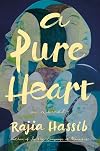
Fayrouz "Rose" Gubran has had what many may perceive as an idyllic life. She and her sister, Gameela, were raised by loving parents, Nora and Ahmad. Both daughters have received advanced educational studies, Rose in Egyptology/Archeology and Gameela in Engineering. And then when Rose was in her mid-twenties, she met an American reporter, Mark Hatfield. Mark was different from the other men she had met, they fell in love, he converted to Islam so they could get married (Muslim women aren't show more allowed to marry non-Muslim men in Egypt), and eventually she was accepted in a doctoral program in the US. She and Mark moved to the States where Rose studied, became a naturalized citizen, changed her name from Fayrouz Gubran to Rose Gubran Hatfield, and eventually became a postdoctoral fellow at the Metropolitan Museum in New York City. Mark became a reporter with assigned articles at the New York Times but longed for the days when he was reporting on social issues from the Middle East. Gameela, several years younger than Rose, lives through Arab Spring, is no longer as idealistic as she once was, and is possibly in a relationship with a man almost 30 years her senior. After a brief return to Egypt to do a series of freelance articles, Mark returns to the States and weeks later the young man he interviewed (Saaber) is jailed for the simple act of being interviewed by a foreign journalist and attacking one of the arresting officers. Several months later, Gameela is killed in a suicide bomber attack and Mark is feeling guilty that he may have inadvertently had a part to play in her death, Rose is angry at Mark because he may have inadvertently had a part to play in her death (Gameela introduced Mark to the man that introduced him to the young interview subject), and their lives are turned upside down. The only thing Rose can think of doing is trying to uncover the secrets, if any, to her sister's life in Egypt. Will the answers she finds bring her peace or simply cause more pain?
I had the pleasure of reading In the Language of Miracles by Rajia Hassib a few years ago and was blown away by the storyline and characters. I knew that I had to get my hands on a copy of her latest book, A Pure Heart after hearing about it and I'm incredibly grateful to the publisher for supplying me with a print review copy. A Pure Heart is an amazing story for so many reasons, not just because it is well written (although it is). This story asks and answers what makes a good Muslimah (Muslim female) as well as a good daughter/sister/wife/friend. Is it possible to be good at any of these roles and have secrets or change our opinions on what it means to be righteous or pious without being sanctimonious? Is it possible to love someone and still be angry with them for a prolonged period of time? Can we ever be assured that we know someone when we don't know their deepest, darkest secrets? Do we even need to know those secrets in order to be a good friend/spouse/sibling? There are a lot of issues presented in A Pure Heart and there's no way too many for me to touch on all of them without revealing too much about this wonderful story. This reader enjoyed getting to know all of the characters, especially Rose, Gameela, Mark, Ingrid, Nora, Ahmad, and Fouad, as well as Saaber. I loved reading about the neighborhoods in Egypt and learning about the poverty-stricken neighborhoods that tourists never see or hear about. I'm hard-pressed to find anything that I didn't like about this story. As an American Muslimah, it is refreshing to read stories written by Muslims about Muslims and although Islam isn't front and center in this story, it does play a pivotal role in the lives of the main characters. I encourage you all to grab a copy of A Pure Heart to read, and I'm not just saying that as a Muslim or because the author is a fellow West Virginia resident. I'm recommending this book because it is an outstanding read and one that I think every reader will be able to appreciate. Happy Reading y'all!
I received a copy of this book from the publisher in exchange for a fair and honest review. This review originally posted on 08/05/2019 at https://www.thebookdivasreads.com/2019/08/2019-book-233-pure-heart-by-rajia-hass.... show less
I had the pleasure of reading In the Language of Miracles by Rajia Hassib a few years ago and was blown away by the storyline and characters. I knew that I had to get my hands on a copy of her latest book, A Pure Heart after hearing about it and I'm incredibly grateful to the publisher for supplying me with a print review copy. A Pure Heart is an amazing story for so many reasons, not just because it is well written (although it is). This story asks and answers what makes a good Muslimah (Muslim female) as well as a good daughter/sister/wife/friend. Is it possible to be good at any of these roles and have secrets or change our opinions on what it means to be righteous or pious without being sanctimonious? Is it possible to love someone and still be angry with them for a prolonged period of time? Can we ever be assured that we know someone when we don't know their deepest, darkest secrets? Do we even need to know those secrets in order to be a good friend/spouse/sibling? There are a lot of issues presented in A Pure Heart and there's no way too many for me to touch on all of them without revealing too much about this wonderful story. This reader enjoyed getting to know all of the characters, especially Rose, Gameela, Mark, Ingrid, Nora, Ahmad, and Fouad, as well as Saaber. I loved reading about the neighborhoods in Egypt and learning about the poverty-stricken neighborhoods that tourists never see or hear about. I'm hard-pressed to find anything that I didn't like about this story. As an American Muslimah, it is refreshing to read stories written by Muslims about Muslims and although Islam isn't front and center in this story, it does play a pivotal role in the lives of the main characters. I encourage you all to grab a copy of A Pure Heart to read, and I'm not just saying that as a Muslim or because the author is a fellow West Virginia resident. I'm recommending this book because it is an outstanding read and one that I think every reader will be able to appreciate. Happy Reading y'all!
I received a copy of this book from the publisher in exchange for a fair and honest review. This review originally posted on 08/05/2019 at https://www.thebookdivasreads.com/2019/08/2019-book-233-pure-heart-by-rajia-hass.... show less
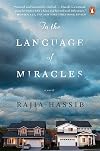
The older I get, the more novels about families speak to me. I think it's the realization that comes with age that every family is broken - every family imperfect in some way - that makes me gravitate toward novels that show those damaged families still struggling to live and love and remain together.
The Al-Menshawy family is certainly damaged, and the novel opens at the one-year anniversary of the tragic events that turned their lives upside down. As the reader peels back the layers of this show more family, we see the ways in which each member carries responsibility for the tragedy, and how they push each other away while simultaneously reaching out for help.
I found myself fully engaged from the very first pages. Will definitely look for more from this author. show less
The Al-Menshawy family is certainly damaged, and the novel opens at the one-year anniversary of the tragic events that turned their lives upside down. As the reader peels back the layers of this show more family, we see the ways in which each member carries responsibility for the tragedy, and how they push each other away while simultaneously reaching out for help.
I found myself fully engaged from the very first pages. Will definitely look for more from this author. show less
Lists
Awards

You May Also Like


Statistics
- Works
- 2
- Members
- 284
- Popularity
- #82,066
- Rating
- 3.8
- Reviews
- 15
- ISBNs
- 13
- Favorited
- 1