

National Audubon Society
Author of National Audubon Society Field Guide to North American Birds: Eastern Region
About the Author
Image credit: Headquarters, National Audubon Society, 2005. Photo by user Geographer / Wikipedia.
Series
Works by National Audubon Society
National Audubon Society Field Guide to North American Birds: Eastern Region (1977) 2,872 copies, 14 reviews
National Audubon Society Field Guide to North American Trees: Eastern Region (1980) 2,216 copies, 5 reviews
National Audubon Society Field Guide to North American Insects and Spiders (1980) 1,580 copies, 3 reviews
National Audubon Society Field Guide to North American Birds: Western Region (1977) 1,325 copies, 4 reviews
National Audubon Society Field Guide to North American Rocks and Minerals (1978) 1,202 copies, 3 reviews
National Audubon Society Field Guide to North American Wildflowers: Western Region (1979) 997 copies, 4 reviews
National Audubon Society Trees of North America (National Audubon Society Complete Guides) (2021) 88 copies
National Audubon Society Birds of North America (National Audubon Society Complete Guides) (2021) 81 copies, 1 review
Familiar Trees of North America : East 34 copies
North American Butterflies (National Audubon Society Collection Nature Series) (1992) 28 copies, 1 review
National Audubon Society Wildflowers of North America (National Audubon Society Complete Guides) (2023) 26 copies
National Audubon Society Mushrooms of North America (National Audubon Society Complete Guides) (2023) 23 copies, 1 review
Audubon House: Building the Environmentally Responsible, Energy-Efficient Office (Wiley Series in Sustainable Design) (1994) 22 copies
Animal Tracks by Arthur Dorros 21 copies
The National Audubon Society Interactive CD-ROM Guide to North American Birds (National Audubon Society Interactive CD-ROM Series) (1996) 6 copies
Audubon field notes 4 copies
Birds of Prey 2 copies
How to Make a Difference: Wetlands 2 copies
Audubon Magazine 1983 2 copies
Audubon 1 copy
Reptiles and Amphibians 1 copy
Wildlife Habitat Improvement 1 copy
Hawks Up Close 1 copy
A Place to Live 1 copy
California Condor 1 copy
HOUSE OF PLANTS 1 copy
The great northern forest 1 copy
Audubon Adventures 1 copy
Bluebirds Up Close 1 copy
The Audubon Society Field Guide to North American Birds Two Volumes Eastern & Western In Carry Case (1977) 1 copy
Audubon Calendar 1970 1 copy
Audubon Global Warming issue 1 copy
Birds of the Wetlands 1 copy
Birds of Prey 1 copy
Prehistoric Life 1 copy
Audubon Annual Report 2004 1 copy
Ducks for Tomorrow? 1 copy
Audubon Annual Report 2003 1 copy
Audubon Annual Report 2002 1 copy
Audubon Annual Report 2000 1 copy
Audubon Annual Report 1999 1 copy
The Book Nest 1 copy
The Book Nest 1978 1 copy
Associated Works
Tagged
Common Knowledge
- Canonical name
- National Audubon Society
- Gender
- n/a
- Nationality
- USA
- Birthplace
- New York, New York, USA
- Associated Place (for map)
- New York, USA
Members
Reviews
National Audubon Society Mushrooms of North America (National Audubon Society Complete Guides) by National Audubon Society

If you're looking for a good field ID guide, this is not it. Nearly useless as an ID book even if you don't mind carrying a huge paperback. The organization is weird. The little symbols that represent the outline of mushrooms don't correspond to the ones they assign them to. Since I can't show you pictures in this review, here's a verbal example. Coral fungus used to be grouped together in the old guide in a separate category with a little thumb symbol that looked like a branched fungus. Now show more they're scattered throughout under icons that are just a generic mushroom with a stem and cap. What? Who the hell would look for coral fungus under that? Not one person, that's who. Ridiculous. That's pretty much the most egregious, but there are dozens and dozens of others that make no sense. Boletes are shown with the icon of a mushroom with a partial veil on the stipe, but not amanitas? Seriously, WTF, people. Nutty. The old guide had perfectly understandable symbolic icons for both of those that you could immediately recognize even if you didn't know the difference between a bolete and an amanita. They were obvious. Now they are buried under nonsense.
Also annoying is the lack of prior taxonomy information. And we all know that mushroom nomenclature changes about every five minutes, so not listing what the mushroom was known as five minutes ago is irritating especially since that term was probably in use for years if not decades. Ugh!
The binding is pretty decent, but I can see pages being torn and bent pretty easily in the future. There is a single satin ribbon which is also crazy given that you can't see look-alikes all together (like the Peterson guide, hint, hint) and that you'd need a whole bunch of bookmarks to see that kind of thing. Ditto for any suspects you may have since those aren't grouped in any logical way either. It needs a dozen cute little satin markers, not one.
Oh and there is a section for How to Use this Book and it contains nothing except some information about some conservation status icons that are used about 10 times in the whole 700+ pages. WTF? There is not a single useful identifications system at all. Not the usual if this then that type or the more innovative scheme the Peterson guide uses. Insane. It's really only good for the pretty pictures and the species information so my advice is to use this to confirm what you've already IDed using other sources. The editor signs off on the How to Use this Book page with good luck and godspeed. Yeah, you're gonna need it. show less
Also annoying is the lack of prior taxonomy information. And we all know that mushroom nomenclature changes about every five minutes, so not listing what the mushroom was known as five minutes ago is irritating especially since that term was probably in use for years if not decades. Ugh!
The binding is pretty decent, but I can see pages being torn and bent pretty easily in the future. There is a single satin ribbon which is also crazy given that you can't see look-alikes all together (like the Peterson guide, hint, hint) and that you'd need a whole bunch of bookmarks to see that kind of thing. Ditto for any suspects you may have since those aren't grouped in any logical way either. It needs a dozen cute little satin markers, not one.
Oh and there is a section for How to Use this Book and it contains nothing except some information about some conservation status icons that are used about 10 times in the whole 700+ pages. WTF? There is not a single useful identifications system at all. Not the usual if this then that type or the more innovative scheme the Peterson guide uses. Insane. It's really only good for the pretty pictures and the species information so my advice is to use this to confirm what you've already IDed using other sources. The editor signs off on the How to Use this Book page with good luck and godspeed. Yeah, you're gonna need it. show less

Oddly, this wasn't among the first books I bought when I became a rabid mushroom photographer. It's a recent purchase and while useful for photos and the little visual key to mushroom ID, it has a couple of drawbacks. First the color plates use "common names" for the mushrooms depicted. According to author Gary H. Lincoff it was his editor who asked for that. He complained that 90% of mushrooms didn't have common names and mycology enthusiasts were used to scientific names. They won. The show more other issue is that it hasn't been revised since 1981 which means MANY of the taxonomical details have changed due to DNA analysis and other improved ID technology. Still, it is a helpful book to have since the photos are good and the organization is easy to use. show less
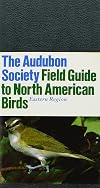
I have thumbed through my copy of this one until the pages (at least the color ones) are falling out. Overall, a great guide, but sometimes good drawings would actually make it easier to positively identify the bird in question than the photographs this book provides.
National Audubon Society Field Guide to North American Mushrooms (National Audubon Society Field Guides) by National Audubon Society
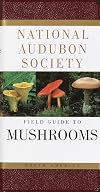
Good mushroom book, but the formatting takes awhile to get used to. I would pick others first if I were selecting just one or two to own.
Lists
You May Also Like


Associated Authors
Statistics
- Works
- 258
- Also by
- 11
- Members
- 17,157
- Popularity
- #1,295
- Rating
- 4.0
- Reviews
- 67
- ISBNs
- 125
- Languages
- 1