
Douglas Wood (1) (1951–)
Author of Old Turtle
For other authors named Douglas Wood, see the disambiguation page.
About the Author
Image credit: Courtesy of Douglas Wood
Works by Douglas Wood
Franklin and Winston: A Christmas That Changed the World (Junior Library Guild Selection) (2011) 134 copies, 9 reviews
Associated Works
Tagged
Common Knowledge
Members
Reviews
The world isn’t finished yet,
It isn’t quite complete.
It’s still
being
made.
Everywhere you look
and everywhere you listen,
someone or something
is helping
to make the world.
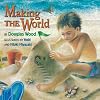
Douglas Wood’s poetic text, accompanied by the marvellous watercolour paintings of Yoshi and Hibiki Miyazaki, considers the ways that natural phenomena, elements, plants, animals (insects, birds, mammals) and a child contribute to the ongoing creation and beauty of the planet.
Wood begins with an ocean breeze and show more seamlessly moves on to a butterfly that “tickles” that breeze, the fluttering wildflower that offers nectar to the butterfly, and the child who bends to smell a flower and feels the breeze in his hair. The author then considers an antelope and the ancient baobab tree that has watched “oceans of antelope wash over the [adjacent] plain” for thousands of years. The tree offers a home to African birds, who reciprocate by offering the silent baobab the gift of music. A cloud that rains down on a pond, “dimpling” the water where koi live; a mountaintop, which “throws silver waterfalls down dark green slopes” and quenches the thirst of dry lands below; a trail which connects farms and villages; squirrel monkeys, the moon, and a moth beating its wings are also contemplated.
Throughout the book, Wood regularly addresses a child who appears in the scene being described. It’s not the same child each time, but one who lives in the current region being presented. We see North and South American, African, and Asian landscapes. The book opens with daytime scenes and ends with a nighttime one that includes the moon, a luna moth with its “feather-duster wings” beating against the window pane, a loving mother, and a child dreaming of all he “might be and all that the world might be.”
Rich in beautiful and appropriate imagery (similes, metaphors, and personification) as well as onomatopoeia, this is a visually and linguistically satisfying picture book.
I’ve used it for a student choral presentation, but it’s also a fine model for writing. I could see children writing their own segments, highlighting the connectedness and beauty of their little corners of the world. show less
It isn’t quite complete.
It’s still
being
made.
Everywhere you look
and everywhere you listen,
someone or something
is helping
to make the world.
Douglas Wood’s poetic text, accompanied by the marvellous watercolour paintings of Yoshi and Hibiki Miyazaki, considers the ways that natural phenomena, elements, plants, animals (insects, birds, mammals) and a child contribute to the ongoing creation and beauty of the planet.
Wood begins with an ocean breeze and show more seamlessly moves on to a butterfly that “tickles” that breeze, the fluttering wildflower that offers nectar to the butterfly, and the child who bends to smell a flower and feels the breeze in his hair. The author then considers an antelope and the ancient baobab tree that has watched “oceans of antelope wash over the [adjacent] plain” for thousands of years. The tree offers a home to African birds, who reciprocate by offering the silent baobab the gift of music. A cloud that rains down on a pond, “dimpling” the water where koi live; a mountaintop, which “throws silver waterfalls down dark green slopes” and quenches the thirst of dry lands below; a trail which connects farms and villages; squirrel monkeys, the moon, and a moth beating its wings are also contemplated.
Throughout the book, Wood regularly addresses a child who appears in the scene being described. It’s not the same child each time, but one who lives in the current region being presented. We see North and South American, African, and Asian landscapes. The book opens with daytime scenes and ends with a nighttime one that includes the moon, a luna moth with its “feather-duster wings” beating against the window pane, a loving mother, and a child dreaming of all he “might be and all that the world might be.”
Rich in beautiful and appropriate imagery (similes, metaphors, and personification) as well as onomatopoeia, this is a visually and linguistically satisfying picture book.
I’ve used it for a student choral presentation, but it’s also a fine model for writing. I could see children writing their own segments, highlighting the connectedness and beauty of their little corners of the world. show less
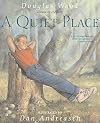
This beautiful and reflective picture book, with stunning illustrations by Dan Andreasen, was first published close to a quarter of a century ago. In many ways, it feels like an even older book. For one thing, the illustrations show scenes depicting the past: 1940s cars, sailing ships, buried treasure, a pony express rider, cavemen, a Mayan temple, explorers, and the pristine natural world.
The author Douglas Wood’s message concerns the need for kids (and sometimes adults, too) to get away show more from noise and (over)stimulation. Unsurprisingly, given the book’s publication in 2002, no screens, gadgets, cell phones, and digital media are mentioned or shown in the book.
One could argue that a work like this may be more important now than ever before, as it gently provides counsel on how to find a quiet place to calm oneself, replenish energy, and exercise one’s imagination. Crawling under bushes while pretending to be a pirate who recovers buried treasure; looking in the woods, as one imagines being inside a green mansion or becoming a timber wolf; walking on a beach while envisioning oneself as an explorer—all these places and more (a desert, pond, cavern, hilltop, snow drift, museum, or library) are possible quiet places where the imagination can take flight. Or
This is a gentle, poetic book, one I’ve never test driven with a group of students. I’m not sure how it would go over with kids. My sense, though, is that children (especially those in rural areas) could still relate to it. I have the feeling that kids would have a lot of “quiet places” to add and would be eager to share information about their own. show less
The author Douglas Wood’s message concerns the need for kids (and sometimes adults, too) to get away show more from noise and (over)stimulation. Unsurprisingly, given the book’s publication in 2002, no screens, gadgets, cell phones, and digital media are mentioned or shown in the book.
One could argue that a work like this may be more important now than ever before, as it gently provides counsel on how to find a quiet place to calm oneself, replenish energy, and exercise one’s imagination. Crawling under bushes while pretending to be a pirate who recovers buried treasure; looking in the woods, as one imagines being inside a green mansion or becoming a timber wolf; walking on a beach while envisioning oneself as an explorer—all these places and more (a desert, pond, cavern, hilltop, snow drift, museum, or library) are possible quiet places where the imagination can take flight. Or
You could come home
and clean your room
and read your own books
and think your own thoughts
and feel your own feelings
and discover the very best quiet place of all—the one that’s always there,
no matter where you go or where you stay—
the one inside of you.
This is a gentle, poetic book, one I’ve never test driven with a group of students. I’m not sure how it would go over with kids. My sense, though, is that children (especially those in rural areas) could still relate to it. I have the feeling that kids would have a lot of “quiet places” to add and would be eager to share information about their own. show less

A poetic narrative exploring the individual nature of our experience of the world is paired with beautiful oil-painting artwork in No One But You. On each page, author Douglas Wood explores something - holding a turtle, gazing at the stars, listening to a cardinal in the woods - that only the reader will experience in just their own way.
The concept of this lovely, gentle picture-book is one that is difficult to capture adequately. Wood isn't telling his readers that they, and they alone show more experience these things. Rather, he is trying to highlight that how they experience them is unique, because they themselves are unique. Although I didn't find the narrative particularly involving, I did appreciate it, and its message. I also found the illustrations, done by celebrated Irish artist P.J. Lynch, just lovely. He captures a diverse range of children, with their diverse experiences, in his beautiful paintings. Recommended to fellow Lynch fans, and to anyone looking for children's books touching on the individual subjectivity of our experiences of the world. show less
The concept of this lovely, gentle picture-book is one that is difficult to capture adequately. Wood isn't telling his readers that they, and they alone show more experience these things. Rather, he is trying to highlight that how they experience them is unique, because they themselves are unique. Although I didn't find the narrative particularly involving, I did appreciate it, and its message. I also found the illustrations, done by celebrated Irish artist P.J. Lynch, just lovely. He captures a diverse range of children, with their diverse experiences, in his beautiful paintings. Recommended to fellow Lynch fans, and to anyone looking for children's books touching on the individual subjectivity of our experiences of the world. show less
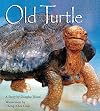
Who can resist a story that begins “Once, long, long ago … yet somehow, not so very long …”? Would it not be wonderful if “… all the beings of the world could speak … and understand one another …”?
Beautiful, peaceful … until the argument.
It is the quiet one who speaks the wisest words. Old Turtle, the quiet one, who knows how to stop the argument.
We need a quiet one today.
A perfect melding of story and art, for all ages and all people. Do not miss this one.
Beautiful, peaceful … until the argument.
It is the quiet one who speaks the wisest words. Old Turtle, the quiet one, who knows how to stop the argument.
We need a quiet one today.
A perfect melding of story and art, for all ages and all people. Do not miss this one.
Lists
Awards


You May Also Like


Associated Authors
Statistics
- Works
- 40
- Also by
- 1
- Members
- 9,761
- Popularity
- #2,446
- Rating
- 4.0
- Reviews
- 199
- ISBNs
- 156
- Languages
- 3