
Sami Timimi
Author of Re-Thinking Autism: Diagnosis, Identity and Equality
Works by Sami Timimi
Tagged
Common Knowledge
- Gender
- male
- Occupations
- psychiatrist
Members
Reviews
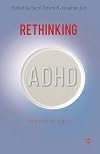
This book is a really interesting look at the difference between scientific and moralistic discourses, and a usefully summary of the state of ADHD research from a critical perspective, but it is ultimately hobbled by by its biases.
The conventional perspective is that ADHD is a real condition, and that while we do not know its precise biological etiology, it's something genetic, neurochemical, or neural circuitry based. The first three chapters do an admirable job at deconstructing the show more science behind the conventional explanation. The attack on Castellanos' 2002 study on medication and brain development is particularly interesting. Mostly, this effort confirms my belief that in matters of scientific construction and deconstruction, laypeople are alienated by the sheer density of facts, and the nuances of proper experimental design. How can we know which argument is true?
The book begins to falter as it looks for alternative explanations of ADHD, presenting dietary and chemical damage explanations that begin to cross into psuedo-science. The studies of the social and historical aspects of ADHD are cursory, tracing peripheral issues rather than engaging in a serious way with the main trust of ADHD in American society from the mid-1970s onwards. The final section, on how ADHD is a reaction to the post-60s society, falls to griping from boomers about how things just aren't like they were, parents are too permissive, kids just don't have moral fiber etc.
There is room for serious scholarly work on ADHD, but this book isn't quite it. Useful in some respects, but overall, disappointing. show less
The conventional perspective is that ADHD is a real condition, and that while we do not know its precise biological etiology, it's something genetic, neurochemical, or neural circuitry based. The first three chapters do an admirable job at deconstructing the show more science behind the conventional explanation. The attack on Castellanos' 2002 study on medication and brain development is particularly interesting. Mostly, this effort confirms my belief that in matters of scientific construction and deconstruction, laypeople are alienated by the sheer density of facts, and the nuances of proper experimental design. How can we know which argument is true?
The book begins to falter as it looks for alternative explanations of ADHD, presenting dietary and chemical damage explanations that begin to cross into psuedo-science. The studies of the social and historical aspects of ADHD are cursory, tracing peripheral issues rather than engaging in a serious way with the main trust of ADHD in American society from the mid-1970s onwards. The final section, on how ADHD is a reaction to the post-60s society, falls to griping from boomers about how things just aren't like they were, parents are too permissive, kids just don't have moral fiber etc.
There is room for serious scholarly work on ADHD, but this book isn't quite it. Useful in some respects, but overall, disappointing. show less
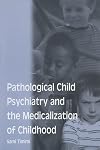
Currently, it is common practice among the child psychiatric establishment to prescribe powerful and potentially addictive drugs to children who have emotional or behavioural problems. "Pathological Child Psychiatry and the Medicalization of Childhood" is a strong challenge to this way of thinking. Sami Timimi uses a wide variety of sources in shaping our understanding of childhood problems and how to deal with them, including his personal experiences, to highlight the role of culture, show more beliefs, science, social hierarchy and power. He urges professionals who work with children to question their assumptions in a manner that will enable them to access a greater variety of potentially helpful therapeutic frameworks. "Pathological Psychiatry and the Medicalization of Childhood" should be of interest to professionals and trainees in psychiatry and child psychiatry, social work, family therapy and other psychotherapies for children and adolescents. show less
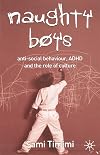
Boys in the West are being labeled as having psychiatric disorders, behaviour problems and special educational needs, and are receiving psychiatric drugs in ever-greater numbers. In this book, Sami Timimi argues that this crisis reflects a fundamental ambivalence that Western culture has towards children that affects boys in particular. Using material from diverse sources, the author shows how Western society's political, social and economic value system works against families and children, show more and how positive alternatives can be found in non-Western traditions. show less

El número de diagnósticos de trastornos mentales, TDAH y autismo entre la juventud aumenta día tras día. Como consecuencia, los centros de salud mental se encuentran colapsados y se produce un incremento desmedido de la medicalización como vía de alivio más inmediata.
Sin embargo, ¿es este proceder el más eficiente a largo plazo? ¿A qué sistemas recurren los diversos países? ¿Hasta dónde llega el interés de la industria farmacéutica por fomentar la mercantilización de estas show more patologías? ¿Qué deberíamos considerar normal y qué merece realmente un tratamiento?
Sami Timimi, prestigioso psiquiatra inglés con más de treinta años de experiencia tratando a niños y adolescentes, explora en Qué es ser normal estas preguntas y sus respuestas con el propósito de redefinir cómo pensamos, abordamos y tratamos el sufrimiento en las sociedades modernas. show less
Sin embargo, ¿es este proceder el más eficiente a largo plazo? ¿A qué sistemas recurren los diversos países? ¿Hasta dónde llega el interés de la industria farmacéutica por fomentar la mercantilización de estas show more patologías? ¿Qué deberíamos considerar normal y qué merece realmente un tratamiento?
Sami Timimi, prestigioso psiquiatra inglés con más de treinta años de experiencia tratando a niños y adolescentes, explora en Qué es ser normal estas preguntas y sus respuestas con el propósito de redefinir cómo pensamos, abordamos y tratamos el sufrimiento en las sociedades modernas. show less
Feb 26, 2026Spanish
Awards

Statistics
- Works
- 12
- Members
- 69
- Popularity
- #250,751
- Rating
- 3.0
- Reviews
- 4
- ISBNs
- 22
- Languages
- 1