
Fred Lieb (1888–1980)
Author of Baseball As I Have Known It
About the Author
Frederick G. Lieb wrote seven of the team histories for the Putnam-Series. In 1973 he became one of the first living baseball writers elected to the 'writers' wing of the 'Hall of Fame. He was the writer who first described Yankee Stadium as the "House That Ruth Built."
Image credit: SABR
Works by Fred Lieb
The Baltimore Orioles: The History of a Colorful Team in Baltimore and St. Louis (Writing Baseball) (2005) 17 copies, 2 reviews
Associated Works
The Baseball Anthology: 125 Years of Stories, Poems, Articles, Photographs, Drawings, Interviews, Cartoons, and Other Memorabilia (1994) — Contributor — 62 copies
Tagged
Common Knowledge
- Legal name
- Lieb, Frederick G.
- Birthdate
- 1888-03-05
- Date of death
- 1980-06-03
- Gender
- male
- Occupations
- sportswriter
- Organizations
- New York Press (original)
New York Post
The Sun (New York)
Evening Telegram (New York)
The Sporting News
St. Petersburg Times (Florida) - Nationality
- USA
- Birthplace
- Philadelphia, Pennsylvania, USA
- Place of death
- Houston, Texas, USA
- Associated Place (for map)
- USA
Members
Reviews
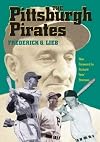
In the late 1940s, G.P. Putnam's Sons commissioned individual histories of 15 of the then existing 16 major league baseball teams (or maybe the commissioned 16, but at any rate, no history of the Philadelphia Athletics appeared). This history of the Pirates was first published in 1948. In 2002, the Southern Illinois University Press republished several of these team histories as part of their "Writing Baseball" series. Several of the authors hired to write these books eventually made it into show more the journalists' wing of the MLB Hall of Fame. Frederick G. Lieb is one of those.
At the time of his writing this history, Lieb was already a veteran Pittsburgh sports writer. He had covered the Pirates for many seasons and was friends with the team's long-time owner Barney Dreyfuss, who had died only a few years before the book was written. He knew many of the players and had attended many of the most famous games. He also did lots of good research, so that his accounts of the earliest years of professional Pittsburgh baseball, going back to the National League's 19th-century origins, is lively and, for a baseball fan, very interesting. Lieb was also able to provide perspectives on key events, trades and relationships from the owner's point of view, as well as often taking us into the dugout to see what players and managers had to say about things. Feuds, holdouts, trades good and bad, and in-game strategic decisions are illuminated along the way. The historic perspective is certainly interesting, given that, writing in 1948, to Lieb 1918 was only as distant in the past as 1990 is to us now.
The real stars of the first half of the book are Dreyfuss, who bought a team in Louisville and brought it to Pittsburgh in the early days of the NL, and Honus Wagner, one of the all-time greats of the game who played for the Pirates in the early 20th century. The book takes us right up to slugger Ralph Kiner's rookie year.
At times, the whirl of player names, trades and statistics becomes a blur, especially towards the book's final quarter. I got the idea that a) this was all recent enough information that Lieb thought his readers would already be familiar with it and b) perhaps Lieb was rushing through these most recent (to him) seasons to be done with the project. At any rate, it's still fun to read.
For baseball fans, the differences in the game between then and now will jump out. The most glaring is Lieb's frequent reference to the criteria that allowed a pitcher to be considered a "regular pitcher." One needed to have pitched at least 10 complete games during a season. Each staff was expected to have three or four such pitchers. Those were the days. Writing in 1948, Lieb simply takes segregation for granted and never mentions it. Jackie Robinson's entry into the game in 1947, the final season Lieb describes, is ignored. The one at only reference to integration at all is this one:
"And even though the Pirates rode seventh or eighth through the late spring and summer months, they had their moments, as when the Buccos gave Brooklyn a stunning setback by crushing them in a midseason Sunday double-header and later ruined the debut of big Dan Bankhead, {Branch} Rickey's Negro pitching find."*
Also, while we are told early on that Barney Dreyfuss was a German-born Jew, the subject is entirely dropped thereafter. We are either to understand from this that Dreyfuss never had to deal with antisemitism in the higher rungs of baseball ownership or, perhaps more likely, that Lieb was aware that his readers wouldn't find antisemitism any more noteworthy than baseball's segregation. That's looking at things with my 2020 readership glasses on, of course. I suppose such things simply wouldn't be discussed in polite society in those days.
Anyway, for readers interested in baseball and, more specifically, baseball history, this book is a lot of fun. Perhaps it's best to think of it, in some ways, as more of an oral history than as an authoritative historical work.
* A quick check online tells us that the mostly forgotten (not very successful) Bankhead was, nevertheless, the first African-American to pitch in the Major Leagues. One would think Lieb would have found that event more interesting than he evidently did. show less
At the time of his writing this history, Lieb was already a veteran Pittsburgh sports writer. He had covered the Pirates for many seasons and was friends with the team's long-time owner Barney Dreyfuss, who had died only a few years before the book was written. He knew many of the players and had attended many of the most famous games. He also did lots of good research, so that his accounts of the earliest years of professional Pittsburgh baseball, going back to the National League's 19th-century origins, is lively and, for a baseball fan, very interesting. Lieb was also able to provide perspectives on key events, trades and relationships from the owner's point of view, as well as often taking us into the dugout to see what players and managers had to say about things. Feuds, holdouts, trades good and bad, and in-game strategic decisions are illuminated along the way. The historic perspective is certainly interesting, given that, writing in 1948, to Lieb 1918 was only as distant in the past as 1990 is to us now.
The real stars of the first half of the book are Dreyfuss, who bought a team in Louisville and brought it to Pittsburgh in the early days of the NL, and Honus Wagner, one of the all-time greats of the game who played for the Pirates in the early 20th century. The book takes us right up to slugger Ralph Kiner's rookie year.
At times, the whirl of player names, trades and statistics becomes a blur, especially towards the book's final quarter. I got the idea that a) this was all recent enough information that Lieb thought his readers would already be familiar with it and b) perhaps Lieb was rushing through these most recent (to him) seasons to be done with the project. At any rate, it's still fun to read.
For baseball fans, the differences in the game between then and now will jump out. The most glaring is Lieb's frequent reference to the criteria that allowed a pitcher to be considered a "regular pitcher." One needed to have pitched at least 10 complete games during a season. Each staff was expected to have three or four such pitchers. Those were the days. Writing in 1948, Lieb simply takes segregation for granted and never mentions it. Jackie Robinson's entry into the game in 1947, the final season Lieb describes, is ignored. The one at only reference to integration at all is this one:
"And even though the Pirates rode seventh or eighth through the late spring and summer months, they had their moments, as when the Buccos gave Brooklyn a stunning setback by crushing them in a midseason Sunday double-header and later ruined the debut of big Dan Bankhead, {Branch} Rickey's Negro pitching find."*
Also, while we are told early on that Barney Dreyfuss was a German-born Jew, the subject is entirely dropped thereafter. We are either to understand from this that Dreyfuss never had to deal with antisemitism in the higher rungs of baseball ownership or, perhaps more likely, that Lieb was aware that his readers wouldn't find antisemitism any more noteworthy than baseball's segregation. That's looking at things with my 2020 readership glasses on, of course. I suppose such things simply wouldn't be discussed in polite society in those days.
Anyway, for readers interested in baseball and, more specifically, baseball history, this book is a lot of fun. Perhaps it's best to think of it, in some ways, as more of an oral history than as an authoritative historical work.
* A quick check online tells us that the mostly forgotten (not very successful) Bankhead was, nevertheless, the first African-American to pitch in the Major Leagues. One would think Lieb would have found that event more interesting than he evidently did. show less

A nice overview of the life and times of the great A's manager Connie Mack! I am a huge Oakland A's fan, so this was fun to read! From the founding of the club, to the publishing of this book (1944), we get an in depth look at the team, the game, and the man. We also get a glimpse of history, as Mack's story begins during the Civil War, he plays through the Spanish American War, and he manages during World War I and II. Baseball history too - the founding of the American League, the baseball show more wars, and the first All-Star game! There are also tidbits of trivia, like how the Pirates got their name, and brief glimpses of other baseball greats during that era. Though at times the author seemed like to much of a "homer" in his viewpoints, this book kept my interest and taught me a thing or two! I'm glad I found it! show less
The Baltimore Orioles: The History of a Colorful Team in Baltimore and St. Louis (Writing Baseball) by Frederick G. Lieb
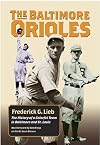
This is, without a doubt, the worst of the "Putnam's Pennant Series" books. The author is very good on the "old" Orioles, and, for that matter, on the International League Orioles, which admittedly were a quasi-major league team for much of their existence. That leaves the Browns stuffed into a few afterthought chapters at the end. Admittedly, they did not have a distinguished history, but they were interesting and remain under-documented, partialy because of this misfire.
A nice overview of the life and times of the great A's manager Connie Mack! I am a huge Oakland A's fan, so this was fun to read! From the founding of the club, to the publishing of this book (1944), we get an in depth look at the team, the game, and the man. We also get a glimpse of history, as Mack's story begins during the Civil War, he plays through the Spanish American War, and he manages during World War I and II. Baseball history too - the founding of the American League, the baseball show more wars, and the first All-Star game! There are also tidbits of trivia, like how the Pirates got their name, and brief glimpses of other baseball greats during that era. Though at times the author seemed like to much of a "homer" in his viewpoints, this book kept my interest and taught me a thing or two! I'm glad I found it! show less
Awards

You May Also Like


Associated Authors
Statistics
- Works
- 11
- Also by
- 1
- Members
- 261
- Popularity
- #88,098
- Rating
- 3.7
- Reviews
- 9
- ISBNs
- 20
- Favorited
- 2