
Benjamin A. Wilgus
Author of Science Comics: Flying Machines: How the Wright Brothers Soared
About the Author
Series
Works by Benjamin A. Wilgus
Science Comics: Flying Machines: How the Wright Brothers Soared (2017) — Author — 168 copies, 4 reviews
Noise Pollution [short story] 2 copies
A Leaf in the Night 2 copies
King Tide (Short story) 1 copy
A Wrinkle Ironed Out [short story] — Author — 1 copy
Associated Works
Be Gay, Do Comics: Queer History, Memoir, and Satire from the Nib (2020) — Contributor — 201 copies, 7 reviews
History Comics: The Stonewall Riots: Making a Stand for LGBTQ Rights (2022) — Editor — 83 copies, 4 reviews
History Comics: Rosa Parks & Claudette Colvin: Civil Rights Heroes (2023) — Editor — 50 copies, 2 reviews
History Comics: The Transcontinental Railroad: Crossing the Divide (2022) — Editor — 33 copies, 1 review
Up and Coming: Stories by the 2016 Campbell-Eligible Authors (2016) — Contributor, some editions — 24 copies, 1 review
History Comics: Ellis Island: Immigration and the American Dream (2025) — Editor — 19 copies, 3 reviews
Tagged
Common Knowledge
- Canonical name
- Wilgus, Benjamin A.
- Other names
- Wilgus, Alison (deadname)
- Birthdate
- 20th century
- Gender
- male
- Education
- Tisch School of the Arts, New York University
- Occupations
- cartoonist
writer
editor
podcaster - Organizations
- First Second Books
Random House Graphic - Agent
- Eddie Schneider
- Nationality
- USA
- Places of residence
- Brooklyn, New York, USA
- Associated Place (for map)
- New York, USA
Members
Reviews

The art for this was phenomenal, and I really enjoyed the world(s) building of the cool space exploring society in which the story is set. At its heart, it's a very familiar story about an adolescent's need, simultaneously, for safety and parental attention and for independence and the recognition of their own skills and abilities—particularly in an environment of divorce, or military deployment, or other scenario where one parent may not generally be involved in the day to day care and show more observation of their needs and simultaneous growing skills and maturity. show less
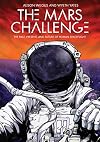
A highly informative and entertaining look at how hard it is going to be to put humans on Mars and return them safely to Earth. It takes the form a dialogue between an aspiring astronaut and a knowledgable space advocate -- both women of color -- as they hike through some rough terrain on Earth that morphs as their discussion wanders from the International Space Station to Mars itself.
The mentor is very realistic about the challenges to be surmounted and how a mission to Mars will build upon show more what has come before, from Martian probes to our manned Moon missions. The problems to be solved are daunting, but the describing of them excited me more for the how great the accomplishment will be when it occurs.
Mostly, this book made me want to read Andy Weir's The Martian again, probably my favorite book of the last ten years. show less
The mentor is very realistic about the challenges to be surmounted and how a mission to Mars will build upon show more what has come before, from Martian probes to our manned Moon missions. The problems to be solved are daunting, but the describing of them excited me more for the how great the accomplishment will be when it occurs.
Mostly, this book made me want to read Andy Weir's The Martian again, probably my favorite book of the last ten years. show less
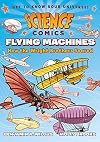
Using the Wright brothers' development of the first practical airplane as a structure on which to build the basics of machine flight, Wilgus and Brooks have created the most linear of the Science Comics I've read so far. It also happens to be the most beautiful, making it a lovely book and story as well as a useful introduction.
Katherine Wright, Wilbur and Orville's younger sister, is our enthusiastic narrator, walking us through her brothers' process, from building a glider to experimenting show more with wing shape to figuring out how to steer to finally getting a motor and second seat attached. We see their crashes, their brainstorming conversations, and their correspondence with both other enthusiasts and with the Smithsonian Institution--so the story's a clear depiction of research and development, not skipping the trial-and-crash phase to get to the flight. Some valuable lessons about science, there!
At the same time, we learn about other attempts at flight, from perfecting existing dirigibles to the enthusiastic French aeronauts with more money than sense, to Alexander Graham Bell. It's really remarkable to see, in a history of science that focuses so much on lone geniuses developing ideas on their own, how so many people were working together on the same problem at the same time, some coming up with some solutions and some creating others, until all the pieces come together in the end. Flying Machines actually goes a bit further than the Wrights, devoting several of the last pages to Englishman Frank Whittle, who developed the turbo jet engine.
As with several of the Science Comics, some of the science gets deep, quickly--creating an actual historical narrative takes up some of the space to break down Newton's Laws and some other technical details--but it's nothing that a second reading didn't clear up (for me, a 30-something who's technically not in the age bracket the book is designed for...). I also would have liked to see a panel or two of Katherine actually doing something to help her brothers instead of just gushing enthusiastically or worrying about their safety. Both the introduction and her biography in the back seem to argue that she was essential to the success of the airplane by conducting correspondence on her brothers' behalf and being the "PR manager" (Richard Mauer, author of The Wright Sister) during their tour of Europe during which they tried to sell their machine. We get a panel joking about coffee and one about waking up early. It might have been nice to see one of Katherine answering questions by mail, or for a European noble, instead of just being around.
That said, her enthusiasm is certainly infectious! For most of the book, Katherine Wright is in portrayed in shades of grey, narrating the story and cheering her brothers on. Periodically, the narrative will break and another character, again in grey, will join her to explain the mechanics of what's going on. These pages are beautiful in line, coloring, and simplicity, genuinely beautiful to look at, and a lovely contrast to the rich colors of the history happening around it. Like I said, this is probably the most beautiful Science Comic I've seen! show less
Katherine Wright, Wilbur and Orville's younger sister, is our enthusiastic narrator, walking us through her brothers' process, from building a glider to experimenting show more with wing shape to figuring out how to steer to finally getting a motor and second seat attached. We see their crashes, their brainstorming conversations, and their correspondence with both other enthusiasts and with the Smithsonian Institution--so the story's a clear depiction of research and development, not skipping the trial-and-crash phase to get to the flight. Some valuable lessons about science, there!
At the same time, we learn about other attempts at flight, from perfecting existing dirigibles to the enthusiastic French aeronauts with more money than sense, to Alexander Graham Bell. It's really remarkable to see, in a history of science that focuses so much on lone geniuses developing ideas on their own, how so many people were working together on the same problem at the same time, some coming up with some solutions and some creating others, until all the pieces come together in the end. Flying Machines actually goes a bit further than the Wrights, devoting several of the last pages to Englishman Frank Whittle, who developed the turbo jet engine.
As with several of the Science Comics, some of the science gets deep, quickly--creating an actual historical narrative takes up some of the space to break down Newton's Laws and some other technical details--but it's nothing that a second reading didn't clear up (for me, a 30-something who's technically not in the age bracket the book is designed for...). I also would have liked to see a panel or two of Katherine actually doing something to help her brothers instead of just gushing enthusiastically or worrying about their safety. Both the introduction and her biography in the back seem to argue that she was essential to the success of the airplane by conducting correspondence on her brothers' behalf and being the "PR manager" (Richard Mauer, author of The Wright Sister) during their tour of Europe during which they tried to sell their machine. We get a panel joking about coffee and one about waking up early. It might have been nice to see one of Katherine answering questions by mail, or for a European noble, instead of just being around.
That said, her enthusiasm is certainly infectious! For most of the book, Katherine Wright is in portrayed in shades of grey, narrating the story and cheering her brothers on. Periodically, the narrative will break and another character, again in grey, will join her to explain the mechanics of what's going on. These pages are beautiful in line, coloring, and simplicity, genuinely beautiful to look at, and a lovely contrast to the rich colors of the history happening around it. Like I said, this is probably the most beautiful Science Comic I've seen! show less
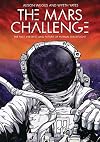
Thorough and well-researched, The Mars Challenge describes the state of the art of work toward sending human astronauts to Mars through a dialogue between a woman who desperately wants to be among the first astronauts, and another woman who explains the technology we'll need and problems we haven't solved yet. There are a lot of challenges, and it's daunting. In the end, the wannabe astronaut almost loses hope, but delivers a stirring speech: "When we talked about building space stations show more back in the 1950s, people like Wernher von Braun came up with these sleek, gorgeous designs. Shining silver wheels in orbit with simulated gravity. What we got is a chain of cans and trusses. An orbiting jumble of compromises. But you know what? It's up there. We did it." I recommend this book to any kid who dreams of being an astronaut. It's good to dream, and it's good to face reality. The two aren't incompatible.
Full disclosure: I was one of two fact-checkers on this book. Wilgus took all my recommendations to heart. show less
Full disclosure: I was one of two fact-checkers on this book. Wilgus took all my recommendations to heart. show less
Lists
Awards


You May Also Like


Associated Authors
Statistics
- Works
- 15
- Also by
- 19
- Members
- 407
- Popularity
- #59,757
- Rating
- 4.0
- Reviews
- 20
- ISBNs
- 24
- Languages
- 1
- Favorited
- 1
