
Dan Zettwoch
Author of Science Comics: Cars: Engines That Move You
About the Author
Image credit: Photo Credit: Dan Zettwoch
Series
Works by Dan Zettwoch
Science Comics: Cars: Engines That Move You (2019) — Author; Illustrator; Designer — 155 copies, 2 reviews
Science Comics: Bridges: Engineering Masterpieces (2022) — Author; Designer; Illustrator — 87 copies, 4 reviews
Redbird 1.5 3 copies
Collectin : a Story in Four Parts 2 copies
Redbird #1 2 copies
Incredible # 3 1 copy
Cut-Away Comics #2 1 copy
Redbird #3 1 copy
Schematic Comics 1 copy
Associated Works
An Anthology of Graphic Fiction, Cartoons, and True Stories: v. 2 (2008) — Contributor — 169 copies, 2 reviews
The Best American Comics 2017 (The Best American Series ®) (2017) — Contributor — 56 copies, 2 reviews
Tagged
Common Knowledge
- Canonical name
- Zettwoch, Dan
- Birthdate
- 1977
- Gender
- male
- Short biography
- Dan Zettwoch was born in Louisville, Kentucky - the birthplace of Muhammad Ali and the cheeseburger - in 1977. His grandfather drew comics in the Pacific Theater during WWII and his father did the same while working as a craftsman at the American Telephone & Telegraph Company in the 1970's and 80's. They never got paid to draw comics and transferred their creative efforts to woodworking, painting, and mechanized sculpture. As a child, Dan Zettwoch read the comics most plentiful in the nickel boxes at the Jefferson County Flea Market: the humor publications Cracked and Mad Magazine and low-grade action fare like the motorcross comic Team America and ROM: Spaceknight. Having always been interested in drawing, he started making his own comics, although he rarely moved beyond detailed character dossiers for made-up superhero characters (including special skills, weapons, team affiliation, etc.) and drawing explosive covers for stories that didn't exist.
Dan moved to St. Louis in 1995 to attend school at Washington University and study mathematics and illustration, and he began discovering comics that he liked better, but which cost more than a nickel. The true power of storytelling - preserving oral histories, world building in three dimensions on paper, communicating technical info along with weird and heartfelt ideas - through the alchemy of words and pictures started to become evident to him, and he has never looked back. Zettwoch drew a strip for the school paper and edited the campus comix anthology, and eventually started stapling together homemade booklets full of his own comics, about things like professional wrestling, childhood gangs roaming the suburbs, alien attacks on the State Fair, slot car racing and Civil War-era battleships.
In addition to several self-published booklets, his stories have appeared in Kramers Ergot, the Drawn & Quarterly Showcase, Comic Art, Nickelodeon Magazine, Yale University Press' An Anthology of Graphic Fiction, Cartoons, and True Stories Volume 2. He is currently working on the weekly newspaper strip Amazing Facts & Beyond with fellow USS Catastrophe crew members Kevin Huizenga and Ted May, a series of screenprints commemorating St. Louis Folk Icons and gross foods, and his own comic Redbird. - Nationality
- USA
- Associated Place (for map)
- USA
Members
Reviews

My first non-animal Science Comic was a good one! This time we've got four tour guides, members of a globe-hopping bridge appreciation club, showing us different bridges and how they work, and the group is diverse not just in race and gender but in a way I don't see often: age! There's punk-looking engineering student Bea who likes beam bridges, cozy-looking "teen archaeologist" Archy who likes arch bridges, much-older retired teacher Trudy who likes truss bridges, and younger (elementary- show more or middle school student) bridge-lover Spence who likes suspension bridges. The members of the B.A.T.S. club are a great way to help kids remember the B.A.T.S. types of bridges!
Sections broken down by bridge type introduce new concepts, like the different types of loads (dead, live, environmental) and forces (compression, tension, torsion, and shear). Most of the content comes in awesome two-page spreads that each feature a different bridge from around the world and across time, pointing out materials and construction strategies, and applying the concepts we just learned. As someone who learns best from examples, I loved this setup! Sometimes the panels were hard to follow, since the bridges spanning across a page spread disrupted the normal top-to-bottom flow you see in most comics, but frankly most of the word boxes and bubbles could stand on their own and be read in any order.
Back matter includes a double-page spread image showing key definitions and concepts, a traditional glossary and bibliography, and a quick suggestion of how to start your own bridge appreciation club. show less
Sections broken down by bridge type introduce new concepts, like the different types of loads (dead, live, environmental) and forces (compression, tension, torsion, and shear). Most of the content comes in awesome two-page spreads that each feature a different bridge from around the world and across time, pointing out materials and construction strategies, and applying the concepts we just learned. As someone who learns best from examples, I loved this setup! Sometimes the panels were hard to follow, since the bridges spanning across a page spread disrupted the normal top-to-bottom flow you see in most comics, but frankly most of the word boxes and bubbles could stand on their own and be read in any order.
Back matter includes a double-page spread image showing key definitions and concepts, a traditional glossary and bibliography, and a quick suggestion of how to start your own bridge appreciation club. show less
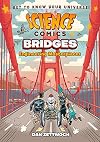
A fun survey of the different ways to build bridges by way of a global tour of famous bridges with a team of four fictional characters. It was nice to see that one of the team was an older woman who was not someone's mother or grandmother but just a person who likes bridges. I could have done with a few less puns, but I was interested in all the bridges and the information being presented.
I found it a bit ironic that a book about structures was often lacking in structure itself, with many show more pages having panels and info dump captions with no set viewing flow or reading order. show less
I found it a bit ironic that a book about structures was often lacking in structure itself, with many show more pages having panels and info dump captions with no set viewing flow or reading order. show less

I got this on my birthday at Star Clipper, a comics and manga (etc.) store on the Del Mar Loop in St. Louis. My request was for "something unusual and local" and I was directed to this work. It's immediately striking as a physical artifact. The cover is made out of an old Hollerith card (IBM punch card) with a small microfilm covered aperture - according to the colophon, it was "rescued from the same building when all its microfiche schematics were converted to digital formats in the late show more 1980's." The piece of film appears to be schematics for tech support types, and has been printed over with the digit "8" flanked by two eyes.
Structurally, the book is 3.75 x 3.25 inches, and about 20 pages (hard to tell from structure - it's got a center fold-out 8.5 x 11 inch printed on both sides which makes pagination confusing - damn you Mr. Zettwoch!). Very neat construction. The whole thing can easily fit in your front shirt pocket right behind your standard issue pocket protector.
Speaking of pocket protectors, the protagonist of this tale is an early 1970's telephone engineer named "Slick" who wouldn't be out of place wearing one. The tale revolves around Slick's expertise with the "ancient and mysterious 8 board."
Art work is what I would call "classic" underground. The younger Zettwoch is obviously proficient in his craft, and the pictures are amusing and expressive. Sometimes the dialog is confusing, but for an artifact like this I prefer it that way. Sometimes a work can be too slick for its own good - not this one.
Fans of old technology, the phone company, and the 1970's are likely to enjoy this. I enjoyed the heck out of it, recommend it, and give it three snaps and a "shoop de doop." show less
Structurally, the book is 3.75 x 3.25 inches, and about 20 pages (hard to tell from structure - it's got a center fold-out 8.5 x 11 inch printed on both sides which makes pagination confusing - damn you Mr. Zettwoch!). Very neat construction. The whole thing can easily fit in your front shirt pocket right behind your standard issue pocket protector.
Speaking of pocket protectors, the protagonist of this tale is an early 1970's telephone engineer named "Slick" who wouldn't be out of place wearing one. The tale revolves around Slick's expertise with the "ancient and mysterious 8 board."
Art work is what I would call "classic" underground. The younger Zettwoch is obviously proficient in his craft, and the pictures are amusing and expressive. Sometimes the dialog is confusing, but for an artifact like this I prefer it that way. Sometimes a work can be too slick for its own good - not this one.
Fans of old technology, the phone company, and the 1970's are likely to enjoy this. I enjoyed the heck out of it, recommend it, and give it three snaps and a "shoop de doop." show less
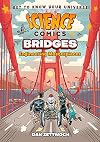
Highly informative. Every term that is commonly discussed in my bridge design class was talked about for at least a little bit in this book. I was surprised by how in-depth some topics got, but it was quite good to see.
However, the art was a mess. It was super hard to follow due to so much *movement* and colors. There were dialogue boxes everywhere with random facts squeezed in wherever there was room. It was just too much.
3 Stars
However, the art was a mess. It was super hard to follow due to so much *movement* and colors. There were dialogue boxes everywhere with random facts squeezed in wherever there was room. It was just too much.
3 Stars
Lists
Awards


You May Also Like


Associated Authors
Statistics
- Works
- 13
- Also by
- 7
- Members
- 290
- Popularity
- #80,655
- Rating
- 3.3
- Reviews
- 7
- ISBNs
- 11