
George R. Parulski
Author of Sword Of The Samurai: The Classical Art Of Japanese Swordsmanship
About the Author
Works by George R. Parulski
Tagged
Common Knowledge
There is no Common Knowledge data for this author yet. You can help.
Members
Reviews

Want to be a real karate kid? You can learn to punch, strike, kick and block just like the experts. With this guide to sport (non-contact) karate, you'll be amazed how quickly you can:
Deliver more powerful punches and kicks than someone twice your size.
Block you attacker with lightning speed.
Sharpen your mind with power techniques used by ancient warriors.
Learn attack and defense stances. Use the force from your entire body for punching and kicking. Practice blocking your opponent. Then put show more it all together in fast, powerful combinations. Soon you'll have an awesome fighting style all you own!
Contents
Introduction
1 The meaning of karate
The basic principles
2 Stances
Closed stance
Open-toed stance
Parallel stance
Inverted open-legged stance
T-Stance
Horse stance
Forward stance
Back stance
Straddle-legged stance
Hourglass stance
Cat stance
One-legged stance
3 Punching techniques
Straight punch
Reverse punch
Lunge punch
Vertical punch
Close punch
Hook punch
Roundhouse punch
4 Striking techniques
Back-fist strike
Elbow strikes
Knife-hand strikes
Hammer-fist strike
5 Kicking techniques
Front kick
Side kick
Roundhouse kick
Back kick
6 Blocking methods
Rising block
Outside/inward block
Low block
Knife-hand block
cross block
Wedging block
7 Falling correctly
Back breakfalls
Side breakfalls
Front breakfall
Advanced leaping breakfalls
8 Basic combinations
Combination #1, 2, and 3
The ranking system
Abokut the assistants
Glossary
Index show less
Deliver more powerful punches and kicks than someone twice your size.
Block you attacker with lightning speed.
Sharpen your mind with power techniques used by ancient warriors.
Learn attack and defense stances. Use the force from your entire body for punching and kicking. Practice blocking your opponent. Then put show more it all together in fast, powerful combinations. Soon you'll have an awesome fighting style all you own!
Contents
Introduction
1 The meaning of karate
The basic principles
2 Stances
Closed stance
Open-toed stance
Parallel stance
Inverted open-legged stance
T-Stance
Horse stance
Forward stance
Back stance
Straddle-legged stance
Hourglass stance
Cat stance
One-legged stance
3 Punching techniques
Straight punch
Reverse punch
Lunge punch
Vertical punch
Close punch
Hook punch
Roundhouse punch
4 Striking techniques
Back-fist strike
Elbow strikes
Knife-hand strikes
Hammer-fist strike
5 Kicking techniques
Front kick
Side kick
Roundhouse kick
Back kick
6 Blocking methods
Rising block
Outside/inward block
Low block
Knife-hand block
cross block
Wedging block
7 Falling correctly
Back breakfalls
Side breakfalls
Front breakfall
Advanced leaping breakfalls
8 Basic combinations
Combination #1, 2, and 3
The ranking system
Abokut the assistants
Glossary
Index show less
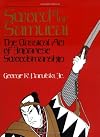
from dust jacket
In Japan, only th samurai class retained the exclusive privilege of wearing the daisho, the long and short sword. Nowhere else in the wordld was the sword so revered and honored as in Japan. 'The living soul of the samurai' it was called.
Highly skilled and respected swordsmiths created the fine blades of Japan's samurai. The making of a sword was akin to religious ceremony and was cloaked in secrecy and ritual. The swordsmith imbued a blade with special characteristics beyond show more strength and beauty, and it was the samurai's task to live up to the expectations of his blade.
As the sword was the privilege of the samurai, so was sthe martial arts. From the inception of the samurai class in Japan, the great swordsmen developed the various schools, or ryu, of sword fighting. These schools basically taught two sword techniques: ken-jutsu, the use of the sword in combat, and iai-juitsu, the quick draw of the sword from the sheath.
Combat was but the 'outer' aspect of swordsmanship; the 'inner' aspect was Zen. 'Zen and the sword are one' the saying goes. The warrior must cultivate 'no-mind,' a mind free of the disturbing influences of external circumstances. Then he could repond to any situation instinctively and decisively.
George R. Parulski began training in the martial arts in 1963 and currently holds ranks in judo, shotokan karate-do, goju-ryu karate-do, aiki-jujutsu, iai-do, and Tai Ch'i ckh'uan kung-fu. Most recently, he was honored with the title of tashi (expert) in ken-jutsu, bestowed on him by Kanyemon Aikira Okazaki under the authority of the All-Japan Seibukan Martial Arts and Ways Association. Parulski also serves as the US president of this organization.
Throughout his career in the martial arts, Parulski has won impressive titles: In 1974, he won the East Coast Judo Championships; he went on to win the weapons division (with the sword) at the Pro-Am Goodwill Karate Championships; and in 1983, he won the Master Kata division and Black Belt Weapons (sword and nunchaku division at the American Karate Federation's Grand Nationals.
Parulski trains martial artists at his school, the Yama-ji School of Traditional Martial Arts in Webster, NY, and is also a prolific wiriter. He has written numerous articles for martial arts magazines and authored books on judo, karate, karate weapons, kung-fu and taekwon-do.
Contents
Preface; Acknowledgments; Foreword by Soke Kanyemon Aikira Okazaki
Part One-Historical Background
Chapter One: The Sword: Its History and Creation
Chapter Two: A History of Japanese Swordsmanship
Chapter Three: Spiritual Strategy: Zen and the Sword
Chapter Four: Classical Ranking in Swordsmanship
Past Two-Fundamentals
Chapter Five: The Uniform
Chapter Six: Fighting Postures
Chapter Seven: Suburito Training
Part Three-Ken-Jutsu: Way of the Sword
Chapter Eight: Bokken Etiquette
Chapter Nine: Two-Man Sword Play: The Kihons
Part Four-Iai-Jutsu: Art of Drawing the Sword
Chapter Ten: Iai Etiquette
Chapter Eleven: Iai Kata with Applications
Afterword
Appendix One: Care of the Sword
Appendix Two: Tying the Sword Cord
Appendix Three: Thing the Sword Bag
Glossary show less
In Japan, only th samurai class retained the exclusive privilege of wearing the daisho, the long and short sword. Nowhere else in the wordld was the sword so revered and honored as in Japan. 'The living soul of the samurai' it was called.
Highly skilled and respected swordsmiths created the fine blades of Japan's samurai. The making of a sword was akin to religious ceremony and was cloaked in secrecy and ritual. The swordsmith imbued a blade with special characteristics beyond show more strength and beauty, and it was the samurai's task to live up to the expectations of his blade.
As the sword was the privilege of the samurai, so was sthe martial arts. From the inception of the samurai class in Japan, the great swordsmen developed the various schools, or ryu, of sword fighting. These schools basically taught two sword techniques: ken-jutsu, the use of the sword in combat, and iai-juitsu, the quick draw of the sword from the sheath.
Combat was but the 'outer' aspect of swordsmanship; the 'inner' aspect was Zen. 'Zen and the sword are one' the saying goes. The warrior must cultivate 'no-mind,' a mind free of the disturbing influences of external circumstances. Then he could repond to any situation instinctively and decisively.
George R. Parulski began training in the martial arts in 1963 and currently holds ranks in judo, shotokan karate-do, goju-ryu karate-do, aiki-jujutsu, iai-do, and Tai Ch'i ckh'uan kung-fu. Most recently, he was honored with the title of tashi (expert) in ken-jutsu, bestowed on him by Kanyemon Aikira Okazaki under the authority of the All-Japan Seibukan Martial Arts and Ways Association. Parulski also serves as the US president of this organization.
Throughout his career in the martial arts, Parulski has won impressive titles: In 1974, he won the East Coast Judo Championships; he went on to win the weapons division (with the sword) at the Pro-Am Goodwill Karate Championships; and in 1983, he won the Master Kata division and Black Belt Weapons (sword and nunchaku division at the American Karate Federation's Grand Nationals.
Parulski trains martial artists at his school, the Yama-ji School of Traditional Martial Arts in Webster, NY, and is also a prolific wiriter. He has written numerous articles for martial arts magazines and authored books on judo, karate, karate weapons, kung-fu and taekwon-do.
Contents
Preface; Acknowledgments; Foreword by Soke Kanyemon Aikira Okazaki
Part One-Historical Background
Chapter One: The Sword: Its History and Creation
Chapter Two: A History of Japanese Swordsmanship
Chapter Three: Spiritual Strategy: Zen and the Sword
Chapter Four: Classical Ranking in Swordsmanship
Past Two-Fundamentals
Chapter Five: The Uniform
Chapter Six: Fighting Postures
Chapter Seven: Suburito Training
Part Three-Ken-Jutsu: Way of the Sword
Chapter Eight: Bokken Etiquette
Chapter Nine: Two-Man Sword Play: The Kihons
Part Four-Iai-Jutsu: Art of Drawing the Sword
Chapter Ten: Iai Etiquette
Chapter Eleven: Iai Kata with Applications
Afterword
Appendix One: Care of the Sword
Appendix Two: Tying the Sword Cord
Appendix Three: Thing the Sword Bag
Glossary show less
Black Belt Judo-A Guide to Advanced Throws and Formal Holds, Kata, and Self-Defense by George Parulski

from cover
Millions worldwide practice the art of judo; it is art of the athletic curriculums in both colleges and high schools, and has been an official Olympic event since 1964. Yet, until now, there has been no accessibly priced volume geared to the advanced student.
From the discussions of history and zen philososphy through advanced throwing and holding techniques, ground work, strategy, and striking and kicking methods, the world of advanced judo is presented clearly and succinctly. Five show more distinct judo kata are presented step by step.
Concluding with appendices on belt requirementes, treating martial art injuries, oening a successful judo school, and nutritional awareness, Black-Belt Judo-with its emphasis on the classical viewpoint-is an A-Z of advanced judo as intended by the forefathers of the sport.
Isao Obato is a shichidan (7th degree black belt) in judo, and is the founder of the American Society of Classical Judoka. At 78 years of age, Master Obato is recognized as one of the greatest living authorities on the art of classical judo.
George R. Parulski, Jr., is a godan (5th degree black belt) under the direction of the American Society of Classical Judoka and the yondan (4th degreee black belt) from the All-Japan Seibukan Martial Arts and Ways Association. He is currently the president of the American branch of the AJSMAWA.
INTRODUCTION
As a mirror is necessary for us to maintain our physical appearance, such as shaving, combing our hair, applying make-up, etc., so advanced techniques, especially the formal exercises (kata), are indispensable for our judo practice.
A mirror is necessary not only for careful appearance but also for maintaining our health. Kata, which is the systematic formulation of the most fundamental principles of throwing, grappling, and body attack, can prevent us from prostituting the purity of true judo.
It may be said that all other throwing techniques and grappling methods are only modifications of those fundamental techniques of kata. Kata, then, is not practiced necessarily for direct sport or self-defense application, but rather is used to instill in its practitioner the fundamental spirit or essence behind a particular concept.
Without a doubt, the kata is the most fundamentally important practice in judo and is also the most neglected. Because kata are difficult to learn and execute and are not always immediately applicable to contest situations, they sometimes are neglected or, worse, never studied at all. Methods of advanced throwing which are not applicable in a contest are left behind. Similarly Atemi-waza, the methods of hitting, are almost forgotten. I can remember when the karate chop was called a 'judo chop.' But all too often, the sport of judo prostitutes the purity of genuine classical judo. Not too long ago, judo was respected as an effective means of self-de-fense as well as a sport. Too often today the sporting egos have left judo an empty shell, devoid of its martial heritage.
This is partly the reason for the formation of the American Society of Classical Judoka. Through this organization, the true art of judo can be promoted and preserved.
There has long been a cry in judo circles for a manual that would deal with the more complex elements of judo; however, up to now, those cries have gone unanswered. Black-Belt Judo gives the judoka a complete guide to the advanced levels of true judo.
The author, George R. Parulski, Jr., is one of the most gifted judoka I have ever met. With his vast knowledge and abilities in Japanese Budo (martial ways) and his flawless judo techniques, he has once again created a masterpiece in martial arts literature.
With his first volume, The Complete Book of Judo, which covers the entire area of basic judo techniques for competition, and his Black-Belt Judo, which covers advanced judo methods in great detail, George Parulski has in fact created a two-volume encyclopedia the likes of which the world of judo has never seen and will probably never see duplicated so professionally.
Both his volumes are fully endorsed by the American Society of Classical Judoka as being the finest judo books available today.
Isao Obato
7th Degree Black Belt (Shichidan)
Technical Advisor for Black-Belt Judo
President/founder
American Society of Classical Judoka
Summer 1984
Arizona
The completion of Black-Belt Judo is the culmination of a dream: to produce in two volumes the most complete material available on the true art of judo - not just the sport, but the entire field.
This dream began in 1984 with the publication of The Complete Book of Judo (Contemporary Books, Inc.), the most complete book of judo basics available in print. With Black-Belt Judo it is my hope that the judo world will discover once again the true values of judo when it is practiced as a martial art rather than as a game. This author has no complaint with judo being practiced as a sport, nor with the AAU. My point is that true judo - as it is practiced by the silent majority - is a complete martial art, involving but not limited to sport judo.
Perhaps of greatest interest in this text are the judo kata. Handed down for centuries from the great Japanese masters and considered to be the crucial link with the past, the judo kata - or 'formal exercises,' as they are translated - are the customary and classic fundamental movements involved in attack and defense. They are rooted in the ancient art of jujutsu and have been refined and improved to reach their present high state. Katas reveal underlying principles and, on a higher level, spiritual knowledge of ourselves and our environment.
Black-Belt Judo addresses the advanced concepts of judo in four major sections: Background, Theory, and Conditioning (Part I); Throwing and Locking (Part II); Kata of Judo (Part III); and Self-Defense Techniques (Part IV).
In Part I we examine the history of judo in the light of jujutsu. Unlike my first book The Complete Book of Judo, which relates the history of judo through the eyes of the Kodokan (main judo headquarters), this book gives new insight into the meaning and purpose of judo by looking at it through jujutsu, judo's predecessor.
The theory covered in Part I also represents a different approach from that of my first book. This time we look at judo as an expression of Zen and how to make the concept of mushin (no-mind) work for you. While Dr. Kano, judo's founder, exemplified the concept of mushin, he never specifically addressed it as it is addressed in this book.
In Part II, we take judo a step further by looking at some of the less popular throwing methods. They are less popular not because they are ineffective, but because they are seldom used in competition. In examining the locking/holding techniques, we discover that judo is indeed a formidable method of self-defense. These techniques, prohibited in competition, represent the more lethal aspects of judo. Also in this section is a look at ne-waza strategy. This is aimed at the competitive judoka (judo player). All too often I am asked, 'How do I get into a hold-down?' Well this section should answer questions like that one. In order to prevent turning the section into a chapter on wrestling, I have presented only those techniques found in judo but not in wrestling.
Part III examines the Nage-no-kata (forms of throwing), Gonosen-no-kata (countering methods), Kime-no-kata (forms of self-defense), Itsutsu-no-kata (forms of five), Koshiki-no-kata (forms of antiquity). I have selected these five kata (out of 13) as being representative of advanced judo theory.
Finally, Part IV is intended to give the reader a complete look at judo as a true method of self-defense. These methods are the Atemi-waza (striking/kicking techniques). At first look they appear to be a form of karate, but in reality they existed long before karate became an organized martial art.
This author acknowledges the help of Master Obato for his technical assistance with this book. Through his careful study of the manuscript, corrections were made to make this the finest book on advanced judo technique in print.
George R. Parulski, Jr.
5th Degree Black Belt (Godan)
USA President Dai-Nippon Seibukan Budo/Bugei-Kai
(All-Japan Seibukan Martial Arts and Ways Association)
Summer 1984
Webster, New York
Table of Contents
ACKNOWLEDGMENTS VIII
FOREWORD IX
INTRODUCTI0N XI
ON USING THIS BOOK XIII
PART I: BACKGROUND, THEORY, AND
CONDITIONING 1
1. FROM JUJUTSU TO JUDO: AN HISTORICAL OVERVIEW 3
2. ADVANCED THEORY: THE ART OF ZEN IN JUDO 11
3. STRENGTH CONDITIONING 20
PART II: THROWING AND LOCKING 31
4. ADVANCED THROWING METHODS 33
5. HOLDS, LOCKS, AND NE-WAZA STRATEGY 52
PART III: THE FORMAL EXERCISES OF JUDO (KATA) 69
6. WHAT ARE KATA? 71
7. NAGE-NO-KATA (FORMS OF THROWING) 75
8. GONOSEN-NO-KATA (FORMS OF THROWS AND
COUNTERTHROWS) 89
9. KIME-NO-KATA (FORMS OF SELF-DEFENSE) 102
10. ITSUTSU-NO-KATA (FORMS OF FIVE) 122
11. KOSHIKI-NO-KATA (FORMS OF ANTIQUITY) 128
PART IV: SELF-DEFENSE TECHNIQUES 155
12. ATEMI-WAZA (STRIKING/KICKING TECHNIQUES) 157
13. SELF-DEFENSE SEQUENCES AGAINST
MODERN-DAY SITUATIONS 174
APPENDICES 183
APPENDIX I: TREATING AND PREVENTING INJURIES 183
APPENDIX II: THE KODOKAN EMBLEM 188
APPENDIX III: BELT REQUIREMENTS 190
APPENDIX IV: OPENING A DOJO SUCCESSFULLY 196
APPENDIX V: TOWARD NUTRITIONAL AWARENESS 199
APPENDIX VI: FOOTNOTES FOR FURTHER INFORMATION 202
ABOUT THIS BOOK 203
INDEX 207 show less
Millions worldwide practice the art of judo; it is art of the athletic curriculums in both colleges and high schools, and has been an official Olympic event since 1964. Yet, until now, there has been no accessibly priced volume geared to the advanced student.
From the discussions of history and zen philososphy through advanced throwing and holding techniques, ground work, strategy, and striking and kicking methods, the world of advanced judo is presented clearly and succinctly. Five show more distinct judo kata are presented step by step.
Concluding with appendices on belt requirementes, treating martial art injuries, oening a successful judo school, and nutritional awareness, Black-Belt Judo-with its emphasis on the classical viewpoint-is an A-Z of advanced judo as intended by the forefathers of the sport.
Isao Obato is a shichidan (7th degree black belt) in judo, and is the founder of the American Society of Classical Judoka. At 78 years of age, Master Obato is recognized as one of the greatest living authorities on the art of classical judo.
George R. Parulski, Jr., is a godan (5th degree black belt) under the direction of the American Society of Classical Judoka and the yondan (4th degreee black belt) from the All-Japan Seibukan Martial Arts and Ways Association. He is currently the president of the American branch of the AJSMAWA.
INTRODUCTION
As a mirror is necessary for us to maintain our physical appearance, such as shaving, combing our hair, applying make-up, etc., so advanced techniques, especially the formal exercises (kata), are indispensable for our judo practice.
A mirror is necessary not only for careful appearance but also for maintaining our health. Kata, which is the systematic formulation of the most fundamental principles of throwing, grappling, and body attack, can prevent us from prostituting the purity of true judo.
It may be said that all other throwing techniques and grappling methods are only modifications of those fundamental techniques of kata. Kata, then, is not practiced necessarily for direct sport or self-defense application, but rather is used to instill in its practitioner the fundamental spirit or essence behind a particular concept.
Without a doubt, the kata is the most fundamentally important practice in judo and is also the most neglected. Because kata are difficult to learn and execute and are not always immediately applicable to contest situations, they sometimes are neglected or, worse, never studied at all. Methods of advanced throwing which are not applicable in a contest are left behind. Similarly Atemi-waza, the methods of hitting, are almost forgotten. I can remember when the karate chop was called a 'judo chop.' But all too often, the sport of judo prostitutes the purity of genuine classical judo. Not too long ago, judo was respected as an effective means of self-de-fense as well as a sport. Too often today the sporting egos have left judo an empty shell, devoid of its martial heritage.
This is partly the reason for the formation of the American Society of Classical Judoka. Through this organization, the true art of judo can be promoted and preserved.
There has long been a cry in judo circles for a manual that would deal with the more complex elements of judo; however, up to now, those cries have gone unanswered. Black-Belt Judo gives the judoka a complete guide to the advanced levels of true judo.
The author, George R. Parulski, Jr., is one of the most gifted judoka I have ever met. With his vast knowledge and abilities in Japanese Budo (martial ways) and his flawless judo techniques, he has once again created a masterpiece in martial arts literature.
With his first volume, The Complete Book of Judo, which covers the entire area of basic judo techniques for competition, and his Black-Belt Judo, which covers advanced judo methods in great detail, George Parulski has in fact created a two-volume encyclopedia the likes of which the world of judo has never seen and will probably never see duplicated so professionally.
Both his volumes are fully endorsed by the American Society of Classical Judoka as being the finest judo books available today.
Isao Obato
7th Degree Black Belt (Shichidan)
Technical Advisor for Black-Belt Judo
President/founder
American Society of Classical Judoka
Summer 1984
Arizona
The completion of Black-Belt Judo is the culmination of a dream: to produce in two volumes the most complete material available on the true art of judo - not just the sport, but the entire field.
This dream began in 1984 with the publication of The Complete Book of Judo (Contemporary Books, Inc.), the most complete book of judo basics available in print. With Black-Belt Judo it is my hope that the judo world will discover once again the true values of judo when it is practiced as a martial art rather than as a game. This author has no complaint with judo being practiced as a sport, nor with the AAU. My point is that true judo - as it is practiced by the silent majority - is a complete martial art, involving but not limited to sport judo.
Perhaps of greatest interest in this text are the judo kata. Handed down for centuries from the great Japanese masters and considered to be the crucial link with the past, the judo kata - or 'formal exercises,' as they are translated - are the customary and classic fundamental movements involved in attack and defense. They are rooted in the ancient art of jujutsu and have been refined and improved to reach their present high state. Katas reveal underlying principles and, on a higher level, spiritual knowledge of ourselves and our environment.
Black-Belt Judo addresses the advanced concepts of judo in four major sections: Background, Theory, and Conditioning (Part I); Throwing and Locking (Part II); Kata of Judo (Part III); and Self-Defense Techniques (Part IV).
In Part I we examine the history of judo in the light of jujutsu. Unlike my first book The Complete Book of Judo, which relates the history of judo through the eyes of the Kodokan (main judo headquarters), this book gives new insight into the meaning and purpose of judo by looking at it through jujutsu, judo's predecessor.
The theory covered in Part I also represents a different approach from that of my first book. This time we look at judo as an expression of Zen and how to make the concept of mushin (no-mind) work for you. While Dr. Kano, judo's founder, exemplified the concept of mushin, he never specifically addressed it as it is addressed in this book.
In Part II, we take judo a step further by looking at some of the less popular throwing methods. They are less popular not because they are ineffective, but because they are seldom used in competition. In examining the locking/holding techniques, we discover that judo is indeed a formidable method of self-defense. These techniques, prohibited in competition, represent the more lethal aspects of judo. Also in this section is a look at ne-waza strategy. This is aimed at the competitive judoka (judo player). All too often I am asked, 'How do I get into a hold-down?' Well this section should answer questions like that one. In order to prevent turning the section into a chapter on wrestling, I have presented only those techniques found in judo but not in wrestling.
Part III examines the Nage-no-kata (forms of throwing), Gonosen-no-kata (countering methods), Kime-no-kata (forms of self-defense), Itsutsu-no-kata (forms of five), Koshiki-no-kata (forms of antiquity). I have selected these five kata (out of 13) as being representative of advanced judo theory.
Finally, Part IV is intended to give the reader a complete look at judo as a true method of self-defense. These methods are the Atemi-waza (striking/kicking techniques). At first look they appear to be a form of karate, but in reality they existed long before karate became an organized martial art.
This author acknowledges the help of Master Obato for his technical assistance with this book. Through his careful study of the manuscript, corrections were made to make this the finest book on advanced judo technique in print.
George R. Parulski, Jr.
5th Degree Black Belt (Godan)
USA President Dai-Nippon Seibukan Budo/Bugei-Kai
(All-Japan Seibukan Martial Arts and Ways Association)
Summer 1984
Webster, New York
Table of Contents
ACKNOWLEDGMENTS VIII
FOREWORD IX
INTRODUCTI0N XI
ON USING THIS BOOK XIII
PART I: BACKGROUND, THEORY, AND
CONDITIONING 1
1. FROM JUJUTSU TO JUDO: AN HISTORICAL OVERVIEW 3
2. ADVANCED THEORY: THE ART OF ZEN IN JUDO 11
3. STRENGTH CONDITIONING 20
PART II: THROWING AND LOCKING 31
4. ADVANCED THROWING METHODS 33
5. HOLDS, LOCKS, AND NE-WAZA STRATEGY 52
PART III: THE FORMAL EXERCISES OF JUDO (KATA) 69
6. WHAT ARE KATA? 71
7. NAGE-NO-KATA (FORMS OF THROWING) 75
8. GONOSEN-NO-KATA (FORMS OF THROWS AND
COUNTERTHROWS) 89
9. KIME-NO-KATA (FORMS OF SELF-DEFENSE) 102
10. ITSUTSU-NO-KATA (FORMS OF FIVE) 122
11. KOSHIKI-NO-KATA (FORMS OF ANTIQUITY) 128
PART IV: SELF-DEFENSE TECHNIQUES 155
12. ATEMI-WAZA (STRIKING/KICKING TECHNIQUES) 157
13. SELF-DEFENSE SEQUENCES AGAINST
MODERN-DAY SITUATIONS 174
APPENDICES 183
APPENDIX I: TREATING AND PREVENTING INJURIES 183
APPENDIX II: THE KODOKAN EMBLEM 188
APPENDIX III: BELT REQUIREMENTS 190
APPENDIX IV: OPENING A DOJO SUCCESSFULLY 196
APPENDIX V: TOWARD NUTRITIONAL AWARENESS 199
APPENDIX VI: FOOTNOTES FOR FURTHER INFORMATION 202
ABOUT THIS BOOK 203
INDEX 207 show less
Statistics
- Works
- 9
- Members
- 52
- Popularity
- #307,429
- Reviews
- 3
- ISBNs
- 10