
Works by Sean Barron
The Unwritten Rules of Social Relationships: Decoding Social Mysteries Through the Unique Perspectives of Autism (2005) — Author — 316 copies, 8 reviews
Associated Works
Tagged
Common Knowledge
There is no Common Knowledge data for this author yet. You can help.
Members
Reviews
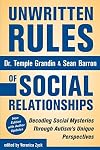
Unwritten Rules of Social Relationships: Decoding Social Mysteries Through the Unique Perspectives of Autism: New Edition with Author Updates by Temple Grandin
Autism makes social interactions a challenge for even high-functioning autistic people because those parts of our brains aren't wired quite the same as neurotypicals. We have to actively learn things that neurotypicals pick up naturally. And our parents and teachers don't necessarily have a good handle on how to do that.
This book features two famous and successful autistic people, Temple Grandin and Sean Barron (confession: I had never heard of Sean Barron, and had to Google him) talking show more about their own experiences, what they've learned, and ten "unwritten rules" of social relationships. Linking and amplifying some of the information in their contributions are commentary and explanatory notes by their editor, Veronica Zysk.
Grandin and Barron are two very different people, and their autism affected them in very different ways. (Common comment heard in discussions of autism: If you've met one person with autism, you've met one person with autism.)
Temple Grandin thinks in pictures, and approaches the world and its puzzles and problems in a very logical, analytical way. Sean Barron is very emotionally oriented, As a child, he approached the world in what he saw as a logical way, but when the world and other people didn't fall in line with his logic and his "rules," he would quickly be pushed into emotional meltdowns fueled by anger. Even though Grandin had more logical tools to apply, for much of the early part of her life she didn't have enough information and images in her mind about social interactions and social relationships to come up with the right solutions. This was true despite her mother being very aware of her needs, and sensitive to when she was going into sensory overload, and getting her to a quiet place when that happened. She also very systematically taught Temple basic manners, appropriate behavior, the art of small talk. These things, and the firm insistence that, autistic or not autistic, everyone is responsible for their own behavior, She still had a hard time, but she had some structure to work with. Like Sean Barron, she had to work on controlling her anger--and that's something I had to work on, too. It's frustrating beyond words, when you think you've followed all the rules, and it doesn't produce the expected results.
Sean Barron, because he was much more emotional in his reactions overall, and possibly because his mother perhaps didn't understand his meltdowns and their triggers as well, had a much harder time learning appropriate behavior and managing to comply with it. One of the aspects he talks about most is not understanding the importance of taking some basic care with his appearance--showers, combed hair, appropriate choice of clothing and making sure your clothing is arranged appropriately.
I found Temple Grandin's contributions far more relatable than Sean Barron's, but that's because I found her experience of being autistic much more like my own. That isn't true for everyone; there will be many for whom Sean Barron's experiences will be far more familiar and relatable. That's part of the value of this book. By including both sets of experiences, more people will find enough to connect with that this book will be useful and helpful for them.
After the first portion of the book, introducing Grandin's and Barron's basic experiences and approaches, that latter part of the book takes each of the ten "unwritten rules" in turn, presenting the rules themselves and the two authors' experiences in mastering the lessons embodied in each rule. It's a useful, helpful approach, and enlightening for both autistic adults, and for parents and teachers working with autistic children.
It's also important to note that this revised edition contains in each section additional comments from Grandin and Barrion, written in 2017, for this edition. It updates and further strengthens the book.
Recommended.
I bought this book. show less
This book features two famous and successful autistic people, Temple Grandin and Sean Barron (confession: I had never heard of Sean Barron, and had to Google him) talking show more about their own experiences, what they've learned, and ten "unwritten rules" of social relationships. Linking and amplifying some of the information in their contributions are commentary and explanatory notes by their editor, Veronica Zysk.
Grandin and Barron are two very different people, and their autism affected them in very different ways. (Common comment heard in discussions of autism: If you've met one person with autism, you've met one person with autism.)
Temple Grandin thinks in pictures, and approaches the world and its puzzles and problems in a very logical, analytical way. Sean Barron is very emotionally oriented, As a child, he approached the world in what he saw as a logical way, but when the world and other people didn't fall in line with his logic and his "rules," he would quickly be pushed into emotional meltdowns fueled by anger. Even though Grandin had more logical tools to apply, for much of the early part of her life she didn't have enough information and images in her mind about social interactions and social relationships to come up with the right solutions. This was true despite her mother being very aware of her needs, and sensitive to when she was going into sensory overload, and getting her to a quiet place when that happened. She also very systematically taught Temple basic manners, appropriate behavior, the art of small talk. These things, and the firm insistence that, autistic or not autistic, everyone is responsible for their own behavior, She still had a hard time, but she had some structure to work with. Like Sean Barron, she had to work on controlling her anger--and that's something I had to work on, too. It's frustrating beyond words, when you think you've followed all the rules, and it doesn't produce the expected results.
Sean Barron, because he was much more emotional in his reactions overall, and possibly because his mother perhaps didn't understand his meltdowns and their triggers as well, had a much harder time learning appropriate behavior and managing to comply with it. One of the aspects he talks about most is not understanding the importance of taking some basic care with his appearance--showers, combed hair, appropriate choice of clothing and making sure your clothing is arranged appropriately.
I found Temple Grandin's contributions far more relatable than Sean Barron's, but that's because I found her experience of being autistic much more like my own. That isn't true for everyone; there will be many for whom Sean Barron's experiences will be far more familiar and relatable. That's part of the value of this book. By including both sets of experiences, more people will find enough to connect with that this book will be useful and helpful for them.
After the first portion of the book, introducing Grandin's and Barron's basic experiences and approaches, that latter part of the book takes each of the ten "unwritten rules" in turn, presenting the rules themselves and the two authors' experiences in mastering the lessons embodied in each rule. It's a useful, helpful approach, and enlightening for both autistic adults, and for parents and teachers working with autistic children.
It's also important to note that this revised edition contains in each section additional comments from Grandin and Barrion, written in 2017, for this edition. It updates and further strengthens the book.
Recommended.
I bought this book. show less
The Unwritten Rules of Social Relationships: Decoding Social Mysteries Through the Unique Perspectives of Autism by Temple Grandin
I'm not sure I actually know anyone who is unequivocally 'neurotypical.' Just about everyone I know could benefit from the wisdom in this rich book. It's much more than a handbook, as it also has lots of illustrative examples from Temple and Sean's lives. It even includes some anecdotes from other people with ASD" and "Aspies" (Temple's terms). It also mentions some specific programs that are being used in therapy and in special ed., and it has a brief bibliography.
Fascinating & helpful to show more me, myself, very helpful to me as a parent of a young man with a mental illness that has not been correctly diagnosed yet but which, in many ways, resembles the social disorder aspect of people w/ ASD, and definitely helpful to families who are directly affected. I think many of them would want to buy the book, because a person struggling to learn social more's is likely to need a lot of repetition, practice, exposure and re-exposure, and discussion... which the authors make clear here. (For example, even though Sean had been told that he's autistic, and even though his mom worked hard with him, he didn't *realize* that he was autistic until age 17, when he saw the movie "Son Rise." So, repeated discussions & stories of others' experiences are key.)
On the other hand, I can just type some brief notes here to remind me of what I learned:
1. Rules are Not Absolute. They are Situation-based and People-based. (This is one my son has trouble with. He's always saying, "Mom, you said....")
2. Not Everything is Equally Important in the Grand Scheme of Things. (I sometimes lose track of this somewhat.)
3., 4.,5.,6.,7. ... (we know pretty well; and I don't want to violate intention of copyright)
8. Know When You're Turning People Off. (I really cannot figure that out with any confidence until the damage has been done. Concrete examples of a bored listener's behavior are given.)
9. "Fitting In" is Often Tied to Looking and Sounding like You Fit in. (Not always easy for either me or my son.)
10. People are Responsible for Their Own Behaviors. (My son and I both have to remind ourselves of that often, and of its corollary that it's not up to us to change others' behaviors.)
"My mother often explained to me that 'the skill set for childhood is not anything like the skill set for adulthood," contributes "Jennifer."
Imipramine is good for both anger management and insomnia. If I can ever get my son to go to a Dr., I'll ask about that.
Anger management is part of #10, which goes on to these points, which are the last tips before the epilogues.
1. ... Sensory oversensitivity can make school or office environment highly stressful.
2. ... All behavior is communication.
Distinguish between I can't... and I won't....
...
4. (from earlier in the book) Social skills will not provide the ASD individual with desires for social r'ships or with emotional connectedness. All are different.
....
So, anyway, yes, good book. Maybe not the best, I don't know others, if you do plz comment, but I do recommend this.
" show less
Fascinating & helpful to show more me, myself, very helpful to me as a parent of a young man with a mental illness that has not been correctly diagnosed yet but which, in many ways, resembles the social disorder aspect of people w/ ASD, and definitely helpful to families who are directly affected. I think many of them would want to buy the book, because a person struggling to learn social more's is likely to need a lot of repetition, practice, exposure and re-exposure, and discussion... which the authors make clear here. (For example, even though Sean had been told that he's autistic, and even though his mom worked hard with him, he didn't *realize* that he was autistic until age 17, when he saw the movie "Son Rise." So, repeated discussions & stories of others' experiences are key.)
On the other hand, I can just type some brief notes here to remind me of what I learned:
1. Rules are Not Absolute. They are Situation-based and People-based. (This is one my son has trouble with. He's always saying, "Mom, you said....")
2. Not Everything is Equally Important in the Grand Scheme of Things. (I sometimes lose track of this somewhat.)
3., 4.,5.,6.,7. ... (we know pretty well; and I don't want to violate intention of copyright)
8. Know When You're Turning People Off. (I really cannot figure that out with any confidence until the damage has been done. Concrete examples of a bored listener's behavior are given.)
9. "Fitting In" is Often Tied to Looking and Sounding like You Fit in. (Not always easy for either me or my son.)
10. People are Responsible for Their Own Behaviors. (My son and I both have to remind ourselves of that often, and of its corollary that it's not up to us to change others' behaviors.)
"My mother often explained to me that 'the skill set for childhood is not anything like the skill set for adulthood," contributes "Jennifer."
Imipramine is good for both anger management and insomnia. If I can ever get my son to go to a Dr., I'll ask about that.
Anger management is part of #10, which goes on to these points, which are the last tips before the epilogues.
1. ... Sensory oversensitivity can make school or office environment highly stressful.
2. ... All behavior is communication.
Distinguish between I can't... and I won't....
...
4. (from earlier in the book) Social skills will not provide the ASD individual with desires for social r'ships or with emotional connectedness. All are different.
....
So, anyway, yes, good book. Maybe not the best, I don't know others, if you do plz comment, but I do recommend this.
" show less
This book tells us what the world looks like through the eyes of two autists with very different styles of autism. It also includes tips on how to handle different aspects of autism.
It has clearly been written for autists and their caregivers and therefore has a bit much jargon for my taste (e.g. Aspies, neurotypicals).
It has definitely taught me a lot about autism, especially what it means in daily life, in what aspects autists are very much like other people and in what aspects they are show more mind-bogglingly alien. However, unlike the subtitle suggests, it does not really tell us anything about nonautists that we don't already know.
I enjoyed reading it but I don't think I will reread. However, if you are, work with or know autists, I recommend it. show less
It has clearly been written for autists and their caregivers and therefore has a bit much jargon for my taste (e.g. Aspies, neurotypicals).
It has definitely taught me a lot about autism, especially what it means in daily life, in what aspects autists are very much like other people and in what aspects they are show more mind-bogglingly alien. However, unlike the subtitle suggests, it does not really tell us anything about nonautists that we don't already know.
I enjoyed reading it but I don't think I will reread. However, if you are, work with or know autists, I recommend it. show less
The Unwritten Rules of Social Relationships: Decoding Social Mysteries Through the Unique Perspectives of Autism by Temple Grandin
A fascinating look at the rules of interaction that neurotypicals know by instinct or nonverbal learning but autistics have to puzzle out by effort.
I'm particularly struck by Grandin's comments about today's social environment vs. the environment she grew up in.
I'm particularly struck by Grandin's comments about today's social environment vs. the environment she grew up in.
Lists
You May Also Like
Associated Authors
Statistics
- Works
- 2
- Also by
- 1
- Members
- 317
- Popularity
- #74,564
- Rating
- 3.7
- Reviews
- 8
- ISBNs
- 7
- Languages
- 1