
Allan Sekula (1951–2013)
Author of Fish Story
About the Author
Image credit: Allan Sekula - Photo of the artist
Works by Allan Sekula
Associated Works
Tagged
Common Knowledge
- Birthdate
- 1951
- Date of death
- 2013-08-10
- Gender
- male
Members
Reviews
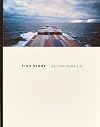
Catalog of a photographic exhibition held at Witte de With, center for contemporary art, Rotterdam, January 21-December 3, 1995; Fotografiska Museet in Moderna Museet, Stockholm, May 6-August 27, 1995; Tramway, Glasgow, October 6-November 12, 1995; and Le Channel, Scene nationale and Musee des beaux arts et de la dentelle, Calais, December 16, 1995-February 25, 1996. Includes Benjamin H. D. Buchloh's "Allan Sekula: photography between discourse and document" (p. 189-200). Completed between show more 1989 and 1995, Fish Story allowed Allan Sekula to pursue throughout his career a contemporary "critical realism" to reach its most complex articulation. Fish Story reconstructed a realistic model of photographic representation, while taking a critical stance towards traditional documentary photography. It also marked the first sustained exploration of the ocean by Sekula as a key space for globalization. A key issue in Fish Story is the link between the transport of containerized cargo and the increasing internationalization of the global industrial economy, with its effects on the real social space of ports. The ambition of Fish Story lies both in its immense complexity and global reach, and in its energetic challenge to the prevailing climate of postmodern theory and practice of the late 1980s and early 1990s. Fish Story occupies a central place in a gradual change, still nascent in the early 1990s, from a widespread culture of resignation and cynicism to a culture of renewed radical engagement in the art world show less

The exhibition Walker Evans and Dan Graham took place at Witte de With and the Museum Boijmans Van Beuningen in Rotterdam. The two artists were considered simultaneously, yet separately, in order to bring attention to their similarities without hiding their differences.
American artists Walker Evans (1903-1975) and Dan Graham (1942) are separated by several generations as well as by the institutional divisions of art culture. Evans, considered one of the modern masters of photography, created show more the core of his oeuvre in the thirties. Graham belongs to the generation of conceptual artists which appeared at the end of the sixties. Both utilized photography to document and analyze architecture, urban life, and vernacular culture.
Walker Evans photographed American urban culture. In series such as American Photographs (1938), he systematically documented the archetypes and stereotypes of urban architecture, taking a special interest in the signs of the city and of commerce, and their violent hold on the environment. His work, documentary in style, resists commercial compromise as well as utopian and nationalist Modernism, aiming instead at sober, straightforward registrations.
Evans’s photography is related to the critical work Graham started in the sixties. Graham wished to return Pop Art to its place of origin, the media, and to synchronize artistic activity with its critical reception, and thus to identify the art object with its social production, where formalist doctrine tended to isolate it in a strict autonomy, carefully distanced from the sphere of media. The result was Homes for America, a photo essay published in Arts Magazine in 1966. In this work, the commentary is not a secondary reflection on a separate artwork; the work and the commentary are copresent in a single space of perception, which is that of information.
Graham’s photojournalism is indebted to Evans’s vision of America, with which he, like most artists of his generation, was very familiar. In Evans’s American Photographs, he recognized the paradigms of suburban urbanism: standardized houses, the architecture of commerce and communication in its mechanized form, common to the industrial world, and in its vernacular aspect specific to America. The very nature of the descriptive value of these images allows the assumption that Graham’s critical distance regarding conceptual art is analogous to the distance which Evans took from the documentary photography which was being practiced in his time.
The exhibition at Witte de With presented Dan Graham’s photographic work from 1965-1991, as well as his pavilion Interior Design for Space Showing Videotapes (1986). The exhibition at Museum Boijmans Van Beuningen showed photographs by Walker Evans from 1928-1968.
Exhibition catalogue published in conjunction with show held at the Witte de With Center for Contemporary Art, and at the Museum Boymans-van Beuningen, both in Rotterdam, The Netherlands, August 29 - October 11, 1992. Traveled to the Musée Cantini, Marseille, France, November 6, 1992 - January 10, 1993 ; to the Westfälisches Landesmuseum für Kunst and Kulturgeschichte, Münster, Germany, January 31 - March 21, 1993 ; Whitney Museum of American Art, New York, December 17, 1993 - March 17, 1994. Essays by Jean-François Chevrier, Allan Sekula, and Benjamin H.D. Buchloh. Includes chronologies and selected bibliographies. Text in English, German, French, and Dutch. show less
American artists Walker Evans (1903-1975) and Dan Graham (1942) are separated by several generations as well as by the institutional divisions of art culture. Evans, considered one of the modern masters of photography, created show more the core of his oeuvre in the thirties. Graham belongs to the generation of conceptual artists which appeared at the end of the sixties. Both utilized photography to document and analyze architecture, urban life, and vernacular culture.
Walker Evans photographed American urban culture. In series such as American Photographs (1938), he systematically documented the archetypes and stereotypes of urban architecture, taking a special interest in the signs of the city and of commerce, and their violent hold on the environment. His work, documentary in style, resists commercial compromise as well as utopian and nationalist Modernism, aiming instead at sober, straightforward registrations.
Evans’s photography is related to the critical work Graham started in the sixties. Graham wished to return Pop Art to its place of origin, the media, and to synchronize artistic activity with its critical reception, and thus to identify the art object with its social production, where formalist doctrine tended to isolate it in a strict autonomy, carefully distanced from the sphere of media. The result was Homes for America, a photo essay published in Arts Magazine in 1966. In this work, the commentary is not a secondary reflection on a separate artwork; the work and the commentary are copresent in a single space of perception, which is that of information.
Graham’s photojournalism is indebted to Evans’s vision of America, with which he, like most artists of his generation, was very familiar. In Evans’s American Photographs, he recognized the paradigms of suburban urbanism: standardized houses, the architecture of commerce and communication in its mechanized form, common to the industrial world, and in its vernacular aspect specific to America. The very nature of the descriptive value of these images allows the assumption that Graham’s critical distance regarding conceptual art is analogous to the distance which Evans took from the documentary photography which was being practiced in his time.
The exhibition at Witte de With presented Dan Graham’s photographic work from 1965-1991, as well as his pavilion Interior Design for Space Showing Videotapes (1986). The exhibition at Museum Boijmans Van Beuningen showed photographs by Walker Evans from 1928-1968.
Exhibition catalogue published in conjunction with show held at the Witte de With Center for Contemporary Art, and at the Museum Boymans-van Beuningen, both in Rotterdam, The Netherlands, August 29 - October 11, 1992. Traveled to the Musée Cantini, Marseille, France, November 6, 1992 - January 10, 1993 ; to the Westfälisches Landesmuseum für Kunst and Kulturgeschichte, Münster, Germany, January 31 - March 21, 1993 ; Whitney Museum of American Art, New York, December 17, 1993 - March 17, 1994. Essays by Jean-François Chevrier, Allan Sekula, and Benjamin H.D. Buchloh. Includes chronologies and selected bibliographies. Text in English, German, French, and Dutch. show less
Lists
You May Also Like
Associated Authors
Statistics
- Works
- 17
- Also by
- 3
- Members
- 169
- Popularity
- #126,056
- Rating
- 3.9
- Reviews
- 2
- ISBNs
- 27
- Languages
- 5