
Robert C. Bartlett
Author of Masters of Greek Thought: Plato, Socrates, and Aristotle
About the Author
Robert C. Bartlett is an assistant professor in the Department of Political Science at Emory University in Atlanta, Georgia.
Works by Robert C. Bartlett
The Shorter Socratic Writings: "Apology of Socrates to the Jury," "Oeconomicus," and "Symposium" (1996) — Editor — 51 copies, 2 reviews
Action and Contemplation: Studies in the Moral and Political Thought of Aristotle (1999) — Editor — 9 copies
The Socratic Revolution 1 copy
Socrates and His Heirs 1 copy
Associated Works
Tagged
Common Knowledge
Members
Reviews
The Shorter Socratic Writings: "Apology of Socrates to the Jury," "Oeconomicus," and "Symposium" by Xenophon
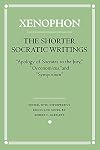
As presented by Xenophon, Socrates is a man who knows he is the smartest guy in the room but disguises it from those who don’t know him well. When asked at the symposium to join in telling the party what he is best at or proudest of, Socrates answers, not philosophy, but pimping, by which he seems to mean introducing people to one another. He always has more than one item on his agenda. When he discusses farming in the Oeconomicus, he is interested not only in how to run a farm but also in show more the nature of what it means to be a gentleman and the nature of goodness.
His interrogators seldom understand his irony. In the Apology, when he is asked why he chooses death over some of the other punishments he might ask for, he says that he wants to die before he has to put up with the pains of old age. Kill me now because old age sucks is not a serious argument, but Socrates is the only one in the room who seems to know that.
Bisexual eroticism also stands out in Xenophon’s version of the Symposium. Most of the guests, including Socrates, seem equally turned on by boys and girls, but in the end, everyone except Socrates goes home to play with their wives and girlfriends. Socrates is not anxious to go home to Xantippe, his difficult wife. He heads out into the night alone.
I wish I had read these pieces when I first encountered Socrates in Plato. show less
His interrogators seldom understand his irony. In the Apology, when he is asked why he chooses death over some of the other punishments he might ask for, he says that he wants to die before he has to put up with the pains of old age. Kill me now because old age sucks is not a serious argument, but Socrates is the only one in the room who seems to know that.
Bisexual eroticism also stands out in Xenophon’s version of the Symposium. Most of the guests, including Socrates, seem equally turned on by boys and girls, but in the end, everyone except Socrates goes home to play with their wives and girlfriends. Socrates is not anxious to go home to Xantippe, his difficult wife. He heads out into the night alone.
I wish I had read these pieces when I first encountered Socrates in Plato. show less

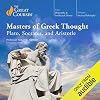
In this 36 lecture series, Dr. Robert Bartlett of Boston College examines the ethical and political philosophy of Socrates, Plato, and Aristotle. He focuses on Plato's Republic, The Trial of Socrates, Aristotle's Nichomean Ethics, and Politics. He is an excellent lecturer, skilled at making abstract concepts accessible.
I haven't grappled with Greek philosophy since my undergraduate days, before my career's start. Nevertheless, I find it interesting to reexamine notions of human virtue and " show more ideal" political systems looking back and reflecting on my experiences. I wish I had saved my undergraduate papers! show less
I haven't grappled with Greek philosophy since my undergraduate days, before my career's start. Nevertheless, I find it interesting to reexamine notions of human virtue and " show more ideal" political systems looking back and reflecting on my experiences. I wish I had saved my undergraduate papers! show less
Philosophy and Human Affairs
The course examined the thought of Socrates, Plato and Aristotle, with special emphasis in moral philosophy. The evolution of the socratic philosophy, through the works of Plato, is exposed, without any tentative to distinguish the ideas of both thinkers (In Plato's dialogues, what are Socrates's concepts and what are Plato's ideas?). The life and judgment of Socrates, his way of living and his thought about education and piety are well examined. Plato works and show more ideas are explained, with emphasis in the Republic. Aristotle is presented by the exposition of the Ethics and Politics. The author discuss the concept of virtue and good life in greek thought. This is an excellent course in Greek moral philosophy. show less
The course examined the thought of Socrates, Plato and Aristotle, with special emphasis in moral philosophy. The evolution of the socratic philosophy, through the works of Plato, is exposed, without any tentative to distinguish the ideas of both thinkers (In Plato's dialogues, what are Socrates's concepts and what are Plato's ideas?). The life and judgment of Socrates, his way of living and his thought about education and piety are well examined. Plato works and show more ideas are explained, with emphasis in the Republic. Aristotle is presented by the exposition of the Ethics and Politics. The author discuss the concept of virtue and good life in greek thought. This is an excellent course in Greek moral philosophy. show less

You May Also Like
Associated Authors
Statistics
- Works
- 13
- Also by
- 2
- Members
- 166
- Popularity
- #127,844
- Rating
- 3.9
- Reviews
- 4
- ISBNs
- 27