
Dmitri Shostakovich (1906–1975)
Author of Testimony: The Memoirs of Dmitri Shostakovich
About the Author
A child of Tsarist Russia and the Russian Revolution, Dmitri Shostakovich was born in St. Petersburg. Throughout his entire life, Shostakovich suffered from the effects of a childhood of malnutrition and disease. Despite such deprivation, he became a composer of powerful and advanced music. After show more studying music at the Leningrad Conservatory between 1919 and 1925, Shostakovich presented his First Symphony in 1925 to critical acclaim. In subsequent years he wrote 14 more symphonies, always attempting to follow the Communist party prescription to portray "Socialist Realism." For his efforts, however, Shostakovich was alternately reviled and hailed by the leadership of the Soviet Union. On his sixtieth birthday, he was finally honored as a Hero of Socialist Labor. Of his 15 symphonies, only the Fifth Symphony (1937) and the Tenth Symphony (1953) have gained a prominent place in concert repertoires. The Fifth Symphony is a masterpiece of symphonic composition and follows traditional symphonic construction in its movements. In the Tenth Symphony, Shostakovich introduced musical elements that he also incorporated into other compositions, notably the fifth and eighth string quartets and his concertos for violin and cello. Shostakovich wrote ballets, such as The Golden Age (1930). Many of his other works were also choreographed as ballets. He also composed an opera, Lady Macbeth of the District of Mtsensk (1930--32). Although it was condemned by Soviet authorities, who considered it full of "Western decadence," it enjoyed some success outside the Soviet Union. Shostakovich's music is remarkably consistent in style, technique, and emotional content. (Bowker Author Biography) show less
Image credit: Office of War Information, 1942
Series
Works by Dmitri Shostakovich
Shostakovich : Symphony No. 7 in C Major Op. 60, "Leningrad" [sound recording] (2005) 78 copies, 1 review
Shostakovich : Symphony no.5 in D minor, Op.47 [sound recording] (1989) — Composer — 61 copies, 1 review
Shostakovich : Symphony No. 8 in C minor, Op. 65 [sound recording] (2001) — Composer — 53 copies, 1 review
Shostakovich : Symphony No. 4 in C minor, Op. 43 [sound recording] (1990) — Composer; Composer — 49 copies
Shostakovich : Symphony no.11 in G minor, Op.103 'The Year 1905' [sound recording] (2009) — Composer — 42 copies, 1 review
Symphony No. 5 in D minor, Op. 47 + Symphony No. 9 in E-flat major, Op. 70 [sound recording] (2000) — Composer — 30 copies
Story of a Friendship: The Letters of Dmitry Shostakovich to Isaak Glikman, 1941-1975 (1993) 25 copies, 1 review
Shostakovich : Violin Concertos Nos. 1 & 2 [sound recording] (1990) — Composer — 21 copies, 1 review
Cello concerto no.1 in E flat major, Op. 107 + Cello concerto no.2 in G major, Op.126 [sound recording] (1996) — Composer — 16 copies
Prokofiev: Violin Concerto No. 1 / Shostakovich: Violin Concerto No. 1 [sound recording] (1994) — Composer — 12 copies
Shostakovich : Bolt : Suite from the ballet, Op.27a + Jazz suite no.1 + Jazz suite no.2 + Tahiti Trot, Op.16 [sound recording] (2002) — Composer — 11 copies
Cello Concerto No. 1 in E flat Major Op. 107 ; Violin Concerto No. 1 in A minor Op. 99 [recording] (1998) 9 copies
Piano Concerto No. 1 Op. 35; Piano Concerto No. 2 Op. 102; Piano Quintet in G minor Op. 57 [recording] (1999) 8 copies
Shostakovich : Symphony no.1 in F minor, Op.10 + Symphony no.5 in D minor, Op.47 [full score] (2000) — Composer — 8 copies
Shostakovich : Symphony no.1 in F minor, Op.10 + Symphony no.9 in E flat major, Op.70 [sound recording] (1990) — Composer — 7 copies, 1 review
Symphony no.1 in F minor, Op.10 + Symphony no.7 in C major, Op.60 'Leningrad' [sound recording] (2001) — Composer — 7 copies
Shostakovich : Cello concerto no.1 in E-flat major, Op.107 + Symphony no.5 in D minor, Op.47 [sound recording] (2006) — Composer — 7 copies, 1 review
Symphony No. 12 in D minor Op. 112, "The Year 1917" ; Hamlet Suite; The Age of Gold Suite [recording] (1991) 7 copies
New collected works of Dmitri Shostakovich : Volume 05 : Symphony no.5 in D minor, Op.47 : Full Score (2004) — Composer — 6 copies
Piano Trio No. 1 in C minor Op. 8; Piano Trio No. 2 in E minor Op. 67; Seven Romances Op. 127 [recording] (1997) 6 copies
Shostakovich : Piano concerto no.1 in C minor, Op.35 + Piano concerto no.2 in F major, Op.102 + Symphony no.1 in F minor, Op.10 [sound recording] (2003) — Composer — 6 copies
Shostakovich : Cello concerto no.1 in E flat major, Op.107 + Symphony no.1 in F major, Op.10 [sound recording] (1983) — Composer — 6 copies
Prokofiev : Violin concerto no.2 in G minor, Op.63 + Shostakovich : Violin concerto no.2 in C-sharp minor, Op.129 [sound recording] (1997) — Composer — 6 copies
Cheryomushki [sound recording] 6 copies
Shostakovich : Symphony no.1 in F minor, Op.10 + Symphony no.6 in B minor, Op.54 [sound recording] (1994) — Composer — 5 copies
Dances of the Dolls 5 copies
Shostakovich: Piano Concertos Nos. 1 & 2 / Shchedrin: Piano Concerto No. 2 [sound recording] (2003) — Composer — 5 copies
Easier Works: Piano Solo (Piano Collection) (Schirmer's Library of Musical Classics) (1999) 5 copies
Shostakovich : Symphony no.1 in F minor, Op.10 + Symphony no.3 in E flat major, Op.20 'The First of May' [sound recording] (2001) 4 copies
Mussorgsky : Songs and dances of death + Shostakovich : Symphony no.14 {sound recording} (1993) — Composer; Composer — 4 copies
Popov : Symphony no.1, Op.7 + Shostakovich : Theme & variations, Op.3 [sound recording] (2004) — Composer — 4 copies
Shostakovich: String Quartet, No. 8 4 copies
Symphony No. 14 Op. 135 [score] 4 copies
The Execution of Stepan Razin, poem for bass, chorus, and orchestra, op. 119 ; Symphony No. 9 in B-flat major, op. 70 (1967) 4 copies
Piano Concerto No. 1 Op. 35; Piano Concerto No. 2 Op. 102; Piano Sonata No. 2 in B minor Op. 61 [recording] (1993) 3 copies
Shostakovich : Symphony no.11 in G minor, Op.103 'The Year 1905' [miniature score] — Composer — 3 copies
Music to the film Hamlet after Shakespeare for orchestra, Op.116 + Symphony no.5 in D minor, Op.47 [sound recording] (1980) — Composer — 3 copies
Richter : The Authorised Recordings. Scriabin, Prokofiev, Shostakovich [sound recording] (1994) — Composer — 3 copies
Shostakovich : Chamber symphonies 1 - 5 [sound recording] — Composer — 3 copies
Shostakovich : Age of gold, Op.22 : Polka + Ballet suite no.1 {excerpts} + Ballet Suite no.2 {excerpts} + Festive overture, Op.96 + The Gadfly {suite}, Op.97a {excerpts} + Moskow… — Composer — 3 copies
Ten Aphorisms Op. 13 [piano score] 3 copies
Piano Concerto no.2 + Symphony no.5 in D minor, Op.47 [sound recording] (1997) — Composer — 3 copies
String Quartet No. 15. Score. 3 copies
Shostakovich : 24 Preludes & Fugues, Op. 87 — Composer — 3 copies
Gubaidulina : Rejoice! For violin & cello + Shostakovich : String quartet no.15, Op.144 [sound recording] (1989) — Composer — 3 copies
Shostakovich : Festive Overture in A major, Op.96 + Symphony no.5 in D minor, Op.47 [sound recording] (2010) — Composer — 3 copies
Piano Concerto No. 1 Op. 35; Piano Concerto No. 2 Op. 102; The Assault on Beautiful Gorky [recording] (1988) 3 copies
Prokofiev & Shostakovich : Violin Concertos No. 1 — Composer — 3 copies
String Quartets Vol. I (Nos. 1-4) 3 copies
Rachmaninov : Sonata for violoncello and piano + Shostakovich : Concerto for violoncello and orchestra no.1 [sound recording] (2012) — Composer — 2 copies
Prokofiev : Ballet "Stone Flower" : Waltz + Sonata for violincello and piano, Op.119 + Shostakovich : Sonata for violincello and piano, Op.40 + Stravinsky : Pulcinella : Suite… (2005) — Composer — 2 copies
Symphony no.1 in F minor, Op.10 + Symphony no.5 in D minor, Op.47 [sound recording] (2006) — Composer — 2 copies
Shostakovich : Symphony no.10 in E minor, op.93 {sound recording} {Karajan/Berlin Philharmonic} (2007) — Composer — 2 copies
Shostakovich: Concerto For Piano, Trumpet And String Orchestra, Op. 35 / Haydn: Concerto For Piano And Orchestra In D Major, Hob. XVIII:11 (1995) 2 copies
Violin Concerto No. 1 in A minor Op. 77; Piano Concerto No. 2 in F Major Op. 102 [recording] (1990) 2 copies
Shostokovich: Cello Concerto No. 1 / Kabalevsky: Cello Concerto No. 1 [audio recording] — Composer — 2 copies
CD11 SHOSTAKOVICH - SYMPHONIES 2 copies
Prokofiev : The love for three oranges, Op.33 + Shostakovich : Symphony no.5 in D minor, Op.47 [sound recording] — Composer — 2 copies
Theodore Kuchar : Dvořák + Shostakovich + Smetana + Nielsen {sound recording} (2019) — Composer — 2 copies
Simfonii The complete symphonies 2 copies
Shostakovich : Chamber Symphony for Strings, Op.110a + Symphony no.5 in D minor, Op.47 [sound recording] (2005) — Composer — 2 copies
Mstislav Rostropovich Conducts 2 copies
Mussorgsky : Songs and dances of death + Shostakovich : Symphony no.10 in E minor, op.93 {sound recording) (2000) — Composer, Arranger — 2 copies
Shostakovich : Piano concerto no.1 in C minor, Op.35 + Piano concerto no.2 in F major, Op.102 + Symphony no.9 [sound recording] (2012) 2 copies
New collected works of Dmitri Shostakovich : Volume 01 : Symphony no.1 in F minor, Op.10 : Full Score (2002) 2 copies
Symphony 13 2 copies
Shostakovich : Symphony no.1 in F minor, Op.10 + Stravinsky : Rite of Spring [sound recording] — Composer — 2 copies
Preludes, piano, op. 34 2 copies
Chamber music. Selections 2 copies
Symphony no. 7 "Leningrad" 2 copies
Shostakovich : Chamber symphony, Op.110a + Piano concerto no.1 in C minor, Op.35 [sound recording] (1992) 2 copies
Shostakovich : Symphony no.1 in F minor, Op.10 + Symphony no.15 in A major, Op.141 [sound recording] — Composer — 2 copies
The Nose / Le nez [programme book] 2 copies
Shostakovich : The Cello Concertos 2 copies
Shostakovich : Symphony no.1 in F minor, Op.10 + Symphony no.2 in B major, Op.14 'To October' + Symphony no.3 in E flat major, Op.20 'The first of May' [sound recording] — Composer — 2 copies, 1 review
Shostakovich: Piano Concertos, 3 Fantastic Dances, 5 Preludes and Fugues/Shostakovich, Cluytens (2003) 2 copies
Jazz & Ballet Suites: Film Music 2 copies
Symphonies nos. 4 & 10 2 copies
Shostakovich : Symphony no.5 & more favourites [sound recording] — Composer — 2 copies
Best of Motion Picture Scores 2 copies
Shostakovich : Symphonies No. 2 "To October" & No. 15 [sound recording] (2012) — Composer — 2 copies
Shostakovich : Chamber symphony, Op.110a + Piano concerto no.1 in C minor, Op.35 + 7 Preludes, Op.34 [sound recording] — Composer — 2 copies
Symphonie Nr. 9 ES-DUR Op.70 1 copy
Complete Piano Sonatas 1 copy
Katerina Ismailova 1 copy
Satires ( Pictures of the Past) on verses by Sasha Chorny ,5 romances for Voice & Piano Op. 109 1 copy
String Quartet No. 4 1 copy
String Quartets No. 1-4 1 copy
Piano concertos nos. 1 & 2 1 copy
Katerina Izmailova 1 copy
String Quartets Nos.1-5 V 1 copy
5th symphony op.47 1 copy
Katerina Ismailowa 1 copy
Trios Nos.1 & 2 1 copy
Moskva, Cheremushki 1 copy
Wieszczy ptak Gamajun 1 copy
The Gamblers 1 copy
The Nose / Le nez 1 copy
Sinfonie Nr. 9 1 copy
Shotakovich: Cmte Symphonies 1 copy
Konzert Nr. 1 für Violoncello und Orchester op. 107 = Concerto No. 1 for violoncello and orchestra 1 copy
The Gamblers 1 copy
Symphonie n° 2, en si majeur, op. 14 'À Octobre' ; Symphonie n° 11, en sol mineur, op. 103 'L'Année 1905' (2010) 1 copy
Symphonie n° 3, en mi bémol majeur, op. 20 'Le 1er mai' ; Symphonie n° 10, en mi mineur, op. 93 (2011) 1 copy
La Demoiselle et le Voyou 1 copy
Intégrale des Symphonies 1 copy
Symphonie n° 9, en mi bémol majeur, op. 70 ; Concerto pour violon et orchestre n°1, en la mineur, op. 77 (2015) 1 copy
24 preludes. Opus 34 1 copy
BBC Proms 2025 : Ravel's Piano Concerto for the Left Hand : Sunday 20 July 2025 {sound recording} (2025) — Composer — 1 copy
Music for Two Pianos: Rachmaninov - Debussy - Bizet - Arensky - Khachaturian - Shostakovich [sound recording] — Composer — 1 copy
Prokofiev : Symphony no.5 + Rachmaninov : Isle of the dead, Op.29 + Symphony no.3 + Vocalise + Shostakovich : Symphony no.9 [sound recording] — Composer — 1 copy
Beethoven : Symphony no.1 in C major, op.21 + Shostakovich : Symphony no.1 in F minor, op.10 [sound recording] — Composer — 1 copy
Janáček: Sinfonietta & Taras Bulba Rhapsody / Shostakovich: Suite from The Age of Gold [sound recording] — Composer — 1 copy
Shostakovich-The Collection 1 copy
BBC Proms 2025 : Ravel's Piano Concerto for the Left Hand {video recording} (2025) — Composer — 1 copy
Prokofiev: Violin Concertos & Sonatas / Shostakovich: Piano Trio No. 2 [sound recording] (2005) — Composer — 1 copy
Brahms:Symphony No.3/4 1 copy
Festive Overture 1 copy
Shostakovich plays Shostakovich - Piano Concerto No.1 & 2, Concertino for Two Pianos, Piano Trio No.2 - Dmitry Shostakovich (2001) 1 copy
Treasures of Russian Chamber Music [sound recording] — Composer — 1 copy
The Greatest Violin Concertos: Bruch - Shostakovich - Glazunov - Mendelssohn - Nielsen - Prokofiev - Sibelius - Tchaikovsky [sound recording] — Composer — 1 copy
Prokofiev : Symphony concertante for cello + Shostakovich : Cello concerto no.1 in E flat major, Op.107 [sound recording] — Composer — 1 copy
Songs by Russian Composers [1980, Christoff, Ghiuselev] — composer — 1 copy
Fifth symphony : op.47 1 copy
Khrennikov : Symphony no.1 in B flat major, Op.4 + Shostakovich : Symphony no.1 in F minor, Op.10 [sound recording] — Composer — 1 copy
Bloch : Schelomo + Cesti : Tu Mancavi A Tormentarmi, Crudelissma Speranza + Gabrieli : Sonata Pian' E Forte + Shostakovich : Lady Macbeth Of Mzensk : Entr'acte + Prelude and… — Composer — 1 copy
Janáček - Prokofiev - Shostakovich: Works for Cello and Piano [sound recording] (1996) — Composer — 1 copy
Britten: Four Sea Interludes + Haydn: Symphony No.104 + Shostakovich: Symphony no.1 in F minor, Op.10 [sound recording] (2006) — Composer — 1 copy
Prokofiev : Piano concerto no.3 in C major, Op.26 + Shostakovich : no 2 [sound recording] — Composer — 1 copy
Beethoven + Chopin + Haydn + Liszt : Piano concerto no.1 in E-flat major, S.124 + Mendelssohn + Prokofiev : Concerto no.3 In C major, Op.26 + Ravel + Schumann + Shostakovich +… (2009) — Composer — 1 copy
Children's Pieces 1 copy
Sonate pour piano n° 2, en ré mineur, op. 14 [Prokofiev] ; Piano-Rag-Music [Stravinsky] ; Prélude et fugue, en mi bémol majeur, op. 87 n° 19 [Chostakovitch] ; Prélude et… — Composer — 1 copy
Prokofiev / Shostakovich: Violin Concertos — Composer — 1 copy
Ravel: Bolero / Rimsky-Korsakov: Song of India / Prokofiev: Scenes from Romeo & Juliet / Shotakovich: Romance from the Suite 'Gadfly' [sound recording] (1993) — Composer — 1 copy, 1 review
Mussorgsky : Pictures at an exhibition + Shostakovich : Preludes Op.34 [sound recording] — Composer — 1 copy
New Collected Works [score] 1 copy
Song cycles 1 copy
Puppet dances : for piano 1 copy
Danses Fantastiques 1 copy
Symphony at the Opera 1 copy
String Quartets Vol.4 1 copy
Shostakovich : Symphony no.5 in D minor Op.47 : Finale [catch-all] — Composer — 1 copy
Klavierkompositionen 1 copy
Symphony 6/12 1 copy
Quartet No. 4 (4 parts) 1 copy
Jazz music 1 copy
Quartet No. 11 (4 parts) 1 copy
Symphony No. 13 1 copy
Duet from "King Lear" 1 copy
Shostakovich Piano Music whole tone piano library (2009) ISBN: 4111611249 [Japanese Import] (1991) 1 copy
Воспоминания 1 copy
Violin Concerto Op. 99 1 copy
Quintet in G minor, Op. 57 1 copy
Festival overture, op. 96 1 copy
Piano Sonata 1 - 24 Preludes 1 copy
String Quartet No. 1 in C major Op. 49 (1935), String Quartet No. 2 in A Major Op. 68, String Quartet No. 4 in D Major Op. 82 1 copy, 1 review
String Quartet No. 3 in F major Op. 73, Two Pieces for String Octet Op.11, Piano Quintet in G Minor Op. 57 1 copy, 1 review
String Quartet No. 5 in B-flat major Op. 92, String Quartet No. 6 in G Major Op. 101, String Quartet No. 7 in F-Sharp Minor Op. 108 1 copy, 1 review
String Quartet No. 8 in C Minor Op. 110, String Quartet No. 9 in E-Flat Major Op. 117, String Quartet No. 10 in A-Flat Major Op. 118 1 copy, 1 review
String Quartet No. 11 in F Minor Op. 122, String Quartet No. 12 in D-Flat Major Op.133 1 copy, 1 review
Shostakovich plays Shostakovich - Piano Concerto No.1 & 2, Concertino for Two Pianos, Piano Trio No.2 - Dmitry Shostakovich (2001) 1 copy
Symphony no. 5, op. 47 1 copy
The nose opera 1 copy
The Golden Age, Op.22 + Symphony no.5 in D minor, Op.47 [sound recording] (1996) — Composer — 1 copy
Festive Overture in A major, Op. 96 + Symphony No. 5 in D minor, Op.47 + Orchestral Works [sound recording] — Composer — 1 copy
André Rieu - Valses 1 copy
Suite for Jazz Orchestra No. 2 + Symphony No. 5 in D minor, Op.47 [sound recording] (2008) — Composer — 1 copy
Katerina Ismailova : opera in four acts and nine scenes : op 29/114 ; English version Edward Downes 1 copy
Puppentänze 1 copy
24 Präludien opus 34 1 copy
Early piano works. 1 copy
Shostakovich : Jazz suite no.1 + Jazz suite no.2 + Symphony no.11 in G minor, Op.103 'The Year 1905' + Tahiti Trot, Op.16 [sound recording] (1997) — Composer — 1 copy
Piano Quintet 1 copy
Symphony No. 12, Op. 112 1 copy
Cello Concertos Nos. 1 & 2 - Piano Trio No. 1 - String Quartet No. 3 - Cello Sonata - Piano Concerto 1 copy
BBC Proms 2021 : Prom 17 : Víkingur Ólafsson plays Bach and Mozart [sound recording] (2021) — Composer — 1 copy
Piano concerto No. 1 op. 35 1 copy
BBC Proms 2018 : Prom 04 : Shostakovich’s ‘Leningrad’ Symphony [sound recording] (2018) — Composer — 1 copy
BBC Proms 2019 : Prom 22 : Rachmaninov, Shostakovich & Outi Tarkiainen [sound recording] (2019) — Composer — 1 copy
BBC Proms 2019 : Prom 42 : Clara Schumann Piano Concerto [sound recording] (2019) — Composer — 1 copy
BBC Proms 2007 : Prom 48 : Simon Bolivar National Youth Orchestra of Venezuela [video recording] (2007) — Composer — 1 copy
BBC Proms 2020 : Prom 14 : Paavo Järvi conducts the Philharmonia Orchestra [sound recording] (2020) — Composer — 1 copy
BBC Proms 2020 : Prom 14 : Paavo Järvi conducts the Philharmonia Orchestra [video recording] (2020) — Composer — 1 copy
BBC Proms 2021 : Prom 43 : Mahler’s 5th Symphony conducted by Mark Wigglesworth [sound recording] (2021) — Composer — 1 copy
BBC Proms 2019 : Prom 15 : Bavarian Radio Symphony Orchestra : 1 [sound recording] (2019) — Composer — 1 copy
String Quartet No. 6 Op. 101 1 copy
Symphony No. 5 1 copy
Symphonie N 7 Leningrad 1 copy
Shostakovich: Jazz Suites [Hybrid SACD] — Composer — 1 copy
Shostakovich: Piano Quintet; Piano Trio No. 2; Waltzes / Schoenberg: Ode to Napoleon; Verklarte Nacht; Kammersymphonie Nr. 1 (2000) 1 copy
Waltz no. 2 1 copy
Piano Concertos Nos. 1 and 2 / String Quartet No. 8, arranged for piano [sound recording] — Composer — 1 copy
"The popular" Schostakowitsch: Jazz-Suite & Highlights aus Symphonien & Konzerten — Composer — 1 copy
A dark century — Composer — 1 copy
An International Triumph 1 copy
Shostakovich : Festive overture, Op.96 + Symphony no.1 in F minor, Op.10 [sound recording] — Composer — 1 copy
Jazz Suite No.1 1 copy
Childhood Notebook 1 copy
Shostakovich : Symphony no.10 + Stravinsky : Violin concerto [sound recording] (2004) — Composer — 1 copy
Shostakovich : Five fragments, for small orchestra, Op.42 + Symphony no.5 in D minor, Op.47 [sound recording] — Composer — 1 copy
Streichquartette Nr. 14, 15 opp. 142 u. 144 / Zwei Stücke f. Streichqu. op. 36 // Prazak Quartett 1 copy
Shostakovich: Piano Trio, No. 2, Op. 67 / Messiaen: Quatuor pour la fin du temps [sound recording] — Composer — 1 copy
Shostakovich: 3 Duets 1 copy
Testimony: The Memoirs of Dmitri Shostakovich — Author — 1 copy
Seven romances on verses by Alexander Blok ; Satires ; Lady Macbeth of Mtsensk (Act I, Scene 3) ; Songs and dances of death (2004) 1 copy
Shostakovich: Hypothetically Murdered, Four Pushkin Romances, Five Fragments, Jazz Suite no. 1 (1993) 1 copy
Jazz & Ballet Suites. Film Music: CD 1: Suite for variety orchestra No. 1 (Jazz Suite No. 2). Overture on Russian and Kirghiz Themes op. 115. Jazz Suite No. 1. Novorossijsk… — Composer — 1 copy
Moskva, Cheremushki : [CD] 1 copy
Shostakovich : Symphony no.5 in D minor, Op.47 + Stravinsky : Rite of Spring [sound recording] 1 copy
Shostakovich : Golden age {Ballet suite} + Piano concerto no.1 in C minor, Op.35 + Symphony no.1 in F minor, Op.10 [sound recording] — Composer — 1 copy
Shostakovich : Symphony no.5 in D minor, Op.47 + Tchaikovsky : Francesca da Rimini [sound recording] (1997) — Composer — 1 copy
New collected works of Dmitri Shostakovich : Volume 39 : Piano concerto no.1 in C minor, Op.35 : Piano Score — Composer — 1 copy
New collected works of Dmitri Shostakovich : Volume 38 : Piano concerto no.1 in C minor, Op.35 : Full Score — Composer — 1 copy
New collected works of Dmitri Shostakovich : Volume 10 : Symphony no.10 in E minor, Op.93 : Full Score — Composer — 1 copy
Shostakovich : Festive Overture + Symphony no.1 in F minor, Op.10 + Symphony no.6 in B minor, Op.54 [sound recording] — Composer — 1 copy
The Moscow Sessions 1 copy
Symphony No. 3, op. 20 1 copy
Romanzen-Suite, op. 127 1 copy
Prelude in Eb Minor 1 copy
Shostakovich: Piano Concertos Nos. 1 & 2; Poulenc: Concerto for Two Pianos (Bernstein Royal Edition No. 80 of 100) (1993) 1 copy
24 Preludes for Piano Op. 34 1 copy
Shostakovich : Adventures of Korzinkina, Op.59 + Two choruses after A. Davidenko, Op.124 + Piano concerto no.1 in C minor, Op. 35 + Symphony no.9 in E flat major, Op.70 [sound… (2006) — Composer — 1 copy
Piano & Cello Concertos 1 copy
Symphony no.1 in F minor, Op.10 [sound recording] — Composer — 1 copy
Dmitri Shostakovich plays 1 copy
Shostakovich : Symphony no.5 in D minor, Op.47 + Symphony No.10 in E minor Op.93 [sound recording] — Composer — 1 copy
Theater Music 1 copy
Shostakovich : Symphony no.10 in E minor, op.93 {score : study} {HPS 687} — Composer — 1 copy
The Bolt [DVD] 1 copy
The Golden Age [DVD] 1 copy
Cello Sonata Op. 40. Part: Fratres. Prokofiev: Cello Sonata Op. 119/Boeckheler (cello), Starr (pn) 1 copy
Piano Trio No. 2 in E minor Op. 67; Tchaikovsky's Piano Trio in A minor Op. 50 [recording] — Composer — 1 copy
Shostakovich : Jazz suite + Piano concerto no.1 in C minor, Op.35 + Symphony no.1 in F minor, Op.10 + Symphony no.5 in D minor, Op.47 [sound recording] — Composer — 1 copy
New collected works of Dmitri Shostakovich : Volume 20 : Symphony no.5 in D minor, Op.47 : 2 Pianos 4 Hands Score — Composer — 1 copy
New collected works of Dmitri Shostakovich : Volume 42 : Violin concerto no.1 in A minor, Op.99 : Full Score — Composer — 1 copy
New collected works of Dmitri Shostakovich : Volume 98 : Trios no.1 & 2 — Composer — 1 copy
New collected works of Dmitri Shostakovich : Volume 33 : Suite for Variety Orchestra : Full Score 1 copy
String quartets 1-15 1 copy
Symphony No.2, Op.14 "To October" / Symphony No.3, Op.20 "The First of May" / Suite from "The Bolt", Op.27a (2003) 1 copy
Shostakovich : Symphonies 4-9 [sound recording] — Composer — 1 copy
Shostakovich: Symphony #10, Ballet Suite #4 — Composer — 1 copy
Symphony No. 11 in G minor Op. 103, "The Year 1905" ; Barber's Adagio for Strings [recording] 1 copy
Suite Op.6 - Merry March 1 copy
Five Preludes [piano score] 1 copy
Sonata No.2 Op.61 1 copy
Shostakovich & Kabalevsky: Cello Sonatas / Prokofiev: Ballade [sound recording] (2019) — Composer — 1 copy
D Shostakovich - String Quartet No. 3, Piano Quintet (P Anderszewski & Belcea Quartet) [24-44] 1 copy
D Shostakovich - Twenty-Four Preludes & Piano Quintet (M Lifits & Szymanowski Quartet) (24-96) 1 copy
D Shostakovich - String Quartets & Piano Quintet in G Minor (M Roscoe & Sorrel Quartet) (1999-2005) 1 copy
Shostakovich: Twenty-Four Preludes, Op. 34 / Auerbach: Arcanum [sound recording] — Composer — 1 copy
Gadfly / Counterplan — Composer — 1 copy
Shostakovich : Symphonies Nos. 1 & 6 — Composer — 1 copy
Piano Quintet / Trio No. 1 / Five Pieces [sound recording] — Composer — 1 copy
Preludes & Fugues (24) 1 copy
Symphonies 5 & 9 1 copy
Sonata No. 1, Op. 12 1 copy
Complete Symphonies [2009-15, Tabakov] — Composer — 1 copy
Symphony No.5 Op. 47 1 copy
VLN Cons 1 & 2 1 copy
Concertino Op. 94 1 copy
El canto de los bosques 1 copy
String Quartet No. 6 1 copy
Sinfonia n.1 op.10 1 copy
Symphony No. 10, op. 93 1 copy
Suite f. Varieté-Orchester (nach 1955) / Jazz-Suite Nr. 1 (1934) / Ouvertüre auf russische und kirghisische Themen op. 115 / Novorossijsk Chimes (1960) / Festouvertüre op. 96… — Composer — 1 copy
Festive Overture 1 copy
Symphony No. 5, Op. 47 1 copy
Symphony No. 5 Opus 47 1 copy
Shostakovich Symphony No.11 1 copy
Sym 7 1 copy
Russian Cello Sonatas 1 copy
Shostakovich: Symphonies Nos. 1 & 10 / Concerto for Piano, Trumpet & Strings / Mussorgsky: Songs & Dances of Death (2002) 1 copy
Symphony No.2 & No.10 1 copy
Symphony No.14, Op.135 1 copy
Piano Trio in E Minor, Op.67 1 copy
String quartet No.8, Op.110 1 copy
Song of the Forests op.81 1 copy
Associated Works
The Music of Cosmos: Selections from the Score of the Television Series "Cosmos" by Carl Sagan (2000) — Composer — 9 copies
The Sound of The Academy — Composer — 7 copies
Khachaturian : Gayne Ballet + Shostakovich : Symphony no.5 in D minor, Op.47 [sound recording] (2000) — Composer — 3 copies
Odna [1931 film] — Composer — 3 copies
Shostakovich - Cello Concerto Nos.1 & 2, Satires (Pictures of the Past) - Mstislav Rostropovich (2001) — Composer — 2 copies
Let's Dance [sound recording] — Composer — 2 copies
Shostakovich : Symphony no.5 in D minor, Op.47 + Symphony no.6 in B minor, Op.54 [sound recording] (2008) — Composer — 1 copy
Classical WETA Adagio: Volume Two — Composer — 1 copy
Mussorgsky : Night on Bare Mountain + Pictures at an exhibition + Songs and dances of death [sound recording] (2015) — Orchestration — 1 copy
Fair at Sorochyntsi : Hopak + Khovantchina : Prelude + Night on Bald Mountain + Pictures at an exhibition [sound recording] (2002) — Orchestration — 1 copy
Shostakovich : Cello concerto no.1 in E-flat major, Op.107 + Symphony no.2 in B major, Op.14 'To October' [sound recording] — Composer — 1 copy
Berlioz + Bizet + Chopin + Debussy + Dinicu + Dvořák + Khatchaturian + Mussorgsky + Offenbach + Rimsky-Korsakov : Scheherazade + Shostakovich {sound recording}… — Composer — 1 copy
Prayer [sound recording] — Composer — 1 copy
Tagged
Common Knowledge
- Canonical name
- Shostakovich, Dmitri
- Legal name
- Shostakovich, Dmitri Dmitriyevich
- Birthdate
- 1906-09-25
- Date of death
- 1975-08-09
- Gender
- male
- Education
- Petrograd Conservatory, Russia
- Occupations
- composer
pianist - Awards and honors
- Order of Lenin (1946 ∙ 1956 ∙ 1966)
American Academy of Arts and Letters (Foreign Honorary ∙ Music ∙ 1960)
Lenin Prize (1958)
Stalin Prize (1941 ∙ 1942 ∙ 1950 ∙ 1952)
Royal Academy of Science, Letters and Fine Arts of Belgium (1960)
Léonie Sonning Music Prize (1973) (show all 8)
Wihuri Sibelius Prize (1958)
Gold Medal of the Royal Philharmonic Society (1966) - Cause of death
- heart failure
- Nationality
- Russia
- Birthplace
- Saint Petersburg, Russia
- Places of residence
- Saint Petersburg, Russia
- Place of death
- Moscow, Russia, USSR
- Burial location
- Novodevichy Cemetery, Moscow, Russia
- Associated Place (for map)
- Russia
Members
Reviews
Testimony: The Memoirs of Dmitri Shostakovich, as related to and edited by Simon Volkov by Dmitri Shostakovich

A controversial book; doubt has been cast on the accuracy of Volkov's reporting. Certainly to me, the voice of Shostakovich that comes over is too jaundiced to be entirely credible; after all, Shostakovich was a child of the Bolshevik Revolution and held the values of those days very dear. Many Russian Communists did even though they were uneasy with the excesses of Stalin's rule, and Shostakovich was no different. None of this comes over in Volkov's rendition. After all, he was a volunteer show more fireman during the siege of Leningrad and had to be ordered to leave the city - these were the acts of a patriot, but no sense of this side of Shostakovich comes through.
I suspect Volkov may have been responsible for some very selective editing, taking out of Shostakovich's account anything that was at all complementary of the Soviet system and ideals. So I believe this is only a partial account of Shostakovich's life, filtered through the mind of someone with an agenda of their own.
++++++++++++++++++++++++++++++++++++++++++++++++++++++++++++++++++++++++++++++++++++++++
Postscript, November 2019: Ten years after I wrote the above review, the changes in the former Soviet Union have brought all manner of new material to light. They have also brought to light much about the USSR that we only suspected, and never knew directly. Russia is a hard country and it breeds hard people. Other, later reviewers here on LT have written from positions of greater knowledge; taking those writings on board and considering them in the light of what I have learnt in the past ten years changes my opinion of this book, to its detriment. My opinion of - and admiration for - Shostakovich remains unchanged. show less
I suspect Volkov may have been responsible for some very selective editing, taking out of Shostakovich's account anything that was at all complementary of the Soviet system and ideals. So I believe this is only a partial account of Shostakovich's life, filtered through the mind of someone with an agenda of their own.
++++++++++++++++++++++++++++++++++++++++++++++++++++++++++++++++++++++++++++++++++++++++
Postscript, November 2019: Ten years after I wrote the above review, the changes in the former Soviet Union have brought all manner of new material to light. They have also brought to light much about the USSR that we only suspected, and never knew directly. Russia is a hard country and it breeds hard people. Other, later reviewers here on LT have written from positions of greater knowledge; taking those writings on board and considering them in the light of what I have learnt in the past ten years changes my opinion of this book, to its detriment. My opinion of - and admiration for - Shostakovich remains unchanged. show less
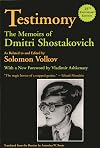
This book's been controversial since it was published in '79, 4 years after Shostakovich’s death. Some think it’s largely fabricated, others think it accurately represents the composer. The interviewer/author doesn’t do an exceptional job (e.g. there’s essentially nothing about Shostakovich’s family after his childhood), but if it’s substantially a fabrication, it’s pretty well done and pretty consistent. Regardless, it’s full of the tragedy and horror of life under Stalin, show more particularly as it affected the Soviet cultural elite, with many disturbing but interesting episodes. Surely the general gist is accurate.
More positively, it sheds a little light on Russian music from an important composer’s perspective, especially regarding Glazunov as an educator and also regarding Mussorgsky (if we trust these specifics). Nearly every paragraph is thick with a sarcasm that seems akin to the irony and sarcasm in Shostakovich’s music. Tragic as the material is, the sarcasm is often funny and occasionally hilarious. I haven’t seen the new Ashkenazy forward – I’d like to hear his take on the book. show less
More positively, it sheds a little light on Russian music from an important composer’s perspective, especially regarding Glazunov as an educator and also regarding Mussorgsky (if we trust these specifics). Nearly every paragraph is thick with a sarcasm that seems akin to the irony and sarcasm in Shostakovich’s music. Tragic as the material is, the sarcasm is often funny and occasionally hilarious. I haven’t seen the new Ashkenazy forward – I’d like to hear his take on the book. show less
As you my learn by reading more about the Author and this book, this is perhaps the greatest hoax in the history of anti-soviet propaganda, as well as an insult to the composer himself. Volkov said that Shostakovich dictated the material in the book at a series of meetings with him between 1971 and 1974. However, when challenged, Volkov refused to show any notes pertinent to is writings. As per Wiki's comments: The strongest criticisms of the book were raised by Laurel Fay first in 1980, show more then in 2002 (when she claimed to have finally managed to access an original manuscript of Testimony in Russian — which, in fact, is not the original manuscript, but a publishing house copy, which differs significantly from the real original manuscript).[citation needed] She found that passages at the beginning of eight of the chapters duplicate almost verbatim material from articles published as Shostakovich’s between 1932 and 1974. Volkov thus persuaded Shostakovich to sign each page containing the composer’s own material, before attaching to it fabricated material of Volkov’s own doing. A second argument against the book is that Volkov did not meet Shostakovich often enough to have received the material. Shostakovich’s widow, Irina, has stated that Volkov met him only three or four times. Regardless of Volkov, I ask myself why don't we look more in the politics of music at time of Beethoven, or never mention that Richard Strauss was a Nazi, that Beethoven was left poor and sick by the regime, and that Haydn was a dictator and "boss" of all musicians at his time? Is it because we don't have enough bad things to say about the USSR? I think we don't need to invent anything, just listen to his music and try to understand how human suffering can produce sublime art. As in Beethoven's last quartets or Mahler's last symphonies. There is good music and bad music. Bad music is very much influenced by the ruling class. Genius is not and never will. Some people, like Shosta, are above what we see and perceive, and this is why they are virtually immortal. I personally had the honor to meet him, I was 8, in 1965 and adults told me that he was the most private person, the most self-critical and modest musician, and a total loner. Did Stalin make him like this? If you think so, you are like the Stalinist who equated him (Stalin) to god. show less

The seventh symphony was one of Shostakovich’s most famous symphonies because of the circumstances that surrounded its composition. Some contemporary listeners (based on what I’ve read in the Shostakovich newsgroup) aren’t so keen on the music itself, but I quite like it.
It was mostly composed in Leningrad in 1941–2, when that city was under siege by the Germans during World War II. Its very composition and performance were hailed as a triumph of Soviet spirit in the face of terrible show more opposition. However, all is not necessarily as it seems (or, as the Soviet authorities wanted to see it). The symphony’s famous savagery (the march-theme in the first movement in particular, but in other places through-out the work) could just as easily be read as a depiction of the brutality of totalitarianism in general. Many now believe this to have been Shostakovich’s real intention.
The second movement of this symphony is one that particularly appeals to me. It starts out in quite a jaunty mood, with the strings playing quite a bouncy melody. However it quickly becomes rather melancholic with the entry of a solo oboe. It’s beautiful, sad and genuine. A little later a bassoon is heard, there is a brief bit of drama on the strings, and the oboe disappears. The strings play a pizzicato melody that doesn’t bode well and then suddenly the clarinets, sarky and interfering, latch onto what’s going on. They’re joined by the brass, and the flutes, and the whole tone of the movement has changed. Within just a short while, the tympani is pounding away and the whole thing is positively martial. This is not joyous music, but thrilling in a chilly, creepy sort of way. Eventually, the fit passes, and the first theme returns with a harp on top, but also with what I think is a bass clarinet murmuring underneath. It even gets to state the oboe’s theme once on its own, before the strings finish the movement. The original bounce is sort of there, but the rhythm is accentuated, and a little tenser.
"Meanwhile, in the first hot July days, I started on my Seventh Symphony, conceived as a musical embodiment of the supreme ideal of patriotic war. The work engrossed me completely. Neither the savage air-raids nor the grim atmosphere of a beleaguered city could hinder the flow of musical ideas. . . . I worked with an inhuman intensity. I continued to compose marches, songs, and film music, and attended to my organizational duties as chairman of the Leningrad Composers' Union, and then would return to my symphony as though I had never left it.
The first and longest movement bears a dramatic and (I would say) tragic character. [It] tells of the happy, peaceful life of a people confident in themselves and in their future. It is a simple life, such as was enjoyed by thousands of Leningrad's Popular Guards, by the whole city, by the whole country, before the war broke out. Then comes the War. I have made no attempt at naturalistic interpretation of the War by imitating booms of cannon, shell, explosions, etc. I tried to give an emotional image of the War. The reprise is a memorial march, or more correctly a requiem for the War's victims. Plain people pay tribute to the memory of their heroes. The requiem is followed by an even more tragic theme. I don't know how to describe it. Perhaps it is the tears of a mother, or even that feeling which comes when sorrow is so great that there are no more tears. These two lyrical fragments form the conclusion of the first part of the symphony. The closing chords resemble the din of distant battle, a reminder that the war continues.
The next two movements were intended as an intermezzo. They confirm life in opposition to war. I tried to express the thought that art, literature and science must advance in spite of war. It is, if you like, a polemic against the statement that "when the cannons roar the muse is silent."
The fourth movement is dedicated to our victory. It is an immediate continuation of the second and third movements, their logical outcome. It is the victory of light over darkness, wisdom over frenzy, lofty humanism over monstrous tyranny.
While I was working on this music, Leningrad was converted into an impregnable fortress. Fresh Popular Guard detachments were constantly being formed. The entire population learned the art of warfare, and it seemed that war had replaced all other affairs. I found, however, that that was not so, for one of my friends told me that all tickets for the Philharmonic concerts had been sold out. Indeed, at all these concerts I found the audience in high spirits and keenly responsive to our performance. My excitement at these concerts was something new, for I came to understand that music, like every art, is a genuine requirement of man.
On the whole I feel that the Seventh Symphony is an optimistic conception. As a composition it is closer to my Fifth Symphony than to my Sixth; it is a continuation of the emotions and mood of the Fifth Symphony". Shostakovich. show less
It was mostly composed in Leningrad in 1941–2, when that city was under siege by the Germans during World War II. Its very composition and performance were hailed as a triumph of Soviet spirit in the face of terrible show more opposition. However, all is not necessarily as it seems (or, as the Soviet authorities wanted to see it). The symphony’s famous savagery (the march-theme in the first movement in particular, but in other places through-out the work) could just as easily be read as a depiction of the brutality of totalitarianism in general. Many now believe this to have been Shostakovich’s real intention.
The second movement of this symphony is one that particularly appeals to me. It starts out in quite a jaunty mood, with the strings playing quite a bouncy melody. However it quickly becomes rather melancholic with the entry of a solo oboe. It’s beautiful, sad and genuine. A little later a bassoon is heard, there is a brief bit of drama on the strings, and the oboe disappears. The strings play a pizzicato melody that doesn’t bode well and then suddenly the clarinets, sarky and interfering, latch onto what’s going on. They’re joined by the brass, and the flutes, and the whole tone of the movement has changed. Within just a short while, the tympani is pounding away and the whole thing is positively martial. This is not joyous music, but thrilling in a chilly, creepy sort of way. Eventually, the fit passes, and the first theme returns with a harp on top, but also with what I think is a bass clarinet murmuring underneath. It even gets to state the oboe’s theme once on its own, before the strings finish the movement. The original bounce is sort of there, but the rhythm is accentuated, and a little tenser.
"Meanwhile, in the first hot July days, I started on my Seventh Symphony, conceived as a musical embodiment of the supreme ideal of patriotic war. The work engrossed me completely. Neither the savage air-raids nor the grim atmosphere of a beleaguered city could hinder the flow of musical ideas. . . . I worked with an inhuman intensity. I continued to compose marches, songs, and film music, and attended to my organizational duties as chairman of the Leningrad Composers' Union, and then would return to my symphony as though I had never left it.
The first and longest movement bears a dramatic and (I would say) tragic character. [It] tells of the happy, peaceful life of a people confident in themselves and in their future. It is a simple life, such as was enjoyed by thousands of Leningrad's Popular Guards, by the whole city, by the whole country, before the war broke out. Then comes the War. I have made no attempt at naturalistic interpretation of the War by imitating booms of cannon, shell, explosions, etc. I tried to give an emotional image of the War. The reprise is a memorial march, or more correctly a requiem for the War's victims. Plain people pay tribute to the memory of their heroes. The requiem is followed by an even more tragic theme. I don't know how to describe it. Perhaps it is the tears of a mother, or even that feeling which comes when sorrow is so great that there are no more tears. These two lyrical fragments form the conclusion of the first part of the symphony. The closing chords resemble the din of distant battle, a reminder that the war continues.
The next two movements were intended as an intermezzo. They confirm life in opposition to war. I tried to express the thought that art, literature and science must advance in spite of war. It is, if you like, a polemic against the statement that "when the cannons roar the muse is silent."
The fourth movement is dedicated to our victory. It is an immediate continuation of the second and third movements, their logical outcome. It is the victory of light over darkness, wisdom over frenzy, lofty humanism over monstrous tyranny.
While I was working on this music, Leningrad was converted into an impregnable fortress. Fresh Popular Guard detachments were constantly being formed. The entire population learned the art of warfare, and it seemed that war had replaced all other affairs. I found, however, that that was not so, for one of my friends told me that all tickets for the Philharmonic concerts had been sold out. Indeed, at all these concerts I found the audience in high spirits and keenly responsive to our performance. My excitement at these concerts was something new, for I came to understand that music, like every art, is a genuine requirement of man.
On the whole I feel that the Seventh Symphony is an optimistic conception. As a composition it is closer to my Fifth Symphony than to my Sixth; it is a continuation of the emotions and mood of the Fifth Symphony". Shostakovich. show less
Awards

You May Also Like


Associated Authors
Statistics
- Works
- 987
- Also by
- 28
- Members
- 2,618
- Popularity
- #9,804
- Rating
- 4.2
- Reviews
- 54
- ISBNs
- 111
- Languages
- 15
- Favorited
- 4

