
Béla Bartók (1881–1945)
Author of Mikrokosmos, Volume 1 [score]
About the Author
Bela Bartok, one of the outstanding composers of the twentieth century, was born in Hungary in 1881. When he was five years old, his mother began to teach him to play the piano. By the age of nine, he had begun to compose his own music. Between 1899 and 1903, he attended the Academy of Music in show more Budapest; in 1907 he was appointed professor of piano. Bartok's early compositions were complex and not well received by the public. In 1905 he turned his attention to collecting and cataloging the folk music of his native Hungary. With the help of his friend and fellow Hungarian, composer Zoltan Kodaly, Bartok produced a series of commentaries, anthologies, and arrangements of the folk music that he had collected. Bartok's interest in folk music had a profound effect on his compositions. The influence is seen in the unadorned power of his music, especially in the rhythmic drive of fast movements and in his use of folk melodies, rhythms, and harmonic patterns. Throughout his life, Bartok had to struggle to make a living. Yet he refused to teach musical composition, believing that this would inhibit his own composing. Instead, he earned a living teaching piano and performing. During the 1920s he traveled throughout Europe giving piano recitals, and, in 1927 and 1928, he made a concert tour of the United States. In 1940, after the outbreak of World War II, Bartok left Hungary to settle in the United States, where he continued to perform and compose music. Among his most famous compositions are the Mikrokosmos for piano (1926--27), Music for Strings, Percussion, and Celesta (1936), and Concerto for Orchestra (1943). Elizabeth Sprague Coolidge became his patron and supported him. Bartok died of leukemia in 1945. (Bowker Author Biography) show less
Image credit: Bartok in 1927. (Public domain; Wikipedia)
Series
Works by Béla Bartók
Boosey & Hawkes Masterworks Library : Bartók : Concerto for Orchestra {score : full + commentaries} (1997) 28 copies
Boulez Conducts Bartok: Concerto for Orchestra; Music for Strings, Percussion & Celesta (1936) 27 copies, 1 review
Piano Pieces for Children: 85 piano pieces without octaves for beginners, based on Hungarian and Slavonic children's and folk songs (1972) 25 copies, 1 review
Concerto for Orchestra / Music for Strings, Percussion and Celesta / Hungarian Sketches (sound recording) (1993) — Composer — 24 copies, 1 review
Prokofiev: Piano Concertos Nos. 1 & 3 / Bartok: Piano Concerto No. 3 [sound recording] (1998) — Composer — 17 copies
Barber : Prayers of Kierkegaard + Bartok : Cantata Profana + Vaughan Williams : Dona nobis pacem {sound recording} (1998) — Composer — 9 copies
Bartók : Music for Stringed Instruments, Percussion and Celeste {score : study} {UE34129} (2012) 7 copies
Bartók : Dance suite + Divertimento for string orchestra + Hungarian pictures + Two pictures {sound recording} {Boulez/Chicago Symphony} (2002) — Composer — 7 copies
Bartók: Bluebeard's Castle / Berg: Wozzeck, Three Excerpts [sound recording] (2009) — Composer — 6 copies
Album for the Young: Schirmer Library of Classics Volume 2000 Piano Solo (Schirmer's Library of Musical Classics) (1994) 5 copies
Bartok: Concerto for Violin & Orchestra No. 2 / Moret: En rêve [sound recording] (1992) — Composer — 5 copies
String Quartets Nos. 1 & 2 5 copies
Three Hungarian Folk Songs 5 copies
Bartók : Dance suite + Hungarian pictures + Two pictures + Romanian dance + Romanian folk dances {sound recording} {Fischer} (1991) 4 copies
Bartok : Music for Strings, Percussion and Celesta {score : study} {Philharmonia 201} (1937) 4 copies
The Master Pianist Plays Bach - Chopin - Liszt - Mozart - Grieg - Schumann - Bartók - Schubert [sound recording] (2008) — Composer — 4 copies
Bartók : Concerto for orchestra + Dance suite + Divertimento, Sz,113 + Hungarian sketches + Miraculous Mandrian suite + Music for strings, percussion & celeste + Romanian… (2002) — Composer — 4 copies
Forty Four Viola Duets - Transcribed by William Primrose - Volume II (Numbers 26-44) [sheet music] (1933) 4 copies
Bartok : Piano concerto no. 2 + Prokofiev : Piano Concerto no.3 in C major, Op.26 [sound recording] (2013) — Composer — 4 copies, 1 review
I. Konzert für Klavier und Orchester 4 copies
Magyar képek 4 copies
Sonate für 2 Klaviere und Schlagzeug [sound recording] = Sonata for 2 pianos and percussion 3 copies
Forty Four Viola Duets - Transcribed by William Primrose - Volume I (Numbers 1-25) [sheet music] (2006) 3 copies
Bartók : Concerto for orchestra, Sz.116 + Lutosławski : Concerto for orchestra [sound recording] (2001) — Composer — 3 copies
Divermento, SZ 113 / Music for Strings, Percussion & Célesta, SZ 106 / Popular Romanian Dances, SZ 56 [sound recording] (2008) — Composer — 3 copies
Bartók : Dance suite + Hungarian pictures + Miraculous Mandarin {complete ballet} {sound recording} {2005 Alsop} (2004) 3 copies
Bartók : Concerto for orchestra + Dance suite + Mikrokosmos : Bourrée + From the diary of a fly+ Two portraits {sound recording} {1958 Dorati} (1958) 3 copies
Bartók : Dance suite + Miraculous Mandarin {sound recording} {1972 Boulez} (1972) — Composer — 3 copies
18 duos aus/from 44 duos fur zwei violinen fur/for 2 violoncelli. (Universal edition no. 12850) 3 copies
Este a Szekelyeknel 3 copies
Ausgewählte Briefe 3 copies
Musical Cameos 3 copies
Masterworks Portrait- Bela Bartok Concerto for Orchestra- Sonata for Two Pianos and Percussion (1989) 3 copies
Bartok Plays Bartok 3 copies
Mikrokosmos - Vol. IV 3 copies
Bartók : Concerto for orchestra + Dance suite + Music for strings, percussion and celesta {sound recording} {Solti/Chicago Symphony} (1981) — Composer — 2 copies
Bartók : Concerto for orchestra + Dance suite + Divertimento for string orchestra + Hungarian pictures + Miraculous Mandarin suite + Music for strings, percussion and… (2004) — Composer — 2 copies
Bartók: Mikrokosmos for Children 2 copies
Bartók : Second Rhapsody for Violin and Orchestra {Revised 1944 Version} {score : study} {HPS 658} 2 copies
Bartók : Concerto for orchestra + Dance suite {sound recording} {Solti/Chicago Symphony} by Béla Bartók (1981) — Composer — 2 copies
Mikrokosmos, Volume 6 2 copies
Mikrokosmos, Volume 5 2 copies
Mikrokosmos, Volume 2 2 copies
Mikrokosmos, Volume 1 2 copies
Bach : Concerto BWV 1052 + Bartók : Piano concerto no.3 + Liszt : Piano concerto no.1 in E-flat major, S.124 [sound recording] (2003) — Composer — 2 copies
Bartók : The Hungarian Soul : CD15 : Piano Works : Dance suite {piano version} + En plein air +15 Hungarian peasant songs + Piano sonata {sound recording} {Béroff;… (2021) — Composer — 2 copies
Le Prince de bois, op. 13 2 copies
Concerto pour orchestre (Sz 116) 2 copies
Le Château de Barbe-Bleue [Bartok]; Ariane et Barbe-Bleue [Dukas] [L'Avant-scène Opéra 303] (2018) 2 copies
Kodály: Háry János Suite, Dances of Galánta & Marosszék Dances / Bartók: Hungarian Sketches & Roumanian Dances [sound recording] — Composer — 2 copies
Bartok: The Miraculous Mandarin Suite (complete) / Kodaly: Hary Janos Suite; Dances of Galanta 2 copies
Brahms: Violin Concerto / Bartók: Violin Concerto No.1 [sound recording] (2016) — Composer — 2 copies
Quintetto per 2 violini, viola, violoncello e pianoforte. A cura di Denijs Dille. [Score and parts.] (1970) 2 copies
Béla Bartók - Violin Concerto No. 2, Second Suite / Yehudi Menuhin, Antal Dorati, Minneapolis Symphony Orchestra (1995) 2 copies
Concerto pour orchestre : Musique pour cordes, percussion et célesta — Composer — 2 copies
Bartók: Rhapsody No. 1, BB94b; Deux Portraits, Op.5 / Kodaly: Dances from Galanta; Hary Janos Suite / Ligeti: Romanian Concerto (2010) 2 copies
Bartok: Concerto for Orchestra / The Miraculous Mandarin / Two Pictures (Essential Classics) 2 copies
Bartók: The 3 Piano Concertos 2 copies
Bartók : Dance Suite + Improvisations + Petite suite + Romanian Christmas carols + Romanian folk dances + Sonatina {sound recording} (1999) — Composer — 2 copies
Concertos: Concerto for Two Pianos, Percussion and Orchestra / Concerto for Violin and Orchestra no. 1 / Concerto for Viola and Orchestra (2009) — Composer — 2 copies
Bartók: Music for Strings, Percussion and Celesta / Divertimento for String Orchestra (2004) 2 copies
Bartók : Dance suite + The wooden prince {sound recording} {1972 Boulez/New York Philharmonic} (1972) — Composer — 2 copies
Bartók : Dance suite + Four pieces for orchestra + Two pictures {sound recording} {1988 Ferenc/Hungarian National Philharmonic Orchestra} (1988) — Composer — 2 copies
Sonata for Two Pianos and Percussion 2 copies
Piano music [sound recording] 2 copies
Yehudi Menuhin - Bartok: Violin Concerto Nos.1 & 2. Viola Concerto Etc. (2CDS) [Japan CD] TOCE-16258 [sound recording ct] (2012) 2 copies
Bartók : The Hungarian Soul : CD03 : Ballet & Orchestral Works : Dance suite + Miraculous Mandarin + Music for strings, percussion and celesta {sound recording}… (2021) — Composer — 2 copies
Cadenzas : [to] W.A. Mozart, Concerto for two pianos and orchestra in E major, K. 365 (2009) 2 copies
Bartok: Concerto for Orchestra 2 copies
El castillo de Barba Azul 1 copy
MIKROKOSMOS 1 PIANO 1 copy
18 Chorlieder - 1. Achtet auf das Licht! - Játék - choeur de femmes ou choeur d'enfants (SA) - Partition de choeur - C 43783 (1978) 1 copy
Grosse Komponisten - Bartók 1 copy
Mikrokosmos: Volume II 1 copy
Bartok (The Miraculous Mandarin; Hungarian, Rumanian and Transylvanian songs, sketches and dances) 1 copy
Mikrokosmos, Volume 3 1 copy
Mikrokosmos, Volume 4 1 copy
Bartok/Britten 1 copy
Rhapsody Op. 1 1 copy
18 Duos for Two Flutes 1 copy
An Evening in the Village 1 copy
Bartók : Concerto for orchestra + Dance suite {sound recording} {Haitink} — Composer — 1 copy
Hungarian Folksongs with Hungarian words for voice and piano, Béla Bartók & Zoltán Kodály (1970) 1 copy
Bartók : Concerto for orchestra + Dance suite + Miraculous Mandarin suite {sound recording} {Solti/LSO} — Composer — 1 copy
Béla Bartók , Stephen Bishop - Mikrokosmos Vol. 6 / Out Of Doors / Sonatina - Philips - 6500 013 1 copy
Viola Concerto, Op. posth. 1 copy
Allegro barbaro - piano solo - Urtext - score - (HN 1400) (English, German and French Edition) 1 copy
String Quartet No. 2 1 copy
Bear-Dance (Bärentanz) 1 copy
Evening In the Country 1 copy
The Miraculous Mandarin / Hungarian Sketches / Suite No. 1 / Music for Strings, Percussion and Celesta / Rhapsody for Piano and Orchestra — Composer — 1 copy
Bartók: Piano Works 1 copy
Bluebeard's Castle 1 copy
Béla Bartók - Gebundeld 1 copy
Suite for two pianos, op. 4b 1 copy
Music for piano 1 copy
Bartók : Divertimento 1 copy
Folk Inspirations: Bartók - Enescu - Weiner [sound recording] — Composer — 1 copy
"Meet the Composer" 1 copy
10 leichte Klavierstücke 1 copy
B Bartók - Bluebeard's Castle (J Relyea, M DeYoung, E Gardner-Bergen Philharmonic Orchestra) [HD] 1 copy
Bartók : Divertimento + Britten : Simple Symphony + Stravinsky : Concerto in D major + Walton : Henry V : Passacaglia : Death Of Falstaff + Touch her soft lips and part… (1993) — Composer — 1 copy
Le Mandarin merveilleux : suite [Bartok] ; Concerto pour piano et orchestre n° 3 [Bartok] ; L'Oiseau de feu [Stravinsky] ; Roméo et Juliette, suite n° 2 : Montaigus et Capulets… (2016) — Composer — 1 copy
Pour les enfants 1 copy
Le Château de Barbe-Bleue ; Concerto pour piano et orchestre n° 3 ; Le Mandarin merveilleux : suite (2004) 1 copy
Hungarian Heritage 1 copy
Five Songs, op. 16 1 copy
Ritual Dance 1 copy
Bartok: Concerto for violin and orchestra, op. posth / Two rhapsodies for violin and orchestra 1 copy
Three Patterns in Tone 1 copy
Music for Strings, Percussion and Celesta, Sz. 106, Divertimento For String Orchestra, Sz. 113 1 copy, 1 review
Four slovak folksongs 1 copy
Le Château de Barbe Bleue [Bartok] ; Ariane et Barbe Bleue [Dukas] [L'Avant-scène Opéra 149-150] (1992) 1 copy
Piano Concertos 1 copy
Bartók : Contrasts + Dance suite + Rumanian Folk Dances + String quartet no.6 {sound recording} (2002) 1 copy
Concerto Violin 1/2 1 copy
Ensemble Incanto 1 copy
Songs 1 copy
The 100 Greatest Recordings of All Time: "Legendary Chamber Music Performances I"; Record #90A&B 1 copy
Piano Concertos Nos. 1 & 3 1 copy
Dance suite : for orchestra 1 copy
Negy Sirato Enek 1 copy
V. Streichquartett - Viola 1 copy
Bartok: Piano Music 1 copy
Bartók : Divertimento + Stravinsky : Rite of spring + Violin concerto [sound recording] (2009) — Composer — 1 copy
Zubin Mehta & Los Angeles Philharmonic: Dvořák - Mozart - Bartók [video recording] — Composer — 1 copy
Hungarian Music for Cello & Piano [sound recording] — Composer — 1 copy
The Fine Arts Quartet at WFMT: Unreleased Recordings of Broadcast Performances, 1967-73 [sound recording] (2013) — Composer — 1 copy
Contrasts: Mozart - Schumann - Brahms - Bartók - Rechtman [sound recording] — Composer — 1 copy
10 leichte Klavierstücke 1 copy
Bartok, Selected Works for the Piano, Vol. 1741 (Schirmer's Library of Musical Classics) (1939) 1 copy
Bartok by Heart 1 copy
Szymanowski Violin Concerto No 1; Bartok Violin Concerto No. 1 ; Hindemith: Violin Concerto (Urania) 1 copy
Bartok Plays Bartok 1 copy
Schoenberg: Verklärte Nacht (Transfigured Night) / Veress / Bartok: Divertimento, Sz. 113 ~ Camerata Bern / Zehetmair (2001) 1 copy
The 6 String Quartets 1 copy
SOLI - Works for Solo Violin 1 copy
Five Pieces for Younger Orchestras from "For Children"-Book 1 — Composer — 1 copy
44 Duos Book 2 1 copy
Bartók Béla kézírása, szerk 1 copy
Bartók : Rhapsody no.1 + Dvořák: Cello concerto + Elgar : Cello concerto in E minor, Op.85 [sound recording] (2002) — Composer — 1 copy
44 Duos Vol. 2 1 copy
44 Duos Vol. 1 1 copy
Evening in the Country 1 copy
44 Viola Duets 1 copy
Bartók : Concerto for orchestra + Dance suite + Music for strings, percussion and celesta + Piano concerto no.3 + Romanian folk dances + Two portraits {sound recording}… (1964) — Composer — 1 copy
Bartók : Piano Works 1 copy
Two Fantasies 1 copy
Divertemento 1 copy
Solo Piano Works 1 copy
Solo Piano Vol. 1 1 copy
For Children. Volume I: Based on Hungarian Folk Tunes, Volume II: Based on Slovakian Folk Tunes 1 copy
Rumanian Christmas Carols 1 copy
Works for Violin and Piano, Vol. 1: Sonatas and Rhapsodies [💿] — Composer — 1 copy
Violin Concerto No.2 sz 112 1 copy
Piano concertos no. 1 and 2 [Bartók] ; Three movements from Petrushka [Stravinsky] (sound recording) 1 copy
Hertog Blauwbaards Burcht 1 copy
Bach & Beyond Part 2 1 copy
Piano Works 1 copy
Bartok: Violin Concerto (1938), The Berlin Philharmonic Orchestra, Tibor Varga, Ferenc Fricsay 1 copy
Dialogue 1 copy
Bartók : Sonata for two pianos and percussion + Brahms : Variations on a theme by Joseph Haydn [sound recording] — Composer — 1 copy
99 Bartók-levél 1 copy
For Children (cd) 1 copy
Hungarian Sketches: An Evening In The Village, Bear Dance, Melody, Slightly Tipsy, Swineherd's Dance 1 copy
Bartók : Concerto for orchestra + Janáček : Sinfonietta + Lutoslawski : Concerto for orchestra + Stravinsky : The Firebird [sound recording] — Composer — 1 copy
Le château de barbe-bleue 1 copy
Mikrokosmos Piano Solo v.5 1 copy
Schiff plays Bartók (CD) 1 copy
Allegro Barbaro Piano Solo 1 copy
Mikrokosmos Piano Solo v.4 1 copy
Rumänische Weihnachtslieder 1 copy
Sketches For Piano 1 copy
Seven Sketches, Op. 9 1 copy
Selected Work for the Piano 1 copy
Petite Suite Piano Solo 1 copy
Hungarian Peasant Songs 1 copy
Bartók : Violin concerto no.1, Sz..36, BB48a + Sibelius : Violin concerto in D minor, Op.47 [sound recording] — Composer — 1 copy
Four Dirges Piano Solo 1 copy
2 Images Op. 10 1 copy
Mikrokosmos Piano Solo v.3 1 copy
Der Junge Bartok II 1 copy
Mikrokosmos Piano Solo v.1 1 copy
Mikrokosmos Piano Solo v.2 1 copy
Sonatina Piano Solo 1 copy
Suite Opus 14 piano solo 1 copy
Ten Pieces for Children 1 copy
Three Rondos Piano Solo 1 copy
Musique de la vie 1 copy
Bartók : Concerto For Orchestra + Music For Strings, Percussion And Celesta {sound recording} 1 copy
Bartok : Music for Strings, Percussion and Celesta {score : study} {mismatched publication/cover} 1 copy
Bartók: The Miraculous Mandarin Suite / Kodály: Peacock Variations / Hindemith: Symphonic Metamorphosis / Schönberg: Five Pieces for Orchestra [sound recording] — Composer — 1 copy
Klavierkonzert Nr. 3 / For children Vol. 1, 40 Übungen // Julius Katchen, Ansermet, Géza Anda 1 copy
Studies Opus 18 piano solo 1 copy
Out Of Doors Piano Solo c.1 1 copy
Tanz - Suite für Orchester 1 copy
Album Zongorara for piano 1 copy
Three Burlesques Opus 8c 1 copy
2 Roumanian Dances Op. 8a 1 copy
Violin sonatas 1, 2, SZ 75, 76, Sonata for Solo Violin, SZ 117, Christian Tetzlaff, Leif Ove Andsnes 1 copy
Out of Doors Piano Solo c.2 1 copy
Bartók : Concerto for orchestra + Dance suite + Petite suite {piano versions} {sound recording} {Sandor} (1987) — Composer, Arranger — 1 copy
String quartets (complete) 1 copy
Quartets i concert piano 1 copy
Dances of Transylvania 1 copy
Bartók Piano Collection Book 1 - The Definitive Bartók Edition - piano - sheet music with CD - (BH 13198) (2016) 1 copy
Bartok : Deux Images pour orchestre + Stravinsky : The fairy's kiss {1950 version} {sound recording} — Composer — 1 copy
The Fine Arts Quartet 1 copy
Fünf Stücke: aus "Mikrokosmos". Streichquartett. Studienpartitur. (Hawkes Pocket Scores) (1956) 1 copy
Violin Concerto 2 1 copy
Sonate pour violon & piano n°2 Sz 76 / Rhapsodies Sz 86 & Sz 89 / Six Danses populaires roumaines Sz 56 [Import anglais] (2000) 1 copy
Second Suite for Orchestra 1 copy
String Quartets Nos. 1 & 2, Opp. 7 & 17 [sound recording] — Composer — 1 copy
Bartók*: Concierto Para Orquesta / Concierto Para Violín - Clásica El Pais – 17 [CD] 1 copy, 1 review
Bartók - The Miraculous Mandarin, Suite No. 2, Hungarian Peasant Songs / BBC Scottish Symphony Orchestra, Thomas Dausgaard (2021) 1 copy
The Hungarian soul : ballet & orchestral works : Divertimenti for strings, Concerto for orchestra 1 copy
Bartok: The Piano Concertos 1 copy
Bartók - Violin Concerto No. 2, Solo Sonata / Christian Tetzlaff, The London Philharmonic, Michael Gielen (1991) 1 copy
Herzog Blaubarts Burg Op. 11 1 copy
Rumanian Dance + Violin Concerto + The Wooden Prince Suite [sound recording] — Composer — 1 copy
Sonate pour piano n° 2, en ré mineur, op. 14 [Prokofiev] ; Piano-Rag-Music [Stravinsky] ; Prélude et fugue, en mi bémol majeur, op. 87 n° 19 [Chostakovitch] ; Prélude et… — Composer — 1 copy
Bartok: The Miraculous Mandarin for Two Pianos / Sonata for Two Pianos and Percussion [sound recording ct] (2007) 1 copy
The Hungarian soul : Piano works : Mikrokosmos (conclusion),; Violin works : Solo violin sonata 1 copy
3 Burlesques Allegro Barbaro 1 copy
Associated Works
Carnival of the Animals [special edition book & audio recording] — Composer — 2 copies
Let's Dance [sound recording] — Composer — 2 copies
Bartok: Works for Two Pnos — Composer — 1 copy
Bartok: Concerti for piano, nos. 1, 2, 3 / Rhapsody for piano and orchestra, op. 1 — Composer — 1 copy
Anne-Sophie Mutter Back To The Future — Composer — 1 copy
Dudley Moore Introduces Concerto! [sound recording] — Composer — 1 copy
Classical Discoveries II [sound recording] — Composer — 1 copy
Portraits: Nordgren - Bruch - Bartók - Sallinen - Rautavaara - Grieg - Jalkanen [sound recording] (2013) — Composer — 1 copy
Tagged
Common Knowledge
- Canonical name
- Bartók, Béla
- Other names
- Bartók, Béla Viktor János
- Birthdate
- 1881-03-25
- Date of death
- 1945-09-26
- Gender
- male
- Education
- Royal Academy of Music, Budapest
- Occupations
- composer
pianist
ethnomusicologist - Organizations
- Sonntagskreis
- Relationships
- Kodály, Zoltán (friend, co-author)
- Nationality
- Hungary
USA (naturalized 1945) - Birthplace
- Nagyszentmiklós, Kingdom of Hungary (now Romania)
- Places of residence
- Nagyszőlős, Austria-Hungary (today Vinogradiv, Ukraine)
Pozsony, Autria-Hungary (today Bratislava, Slovakia)
Budapest, Hungary - Place of death
- New York, New York, USA
Members
Reviews
[Concertos, piano, orchestra. Sound recording] Konzerte fur Klavier und Orchester Nos. 1-3 [sound recording] by Béla Bartók

Peerless performances of these three concerti (if you need all three). The emancipation of rhythm and dissonance here does not obscure the classical foundations of these works. Pay no attention to Nevile Cardus!!

Bartok is the only classical composer of this century that I love. The opening movement of the concerto explains why,
DG Concerts 2006|2007-Live from Walt Disney Concert Hall, LA Philharmonic | Gustavo Dudamel, Bartók | Concerto for Orchestra by Béla Bartók
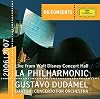
CDBAR1 | One of his greatest successes of these American years was the Concerto for Orchestra, the result of a far-sighted commission from the Koussevitzky Foundation. The work is a masterpiece of accessibility and one of the last pieces from outside the Soviet Union to have entered the standard orchestral repertoire. Bartók also retained his mastery of small-scale forms. | a concerto became especially noted for displaying virtuosic abilities of a soloist. Thus the title “Concerto for show more Orchestra” can easily seem like a contradiction. However, the basic DNA of “contrast by independent forces” has been maintained. A concerto for orchestra preserves the concertante element by selecting individual sections, or maybe an individual of an orchestra, to serve momentarily into the solo spotlight. | In 1943, the Hungarian composer, Béla Bartók, wrote his iconic Concerto for Orchestra within the span of two months while visiting Saranac Lake in upstate New York. For the premiere, he wrote: “The general mood of the work represents, apart from the jesting second movement, a gradual transition from the sternness of the first movement and the lugubrious death-song of the third, to the life-assertion of the last one… The title of this symphony-like orchestral work is explained by its tendency to treat the single orchestral instruments in a concertant or soloistic manner. The virtuoso treatment appears, for instance, in the fugato sections of the development of the first movement (brass instruments), or in the perpetuum mobile-like passage of the principal theme in the last movement (strings), and especially in the second movement, in which pairs of instruments consecutively appear with brilliant passages.” The Concerto for Orchestra was secretly commissioned by two Hungarian-born friends, Szigeti and Reiner, who prevailed upon the flamboyant conductor Serge Koussevitsky to visit Bartók in a New York hospital and deliver the commission. Koussevitsky threw the commission down on the bedsheet, along with a $500 down payment, and coaxed the ailing composer back to work. Bartók revived his lagging spirits and began to write in August of 1943, completing the concerto in October. Fate was kind, and he managed to attend the successful premiere on December 1, 1944, in Boston. The fact that one of the world’s greatest composers died a painful death in abject poverty—and almost unknown—in New York City is chilling commentary. (Indianapolis Symphony Orchestra, 2016. |
Tracklist
1. I. Introduzione (Andante non troppo - Allegro vivace) (Live From Walt Disney Concert Hall, Los Angeles / 2007)
10:33
2. II. Giuoco della coppie (Allegretto scherzando) (Live From Walt Disney Concert Hall, Los Angeles / 2007)
06:36
3. III. Elegia (Andante, non troppo) (Live From Walt Disney Concert Hall, Los Angeles / 2007)
07:49
4. IV. Intermezzo interrotto (Allegretto) (Live From Walt Disney Concert Hall, Los Angeles / 2007)
04:27
5. V. Finale (Pesante - Presto) (Live From Walt Disney Concert Hall, Los Angeles / 2007)
10:19 show less
Tracklist
1. I. Introduzione (Andante non troppo - Allegro vivace) (Live From Walt Disney Concert Hall, Los Angeles / 2007)
10:33
2. II. Giuoco della coppie (Allegretto scherzando) (Live From Walt Disney Concert Hall, Los Angeles / 2007)
06:36
3. III. Elegia (Andante, non troppo) (Live From Walt Disney Concert Hall, Los Angeles / 2007)
07:49
4. IV. Intermezzo interrotto (Allegretto) (Live From Walt Disney Concert Hall, Los Angeles / 2007)
04:27
5. V. Finale (Pesante - Presto) (Live From Walt Disney Concert Hall, Los Angeles / 2007)
10:19 show less

This critical restoration of Béla Bartók’s Viola Concerto made by the Hungarian violist Csaba Erdélyi represents a major contribution to Bartók scholarship, and has revived international interest in an important work by one of the greatest composers of the twentieth century. This edition is intended to serve as a basis for practical performance, and a critical apparatus is supplied so that comparison may be made with the work as it appeared in the composer’s draft manuscript. The show more viola part is presented in two versions in the same folio; the first including Erdélyi’s fingerings and bowings, and the second including only suggestions for dynamics and tempi, in order to provide a clean copy for the player’s personal interpretation. show less
Awards

Concerto for Orchestra / Music for Strings, Percussion and Celesta / Hungarian Sketches (sound recording) (Winner – Best Classical Performance - Orchestra – 1961)
Bartók: The Wooden Prince / Cantata Profana (Winner – Best Performance of a Choral Work, Best Engineered Album, Classical – 1994)
Prokofiev: Piano Concertos Nos. 1 & 3 / Bartok: Piano Concerto No. 3 [sound recording] (Winner – Best Instrumental Soloist(s) Performance (with orchestra) – 2000)
You May Also Like


Associated Authors
Statistics
- Works
- 925
- Also by
- 16
- Members
- 2,915
- Popularity
- #8,782
- Rating
- 4.3
- Reviews
- 106
- ISBNs
- 188
- Languages
- 12
- Favorited
- 5
