

Mark Sumner
Author of The Prodigal Sorcerer
About the Author
Image credit: Daily Kos (dailykos.com)
Series
Works by Mark Sumner
St. George and the Antriders 3 copies
Monster From Minnesota, The 1 copy
Insanity illinois 1 copy
An Incident at Gray's Works 1 copy
Going to Applewash 1 copy
Leather Doll 1 copy
Associated Works
Tagged
Common Knowledge
- Other names
- Morr, Kenyon
Sumner, M C
Sumner, Mark C - Birthdate
- 1959-11-15
- Gender
- male
- Nationality
- USA
- Places of residence
- St. Louis, Missouri, USA
- Associated Place (for map)
- Missouri, USA
Members
Reviews
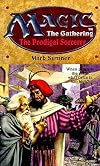
this is the best of the early mtg novels so far (it's the sixth one not counting the tapestries anthology), and it's not especially close. it's another one that's definitely off to the side of the main continuity (it's at least set on dominaria, albeit a remote region of dominaria), but this tale of political intrigue and war and backstabbing and bravery all definitely feels on brand for magic the gathering. and taken on its own merits it's just a straightforwardly good story with show more interesting characters.
if you just want to know about mtg lore you can absolutely skip this because it has nothing to do with the larger lore of mtg and these characters and locations are never seen again as far as i know, but if you just want a well-written pulpy fantasy story that isn't as edgelordy as early mtg lore can sometimes be, i can unreservedly recommend this. show less
if you just want to know about mtg lore you can absolutely skip this because it has nothing to do with the larger lore of mtg and these characters and locations are never seen again as far as i know, but if you just want a well-written pulpy fantasy story that isn't as edgelordy as early mtg lore can sometimes be, i can unreservedly recommend this. show less
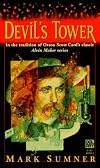
"The shaman came to town near sunset, riding a dead horse." - I must confess, a line like that is catnip to me. If you can understand the appeal, then Devil's Tower is likely to please.
During the American Civil war, something happened, and now the wild west is filling up with magic. Duelling wizards, godlings, shapechangers and more are wandering the badlands, and a town's future is only as secure as their sheriff's trigger finger and their magical talents.
I liked this book a lot. Sumner show more gives just the right amount of detail - his world feels real and fully-fleshed out, and yet surprises were regularly popping up. The combination of magic and the west isn't exactly new, but the genre is surprisingly under-populated - especially by decent quality writers.
Sumner is no Willa Cather, but his prose is well constructed and quite evocative. His protagonist Jake Bird is somewhat of a stock character, but he has a nice pathos and the supporting cast is in the main terrific.
The narrative moves along at a nice pace, and very little in it felt pre-ordained or mapped out. Certainly, this is not a work of literature, but again: that opening line. If the thought of shamans riding dead horses through a dusty main street, duelling it out with magical sheriffs, fast with spells and faster with pistols, a terrified populace watching from the saloon is something you like the sound of, then pull up to the hitching post: This here is three fingers of gulpin' awesome. show less
During the American Civil war, something happened, and now the wild west is filling up with magic. Duelling wizards, godlings, shapechangers and more are wandering the badlands, and a town's future is only as secure as their sheriff's trigger finger and their magical talents.
I liked this book a lot. Sumner show more gives just the right amount of detail - his world feels real and fully-fleshed out, and yet surprises were regularly popping up. The combination of magic and the west isn't exactly new, but the genre is surprisingly under-populated - especially by decent quality writers.
Sumner is no Willa Cather, but his prose is well constructed and quite evocative. His protagonist Jake Bird is somewhat of a stock character, but he has a nice pathos and the supporting cast is in the main terrific.
The narrative moves along at a nice pace, and very little in it felt pre-ordained or mapped out. Certainly, this is not a work of literature, but again: that opening line. If the thought of shamans riding dead horses through a dusty main street, duelling it out with magical sheriffs, fast with spells and faster with pistols, a terrified populace watching from the saloon is something you like the sound of, then pull up to the hitching post: This here is three fingers of gulpin' awesome. show less

My reactions to reading this novel in 1997. Spoilers follow.
This book is labeled as an alternate history though the hinge the alternate timeline swings on – that the bloody Civil War unleashed magical energy that could be harnessed by the talented – is not sufficiently rationalistic to justify the label. Still, given the conceit, Sumner provides a fairly well worked West and America.
The Civil War still drags on with neither side having the will or resources to really pursue victory. The show more West is becoming rapidly depopulated through a combination of factors. The Civil War has played havoc with the money supply since both US and Confederate money circulates. With the rise of “talents”, various magical abilities possessed by a few (Sumner creates magic via words – “chanting”, magic “signing”, shapeshifting, prophecy – “casting”, the ability to conjure up beings of various material), towns fall prey to the talented – whether they are bandits or extortionist sheriffs that offer protection.
Sumner keeps the plot moving with lots of set pieces – the demon possessed Custer (at least he’s possessed by something) wipes out a gathering of Indians at Greasy Grass aka the Little Big Horn, protagonist Jake Bird battles a re-animated fossil dinosaur, a challenge between a Sheriff and an Indian shaman using conventional weapons and magic, and the dispatching of a spirit called up by a dying Indian medicine man at Greasy Grass and then gone rogue. Of course, part of the fun of alternate histories is having historical personages show up in recast roles. The possessed Custer is the arch-villain and fittingly enough he draws power from the worship and adoration of others. In fact, he originally possesses no talent, but his lust for power leads him to strike a bad deal with a spirit around Devil’s Tower. (The camp and climax around Devil’s Tower are pretty creepy as the bodies pile up.). William Quantrill shows up as an appropriately ruthless villain. Morgan Earp makes an appearance as an extortionist gun man.
The totally fictional characters are all good though Sumner seems a bit too careful in making sure that he has laudable Indian, black, and Hispanic characters. However, the West was full of different races and nationalities and that is too often forgotten. I liked Brad Smith the trader and ex-buffalo soldier. My main complaint is Sumner’s rather vague geography (I wasn’t exactly sure where Hatty lived – it seemed to be north of the South Dakota Badlands) and poorly evoked landscape. My main complaint of the latter is not only the sketchy trip through the Black Hills (though he did get the almost year around possibility of snow right) and side trip to a Deadwood deserted after Wild Bill Hickok’s murder but also his description of Devil’s Tower and the surrounding terrain. It was virtually unrecognizable. That is a rather humbling reminder of the difficulty of evoking places you’ve been to (and I’m sure Sumner’s visited those places) much less the ones you haven’t seen for yourself. As near as I can tell, Medicine Rock is, according to textual clues and Sumner’s acknowledgements, is where Gillette, Wyoming is. show less
This book is labeled as an alternate history though the hinge the alternate timeline swings on – that the bloody Civil War unleashed magical energy that could be harnessed by the talented – is not sufficiently rationalistic to justify the label. Still, given the conceit, Sumner provides a fairly well worked West and America.
The Civil War still drags on with neither side having the will or resources to really pursue victory. The show more West is becoming rapidly depopulated through a combination of factors. The Civil War has played havoc with the money supply since both US and Confederate money circulates. With the rise of “talents”, various magical abilities possessed by a few (Sumner creates magic via words – “chanting”, magic “signing”, shapeshifting, prophecy – “casting”, the ability to conjure up beings of various material), towns fall prey to the talented – whether they are bandits or extortionist sheriffs that offer protection.
Sumner keeps the plot moving with lots of set pieces – the demon possessed Custer (at least he’s possessed by something) wipes out a gathering of Indians at Greasy Grass aka the Little Big Horn, protagonist Jake Bird battles a re-animated fossil dinosaur, a challenge between a Sheriff and an Indian shaman using conventional weapons and magic, and the dispatching of a spirit called up by a dying Indian medicine man at Greasy Grass and then gone rogue. Of course, part of the fun of alternate histories is having historical personages show up in recast roles. The possessed Custer is the arch-villain and fittingly enough he draws power from the worship and adoration of others. In fact, he originally possesses no talent, but his lust for power leads him to strike a bad deal with a spirit around Devil’s Tower. (The camp and climax around Devil’s Tower are pretty creepy as the bodies pile up.). William Quantrill shows up as an appropriately ruthless villain. Morgan Earp makes an appearance as an extortionist gun man.
The totally fictional characters are all good though Sumner seems a bit too careful in making sure that he has laudable Indian, black, and Hispanic characters. However, the West was full of different races and nationalities and that is too often forgotten. I liked Brad Smith the trader and ex-buffalo soldier. My main complaint is Sumner’s rather vague geography (I wasn’t exactly sure where Hatty lived – it seemed to be north of the South Dakota Badlands) and poorly evoked landscape. My main complaint of the latter is not only the sketchy trip through the Black Hills (though he did get the almost year around possibility of snow right) and side trip to a Deadwood deserted after Wild Bill Hickok’s murder but also his description of Devil’s Tower and the surrounding terrain. It was virtually unrecognizable. That is a rather humbling reminder of the difficulty of evoking places you’ve been to (and I’m sure Sumner’s visited those places) much less the ones you haven’t seen for yourself. As near as I can tell, Medicine Rock is, according to textual clues and Sumner’s acknowledgements, is where Gillette, Wyoming is. show less

This is a fun little story, which turns out to actually be the second in a series. I guess it would qualify as a cozy mystery although cozy is not really the word for it. Savannah (Savvy) Skye is a reporter for a weekly supermarket tabloid, who occasionally stumbles upon an actual weird story as opposed to the sensational made-up stories that are the usual content of the paper. In this book, all the residents of one particular island community have apparently gone mad, and Savvy and her show more photographer set off in search of answers.
It was a quick read and enjoyable enough, and well-written, but not particularly memorable. Just good fun. show less
It was a quick read and enjoyable enough, and well-written, but not particularly memorable. Just good fun. show less
Lists
Read in 1999 (1)
Awards

You May Also Like


Associated Authors
Statistics
- Works
- 30
- Also by
- 8
- Members
- 689
- Popularity
- #36,712
- Rating
- 3.5
- Reviews
- 18
- ISBNs
- 47
- Languages
- 2
- Favorited
- 1