
Fritjof Capra
Author of The Tao of Physics
About the Author
Image credit: photo credit: Kate Mount
Works by Fritjof Capra
The Science of Leonardo: Inside the Mind of the Great Genius of the Renaissance (2007) 431 copies, 6 reviews
Belonging to the Universe: Explorations on the Frontiers of Science and Spirituality (1991) 183 copies, 2 reviews
Associated Works
The Patterning Instinct: A Cultural History of Humanity's Search for Meaning (2017) — Foreword — 163 copies, 5 reviews
The Tao of Liberation: Exploring the Ecology of Transformation (Ecology and Justice) (2009) — Foreword — 24 copies, 1 review
Tagged
Common Knowledge
- Canonical name
- Capra, Fritjof
- Birthdate
- 1939-02-01
- Gender
- male
- Education
- University of Vienna (PhD|Theoretical Physics, 1966)
- Occupations
- physicist
environmentalist - Organizations
- University of California, Santa Cruz
Center for Ecoliteracy, Berkeley, California, USA (founding director)
Schumacher College - Awards and honors
- American Book Award (1992)
- Nationality
- Austria (birth)
USA - Birthplace
- Vienna, Austria
- Places of residence
- Vienna, Austria
Berkley, California, USA - Associated Place (for map)
- Berkley, California, USA
Members
Reviews
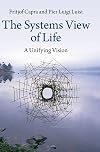
A book that pretends to offer an alternative, global, “unifying” view on life and reality cannot be but very comprehensive. And in this respect Fritjof Capra lives up to all expectations: not only does it offer a thorough critique on the current view of reality by classical sciences (its determinism and reductionism), but it also offers an alternative: a contextual, integrative and holistic approach. For Capra that alternative paradigm can be found through Systems Approach, a show more philosophical-scientific and technical current of thinking, that came to the foreground after the Second World War.
Capra summarizes the specific perspective of Systems View as follows: “The great shock of twentieth-century science has been that living systems cannot be understood by analysis. The properties of the parts are not intrinsic properties, but can be understood only within the context of the larger whole. Thus the relationship between the parts and the whole has been reversed. In the systems approach, the properties of the parts can be understood only from the organization of the whole. Accordingly, systems thinking does not concentrate on basic building blocks but rather on basic principles of organization. Systems thinking is “contextual,” which is the opposite of analytical thinking. Analysis means taking something apart in order to understand it; systems thinking means putting it into the context of a larger whole.”
In this book Capra shows us the usefulness of this approach on all scientific domains that are relevant to life, and he does so in great detail, but without becoming too technical (although of course sometimes it’s a tough read). And I must say: it’s fascinating and intriguing, and it’s quite convincing that this more integrative and contextual approach has much to offer.
But (yes, of course there’s a but!), Capra does make a very extreme black-and-white drawing of it. Throughout the entire book, in all domains that Capra raises, he underlines how classical science and the paradigm behind it fail, according to him they even are responsible for the major world problems we are facing. And quite frankly, that is a fairly gross and largely unjust accusation. I have the impression that in his enthousiasm Capra sometimes twists and turns things to fit his view. For example, in his overview of the history of science he pretends that there has always been a pendulum movement between a reductionist-deterministic approach and a holistic one, and that is manifestly incorrect. On top of that he is – and after having read a number of books on Systems Thinking I think I can make that estimation – he is very selective in what he puts under the banner of the Systems View; by now I know Systems Thinking is quite a heterogenous current, and Capra manifestly left out the bits that didn’t fit in his story.
Of course, Capra is not just an amateur: he has written dozens of popular scientific works and I have the impression that he knows the latest state of affairs in various scientific domains. But his rather self-assured, demonstrative and sometimes even indoctrinating tone makes me very suspicious. By his critics Capra is regularly put away as a New Age author, especially referring to one of his first and most famous works, The Tao of Physics; in that book he moved in a fairly straight line from the failure of the classic reductionist sciences to the holistic wisdoms of Eastern religions. 40 years later, Capra takes up that line again (in this book the Dalai Lama even gets a guest article), but now he uses the Systems View as an interface. And there’s another shift: instead of Buddhism and Taoism, Capra now sees a new doctrine of salvation in Ecology; the last 100 pages of this book are entirely dedicated to that approach; it gets so much emphasis that I think the title of this book should have been an "ecological view of life", instead of a “systems view”.
Now, obviously there is a lot of wisdom in the ecological view and we have to shift our current way of thinking much more in that direction; that’s without question, and when you look around this is a process that is in full swing. But, once again, my impression is that Capra exaggerating in the other direction and is falling into the trap of eco-fundamentalism, depicting a too black-and-white state of affairs and being almost dogmatic in his line of thought (I’m strongly in favor of ecologism too, but not when it turns into a anti-humanism). At the end this book breaths more the air of a manifesto than of a reasoned analysis. It is also clear from the book that it was written in the period 2011-2012, just after the severe economic crisis, and Capra repeatedly gives the impression that the whole world finally is convinced of the paradigm shift proclaimed by him with a loud drum. More than 5 years later, that eschatological-looking expectation certainly still has not been fulfilled, perhaps even on the contrary.
Capra is an enticing writer, that is the least you can say. Now, our world needs dreamers and visionists like Capra, so let them do it, but as a reader, it does no harm to link back to reality! show less
Capra summarizes the specific perspective of Systems View as follows: “The great shock of twentieth-century science has been that living systems cannot be understood by analysis. The properties of the parts are not intrinsic properties, but can be understood only within the context of the larger whole. Thus the relationship between the parts and the whole has been reversed. In the systems approach, the properties of the parts can be understood only from the organization of the whole. Accordingly, systems thinking does not concentrate on basic building blocks but rather on basic principles of organization. Systems thinking is “contextual,” which is the opposite of analytical thinking. Analysis means taking something apart in order to understand it; systems thinking means putting it into the context of a larger whole.”
In this book Capra shows us the usefulness of this approach on all scientific domains that are relevant to life, and he does so in great detail, but without becoming too technical (although of course sometimes it’s a tough read). And I must say: it’s fascinating and intriguing, and it’s quite convincing that this more integrative and contextual approach has much to offer.
But (yes, of course there’s a but!), Capra does make a very extreme black-and-white drawing of it. Throughout the entire book, in all domains that Capra raises, he underlines how classical science and the paradigm behind it fail, according to him they even are responsible for the major world problems we are facing. And quite frankly, that is a fairly gross and largely unjust accusation. I have the impression that in his enthousiasm Capra sometimes twists and turns things to fit his view. For example, in his overview of the history of science he pretends that there has always been a pendulum movement between a reductionist-deterministic approach and a holistic one, and that is manifestly incorrect. On top of that he is – and after having read a number of books on Systems Thinking I think I can make that estimation – he is very selective in what he puts under the banner of the Systems View; by now I know Systems Thinking is quite a heterogenous current, and Capra manifestly left out the bits that didn’t fit in his story.
Of course, Capra is not just an amateur: he has written dozens of popular scientific works and I have the impression that he knows the latest state of affairs in various scientific domains. But his rather self-assured, demonstrative and sometimes even indoctrinating tone makes me very suspicious. By his critics Capra is regularly put away as a New Age author, especially referring to one of his first and most famous works, The Tao of Physics; in that book he moved in a fairly straight line from the failure of the classic reductionist sciences to the holistic wisdoms of Eastern religions. 40 years later, Capra takes up that line again (in this book the Dalai Lama even gets a guest article), but now he uses the Systems View as an interface. And there’s another shift: instead of Buddhism and Taoism, Capra now sees a new doctrine of salvation in Ecology; the last 100 pages of this book are entirely dedicated to that approach; it gets so much emphasis that I think the title of this book should have been an "ecological view of life", instead of a “systems view”.
Now, obviously there is a lot of wisdom in the ecological view and we have to shift our current way of thinking much more in that direction; that’s without question, and when you look around this is a process that is in full swing. But, once again, my impression is that Capra exaggerating in the other direction and is falling into the trap of eco-fundamentalism, depicting a too black-and-white state of affairs and being almost dogmatic in his line of thought (I’m strongly in favor of ecologism too, but not when it turns into a anti-humanism). At the end this book breaths more the air of a manifesto than of a reasoned analysis. It is also clear from the book that it was written in the period 2011-2012, just after the severe economic crisis, and Capra repeatedly gives the impression that the whole world finally is convinced of the paradigm shift proclaimed by him with a loud drum. More than 5 years later, that eschatological-looking expectation certainly still has not been fulfilled, perhaps even on the contrary.
Capra is an enticing writer, that is the least you can say. Now, our world needs dreamers and visionists like Capra, so let them do it, but as a reader, it does no harm to link back to reality! show less
it's been a long time since I've been so excited about reading a non-fiction book, let alone a text book. But this one has captivated my interest by pulling together so many ideas and threads of scientific knowledge and wisdom.
In a sense, this book feels like a Rosetta stone for me, unlocking connections and roots of a panoply of different ideas and concepts.
It starts walking us through the history of science—and how scientific models influenced most aspect of cultures. This is a show more wonderful section that lays out the people who came up with the ideas.
I was reading about the history of systems thinking. At one point, as the authors were about to begin giving a history and explanation of a concept I’d had a loose handle on, I realized that I was suddenly feeling very excited, like I was in a movie, sitting on the edge of my seat, or becoming aroused and excited. But it was a non-fiction book, on scientific theory. Frankly, at 70 pages into this book, at that point, I was highly aroused, with excitement and curiosity and anticipation. I can’t wait to get to the next parts of the book, to put the whole picture together.
This is what a great writer and a great book are supposed to do.
Now I'm 270 pages into it, reading about consciousness, having just finished reading about evolution of humans. Great, great book that's changing my thinking on the book I'm working on-- Bottom-up.
Update: I finished the book. It's one of the best books I've read in the past few years. I can't recommend it highly enough. I did the interview with Capra-- it exceeded my expectations. show less
In a sense, this book feels like a Rosetta stone for me, unlocking connections and roots of a panoply of different ideas and concepts.
It starts walking us through the history of science—and how scientific models influenced most aspect of cultures. This is a show more wonderful section that lays out the people who came up with the ideas.
I was reading about the history of systems thinking. At one point, as the authors were about to begin giving a history and explanation of a concept I’d had a loose handle on, I realized that I was suddenly feeling very excited, like I was in a movie, sitting on the edge of my seat, or becoming aroused and excited. But it was a non-fiction book, on scientific theory. Frankly, at 70 pages into this book, at that point, I was highly aroused, with excitement and curiosity and anticipation. I can’t wait to get to the next parts of the book, to put the whole picture together.
This is what a great writer and a great book are supposed to do.
Now I'm 270 pages into it, reading about consciousness, having just finished reading about evolution of humans. Great, great book that's changing my thinking on the book I'm working on-- Bottom-up.
Update: I finished the book. It's one of the best books I've read in the past few years. I can't recommend it highly enough. I did the interview with Capra-- it exceeded my expectations. show less
The Tao of Physics: An Exploration of the Parallels between Modern Physics and Eastern Mysticism (25th Anniversary Edition) by Fritjof Capra
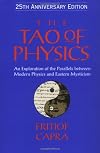
The Tao of Physics presents an intriguing premise—drawing parallels between the world of modern physics and the ancient wisdom of Eastern mysticism. Fritjof Capra attempts to explore how the insights of quantum mechanics, relativity, and other branches of modern physics may align with the philosophical and spiritual teachings of Taoism, Buddhism, and Hinduism. The idea of finding common ground between science and spirituality is a compelling one, and the book offers an interesting show more foundation for such a conversation.
However, while the concept is thought-provoking, the book ultimately falls short of fully fleshing out these connections in the way one might expect. Capra touches on similarities between the two fields, but the exploration doesn't go as deep or as expansive as anticipated. Rather than providing substantial new insights or truly bridging the gap between the two realms, the connections between modern physics and Eastern mysticism often feel more surface-level. It’s almost as if Capra hints at the possibility of deeper parallels but stops short of fully drawing them out or exploring their implications.
For readers interested in how science and spirituality might intersect, The Tao of Physics provides some thought-provoking moments, but it may leave those looking for a more rigorous exploration feeling somewhat unsatisfied. While the overlap between modern physics and Eastern thought is certainly a fascinating area to explore, this book doesn’t quite delve into it as thoroughly or profoundly as one might hope. It’s an interesting read, but ultimately, it doesn’t fulfill the potential its premise suggests. show less
However, while the concept is thought-provoking, the book ultimately falls short of fully fleshing out these connections in the way one might expect. Capra touches on similarities between the two fields, but the exploration doesn't go as deep or as expansive as anticipated. Rather than providing substantial new insights or truly bridging the gap between the two realms, the connections between modern physics and Eastern mysticism often feel more surface-level. It’s almost as if Capra hints at the possibility of deeper parallels but stops short of fully drawing them out or exploring their implications.
For readers interested in how science and spirituality might intersect, The Tao of Physics provides some thought-provoking moments, but it may leave those looking for a more rigorous exploration feeling somewhat unsatisfied. While the overlap between modern physics and Eastern thought is certainly a fascinating area to explore, this book doesn’t quite delve into it as thoroughly or profoundly as one might hope. It’s an interesting read, but ultimately, it doesn’t fulfill the potential its premise suggests. show less
This is great although I can't quite put my finger on it. It is a great introduction into the sea changes in thought that I am sure will characterize our age in 1000 years. The big most accessible message for me is the systems biology notion, the notion that even as the genome is now in a database, our scientists see a much more complex and constantly evolving and recombinant world, rather than a rigid deterministic one which would make the future so much easier (and dangerous). Funny, now show more many educated people view biology and genetics as deterministic, but that will change as we all learn to speak every day of complexity theory and many other delightful liberating recombinant notions. Read this one too, but slowly and don't be too pedantic about it. Capra is one of my favourites and I have read a few others. show less
Lists
Awards


You May Also Like


Associated Authors
Statistics
- Works
- 50
- Also by
- 6
- Members
- 8,388
- Popularity
- #2,873
- Rating
- 3.8
- Reviews
- 86
- ISBNs
- 248
- Languages
- 20
- Favorited
- 11