
Stacey Ballis
Author of Good Enough to Eat
Works by Stacey Ballis
Associated Works
Everything I Needed to Know About Being a Girl I Learned From Judy Blume (2007) — Contributor — 344 copies, 16 reviews
Girls Who Like Boys Who Like Boys: True Tales of Love, Lust, and Friendship Between Straight Women and Gay Men (2007) — Contributor — 111 copies, 3 reviews
Tagged
Common Knowledge
- Gender
- female
- Education
- Brandeis University
- Places of residence
- Chicago, Illinois, USA
- Associated Place (for map)
- Illinois, USA
Members
Reviews
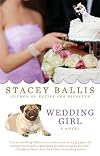
Please note that I gave this book 4.5 stars, but rounded up to 5 stars on Goodreads.
Don't read this book if you are even a little bit hungry. I know that previous Ballis books often incorporate cooking/baking into the plot, but this is the first one that actually made me hungry while reading. I am going to give Ballis a little bit grief though, everyone of her books except for one I think stars a women who is a certain size, with brown hair, and is usually Jewish. All of these books I think show more except for two that I can think of take place in Chicago too. I know a writer writes what they know, but it be nice to see her change it up in future books.
The main character in "Wedding Girl" is Sophie Bernstein. Sophie is a top pastry chef at a hot Chicago restaurant. Excited that she is about to be married to her long-time boyfriend Dexter (never trust a man named Dexter) and open a restaurant together, she thinks that her life is turning out perfect.
Though Sophie has spent thousands of dollars she can't afford on their special day, she knows that when Dexter gets access to his trust fund everything will be a-okay. Until Dexter runs off with another woman, and Sophie finds out minutes before her ceremony is about to start. Cue 9 months later when Sophie is at her lowest and is forced to move back in with her grandmother Bubbles.
I felt for Sophie. She looks back on her relationship with Dexter and realizes that he wasn't right for her. But man oh man I wanted something shitty to happen to him while I was reading this book. I am all about the vengeance. I have to give it to Ballis though, it would have been easy to write Dexter as coming crawling back to Sophie, but instead his life is great and he doesn't seem to give a crap about her (he sucks).
Though I did feel for Sophie, I also could see why her two best friends Jean and Ruth gave her a firm kick in the pants about moving on. Sophie wallowed and it cost her everything.
Though Sophie wants to run and hide, she decides to take a job at the local bakery near her grandmother's house and does what she can to help out the owner when it becomes clear a new bakery is coming to the neighborhood. And after a customer comes in looking for Sophie to bake her a wedding cake, Sophie befriends the woman and ends up getting into another business that she hopes can help pay down her debt (anonymous advice giver concerning weddings). Due to this, Sophie ends up "meeting" someone named Jake online and starts to write emails back and forth to him through the book, culminating with them finally meeting in the end.
I thought all of the other characters in this book were hilarious and funny. Sophie's grandmother has a dog named Snatch and does not seem to understand why naming the dog and screaming where's my Snatch out loud may be a problem.
Also Sophie's two hippie parents finally decide to settle down after coming into money which turns her mother into a slightly insane person and her father trying to do his best to hide out.
There are also really hilarious scenes in this book. One of my favorites shows Sophie's friend Jean with her new girlfriend and Sophie and Ruth attending a surprise party and I died. I mean seriously. I re-read that whole scene about 10 times because it was so well done that I cracked up. I don't think that I laughed through a Ballis book this much before and I laughed almost the whole way through this one.
I thought the writing was really great in this one. And I love that Ballis incorporated famous lines said in romantic black and white movies. I love, love, love, old movies and it was nice to see how they played into the overall theme of the book.
I do think that the flow could have been just a bit better. There were just a few times that the book slowed down for me and I felt like I was just trudging along.
The setting of Chicago is once again excellently captured in this book. Ballis lives there and it shows based on the way neighborhoods and buildings are described.
I did think the ending was a bit abrupt, but it ended like a very old black and white movie. I could actually picture end credits with the hero and heroine in each other's arms kissing. show less
Don't read this book if you are even a little bit hungry. I know that previous Ballis books often incorporate cooking/baking into the plot, but this is the first one that actually made me hungry while reading. I am going to give Ballis a little bit grief though, everyone of her books except for one I think stars a women who is a certain size, with brown hair, and is usually Jewish. All of these books I think show more except for two that I can think of take place in Chicago too. I know a writer writes what they know, but it be nice to see her change it up in future books.
The main character in "Wedding Girl" is Sophie Bernstein. Sophie is a top pastry chef at a hot Chicago restaurant. Excited that she is about to be married to her long-time boyfriend Dexter (never trust a man named Dexter) and open a restaurant together, she thinks that her life is turning out perfect.
Though Sophie has spent thousands of dollars she can't afford on their special day, she knows that when Dexter gets access to his trust fund everything will be a-okay. Until Dexter runs off with another woman, and Sophie finds out minutes before her ceremony is about to start. Cue 9 months later when Sophie is at her lowest and is forced to move back in with her grandmother Bubbles.
I felt for Sophie. She looks back on her relationship with Dexter and realizes that he wasn't right for her. But man oh man I wanted something shitty to happen to him while I was reading this book. I am all about the vengeance. I have to give it to Ballis though, it would have been easy to write Dexter as coming crawling back to Sophie, but instead his life is great and he doesn't seem to give a crap about her (he sucks).
Though I did feel for Sophie, I also could see why her two best friends Jean and Ruth gave her a firm kick in the pants about moving on. Sophie wallowed and it cost her everything.
Though Sophie wants to run and hide, she decides to take a job at the local bakery near her grandmother's house and does what she can to help out the owner when it becomes clear a new bakery is coming to the neighborhood. And after a customer comes in looking for Sophie to bake her a wedding cake, Sophie befriends the woman and ends up getting into another business that she hopes can help pay down her debt (anonymous advice giver concerning weddings). Due to this, Sophie ends up "meeting" someone named Jake online and starts to write emails back and forth to him through the book, culminating with them finally meeting in the end.
I thought all of the other characters in this book were hilarious and funny. Sophie's grandmother has a dog named Snatch and does not seem to understand why naming the dog and screaming where's my Snatch out loud may be a problem.
Also Sophie's two hippie parents finally decide to settle down after coming into money which turns her mother into a slightly insane person and her father trying to do his best to hide out.
There are also really hilarious scenes in this book. One of my favorites shows Sophie's friend Jean with her new girlfriend and Sophie and Ruth attending a surprise party and I died. I mean seriously. I re-read that whole scene about 10 times because it was so well done that I cracked up. I don't think that I laughed through a Ballis book this much before and I laughed almost the whole way through this one.
I thought the writing was really great in this one. And I love that Ballis incorporated famous lines said in romantic black and white movies. I love, love, love, old movies and it was nice to see how they played into the overall theme of the book.
I do think that the flow could have been just a bit better. There were just a few times that the book slowed down for me and I felt like I was just trudging along.
The setting of Chicago is once again excellently captured in this book. Ballis lives there and it shows based on the way neighborhoods and buildings are described.
I did think the ending was a bit abrupt, but it ended like a very old black and white movie. I could actually picture end credits with the hero and heroine in each other's arms kissing. show less
I had a huge stylistic problem with this book that I just could not get past: inability to use contractions as needed. This was prominent throughout, not just in the speech of one character to indicate that someone actually spoke that way (unlike the Took-Himself-Too-Seriously Boyfriend who spoke with Capital Letters, which was actually a well-executed characterization technique). I don't know whether responsibility lies with the author or the editor but I feel firmly that the finished show more product that I read should not have had this wonky trait. One example (seriously, there hare hundreds to choose from): "I can't begin to imagine what he is doing here." We see here that the author knows how to use contractions ("can't") but chooses not to in some cases ("he is" rather than "he's"). In this particular sentence, it isn't a particularly big deal. It still reads decently. That isn't always the case. It is very distracting to find this throughout an entire book.
Second issue: having multiple characters whose stories are being told is a difficult feat to execute. I just had trouble keeping track of everyone. I know they were all introduced from the start, but this was done in a group scene and I simply didn't manage to wrap my head around who was who.
Otherwise, this was a good chick lit book. I especially liked that there was some vulgarity, some girl talk about explicit sex. But for the weird use of contractions, I think I would have liked this book just fine. show less
Second issue: having multiple characters whose stories are being told is a difficult feat to execute. I just had trouble keeping track of everyone. I know they were all introduced from the start, but this was done in a group scene and I simply didn't manage to wrap my head around who was who.
Otherwise, this was a good chick lit book. I especially liked that there was some vulgarity, some girl talk about explicit sex. But for the weird use of contractions, I think I would have liked this book just fine. show less

Good Enough to Eat is the story of Melanie Hoffman, a 30-something Chicago professional who, after being obese for most of her life, has reached her goal weight. Along the way to finding her healthiest weight, she decides to leave her career as a lawyer to become a chef. Shortly after she opened her restaurant, her husband left her. It seems, after he took up with one of her obese friend, he preferred much more flesh on his women. All along, she believed that their relationship had been show more about what was important, not the superficial issues of the physical. When she discovered that it was her body that attracted her ex-husband, not her whole self, she questioned who she really was, regardless of what her body looked like.
As someone who is obese, this book appealed to me right away. The main character has lived life in my skin and has accomplished what I dream of accomplishing permanently – well with the exception of losing my husband along the way. There have been three times in my life when I’ve stuck with a diet long enough to be psyched about my body. Each time, it’s not lasted for me. I approached this book with the same hopes that I approach all weight loss success stories – that it will spark the fuse inside me that will lead me down the path to a healthier me once again. What I discovered was a novel so honest about everything related to weight, weigh loss, body image, and compulsive eating that it made me cry. Melanie found what have always feared (and knew deep down inside) to be true – you are never free from the cravings and compulsions that lead to obesity. It doesn’t get easier. If anything, it’s probably harder. I wanted to scream. I could only read this book a little at a time before the “It’s f*cking not fair!” demons (who never get anyone anywhere) would start raging in my head.
It’s when Melanie recollections of her life in a fat body played out that brought on the tears. Shortly after booking a flight home for what would be for my grandfather’s memorial service, I got to the chapter where she was taking a trip to NYC to speak to a Jewish woman’s conference about her shop. She pointed out the relative ease with which she flew there. No worries about the seat belts not fitting and having to ask for an extension. No looks of relief on your fellow travelers’ faces as you passed their row and they knew that you were not going to sit next to them. No forced politeness through exasperation from the person(s) who would be sitting next to you. No muscle cramps and pains from the exertion of keeping your flesh as far as possible from your aisle mates. Reading this at that time was like a reading a mini horror story. Those are the very things that run through my head every time I even have to think about booking a flight. They are the things that lead to sleepless nights coming up to the trip. While often it is soothing to know that there are others in this world who share your experiences, this chapter was like being slapped in the face with my own reality. It was at that point that I set Good Enough to Eat down and couldn’t pick it back up again until this past weekend. It just cut too close.
Stacey Ballis is clearly an author who understands what it is like to be fat – with an obese body or without. The sections where Melanie calls Carey, her nutritionist and life counselor, were spot on about rebuilding relationships with food when addiction and compulsion are involved. If you want to know what it’s like to binge and it’s emotional repercussions, Ballis has brought it to life in all honesty. This book was extremely difficult for me to read. This is stated as a compliment. I’ve never before read a novel about an obese woman that has had this effect on me. Good Enough to Eat did not encourage me to immediately jump on the weight loss band wagon once again. As an emotional eater, the feelings this book created along with my grandfather’s passing and the shortening days has had just the opposite affect. BUT, this book and its affects mixed with my reaction to Jennifer Weiner’s recent post (which I’ll explain in a forthcoming topic early next week) has had an interesting impact. I’m still formulating it in my head so I won’t say much more here. It may only be of interest to me, but I think it will be liberating and therapeutic. I’m planning the “big” launch next week Friday.
My Final Thoughts
If you are interested in the inner workings of obese people (women at least) and how we judge ourselves, Good Enough to Eat is by far the most authentic book I’ve read to date. If you’re obese yourself, take into consideration those things I’ve said and gird your loins before picking it up. We all react individually to life and what we read, but I guarantee this isn’t just a fluffy novel about the fat girl who discovered her inner princess. All things come with a price. show less
As someone who is obese, this book appealed to me right away. The main character has lived life in my skin and has accomplished what I dream of accomplishing permanently – well with the exception of losing my husband along the way. There have been three times in my life when I’ve stuck with a diet long enough to be psyched about my body. Each time, it’s not lasted for me. I approached this book with the same hopes that I approach all weight loss success stories – that it will spark the fuse inside me that will lead me down the path to a healthier me once again. What I discovered was a novel so honest about everything related to weight, weigh loss, body image, and compulsive eating that it made me cry. Melanie found what have always feared (and knew deep down inside) to be true – you are never free from the cravings and compulsions that lead to obesity. It doesn’t get easier. If anything, it’s probably harder. I wanted to scream. I could only read this book a little at a time before the “It’s f*cking not fair!” demons (who never get anyone anywhere) would start raging in my head.
It’s when Melanie recollections of her life in a fat body played out that brought on the tears. Shortly after booking a flight home for what would be for my grandfather’s memorial service, I got to the chapter where she was taking a trip to NYC to speak to a Jewish woman’s conference about her shop. She pointed out the relative ease with which she flew there. No worries about the seat belts not fitting and having to ask for an extension. No looks of relief on your fellow travelers’ faces as you passed their row and they knew that you were not going to sit next to them. No forced politeness through exasperation from the person(s) who would be sitting next to you. No muscle cramps and pains from the exertion of keeping your flesh as far as possible from your aisle mates. Reading this at that time was like a reading a mini horror story. Those are the very things that run through my head every time I even have to think about booking a flight. They are the things that lead to sleepless nights coming up to the trip. While often it is soothing to know that there are others in this world who share your experiences, this chapter was like being slapped in the face with my own reality. It was at that point that I set Good Enough to Eat down and couldn’t pick it back up again until this past weekend. It just cut too close.
Stacey Ballis is clearly an author who understands what it is like to be fat – with an obese body or without. The sections where Melanie calls Carey, her nutritionist and life counselor, were spot on about rebuilding relationships with food when addiction and compulsion are involved. If you want to know what it’s like to binge and it’s emotional repercussions, Ballis has brought it to life in all honesty. This book was extremely difficult for me to read. This is stated as a compliment. I’ve never before read a novel about an obese woman that has had this effect on me. Good Enough to Eat did not encourage me to immediately jump on the weight loss band wagon once again. As an emotional eater, the feelings this book created along with my grandfather’s passing and the shortening days has had just the opposite affect. BUT, this book and its affects mixed with my reaction to Jennifer Weiner’s recent post (which I’ll explain in a forthcoming topic early next week) has had an interesting impact. I’m still formulating it in my head so I won’t say much more here. It may only be of interest to me, but I think it will be liberating and therapeutic. I’m planning the “big” launch next week Friday.
My Final Thoughts
If you are interested in the inner workings of obese people (women at least) and how we judge ourselves, Good Enough to Eat is by far the most authentic book I’ve read to date. If you’re obese yourself, take into consideration those things I’ve said and gird your loins before picking it up. We all react individually to life and what we read, but I guarantee this isn’t just a fluffy novel about the fat girl who discovered her inner princess. All things come with a price. show less
So I swore through this whole damn book. Seriously.
I have really enjoyed Stacey Ballis's past works. She can describe food and how to cook certain dishes in such a way that you will have to go and get something to snack on while reading. Also hopefully you have some wine to sip as you go. But I really wanted to take her by the hands and ask her some questions about how she portrayed some of the key African American characters in this book. I don't think it was intentional, but I was over it. show more And I think the main plot such as it was, was not a bit realistic at all. And some of the same dialogue used by the male hero in this one, was used by the same character in her book "Off the Menu." I even went and checked a few things back and forth between that book and this one and said oh well I guess it's nice she's reusing RJ's commentary.
The main character is Eloise. She is a private chef to a very wealthy family and has another long time client as well. She has not dated in years since her last break-up broke her heart. When she finds out her favorite teacher has passed away, Eloise reconnects with her two high school friends, Teresa and Lynne. The three friends have grown out of touch, though Teresa and Lynne have kept in sporadic contact. When Eloise finds a list she made about what she wanted to accomplish by the age of 40, her three other friends agree that they want to knock some things off their list before their birthdays in May. This leads Eloise to finding and dating a guy who is too perfect by far (and yeah, he is) and leads to some conflict with Lynne.
I will say that there was too much going on in this book. We have Eloise doing her bet with the friends, finding and dating a guy, teaching one of the kids that she cooks for privately how to train for a celebrity cooking show, reading about her attempts to stay active, draw, write, etc., I just didn't care after a while. But really, what got me is that this book started to read a bit too self help for me to enjoy.
Eloise really sticks her nose in the air about what Lynne is doing and I hated how Ballis portrayed her in this book. There was no nuance at all to be had. Eloise is right, Lynne is wrong. There is some bullshit let's say everything we hate about each other crap that Teresa pulls and I got so mad. You don't do that type of shit to people and than somehow everyone loves each other again. I wish that the book had been more honest that the people you are friends with in high school are not the friends you would choose as an adult.
I also didn't even get why people kept telling Eloise to keep Lynne in her life. Lynne was terrible (based on the little we see of her) and there is no point in keeping someone you haven't spoken to in 20 years in your life. The way that Ballis tries to have her cake and eat it too (hey your long time friends are to be put up with even when they are acting like assholes, but also want more things than money and status) drove me up the wall.
And here is where I want to ask Ballis some questions. Did she think it was stereotypical how she portrayed Lynne? Lynne is shown as some light skinned black woman who was all about money/status and didn't really give a crap about love. That Lynne sounded like a woman who wanted to forget her past and deny her black self and Eloise and the author via her give her shit for that.
I don't know enough about Lynne for why she is the way she is, but I hated how one of the few black characters we get in this book is shown in a terrible light when I actually sympathized with her a lot. For many black woman if we are not married, we prove ourselves over and beyond at work. Lynne seems to kick ass at her job, but Ballis shows her as too obsessed with doing well at her job. She gets a bit cartoony after a while and I just got over it. Black women are always being portrayed as either highly emotional or cold. Articulate (read white) or way too black. I could go on and on about things that I was like, oh lord about and just struggled to move on from.
The other African American character, a love interest of Eloise is named Shawn and I rolled my damn eyes at the guy. First of all, I like that Ballis didn't have him speaking "ghetto" but he also sure didn't have what I would call an authentic voice to me. I say this because I said above, some of the phrases and things he does sounds like a previous character in her works. And Ballis breezes past the interracial relationship aspect real quick. Just asks one white character how did they deal with this when they were dating/married and it was all just be honest with each other.
Man. There's honesty and reality. And interracial relationships are hard. There are things you won't get and vice versa. All you need is love is great in concept, and hard in reality. I know a ton of interracial couples and they have to deal with the everyday mess they get from total strangers and family members.
There is also another aspect that would be spoiling things about Shawn that I was 100 percent done with when revealed in the book. Sorry.
The writing was typical Ballis and I have to say that all of the recipes sounded awesome. But if not for the food descriptions I would have DNFed this book.
I think the book should have been edited further down past what we got since most of the book started to just be repetitive after a while with Eloise's conflicts with Lynne.
The ending didn't move me at all and I can say that I will not be re-reading this in the future. show less
I have really enjoyed Stacey Ballis's past works. She can describe food and how to cook certain dishes in such a way that you will have to go and get something to snack on while reading. Also hopefully you have some wine to sip as you go. But I really wanted to take her by the hands and ask her some questions about how she portrayed some of the key African American characters in this book. I don't think it was intentional, but I was over it. show more And I think the main plot such as it was, was not a bit realistic at all. And some of the same dialogue used by the male hero in this one, was used by the same character in her book "Off the Menu." I even went and checked a few things back and forth between that book and this one and said oh well I guess it's nice she's reusing RJ's commentary.
The main character is Eloise. She is a private chef to a very wealthy family and has another long time client as well. She has not dated in years since her last break-up broke her heart. When she finds out her favorite teacher has passed away, Eloise reconnects with her two high school friends, Teresa and Lynne. The three friends have grown out of touch, though Teresa and Lynne have kept in sporadic contact. When Eloise finds a list she made about what she wanted to accomplish by the age of 40, her three other friends agree that they want to knock some things off their list before their birthdays in May. This leads Eloise to finding and dating a guy who is too perfect by far (and yeah, he is) and leads to some conflict with Lynne.
I will say that there was too much going on in this book. We have Eloise doing her bet with the friends, finding and dating a guy, teaching one of the kids that she cooks for privately how to train for a celebrity cooking show, reading about her attempts to stay active, draw, write, etc., I just didn't care after a while. But really, what got me is that this book started to read a bit too self help for me to enjoy.
Eloise really sticks her nose in the air about what Lynne is doing and I hated how Ballis portrayed her in this book. There was no nuance at all to be had. Eloise is right, Lynne is wrong. There is some bullshit let's say everything we hate about each other crap that Teresa pulls and I got so mad. You don't do that type of shit to people and than somehow everyone loves each other again. I wish that the book had been more honest that the people you are friends with in high school are not the friends you would choose as an adult.
I also didn't even get why people kept telling Eloise to keep Lynne in her life. Lynne was terrible (based on the little we see of her) and there is no point in keeping someone you haven't spoken to in 20 years in your life. The way that Ballis tries to have her cake and eat it too (hey your long time friends are to be put up with even when they are acting like assholes, but also want more things than money and status) drove me up the wall.
And here is where I want to ask Ballis some questions. Did she think it was stereotypical how she portrayed Lynne? Lynne is shown as some light skinned black woman who was all about money/status and didn't really give a crap about love. That Lynne sounded like a woman who wanted to forget her past and deny her black self and Eloise and the author via her give her shit for that.
I don't know enough about Lynne for why she is the way she is, but I hated how one of the few black characters we get in this book is shown in a terrible light when I actually sympathized with her a lot. For many black woman if we are not married, we prove ourselves over and beyond at work. Lynne seems to kick ass at her job, but Ballis shows her as too obsessed with doing well at her job. She gets a bit cartoony after a while and I just got over it. Black women are always being portrayed as either highly emotional or cold. Articulate (read white) or way too black. I could go on and on about things that I was like, oh lord about and just struggled to move on from.
The other African American character, a love interest of Eloise is named Shawn and I rolled my damn eyes at the guy. First of all, I like that Ballis didn't have him speaking "ghetto" but he also sure didn't have what I would call an authentic voice to me. I say this because I said above, some of the phrases and things he does sounds like a previous character in her works. And Ballis breezes past the interracial relationship aspect real quick. Just asks one white character how did they deal with this when they were dating/married and it was all just be honest with each other.
Man. There's honesty and reality. And interracial relationships are hard. There are things you won't get and vice versa. All you need is love is great in concept, and hard in reality. I know a ton of interracial couples and they have to deal with the everyday mess they get from total strangers and family members.
There is also another aspect that would be spoiling things about Shawn that I was 100 percent done with when revealed in the book. Sorry.
The writing was typical Ballis and I have to say that all of the recipes sounded awesome. But if not for the food descriptions I would have DNFed this book.
I think the book should have been edited further down past what we got since most of the book started to just be repetitive after a while with Eloise's conflicts with Lynne.
The ending didn't move me at all and I can say that I will not be re-reading this in the future. show less
Lists
You May Also Like


Associated Authors
Statistics
- Works
- 12
- Also by
- 2
- Members
- 941
- Popularity
- #27,308
- Rating
- 3.5
- Reviews
- 48
- ISBNs
- 42
- Languages
- 2
- Favorited
- 1