
Steven Morrissey
Author of Autobiography
About the Author
Disambiguation Notice:
This is the singer-songwriter most often known as Morrissey. However, do not combine this page with the author page https://www.librarything.com/author/morrissey as there are multiple authors with that surname. Instead, the works by the singer-songwriter Morrissey are aliased into this page. Also, please do not set the canonical name on this page, as it leads to confusion.
Image credit: Morrissey at the premiere of the Alexander film in Dublin Ireland / Caligvla at English Wikipedia
Works by Steven Morrissey
My Love Life 3 copies
New York Dolls 2 copies
Maladjusted 2 copies
Black Eyed Susan 1 copy
Lover-To-Be (Rsd) 1 copy
Satan Rejected My Soul 1 copy
Introducing Morrissey [VHS] 1 copy
Our Frank 1 copy
The Boy Racer [EP] 1 copy
Irish Blood, English Heart 1 copy
Interlude 1 copy
Now My Heart Is Full 1 copy
Tomorrow 1 copy
Hold on to Your Friends 1 copy
Malady Lingers On 1 copy
Associated Works
Tony Visconti: The Autobiography: Bowie, Bolan and the Brooklyn Boy (2007) — Foreword, some editions — 101 copies, 1 review
Never Mind the Mainstream: The Best of MTV's 120 Minutes, Vol. 2 — Contributor — 2 copies
Tagged
Common Knowledge
- Legal name
- Morrissey, Steven Patrick
- Other names
- Morrissey
- Birthdate
- 1959-05-22
- Gender
- male
- Occupations
- singer-songwriter
- Relationships
- Smiths, The (band)
- Nationality
- UK
- Birthplace
- Old Trafford, Manchester, England, UK
- Places of residence
- Hulme, Manchester, England, UK
- Map Location
- England, UK
- Disambiguation notice
- This is the singer-songwriter most often known as Morrissey. However, do not combine this page with the author page https://www.librarything.com/author/mo... as there are multiple authors with that surname. Instead, the works by the singer-songwriter Morrissey are aliased into this page. Also, please do not set the canonical name on this page, as it leads to confusion.
Members
Reviews
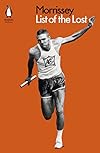
I loved this novel. It was so strange and idiosyncratic, so different from anything else I’ve ever read. Morrissey writes like Daisy Ashford all grown up. Ostensibly set in Boston in the 1970s, the story actually took place in a surreal landscape that was not meant to have the verisimilitude of any particular time and place. I enjoyed the lyricism of the writing, and in particular I don’t think I have ever read any finer descriptions of death or awkward sex.
Usually in a book, you get a show more lot of warning when a character is going to die, but I was taken by surprise again and again and again here. And that’s what it’s actually like in real life. The random cruelty of death is put across very effectively in this story, and this is the realism created by the seeming unreality of the plot.
List of the Lost reminded me a lot of Gertrude Stein’s book of poetry Tender Buttons, which is also extremely unusual and non-conformist. Both of those books are so far from the mainstream that I struggle to explain/defend why I like them so much, because they’re indescribably lacking in point of reference. I think the key is that with these two books, I had to engage and grapple with them and so the experience is about me plus the book, rather than the usual experience where a book conforms to my expectations and plays a movie in my mind so I don’t really have to do any work.
I’m a writer, and in the publishing industry as a whole there’s incredible pressure to conform, conform, conform and please the gatekeepers and grab the reader by the throat in the opening paragraph. I really appreciate how Morrissey totally short circuited all that. It’s incredibly refreshing to see someone follow their own star and write whatever the hell they want and then get published by Penguin.
I was delighted or deeply moved from the first page to the last. One of the most affecting and true-to-life parts was the death of one of the character’s mothers. And something that just tickled me tremendously was an extended description of the TV show Bonanza. List of the Lost also surprisingly turned out to be something of a page turner. I started off reading it very slowly, wanting to savor it all and make sure I comprehended it, but by the end I was just racing through, wondering what would happen next.
As a big Morrissey fan, I enjoyed reading his time-honored themes (such as the perfidy of: the royal family, the police, the meat/murder industry, Margaret Thatcher, and child murderers) but this time through the medium of fiction. It was so his voice that I felt as though I was hearing him read aloud.
One of the most striking things was Morrissey’s iconoclastic disregard for what anyone thinks. It’s not just the evil people in power he’s unafraid to offend, it’s everyone. Does it seem backward and unhelpful to have the villain who’s a child molester and murderer also be a gay man who frequents drag clubs? Sure. Does Morrissey shrink from having one of his characters opine that some child victims are asking for it? No, he goes right ahead and includes this abhorrent idea. Although I’m usually so easily offended, none of this bothered me because I was just so taken with the irrepressible spirit of the story. (But trigger warning for these things!)
I can’t help but notice that a lot of people really don’t seem to like this book. I’m kind of baffled. Yes, it’s weird but it’s good. I do feel a special kinship with Morrissey’s unique sensibility, but so do a LOT of other people, and Morrissey fans are ten a penny. So...? I was wondering when I was reading it if part of the reason I loved it was just that I love Morrissey. But context can’t be escaped from, it’s always there, and if I like him wearing one hat why wouldn’t I like him wearing another hat, especially when he brings the same originality, passion, and elegiac quality to fiction as to songwriting. But I don’t think you need to bring some special knowledge to this novel in order to like it or “understand” it. In the opening, List of the Lost seemed plotless and it brought Balanchine’s plotless ballets to my mind. And I started thinking about what Balanchine said about watching ballet; you don’t have to know anything, you just open your eyes and look at it and think, Is this beautiful? Does this mean something to me? Do I like this? That was kind of what I was asking myself as I read this unusual book and the answer was always yes, yes, yes. But I am going to lend List of the Lost to my friend Rebecca who is one of the smartest people I know (and yet she does not listen to Morrissey and she teaches college English) to see what she makes of it. Obviously, as with any book, it’s a matter of taste, but where are the other folks who think this tastes delicious? Part of me wants to be this book’s champion because it isn’t being appreciated, but the rest of me realizes that this book can stand on its own two feet and does not need me of all people to be its champion. (Also, if Morrissey were unable to withstand bad reviews and mockery, then he could not be still alive today.)
Morrissey’s novel also made me think a lot about my own so-called writing. As it happens, my most recently published book was also a gothic romance. My number one concern was the portrayal and representation of marginalized people, but beyond that literally my only aims were to make the book as accessible and entertaining as I could. And now I feel like, why? Okay, I write YA instead of literary fiction, but what is so great about trying to please people? (Which by the way does not work.) Isn’t there more to writing than trying to churn out a potboiler that adheres to certain conventions of how a story is supposed to be told? What do I really have to say? If I cast aside everything I think I know about my narrative identity, who or what am I as a writer? Or am I even a writer? I believe I have a lot to learn from the unabashed individuality of List of the Lost.
Now I am going to get specific about some things that happen in the story, so if you don’t want to know what happens, it’s time for you to stop reading. Spoiler alert, okay?...
List of the Lost is about a college men’s relay team on the cusp of incredible success in their sport. The four runners are physically at the peak of perfection and they have an easy and loving friendship. Then they are at some sort of runners’ retreat, and in the woods they unexpectedly encounter a repulsive old vagrant who however has a sympathetic backstory which he relates in a long soliloquy. At that point I had to stop reading, so my mind was spinning about what would happen next. In the hands of a hack (i.e. like myself), the old man would lay a curse on them and then one by one some terrible supernatural thing would befall each runner and they would certainly not win their big race and perhaps some or all of them would die. Well, in a way that’s not too far off, but my version would be very Lois Duncan/Final Destination. What Morrissey actually chose to do, though, is for the old man to try to sexually assault Ezra, one of the runners. Ezra hits him and the man falls down stone dead. (Let me say again, people die very abruptly in this novel!) The friends hide the body and run off. Then not long after, Harri’s mother dies and while Harri is at the very bottom of despair, a drug dealer who may be some sort of ghost or may be just an ordinary drug dealer, sells Harri everything he needs to end his pain and die by suicide. The remaining three are wracked with sadness and start to question the point of everything. Then a ghost appears to Ezra asking him to uncover the body of her child who was murdered decades ago. Actually, I’m going to leave it at that. List of the Lost turned out to be far from plotless; there were a lot of exciting things that happened and there was a very clear trajectory to the action. But the plot was not the main thing. And I can’t deliver the “main thing” to you in a book review. You’re going to have to find out for yourself.
[Note: I actually don't post reviews to Goodreads anymore except under exceptional circumstances. You can find my book reviews at http://brokenbiscuits.booklikes.com/blog] show less
Usually in a book, you get a show more lot of warning when a character is going to die, but I was taken by surprise again and again and again here. And that’s what it’s actually like in real life. The random cruelty of death is put across very effectively in this story, and this is the realism created by the seeming unreality of the plot.
List of the Lost reminded me a lot of Gertrude Stein’s book of poetry Tender Buttons, which is also extremely unusual and non-conformist. Both of those books are so far from the mainstream that I struggle to explain/defend why I like them so much, because they’re indescribably lacking in point of reference. I think the key is that with these two books, I had to engage and grapple with them and so the experience is about me plus the book, rather than the usual experience where a book conforms to my expectations and plays a movie in my mind so I don’t really have to do any work.
I’m a writer, and in the publishing industry as a whole there’s incredible pressure to conform, conform, conform and please the gatekeepers and grab the reader by the throat in the opening paragraph. I really appreciate how Morrissey totally short circuited all that. It’s incredibly refreshing to see someone follow their own star and write whatever the hell they want and then get published by Penguin.
I was delighted or deeply moved from the first page to the last. One of the most affecting and true-to-life parts was the death of one of the character’s mothers. And something that just tickled me tremendously was an extended description of the TV show Bonanza. List of the Lost also surprisingly turned out to be something of a page turner. I started off reading it very slowly, wanting to savor it all and make sure I comprehended it, but by the end I was just racing through, wondering what would happen next.
As a big Morrissey fan, I enjoyed reading his time-honored themes (such as the perfidy of: the royal family, the police, the meat/murder industry, Margaret Thatcher, and child murderers) but this time through the medium of fiction. It was so his voice that I felt as though I was hearing him read aloud.
One of the most striking things was Morrissey’s iconoclastic disregard for what anyone thinks. It’s not just the evil people in power he’s unafraid to offend, it’s everyone. Does it seem backward and unhelpful to have the villain who’s a child molester and murderer also be a gay man who frequents drag clubs? Sure. Does Morrissey shrink from having one of his characters opine that some child victims are asking for it? No, he goes right ahead and includes this abhorrent idea. Although I’m usually so easily offended, none of this bothered me because I was just so taken with the irrepressible spirit of the story. (But trigger warning for these things!)
I can’t help but notice that a lot of people really don’t seem to like this book. I’m kind of baffled. Yes, it’s weird but it’s good. I do feel a special kinship with Morrissey’s unique sensibility, but so do a LOT of other people, and Morrissey fans are ten a penny. So...? I was wondering when I was reading it if part of the reason I loved it was just that I love Morrissey. But context can’t be escaped from, it’s always there, and if I like him wearing one hat why wouldn’t I like him wearing another hat, especially when he brings the same originality, passion, and elegiac quality to fiction as to songwriting. But I don’t think you need to bring some special knowledge to this novel in order to like it or “understand” it. In the opening, List of the Lost seemed plotless and it brought Balanchine’s plotless ballets to my mind. And I started thinking about what Balanchine said about watching ballet; you don’t have to know anything, you just open your eyes and look at it and think, Is this beautiful? Does this mean something to me? Do I like this? That was kind of what I was asking myself as I read this unusual book and the answer was always yes, yes, yes. But I am going to lend List of the Lost to my friend Rebecca who is one of the smartest people I know (and yet she does not listen to Morrissey and she teaches college English) to see what she makes of it. Obviously, as with any book, it’s a matter of taste, but where are the other folks who think this tastes delicious? Part of me wants to be this book’s champion because it isn’t being appreciated, but the rest of me realizes that this book can stand on its own two feet and does not need me of all people to be its champion. (Also, if Morrissey were unable to withstand bad reviews and mockery, then he could not be still alive today.)
Morrissey’s novel also made me think a lot about my own so-called writing. As it happens, my most recently published book was also a gothic romance. My number one concern was the portrayal and representation of marginalized people, but beyond that literally my only aims were to make the book as accessible and entertaining as I could. And now I feel like, why? Okay, I write YA instead of literary fiction, but what is so great about trying to please people? (Which by the way does not work.) Isn’t there more to writing than trying to churn out a potboiler that adheres to certain conventions of how a story is supposed to be told? What do I really have to say? If I cast aside everything I think I know about my narrative identity, who or what am I as a writer? Or am I even a writer? I believe I have a lot to learn from the unabashed individuality of List of the Lost.
Now I am going to get specific about some things that happen in the story, so if you don’t want to know what happens, it’s time for you to stop reading. Spoiler alert, okay?...
[Note: I actually don't post reviews to Goodreads anymore except under exceptional circumstances. You can find my book reviews at http://brokenbiscuits.booklikes.com/blog] show less
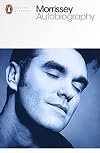
In a way, this book seems to be an inverted version of Morrissey's life.
The language where he describes his materially deprived childhood is beautiful, full of wide-eyed wonder and boldness; and when he has become successful the words are often petty and belittling, dismissive, as anger at the world gives way to depression and resignation.
As an autobiography, it is a curious thing, you don't feel the story along with the teller; it is all snippets and not so much of a story arc. And of show more course why would you tell a story if you are still living and don't know where the arc will end? The snippets do give a glimpse into what Morrissey thinks important at the time of writing, and it's not all that comfortable.
I want to say, do it once more with feeling, but this is a man who put so much feeling into the songs, so maybe all the emotions are there.
Overall interesting, but I think no-one who reads this book will come without the weight of expectations from the music (for why would you read the autobiography of an artist you didn't like?); and the man is not the same as the music. show less
The language where he describes his materially deprived childhood is beautiful, full of wide-eyed wonder and boldness; and when he has become successful the words are often petty and belittling, dismissive, as anger at the world gives way to depression and resignation.
As an autobiography, it is a curious thing, you don't feel the story along with the teller; it is all snippets and not so much of a story arc. And of show more course why would you tell a story if you are still living and don't know where the arc will end? The snippets do give a glimpse into what Morrissey thinks important at the time of writing, and it's not all that comfortable.
I want to say, do it once more with feeling, but this is a man who put so much feeling into the songs, so maybe all the emotions are there.
Overall interesting, but I think no-one who reads this book will come without the weight of expectations from the music (for why would you read the autobiography of an artist you didn't like?); and the man is not the same as the music. show less
So, I finished the Autobiography. As a Smiths/Moz fan, it was like sitting, chatting with an absent friend. Morrissey, the older, wiser compadre with the same Weltanschauung. The one who had been there through the ups and downs, through high school, through university, mental illness, and relationships.
On the contrary, I didn't finish the in one sitting. Ironically, if it were an actually physical chat, I would have probably cut it short and told him, "it is getting late." [Stephen Patrick] show more Morrissey, the voice, saved my life on numerous occasions. His vocal sincerity and richness comforted me on countless, lonely walks at 4am in the dark. Me, anxious, overdosed and released from A&E. The mournful troubadour bled all over the 457 pages. It was almost a self sacrifice not only to his loyal fans but to suffers of depression. His memoir was raw and morbid. The death count rose as his life went on.
The autobiography was not a revelation. Nor were there any Rousseauan confessions. What we did get, was his version of events. The events we read in the press, the events we hear in his lyrics. The witty inclusions of said song lyrics (I dare a Smiths fan to count them all), furthers the notion that he was and still is definitely singing his life. (Sing Your Life). The Autobiography is a call to arms to the outsiders. The bookish, the anxious, the passionate, the over and undersexed. While he remains blue about most things in his life, he sympathizes with the outsider, even as far as race. Morrissey sung in 1985’s Unlovable (I wear black on the outside | because black is how I feel on the inside) - 1985, he shows compassion for US expatriate and novelist, James Baldwin. It puts the accusations of racism and inhumanly nature to rest in one go.
My sentiments for this Autobiography does not mean I cannot see its literary faults. The Americanisms expose an expat, living a LA life which is a far cry from his humble Stretford beginnings. The licentious, stream of consciousness narrative was reminiscent of Jack Kerouac, who Morrissey actually name-checks on page 285 (I chirp, thinking I’m Jack Kerouac to Alan’s [Bennett] William Burroughs. As much as I enjoy a stream of consciousness or as I call it 'written inebriation', Morrissey’s use reflects his wandering, bitter mind, that of a recovering depressive and of a grumpy old man.
I sympathize with critics who also noticed when the Autobiography dipped into a predictable Morrissean diatribe. There were also no Rousseauesque confessions. It was quite subdued and prosaic. It was though, without the backing band, Morrissey is actually quite a bore. I failed to shed a tear when ‘the cast of casualties in Morrisseyland’ (p.284) piled up or feel sorry for him when his sister died. This egotistic morbidity is synonymous with depression, the -It’s all happening to me, it is all about how I feel mentality. But it is this candid quality of Morrissey, plus his mini breakdowns, that made me fall in love with him, first when I was a depressed teenager and still now as an adult, pushing 30.
The Autobiography enriches Morrissey's wit and charm while exposing him as a respectable observer of culture and politics. It is half memoir, half cultural chronicle, yet, the narrative voice remains the most intriguing part of the book. We finally hear Morrissey speak in prose. Well, occasionally dipping into verse. I sighed when I closed the book. It’s overwrought yet, cathartic quality meant I didn’t cry. show less
On the contrary, I didn't finish the in one sitting. Ironically, if it were an actually physical chat, I would have probably cut it short and told him, "it is getting late." [Stephen Patrick] show more Morrissey, the voice, saved my life on numerous occasions. His vocal sincerity and richness comforted me on countless, lonely walks at 4am in the dark. Me, anxious, overdosed and released from A&E. The mournful troubadour bled all over the 457 pages. It was almost a self sacrifice not only to his loyal fans but to suffers of depression. His memoir was raw and morbid. The death count rose as his life went on.
The autobiography was not a revelation. Nor were there any Rousseauan confessions. What we did get, was his version of events. The events we read in the press, the events we hear in his lyrics. The witty inclusions of said song lyrics (I dare a Smiths fan to count them all), furthers the notion that he was and still is definitely singing his life. (Sing Your Life). The Autobiography is a call to arms to the outsiders. The bookish, the anxious, the passionate, the over and undersexed. While he remains blue about most things in his life, he sympathizes with the outsider, even as far as race. Morrissey sung in 1985’s Unlovable (I wear black on the outside | because black is how I feel on the inside) - 1985, he shows compassion for US expatriate and novelist, James Baldwin. It puts the accusations of racism and inhumanly nature to rest in one go.
My sentiments for this Autobiography does not mean I cannot see its literary faults. The Americanisms expose an expat, living a LA life which is a far cry from his humble Stretford beginnings. The licentious, stream of consciousness narrative was reminiscent of Jack Kerouac, who Morrissey actually name-checks on page 285 (I chirp, thinking I’m Jack Kerouac to Alan’s [Bennett] William Burroughs. As much as I enjoy a stream of consciousness or as I call it 'written inebriation', Morrissey’s use reflects his wandering, bitter mind, that of a recovering depressive and of a grumpy old man.
I sympathize with critics who also noticed when the Autobiography dipped into a predictable Morrissean diatribe. There were also no Rousseauesque confessions. It was quite subdued and prosaic. It was though, without the backing band, Morrissey is actually quite a bore. I failed to shed a tear when ‘the cast of casualties in Morrisseyland’ (p.284) piled up or feel sorry for him when his sister died. This egotistic morbidity is synonymous with depression, the -It’s all happening to me, it is all about how I feel mentality. But it is this candid quality of Morrissey, plus his mini breakdowns, that made me fall in love with him, first when I was a depressed teenager and still now as an adult, pushing 30.
The Autobiography enriches Morrissey's wit and charm while exposing him as a respectable observer of culture and politics. It is half memoir, half cultural chronicle, yet, the narrative voice remains the most intriguing part of the book. We finally hear Morrissey speak in prose. Well, occasionally dipping into verse. I sighed when I closed the book. It’s overwrought yet, cathartic quality meant I didn’t cry. show less

I wouldn't on the whole say that it's a literary classic, but even at his very worst, there's something oddly touching about the man, or at least his persona. It's like he's somehow managed to stay 16 years old forever, and he's exactly as awful and insufferable as your average 16 year old: endlessly self-pitying, oversensitive, sanctimonious, petty, self-righteous, blames everyone but himself for every ill thing that's ever befallen him, holds nasty grudges... but at the same time, he is SO show more GOOD at cutting right to the bleeding heart of the 16 year old in all of us... the raw emotions, the sexual and romantic ambivalence, the frustration at the world being less perfect than it ought to be, the endlessly putting your foot in your mouth, the sense of wonder on your first encounter with great art, the general pain and awkwardness of being human... None of this should be news to those who have listened attentively to his music, and I don't think true fans will come away disappointed. show less
Lists
Awards


You May Also Like


Associated Authors
Statistics
- Works
- 68
- Also by
- 6
- Members
- 1,328
- Popularity
- #19,368
- Rating
- 3.6
- Reviews
- 27
- ISBNs
- 38
- Languages
- 3