
Simon Goddard
Author of The Smiths: Songs That Saved Your Life
About the Author
Simon Goddard is a regular contributor to Uncut magazine and various other music and cinema titles.
Works by Simon Goddard
Tagged
Common Knowledge
- Canonical name
- Goddard, Simon
- Gender
- male
- Occupations
- music journalist
- Nationality
- UK
- Associated Place (for map)
- UK
Members
Reviews
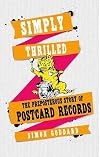
In the late 1970s a disparate group of young souls came together, bonded by their love of music. A record label was formed and the resulting releases defined 'the sound of young Scotland' for a few glorious months. Some individuals went on to greater success, others fell by the wayside but the influence of Postcard Records is widespread. This book tells the story of the creative talent and the man who brought it all together, Alan Horne.
Pinning my heart on my sleeve, this book was always show more going to appeal to me as I was an original fan of Postcard Records and, at age eighteen, I was beside myself when I managed to obtain a copy of 'Falling and Laughing' by Orange Juice, the debut release. Therefore I absolutely loved the stories about Glasgow and Edinburgh youth, recognising individuals and bands from the times but also the stereotypes of the people around the fringes. My only quibble with the book is the style of writing. It makes sense to write in an anecdotal, almost comedy-fiction style and Goddard does explain that this is because he got disparate versions of events from many protagonists. However I feel that at times it goes over the top with florid description. Nevertheless I was singing snatches of songs as they were mentioned as I went back to my 1980s indie-past. show less
Pinning my heart on my sleeve, this book was always show more going to appeal to me as I was an original fan of Postcard Records and, at age eighteen, I was beside myself when I managed to obtain a copy of 'Falling and Laughing' by Orange Juice, the debut release. Therefore I absolutely loved the stories about Glasgow and Edinburgh youth, recognising individuals and bands from the times but also the stereotypes of the people around the fringes. My only quibble with the book is the style of writing. It makes sense to write in an anecdotal, almost comedy-fiction style and Goddard does explain that this is because he got disparate versions of events from many protagonists. However I feel that at times it goes over the top with florid description. Nevertheless I was singing snatches of songs as they were mentioned as I went back to my 1980s indie-past. show less

The author has some odd ideas, and the first 90 pages are about kabuki theater and the origin of the universe, but this is a really cool book. The conceit is that David Bowie’s Ziggy Stardust persona was like a real person taking over Bowie’s life. There are a lot of crazy coincidences that will blow your mind. My favorite parts were 1) when Bowie finally saw the Velvet Underground live and then met Lou Reed but it turned out it wasn’t really Lou Reed at all 2) everything about Marc show more Bolan; he is presented as David Bowie’s doppelganger who is trying to sabotage him. Also there are some very nice photos, and the book design is gorgeous. show less
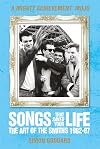
Acknowledges its debt to Revolution in the Head and then goes on to knock it out of the park. Simply delicious review of song genesis and structure. Written by an unashamed fan for unashamed fans. What a treat.
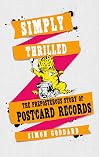
Goddard’s account of Postcard’s brief but gloriously insane existence is suitably fast moving and enveloped in prose that isn’t just purple but strives to invent an entirely new, ultimate shade of that colour. It’s the story of how Alan Horne gloriously crashed his Motown fuelled fantasies with the ebullient assistance of the inimitable Edwyn Collins. It’s almost the textbook lesson in how not to run your own label, communication, organisation and finances rarely rising to the show more level of shambolic. But then, when the music they release is of the calibre of Josef K, Orange Juice, The Go-Betweens and Aztec Camera, perhaps it’s all worth it.
Goddard’s work seems based on first-hand accounts from all the major players, and as such makes gleeful play that there may be issues with strict accuracy. He even takes the famous line from The Man Who Shot Liberty Valance of ‘when the legend becomes fact, print the legend’ as inspiration. Which, in true Postcard style, makes for better entertainment. What it means is that it captures how Horne’s madness takes him to the brink of success, though it’s not so good on internal motivations past his initial reasons for forming the label. That means that this is something of a shallow portrait which rarely pauses for breath or analysis, though it’s good on contrasting what made Postcard so different from the equally chaotic Factory Records.
I’m not quite sure as to whether Goddard’s prose is a stylistic decision or narrative stretching padding – his previous books have essentially been linked lists often typical of journalists looking to move into prose. Despite the relatively brief length of the book, it does become more and more wearing over the course of the book. Goddard does have a good grasp on his narrative though, centring it on Horne, finishing with Postcard’s demise and only leaving the later chart success of Orange Juice and Aztec Camera as an epilogue.
Not quite as glorious as the label’s ambition and the songs that resulted, but a serviceable starting point as to one of the indie’s finest examples of ambition exceeding reach. If you want the story in the true Postcard spirit, this is fine, but if you want the actual story head for Richard King’s How Soon Is Now. show less
Goddard’s work seems based on first-hand accounts from all the major players, and as such makes gleeful play that there may be issues with strict accuracy. He even takes the famous line from The Man Who Shot Liberty Valance of ‘when the legend becomes fact, print the legend’ as inspiration. Which, in true Postcard style, makes for better entertainment. What it means is that it captures how Horne’s madness takes him to the brink of success, though it’s not so good on internal motivations past his initial reasons for forming the label. That means that this is something of a shallow portrait which rarely pauses for breath or analysis, though it’s good on contrasting what made Postcard so different from the equally chaotic Factory Records.
I’m not quite sure as to whether Goddard’s prose is a stylistic decision or narrative stretching padding – his previous books have essentially been linked lists often typical of journalists looking to move into prose. Despite the relatively brief length of the book, it does become more and more wearing over the course of the book. Goddard does have a good grasp on his narrative though, centring it on Horne, finishing with Postcard’s demise and only leaving the later chart success of Orange Juice and Aztec Camera as an epilogue.
Not quite as glorious as the label’s ambition and the songs that resulted, but a serviceable starting point as to one of the indie’s finest examples of ambition exceeding reach. If you want the story in the true Postcard spirit, this is fine, but if you want the actual story head for Richard King’s How Soon Is Now. show less
Awards

You May Also Like


Statistics
- Works
- 23
- Members
- 539
- Popularity
- #46,219
- Rating
- 3.9
- Reviews
- 9
- ISBNs
- 45
- Languages
- 3