
Tracey Thorn
Author of Bedsit Disco Queen: How I Grew Up and Tried to Be a Pop Star
Works by Tracey Thorn
Associated Works
On Nature: Unexpected Ramblings on the British Countryside (2011) — Contributor — 13 copies, 2 reviews
Tagged
Common Knowledge
- Birthdate
- 1962-09-26
- Gender
- female
- Education
- University of Hull
Birkbeck College, University of London - Occupations
- musician
songwriter - Organizations
- Everything But The Girl [band]
- Relationships
- Watt, Ben (spouse and band member)
- Nationality
- UK
- Birthplace
- Hatfield, Hertfordshire, England, UK
- Places of residence
- Hampstead, London, England, UK
Hatfield, Hertfordshire, England, UK - Map Location
- England, UK
Members
Reviews
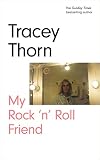
I first heard the Go-Betweens when a live version of their stand alone single Hammer the Hammer was included on the first JJJ Live at the Wireless album in 1983, which still ranks among my favourites, with outstanding performances by Private Lives, Hoodoo Gurus, Do-Re-Mi, The Triffids and The Particles, among others. The Go-Betweens track certainly caught my attention, swinging wildly between folk, pop and punk as I was at the time. Hammer the Hammer seemed to be a bit of all three. The punk show more side of it came mostly from the propulsive drumming.
Thirty-eight years later, I’ve just finished reading My Rock ‘n’ Roll Friend, a fascinating account by Everything But The Girl’s Tracey Thorn of her friendship with that drummer, Lindy Morrison. It’s probably fair to say that it took someone like Thorn to tell Morrison’s story in this way, being close in contact and spirit with Morrison but not overly influenced by the now almost legendary status The Go-Betweens hold in Australian music.
What Thorn relates is the story of an Australian woman in rock music who was misunderstood and mistreated by her own band members, specifically two artistically inclined but socially maladroit boys-who-never-became men, stunted by their personal mutual admiration society. Thorn isn’t that harsh, and neither is Morrison, but jeez what a pair of wankers.
The climactic sacking of the two women members of The Go-Betweens, Morrison and multi-instrumentalist (and now acclaimed film composer) Amanda Brown by their male band mates – and former partner and current partner at the time, respectively – is jaw dropping in the paucity of its thinking and the cruelty of its execution.
But this book is not the story of The Go-Betweens, it’s the story of a misfit musician, a woman who came out of Brisbane’s Bjelke-Petersen era punk scene, who joined an arthouse duo, who played drums in a dress with a handbag by her side and rocked, who was never accepted by her band members even after one of them fell in love with her.
Thorn’s position as a friend and admirer, who largely kept contact with Morrison by letters, gives her a unique perspective on what kept Morrison going, even as Robert Forster and Grant McLennan pondered whether she was the reason the band never cracked the big time. Putting her account of Morrison’s history in the first person present tense is a stroke of genius – no wonder she’s become a bestselling author.
The whole thing builds up to when Thorn visited Morrison in Brisbane just a few years ago and they start going through their correspondence, which provides the background for all the events in the book leading up to that point. It’s not nearly as complicated as I’ve made it sound, but it’s a very clever structure.
I have to mention that I met Lindy Morrison a couple of times in the early 90s when she had just started working with the Junction House Band, a Sydney-based group of musicians with intellectual disabilities. I was on the board of Junction House for a while, and the main impression I had was that she was completely comfortable with the band members, who neither knew nor cared that she had been a Go-Between.
I have also been an ardent admirer of Robert Forster’s music criticism for The Monthly from 2005-2013 but, honestly, after reading this book I can never regard him in the same way again. I will also never think of Lindy Morrison in the same way again, for the opposite reason. Great book. show less
Thirty-eight years later, I’ve just finished reading My Rock ‘n’ Roll Friend, a fascinating account by Everything But The Girl’s Tracey Thorn of her friendship with that drummer, Lindy Morrison. It’s probably fair to say that it took someone like Thorn to tell Morrison’s story in this way, being close in contact and spirit with Morrison but not overly influenced by the now almost legendary status The Go-Betweens hold in Australian music.
What Thorn relates is the story of an Australian woman in rock music who was misunderstood and mistreated by her own band members, specifically two artistically inclined but socially maladroit boys-who-never-became men, stunted by their personal mutual admiration society. Thorn isn’t that harsh, and neither is Morrison, but jeez what a pair of wankers.
The climactic sacking of the two women members of The Go-Betweens, Morrison and multi-instrumentalist (and now acclaimed film composer) Amanda Brown by their male band mates – and former partner and current partner at the time, respectively – is jaw dropping in the paucity of its thinking and the cruelty of its execution.
But this book is not the story of The Go-Betweens, it’s the story of a misfit musician, a woman who came out of Brisbane’s Bjelke-Petersen era punk scene, who joined an arthouse duo, who played drums in a dress with a handbag by her side and rocked, who was never accepted by her band members even after one of them fell in love with her.
Thorn’s position as a friend and admirer, who largely kept contact with Morrison by letters, gives her a unique perspective on what kept Morrison going, even as Robert Forster and Grant McLennan pondered whether she was the reason the band never cracked the big time. Putting her account of Morrison’s history in the first person present tense is a stroke of genius – no wonder she’s become a bestselling author.
The whole thing builds up to when Thorn visited Morrison in Brisbane just a few years ago and they start going through their correspondence, which provides the background for all the events in the book leading up to that point. It’s not nearly as complicated as I’ve made it sound, but it’s a very clever structure.
I have to mention that I met Lindy Morrison a couple of times in the early 90s when she had just started working with the Junction House Band, a Sydney-based group of musicians with intellectual disabilities. I was on the board of Junction House for a while, and the main impression I had was that she was completely comfortable with the band members, who neither knew nor cared that she had been a Go-Between.
I have also been an ardent admirer of Robert Forster’s music criticism for The Monthly from 2005-2013 but, honestly, after reading this book I can never regard him in the same way again. I will also never think of Lindy Morrison in the same way again, for the opposite reason. Great book. show less
Thoroughly enjoyed this book that rightfully puts Lindy Morrison back into the history of The Go-Betweens. I loved Lindy’s raucous personality and fierce and fiery spirit. I also really liked Tracey Thorn’s writing style (this is the second book I have read by her), her thoughtful drawing of Lindy’s life and work and her own comments on the music industry. Totally skewered the mansplaining of music history and art.
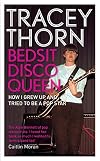
An utterly delightful memoir by Tracey Thorn, the lead singer of Everything But The Girl. Tracey has always presented an opaque, cool front to the world, letting her song lyrics hint at her life but here she takes us back to the teenager growing up in suburban Hertfordshire, needing to become involved in the post-punk music scene in London but unsure of how to go about it. Gaining some indie success as part of The Marine Girls, Tracey went to study at Hull University and within a few hours show more of arriving had met fellow-record label artist Ben Watt. They bonded over music and started the band Everything But The Girl (taking the name from a local shop) and were soon gaining mainstream success while still at University.
Tracey shares the successes the band achieved but also the quandary of how to keep both afloat in the never-constant flow of the pop world while staying true to your vision. EBTG had highs, they had lows but more through happenstance than design kept finding opportunities for success. Thorn also shares her offstage life with Ben Watt and the awful experience in the 1990s when Ben was crippled with an illness that left them facing an unknown future.
Warm, involving, insightful and full of humour, Tracey's book is one of the best autobiographies of recent years. show less
Tracey shares the successes the band achieved but also the quandary of how to keep both afloat in the never-constant flow of the pop world while staying true to your vision. EBTG had highs, they had lows but more through happenstance than design kept finding opportunities for success. Thorn also shares her offstage life with Ben Watt and the awful experience in the 1990s when Ben was crippled with an illness that left them facing an unknown future.
Warm, involving, insightful and full of humour, Tracey's book is one of the best autobiographies of recent years. show less
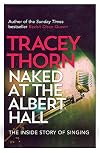
This is a quite self-made book about western views on singing. Or, rather, Thorn's views on singing. The fact that she has been a fairly famous singer for a bunch of years does play a part in this, as does her interviews with other famous persons, e.g. Kristin Hersh and Romy Madley Croft.
Where Thorn excels, is in her personal mini-monographs that are often encased within single paragraphs, as here, about experience and influence:
A lot of the book is about popular, western ways of singing, mainly in a crowd-fronting way, but also about the need for singing, to begin with.
I loved to read about Dusty Springfield, not only because Thorn found her through my favourite song of Springfield (perhaps bar "Magic Garden"):
Some of the interviews in this book are truly interesting. I love Kristin Hersh's comment here:
Some of Thorn's personal memories are also interesting, funny, and illuminating, slight as they may at first mean:
All in all, a funny, probably helpful book to the everyday singer, but I couldn't help but feel that I wish that more stones had been turned while researching this book; it is very western and poppy, but if that's what I'd had in mind to begin with, it'd have been better. show less
Where Thorn excels, is in her personal mini-monographs that are often encased within single paragraphs, as here, about experience and influence:
It’s also true that we can be negatively influenced byshow more
people, or strain to avoid taking on too strongly the imprint of another, for fear of drifting into mere imitation and unoriginality. Bob Dylan talks in his book, Chronicles, about how intimidated he could be in the early days by hearing others who seemed more authentic than him, and how inadequate that could make him feel. He’d been learning and playing all of Woody Guthrie’s songs, and feeling pretty good about himself as a singer of these songs, when he suddenly heard the recordings of Ramblin’ Jack Elliott, who’d been singing the same songs for years. Dylan describes being devastated by this – ‘I felt like I’d been cast into sudden hell’. Far from being inspired by the sound of someone doing what he was trying to do, he felt paralysed, and realised that in fact he would have to run a million miles from the very person it seemed he could learn the most from. All he could do was try to ignore Elliott – ‘It would be hard not to be influenced by the guy I just heard. I’d have to block it out of my mind… tell myself I hadn’t heard him and he didn’t exist.’ In other words, influence can sometimes be terrifying – not inspiring at all, but crippling.
A lot of the book is about popular, western ways of singing, mainly in a crowd-fronting way, but also about the need for singing, to begin with.
I loved to read about Dusty Springfield, not only because Thorn found her through my favourite song of Springfield (perhaps bar "Magic Garden"):
Who is your favourite singer? It’s a question I’m often asked, not surprisingly, and my answer is usually the same: Dusty Springfield.
[...] I do know the first time I heard her. Elvis Costello was presenting a radio show, playing a selection of his favourite records, and as was usually the case with anything like that on the radio, I was taping it onto cassette. This was 1980, or maybe 1981. He had already introduced us to another of her signature tunes, ‘I Just Don’t Know What to Do with Myself’, when he performed it on the Live Stiffs Live album in 1978, and that had been a revelation, opening my eyes to the possibility of liking Bacharach and David as well as punk; a difficult but heady idea, and one I would have to come back to later. Now on this radio show he played ‘I Don’t Want to Hear it Any More’ from Dusty in Memphis, and for the first time I truly heard that voice – that smoky, husky, breathy, vulnerable, bruised, resigned, deliberate, sensual voice.
Some of the interviews in this book are truly interesting. I love Kristin Hersh's comment here:
KRISTIN: I have one rule in the studio: ‘no singing’, meaning ‘no faking’. Which probably pertains to guitar parts as well: no chops, no imitating, no telling the song what to do. A real vocal is a textural expression. Maybe the kind you croon to your baby, maybe the kind you yell when you drop something on your foot, but it must be determined by the song or it will never resonate with the listener. And if it’s embarrassing? So much the better!
Some of Thorn's personal memories are also interesting, funny, and illuminating, slight as they may at first mean:
I was in the loo at a nightclub once, years ago, when I was recognised as I washed my hands. It can’t have been that long after ‘Missing’ was a hit as the request made of me was not for an autograph, or even a photo, but for me to sing a few lines of the song to prove that I was really that Tracey Thorn.
And because I’d presumably had a few drinks – I must have done or I would have run a mile in the opposite direction – I agreed, and standing there at the sink I took a deep breath and sang, ‘I step off the train, I’m walking down your street again, and past your door, but you don’t live there any more.’
The girls stared and squealed at me, and grabbed each other, and the thing they said, which I took as the ultimate compliment, was: ‘YOU SOUND JUST LIKE YOU!’
I knew what they meant, of course I did. That my voice really was my voice, the authentic sound that came out of my mouth, not some product of studio trickery and fakery. There’s a naivety to this response, really, the idea that someone’s voice can be manufactured for them in the studio – which is simply not as true as people think – and an old-fashioned regard for the virtues of vocal authenticity. But there’s an important point to be made here, a timeless truth, which is that however much vocals can be manipulated, or fixed, or homogenised, finding your own voice – your unique, personal sound – is still the key ingredient in becoming a singer.
All in all, a funny, probably helpful book to the everyday singer, but I couldn't help but feel that I wish that more stones had been turned while researching this book; it is very western and poppy, but if that's what I'd had in mind to begin with, it'd have been better. show less
Lists
Awards


You May Also Like


Associated Authors
Statistics
- Works
- 12
- Also by
- 5
- Members
- 469
- Popularity
- #52,470
- Rating
- 4.0
- Reviews
- 12
- ISBNs
- 24
- Languages
- 2